Top 8 Natural Monuments around Vougy
Best natural monuments around Vougy are situated in the Haute-Savoie region of France, characterized by its mountainous terrain and the Arve River. The area features diverse natural landscapes, including significant ecological sites and numerous lakes. These natural features provide opportunities for conservation, nature observation, and outdoor recreation. The region's geology contributes to its varied landscapes, from riverine islands to alpine summits.
Best natural monuments around Vougy
- The most popular natural monuments is Pointe de Marcelly, a summit that offers…
Last updated: July 2, 2026
Lac Bénit
Highlight • Lake
Translated by Google •
Tip by

Gorges du Pont du Diable
Highlight • Gorge
Translated by Google •
Tip by

Sign up now to discover places like this
Get recommendations on the best single tracks, peaks, & plenty of other exciting outdoor places.
Sign up for free
Pic de Jallouvre
Highlight • Summit
Translated by Google •
Tip by

Le Môle summit cross
Highlight • Summit
Translated by Google •
Tip by

Pointe de Marcelly
Highlight • Summit
Translated by Google •
Tip by

Sign up for free to discover even more natural monuments around Vougy.
Sign up for free
Already have an account?
Start today with a free account
Your next adventure awaits.
Login or Signup
Tips from the Community

Very nice hike. It was quite crowded today. Contrary to what’s written in the description, I didn’t see any particularly risky passages
0
0

One of the most beautiful views of the valley, with a rather unusual view overlooking the mole. It is then possible to cross the ridges to Pointe du Haut Fleury but be careful at Pas de l'Ane which is quite exposed despite the handrail. Strictly not recommended in case of dizziness.
0
0
A majestic summit resembling a pyramid from the Cenise side, the Jallouvre - or Jalouvre - is a mythical summit whose ascent, although not difficult compared to its neighbor Pointe Blanche overhanging it by 30m, remains in the memory like that of a almost epic adventure between grueling scree (on both sides), the mythical Col du Razoir (the aptly named) and the Passage de la Cravate which, in the end, poses no more problem than that when the residual snowfields have disappeared, unless that we are subject to vertigo. In summary, one of the most beautiful hikes in the area in my opinion, for which you still need to be sure-footed and in good shape, but which can be tamed quite easily. Do not miss !
1
0


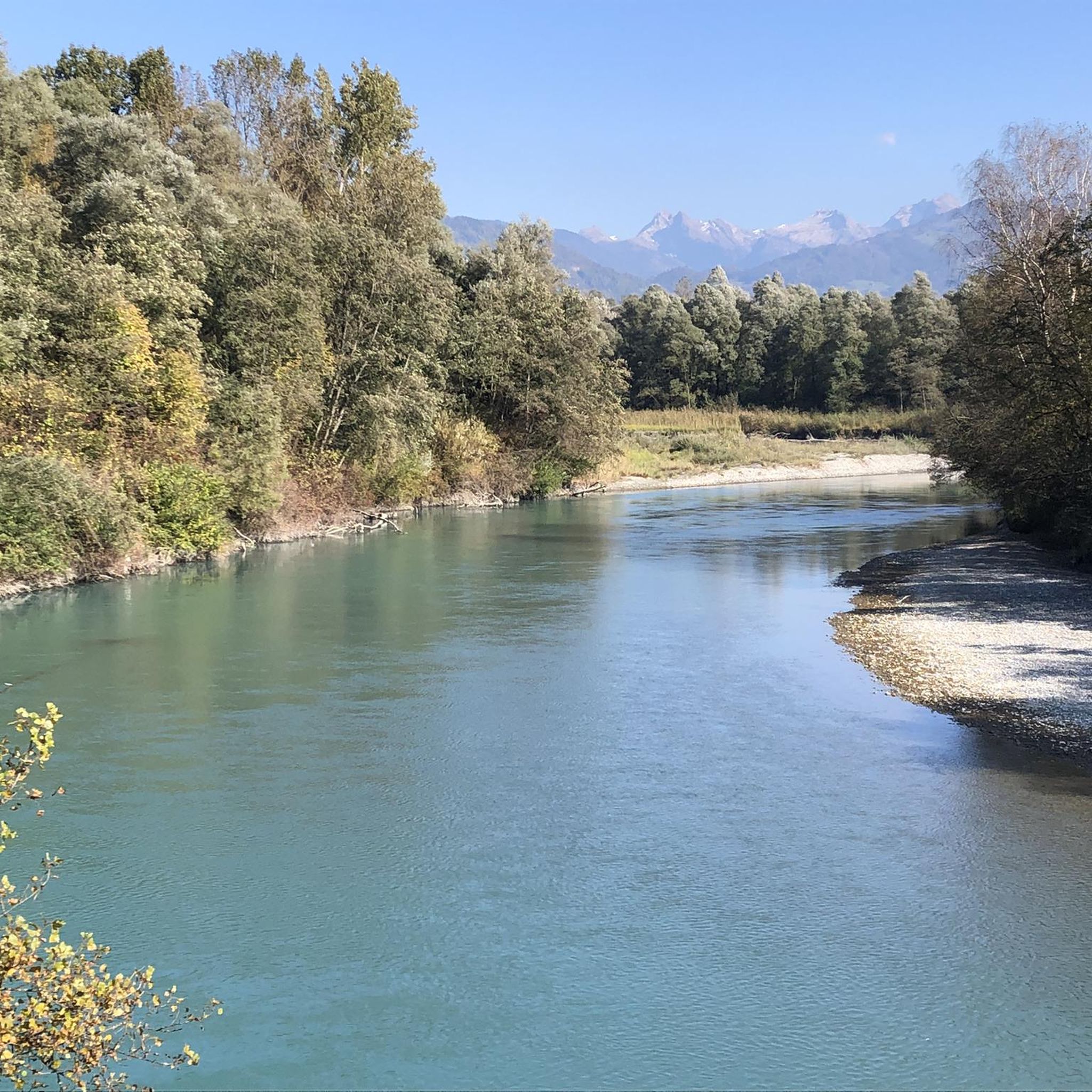
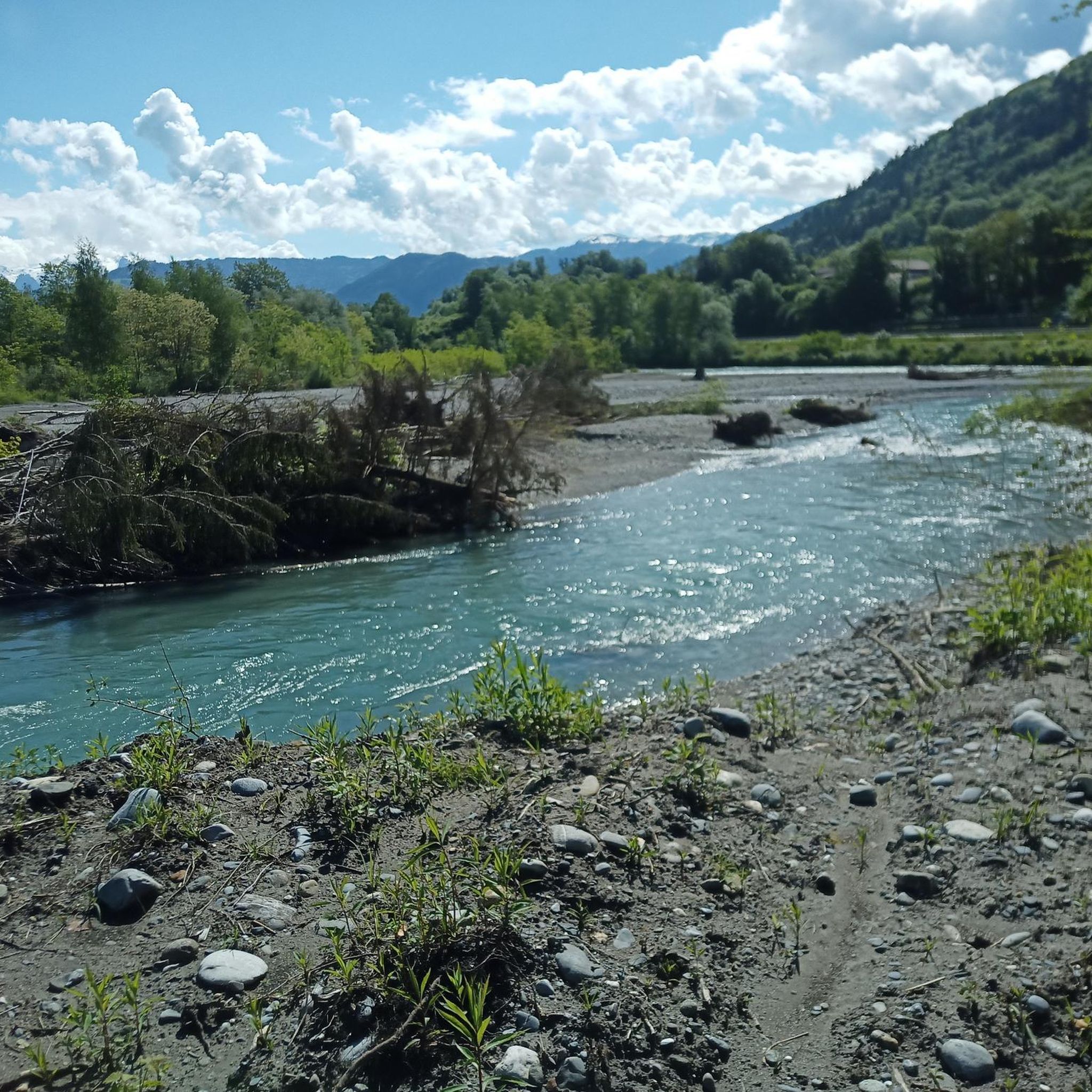
Incredible nature, the river has carved out a passage
0
0

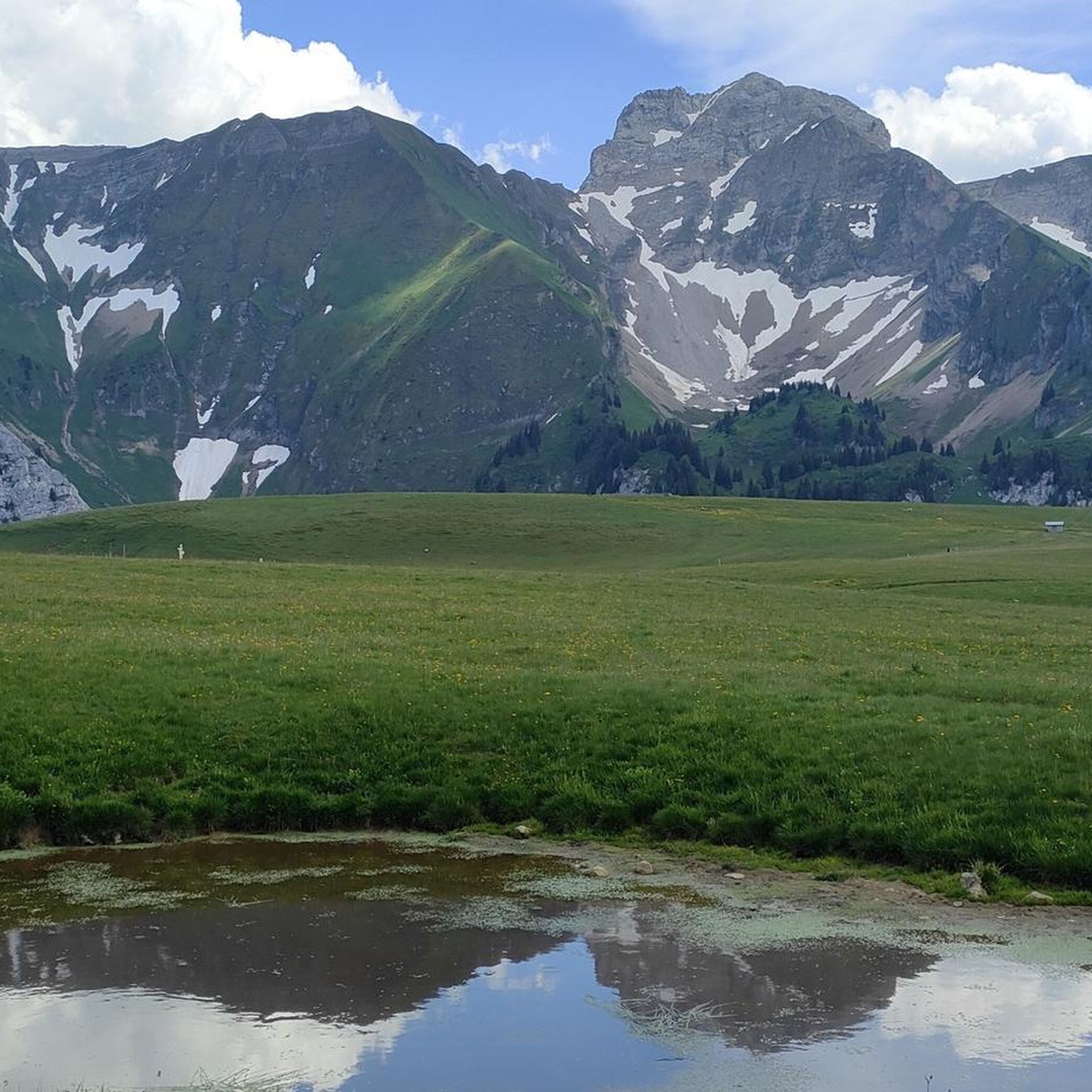
Lake Bénit is located at an altitude of 1,452 meters, on the northern slope (ubac) of the Bargy chain, in the Bornes1 massif. It is dominated to the south by the limestone wall of the Bargy chain from where the scree of the Col d'Encrenaz cirque spills out and delimits the south-west shore of the lake. The northwest bank corresponds to the slope of the old glacial basin while the east bank opens onto the valley of the Lac Bénit stream. In 1988, Father Arsène Bourgeaux, ethnographer, in a publication dedicated to the parish, indicated that the lake, “for the inhabitants of the Mont is considered as a sort of founding place where the identity of a population originates” 7. The lake was the subject of processions by the populations of Marnaz and Mont-Saxonnex, on Saint Claude's Day, in order to protect the villages from flooding. The lake benefited from developments in the early 1960s, notably with the raising of the lake level, which made it possible to double its surface area7. The inauguration took place on July 11, 19657. A mass was improvised by priest Claude Scherantz. Lake Bénit is the subject of many legends. One of them relates that the fairies came to bathe there and were at the origin of the production of butter and tomme in the town. A second legend says that an episcopal ring is found in the lake9. Following a deadly avalanche, the bishop of the diocese is said to have gone “in a grand procession” to bless the lake and to have thrown “his episcopal ring into the waves asking heaven that such a catastrophe never happens again”9. Another version says that the object was so heavy that it fell into the lake at the time of the blessing9. According to this legend, an avalanche emptied the lake and flooded Marnaz below4. Finally Alphonse Favre (en) reports that “this lake is due to a collapse in which a fir forest disappeared. As for the time, it can only be established in a very doubtful manner, by the fact that an old man from the village of Brezon assured, around 1845, that this event had happened in his father's youth. »1
0
0
The Gorges du Giffre, at the Pont du Diable, represent a very aesthetic canyon, when the sun is in the axis, it gives extraordinary lights. These mythical gorges are steeped with a rather horizontal profile. The geological formation of the Gorges du Giffre is formed by a lock, called a glacial lock. On the bottom of the valley, the folds of the limestone layers are oriented perpendicular to the axis of the valley. During the Quaternary era, these limestones offered greater resistance to the erosion of the glacier. He was only able to hollow out the layers occasionally. The pots were dug afterwards, by repeated movements of water and pebbles
0
1
Frequently Asked Questions
What are the most popular natural monuments around Vougy?
Among the most appreciated natural monuments are Pointe de Marcelly, a summit offering expansive views of the valley, and Le Môle summit cross, known for its exceptional panorama including Mont Blanc. Visitors also highly rate the Gorges du Pont du Diable, where the river has carved out an aesthetic canyon.
Are there family-friendly natural monuments around Vougy?
Yes, the region offers several options suitable for families. Lac Bénit, nestled at 1,452 meters, provides a pleasant setting for a picnic and is steeped in local legends, making it an engaging spot for all ages. The Site naturel des Iles de Vougy, while primarily accessible through organized events, offers a unique opportunity for nature observation in a protected riverine environment.
What unique natural features can I explore near Vougy?
Vougy is rich in diverse natural features. You can explore the dramatic Gorges du Pont du Diable, where the Giffre river has carved impressive passages. The region also features several stunning lakes, such as Lac Bénit, known for its legends, and the peaceful alpine Lac de Lessy (not in highlights, but mentioned in region research) at the foot of the Aiguille Verte.
What kind of wildlife can be observed at the natural monuments?
The Site naturel des Iles de Vougy is a haven for diverse wildlife. It's home to various water birds like the goosander, kingfisher, and grey heron. During winter, diving ducks such as the tufted duck are present. The site also hosts seven bat species, twelve dragonfly species, and the elusive beaver, a protected species in France.
Are there hiking trails near these natural monuments?
Yes, there are numerous hiking opportunities. For instance, you can find routes leading to Lac Bénit, with a moderate 7.9 km loop from Mont-Saxonnex. For more challenging ascents, trails lead to Le Môle summit cross, offering a 17.2 km difficult loop from Ayse. You can find more details on these and other trails in the Hiking around Vougy guide.
What are the best viewpoints for panoramic scenery?
For breathtaking panoramic views, consider ascending Pointe de Marcelly, which offers one of the most beautiful views of the valley, including an unusual perspective overlooking Le Môle. The Le Môle summit cross also provides an exceptional vista, with Mont Blanc visible among nearly 700 other peaks.
What outdoor activities can I do near the natural monuments?
Beyond hiking, the area around Vougy offers diverse outdoor activities. You can explore mountain trails, with options like the difficult 5 km Via Ferrata loop from Col de la Colombière. Gravel biking is also popular, with routes such as the 60 km Gorges du Borne loop from Bonneville. For more ideas, check out the Mountain Hikes around Vougy and Gravel biking around Vougy guides.
What is the best time to visit the natural monuments around Vougy?
The best time to visit largely depends on the activity. For hiking and enjoying the alpine lakes like Lac Bénit, late spring to early autumn (May to October) generally offers pleasant weather. However, for certain areas like Lac de Peyre, it's advised to avoid July and August due to wildlife protection efforts. Winter can offer unique snowy landscapes, but some trails and high-altitude areas may be inaccessible or require specialized gear.
Are there any challenging natural monuments for experienced hikers?
Absolutely. The Pic de Jallouvre is a majestic summit known for its challenging ascent, involving grueling scree sections and passages like the Col du Razoir and Passage de la Cravate. It's considered one of the most beautiful, albeit demanding, hikes in the area, requiring sure-footedness and good physical condition. Pointe de Marcelly also offers challenging ridge crossings.
What makes the Site naturel des Iles de Vougy significant?
The Site naturel des Iles de Vougy is a 25-hectare protected area along the Arve River, recognized for its exceptional biodiversity. It comprises five distinct ecological units, including priority habitats like gallery forests of willows and white alders. This site is crucial for conservation, providing a home for numerous bird species, bats, dragonflies, and the protected beaver, making it a vital ecological area.
What do visitors enjoy most about the natural monuments near Vougy?
Visitors frequently highlight the incredible natural beauty and the sense of adventure. For instance, the Gorges du Pont du Diable are praised for their aesthetic canyon and unique lighting effects. Summits like Pointe de Marcelly and Le Môle summit cross are celebrated for their expansive and exceptional views, often including Mont Blanc. The overall appeal lies in the diverse landscapes, from riverine ecosystems to high alpine vistas.
Most popular routes around Vougy
Most popular attractions around Vougy

Get inspired with the komoot mobile app


Explore more
Extend your search for the best caves by checking out these guides of the top ones around Vougy:
