Top 8 Natural Monuments around Saint-Bresson
Natural monuments around Saint-Bresson, located in the Gard department, offer a diverse landscape at the southern edge of the Cévennes mountains. This region is characterized by its geological formations, including numerous caves, sinkholes, and prominent viewpoints. The area provides opportunities to explore varied natural features, from mountain summits to river valleys.
Best natural monuments around Saint-Bresson
- The most popular natural monuments is Ranc de Banes Viewpoint, a viewpoint that offers a belvedere over the village of Sumène and the…
Last updated: August 27, 2026
Montagne de la Seranne
Highlight • Summit
Translated by Google •
Tip by

Ranc de Banes Viewpoint
Highlight • Viewpoint
Translated by Google •
Tip by
Sign up now to discover places like this
Get recommendations on the best single tracks, peaks, & plenty of other exciting outdoor places.
Sign up for free
View of the Upper Hérault Valley
Highlight • Viewpoint
Translated by Google •
Tip by

Caverne du Maure
Highlight • Cave
Translated by Google •
Tip by

Aven de la Dame
Highlight • Cave
Caving enthusiasts, a beautiful well of approximately 15m, and approximately 90m await …
Translated by Google •
Tip by

Sign up for free to discover even more natural monuments around Saint-Bresson.
Sign up for free
Already have an account?
Start today with a free account
Your next adventure awaits.
Login or Signup
Tips from the Community

Superb 360° views. Be careful of the wind, bring a sweater :)
0
0

A cave that can be visited by everyone. A good walk awaits you from Gorniès. Bring good lamps, and not basic lamps, because the cave has very large spaces, and you risk being very impressed. A special atmosphere reigns there... If you go to the bottom, at the level of the "stairs", then your walk will be rewarded by beautiful concretions! BE CAREFUL, everything you dirty will remain engraved on the rock, so please, do not touch anything, just take beautiful photos, with adequate lighting.
1
0
A very deep sinkhole (-167m approximately) which is protected by a fence, which I do not recommend crossing! Caving enthusiasts, a beautiful well of approximately 15m, and approximately 90m await you before reaching the bottom :) Another small sinkhole is located 100m further, so be careful if you are walking with animals, or children.
1
0

Consider taking a lamp. Easy to access for around a hundred meters.
1
0

Located south of Larzac and therefore of the Massif Central, the Séranne mountain is a small massif whose main peaks are, among others, Mont Saint-Baudille, the Pioch de Roquebrune, the Pioch de la Boffia, Peyre Martine and the Roc Blanc.
2
0
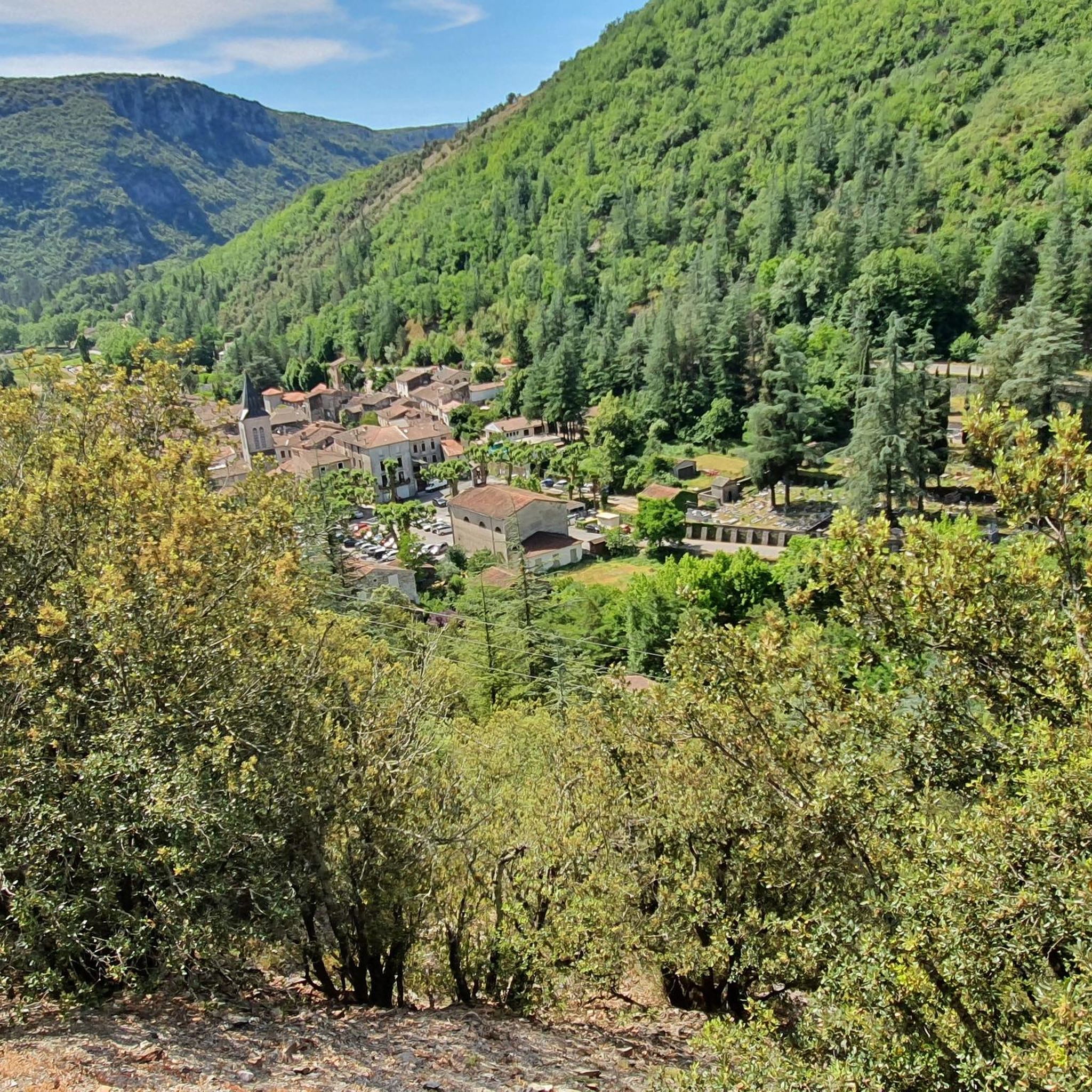
With its 713m altitude, the Ranc de Banes offers a magnificent belvedere over the village of Sumène and the Rieutord valley.
1
0

Take five minutes to contemplate the landscape. There is a bench along the road, should you wish to sit down.
0
0
Frequently Asked Questions
What types of natural monuments can I expect to see around Saint-Bresson?
The Saint-Bresson area, situated at the southern edge of the Cévennes mountains, is rich in diverse natural monuments. You'll find dramatic geological formations such as caves and sinkholes, prominent viewpoints offering panoramic vistas, and stunning river valleys and gorges. The landscape ranges from mountain summits to unique eroded rock formations.
Are there any notable viewpoints offering panoramic views?
Yes, the region boasts several impressive viewpoints. The Ranc de Banes Viewpoint, at 713m altitude, provides magnificent 360° views over the village of Sumène and the Rieutord valley. Another spot is the View of the Upper Hérault Valley, where you can contemplate the landscape from a convenient bench along the road. The Montagne de la Seranne also offers scenic overlooks from its various peaks.
What geological features are prominent in the Saint-Bresson area?
The area is particularly known for its geological formations, including numerous caves and sinkholes. You can explore the Caverne du Maure, which is accessible for about a hundred meters and features large spaces and impressive concretions. For experienced cavers, the Aven de la Dame is a very deep sinkhole. Other significant sites in the wider region include the large Grotte des Demoiselles, the spectacular Aven Armand, and the unique eroded rock formations of the Chaos de Nimes-le-Vieux.
Are there family-friendly natural monuments or activities around Saint-Bresson?
Many natural sites in the region can be enjoyed by families. The View of the Upper Hérault Valley is easily accessible with a bench for resting. For a more active outing, the Cascade de la Vis is a popular bathing spot perfect for picnicking and sunbathing, often referred to as 'the Riviera' by locals. Exploring the initial accessible sections of the Caverne du Maure can also be an exciting adventure for families, provided you bring adequate lighting.
What outdoor activities can I do near these natural monuments?
The Saint-Bresson area offers a variety of outdoor activities. You can find numerous hiking trails, including options like the 'L'Oiselette loop from Saint-Bresson' which is an easy 3.2 km route. For more challenging hikes, consider the 'Chapelle de la Clastre Loop from Roquedur' or the 'Anjeau Peak – Anjeau Cave loop'. The region is also excellent for running and gravel biking, with routes like the 'Le Vigan – Mourèzes Pass loop' for runners and the 'Lusette Pass – Mont Aigoual loop' for gravel bikers. You can find more details on these activities in the Hiking around Saint-Bresson, Running Trails around Saint-Bresson, and Gravel biking around Saint-Bresson guides.
Are there any natural cirques or gorges to explore?
Absolutely. The region is home to the magnificent Cirque de Navacelles, a UNESCO Global Geopark site, which is a spectacular natural amphitheater. Another notable formation is the Cirque de Vissec. Additionally, the stunning Gorges de l'Hérault offer beautiful scenery and opportunities for various outdoor activities along the river.
What is the best time to visit the natural monuments around Saint-Bresson?
The Cévennes region generally offers pleasant conditions for exploring natural monuments from spring through autumn. Spring brings lush greenery and blooming flora, while autumn showcases vibrant fall colors. Summer is ideal for activities like swimming at the Cascade de la Vis, though it can be popular. Always check local weather forecasts before your visit, especially if planning to explore caves or undertake longer hikes.
What should I bring for a trip to the natural monuments in this area?
For exploring the natural monuments around Saint-Bresson, it's advisable to bring appropriate footwear for hiking, sufficient water, and sun protection. If you plan to visit caves like the Caverne du Maure, a good quality lamp is essential due to the large spaces and impressive concretions inside. For viewpoints like Ranc de Banes, a sweater might be useful as it can be windy.
Are there opportunities for wild swimming near the natural monuments?
Yes, the Cascade de la Vis is a well-known and popular spot for wild swimming, picnicking, and sunbathing, often referred to as 'the Riviera' by locals. The Gorges de l'Hérault also offer various points along the river where you might find suitable spots for a refreshing dip, though always exercise caution and check local conditions.
What do visitors enjoy most about the natural monuments around Saint-Bresson?
Visitors particularly appreciate the breathtaking 360° views from spots like the Ranc de Banes Viewpoint. The unique geological formations, especially the accessible sections of caves like the Caverne du Maure, offer a special atmosphere and impressive concretions. The diverse landscape, from mountain summits to river valleys, provides a wide range of experiences for nature lovers and outdoor enthusiasts.
Is public transport available to reach the natural monuments?
While some natural monuments might be accessible via regional bus services to nearby villages, many of the more remote or specific sites in the Cévennes region are best reached by car. For detailed information on public transport options to specific trailheads or natural sites, it's recommended to check local transport schedules and plan your journey in advance.
Are there any unique landscapes with distinctive features?
Yes, beyond the caves and cirques, the region features the Vallée du Salagou, known for its distinctive red soil and a large lake, offering a unique visual contrast to the green mountains. The Chaos de Nimes-le-Vieux also presents an unusual landscape of eroded rock formations, making for interesting exploration.
Most popular routes around Saint-Bresson
Most popular attractions around Saint-Bresson

Get inspired with the komoot mobile app


Explore more
Extend your search for the best caves by checking out these guides of the top ones around Saint-Bresson:
