Top 11 Natural Monuments around Angerville-La-Martel
Best natural monuments around Angerville-La-Martel are located within the Seine-Maritime department of France, a region known for its diverse natural landscapes. The area provides access to the dramatic chalk cliffs of the Alabaster Coast, extensive regional nature parks, and significant forests. These natural features offer opportunities to explore unique geological formations, wetlands, and varied ecosystems. This guide highlights 11 natural monuments around Angerville-La-Martel.
Best natural monuments around Angerville-La-Martel
- The most popular natural monument is Cliff Path, a trail offering…
Last updated: July 5, 2026
The Weeping Rock
Highlight • Natural Monument
Translated by Google •
Tip by

Cliff Path
Highlight (Segment) • Trail
Tip by

Sign up now to discover places like this
Get recommendations on the best single tracks, peaks, & plenty of other exciting outdoor places.
Sign up for free
Spring and Chapel of the Precious Blood
Highlight • Religious Site
Translated by Google •
Tip by
Waterfall Along the Cliffs of Yport
Highlight • Waterfall
Translated by Google •
Tip by

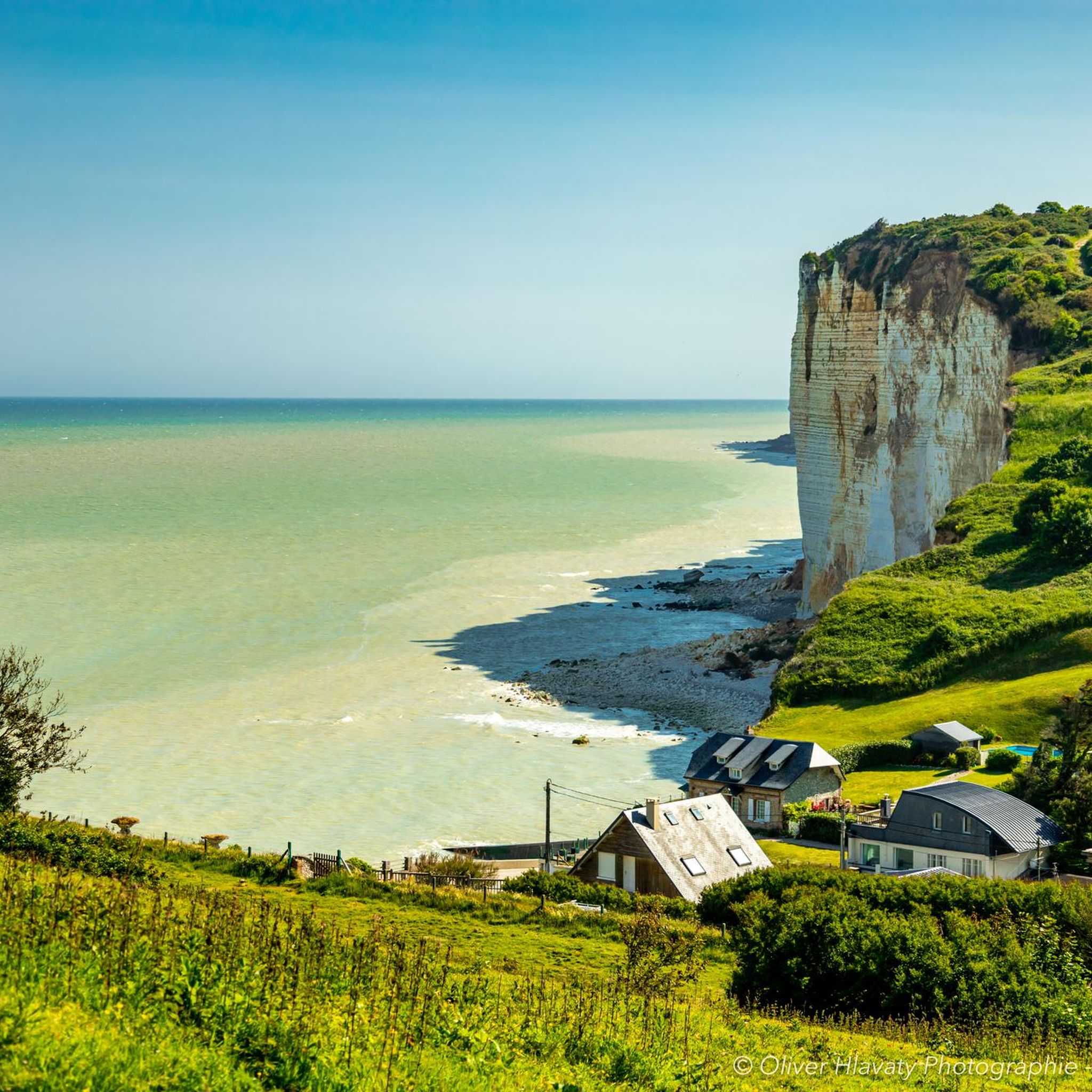
View of the cliffs at Veulettes
Highlight • Viewpoint
Translated by Google •
Tip by

Sign up for free to discover even more natural monuments around Angerville-La-Martel.
Sign up for free
Already have an account?
Start today with a free account
Your next adventure awaits.
Login or Signup
Tips from the Community

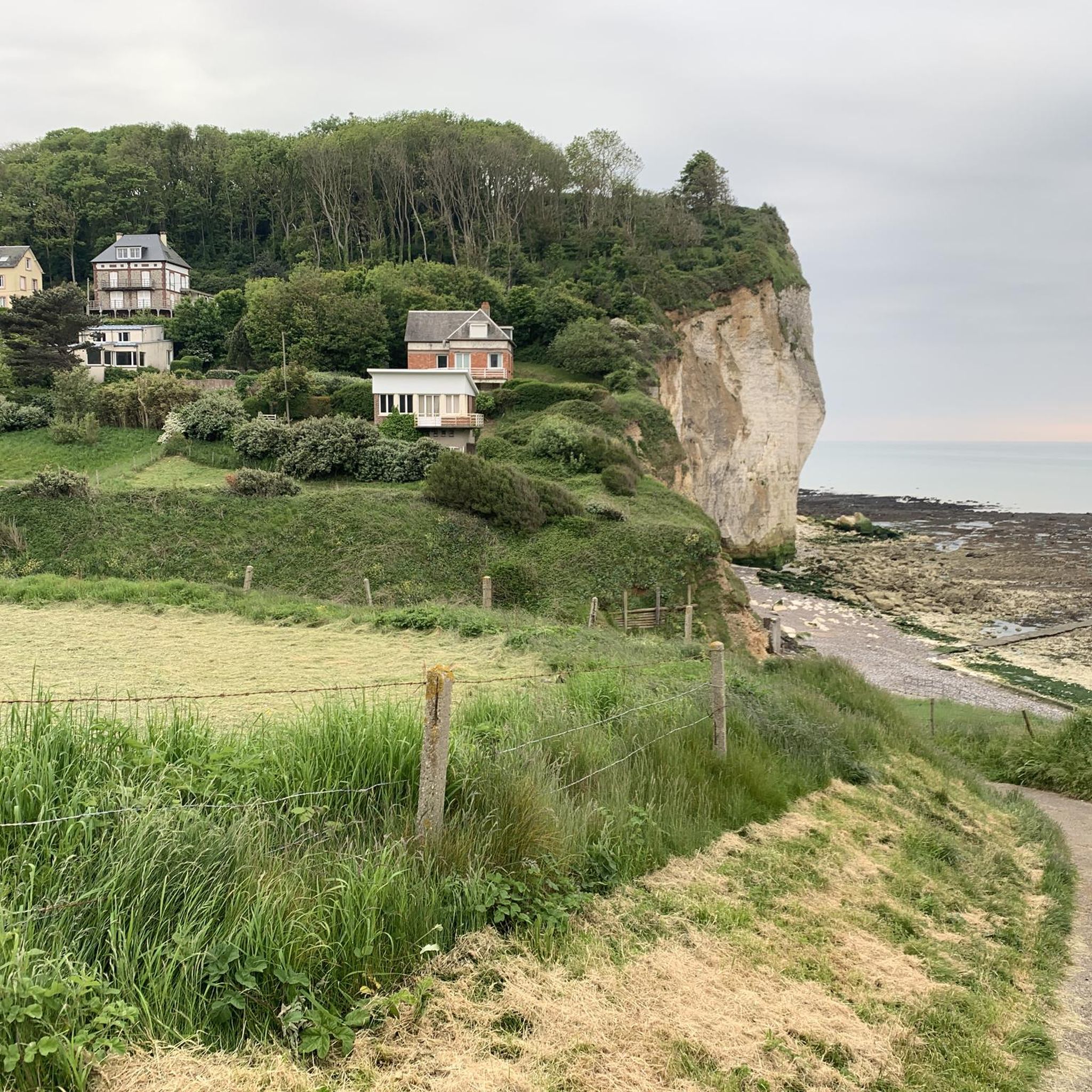
A trip to the "weeping rock" at Valleuse de Grainval is a peaceful and picturesque experience that is particularly appealing to nature lovers. The valley leads gently down to the sea, where the spring "Le Rocher qui pleure" runs in narrow streams over the moss-covered rocks. The scenery is fascinating and offers a special tranquility accompanied by the gentle surf of the sea. The view of the enormous limestone cliffs that dominate the horizon and frame the beach is particularly impressive. Following in the footsteps of Claude Monet, who painted a painting here, it is easy to imagine why this place inspires artists. The small chapel, which is located nearby, blends harmoniously into the coastal landscape with its stained glass windows depicting maritime scenes. A walk along the pebble beach with a view of the wide sea and the impressive rock formations makes a visit to Valleuse de Grainval an unforgettable experience in Normandy.
0
1
A visit along the rocky coast at Yport offers an impressive natural experience. A narrow staircase takes you directly to the sea, where the waves gently lap against the pebbles. The scenery is accompanied by the sound of a waterfall that runs along the moss-covered rock walls and sends small threads of water into the depths. An almost magical atmosphere is created when the fine drops of water float in the air and blend into the calming play of the sound of the sea. A little further on you can enjoy the view of the cliffs, which offer new perspectives on the coastline and the picturesque rock formations with every step.
0
0

Fecamp is a very beautiful, lively port town
2
0

If you are looking for a scenic and peaceful hike in Normandy, you can visit the Valleuse de Grainval, a natural valley that leads to the sea near Fécamp. Here you can admire the cliffs and the beach, where a spring called Le Rocher qui pleure flows over the rocks. There is also a small chapel whose stained glass windows represent maritime scenes. This place inspired the impressionist painter Claude Monet who painted a canvas there in 1881.
3
3

-Palais Bénédictines with cognac/liqueur tasting -wonderful paths between fields overlooking the sea
2
0

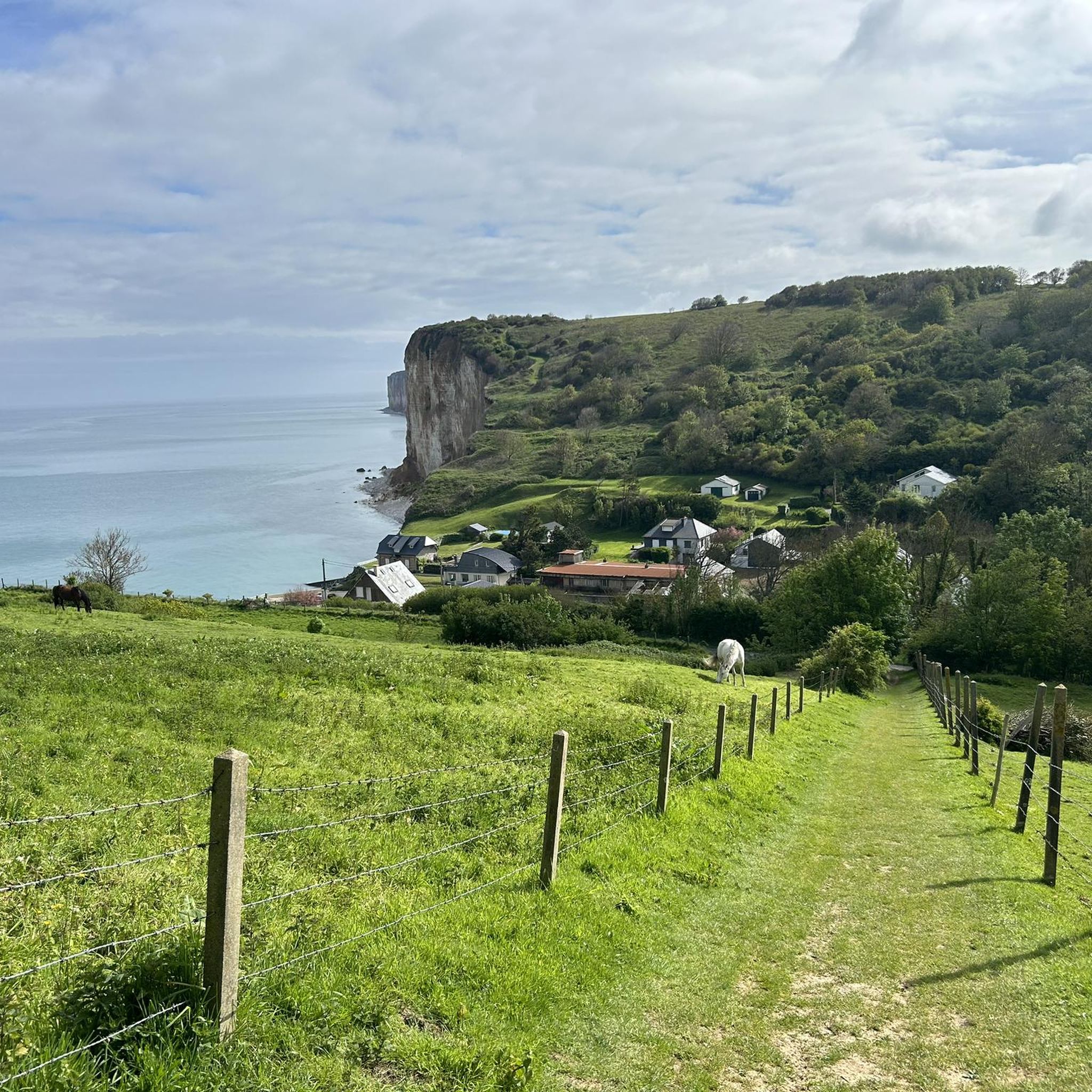
There are cliffs identical to those of the town of Étretat (about 40 km from Veulettes), encircling the beach. But, unlike Étretat, Veulettes beach is located in a large wild valley (with little construction), at the mouth of the Durdent. In 2005, the coastal conservatory acquired 10 ha of meadows in this valley, protected as classified sites for several years. This natural monument of the Durdent valley offers a spectacular panorama between sky, land and sea. Wikipedia
8
1

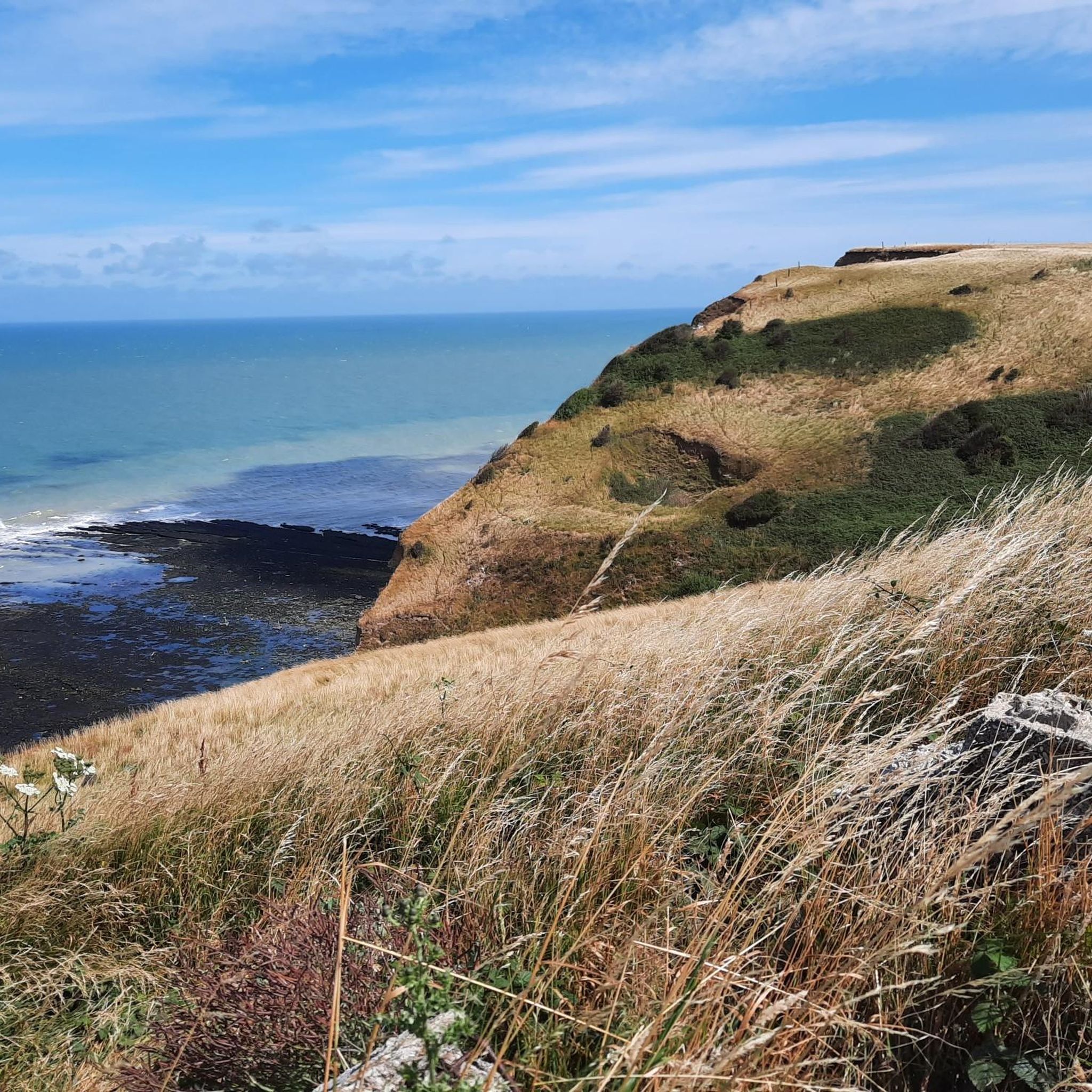
Glorious straight stretch of rural road a little inlands on the height of the chalk cliffs, with virtually no traffic and some spectacular views
5
2
The legendary story of the Precious Blood of Fécamp takes its final form following the discovery, on July 19, 1171, in the ruins of the abbey of the Holy Trinity, of two lead cases containing particles of the blood of Christ . Following the legend, after the crucifixion, Nicodemus, together with Joseph of Arimathea, receives the body of Christ and proceeds to his burial. Nicodemus is one of the last men to have physical contact with the remains of Christ - he saw it and touched it. As a result, he is in a position to become a purveyor of relics. Inspired by God, he sculpts the face of Christ: this work, the Saint Voult, passes from the Holy Land to Lucca. In another tradition, he collects particles or drops of Christ blood which, following a miraculous journey, will be carried, in the trunk of a fig tree, to the shore where the Abbey of the Holy Trinity of Fécamp. The two historical-legendary corpora are not independent of each other. From certain indications, we can suppose that the clerics and laity of Fécamp who composed the account of the translation of the Precious Blood, made use of the tradition of Saint Voult of Lucca. https://journals.openedition.org/tabularia/1676
2
0
Frequently Asked Questions
What types of natural features can I expect to see around Angerville-La-Martel?
The region around Angerville-La-Martel, within the Seine-Maritime department, is characterized by diverse natural landscapes. You'll find dramatic chalk cliffs along the Alabaster Coast, extensive regional nature parks, significant forests, and unique wetlands. These areas offer geological formations, varied ecosystems, and coastal panoramas.
Are there any family-friendly natural monuments in the area?
Yes, the View of the cliffs at Veulettes is noted as family-friendly. It offers a spectacular panorama between sky, land, and sea, with cliffs similar to those at Étretat, but located in a large wild valley. The forests like Forêt de Roumare are also excellent for family walks and picnics.
Where can I find dramatic coastal views and unique geological formations?
For dramatic coastal views and unique geological formations, the Cliffs of Étretat are a must-see, featuring iconic arches and a needle-like formation. Closer to Angerville-La-Martel, the Cliff Path offers spectacular views along the height of the chalk cliffs. Cap Fagnet in Fécamp also provides magnificent panoramic views as the highest point on the Alabaster Coast.
Are there opportunities for hiking near these natural monuments?
Yes, the region offers numerous hiking opportunities. You can explore trails along the Alabaster Coast, such as the Cliff Path, or venture into the extensive forests like Forêt d'Eawy. For more options, check out the Hiking around Angerville-La-Martel guide, which includes routes like the Veloroute Du Lin.
What about cycling or mountain biking near the natural monuments?
The area is well-suited for cycling and mountain biking. The Boucles de la Seine Normande Regional Nature Park, for instance, offers diverse landscapes for these activities. You can find various routes in the Cycling around Angerville-La-Martel guide and the MTB Trails around Angerville-La-Martel guide, including scenic coastal trails and routes through the countryside.
What makes the Marais Vernier a significant natural site?
The Marais Vernier, located within the Boucles de la Seine Normande Regional Nature Park, is an internationally important wetland ecosystem. It's the largest peat bog in France by volume, featuring wet meadows, marshes, and reed beds. It's significant for its remarkable flora and rich fauna, including numerous protected bird species, Camargue horses, and Highland cattle.
Can I find any waterfalls along the coast near Angerville-La-Martel?
Yes, you can discover waterfalls along the coast. The Waterfall Along the Cliffs of Yport offers an impressive natural experience where water runs along moss-covered rock walls, creating a serene atmosphere by the sea. Additionally, The Weeping Rock at Valleuse de Grainval features a spring flowing over moss-covered rocks, creating a peaceful and picturesque experience.
What do visitors particularly enjoy about the natural sites in this region?
Visitors appreciate the breathtaking coastal panoramas, the geological significance of the chalk cliffs, and the opportunities for scenic walks. The peaceful and picturesque experiences offered by sites like The Weeping Rock, and the serene environments of the forests are also highly valued. The region's natural beauty has even inspired artists like Claude Monet.
Are there any large forests suitable for walks near Angerville-La-Martel?
Yes, the Seine-Maritime department is home to several significant forests. The Forêt d'Eawy is an immense 7,000-hectare beech forest with popular hiking trails. La Forêt Verte is labeled a 'Forêt d'Exception' and is ideal for walks and family outings. Forêt de Roumare and Forêt de Lyons also offer beautiful settings for relaxation and exploration.
What is the Seine Estuary Nature Reserve known for?
The Seine Estuary Nature Reserve is the second-largest nature reserve in France, covering 8,528 protected hectares. It's vital for its exceptional biodiversity, housing over 500 plant species and a rich fauna including more than 300 bird species, 70 fish species, nearly 50 mammal species (such as seals), and 13 amphibian species. It's an excellent destination for nature events and guided tours. You can find more information on the Le Havre Étretat Tourisme website.
Is there a best season to visit the natural monuments around Angerville-La-Martel?
The best season to visit largely depends on your preferred activities. Spring and summer offer pleasant weather for coastal walks, cycling, and enjoying the lush greenery of the forests and wetlands. Autumn brings beautiful foliage to the forests. Coastal areas can be visited year-round, though some paths might be more challenging in wet or windy conditions.
Are there any historical or cultural sites integrated with the natural monuments?
Yes, some natural sites have historical or cultural connections. For example, the Spring and Chapel of the Precious Blood is a historical site with a legendary story tied to a sacred water spring. Additionally, the cliffs of Étretat have inspired many artists, and the small chapel near The Weeping Rock features stained glass windows depicting maritime scenes.
Most popular routes around Angerville-La-Martel
Most popular attractions around Angerville-La-Martel

Get inspired with the komoot mobile app


Explore more
Extend your search for the best caves by checking out these guides of the top ones around Angerville-La-Martel:
