Top 6 Natural Monuments around Łużna
Best natural monuments around Łużna offer a blend of botanical interest and unique geological formations. The region, including the nearby town of Ciężkowice, features significant natural attractions. Łużna's landscape provides a diverse environment for exploration, with 6 natural monuments to discover. These sites showcase ancient rock formations, protected flora, and scenic waterfalls.
Best natural monuments around Łużna
- The most popular natural monuments is Skamieniałe Miasto Nature Reserve, a natural_monument that is an inanimate nature reserve covering 15 hectares, featuring…
Last updated: June 29, 2026
Witch Rock (Czarownica), Skamieniałe Miasto, Ciężkowice
Highlight • Natural Monument
Translated by Google •
Tip by

Morskie Oko Landslide Lake (Beskid Mountains)
Highlight • Lake
Translated by Google •
Tip by

Sign up now to discover places like this
Get recommendations on the best single tracks, peaks, & plenty of other exciting outdoor places.
Sign up for free
Skamieniałe Miasto Nature Reserve
Highlight • Natural Monument
Translated by Google •
Tip by

Witch Waterfall (Wodospad Czarownic)
Highlight • Waterfall
Translated by Google •
Tip by

Bat Trail (Szlak Nietoperza) – Skamieniałe Miasto Nature Reserve
Highlight (Segment) • Trail
Translated by Google •
Tip by

Sign up for free to discover even more natural monuments around Łużna.
Sign up for free
Already have an account?
Start today with a free account
Your next adventure awaits.
Login or Signup

Tips from the Community

Many consider it the best place in the Ciężkowice area. Although in summer it is a small stream of water, it turns out that in winter it freezes and turns into a large icefall! The huge rocks surrounding it are also impressive - maybe that is why there were legends about witches (hence the name of this waterfall/icefall) who held a sabbath here (those were the days, eh?)
1
0

It is a 15 hectare wooded hill, located 700 m south of the town, on which there is a group of rocks. Over the years, wind, frost and rain have given the rocks fantastic shapes. Legends shroud Skamieniałe Miasto in mystery. Witch (Czarownica) The most popular rock in the reserve, its height is 13 metres. The upper part of the rock looks like a mystical profile of a witch, with clearly defined eye sockets, a long crooked nose and a protruding chin. The witch is made of sandstone layers with different grain sizes. In the upper part of the rock there are many cracks, the largest of which is 0.5 m by 8 m. Rock with a cross The rock is in the shape of a tower and is about 10 m high. Inside there is a crack with steps that allow you to climb to the top of the rock. The view from the top extends over the neighboring hills, valleys, the Biała River and Ciężkowice. Grunwald The rock was given its name in 1910 to commemorate the Battle of Grunwald, which took place 500 years ago. A memorial plaque donated by I.J. Paderewski was attached to the rock. The rock is in the shape of a tower, which lies along the road and is considered the largest in the entire reserve. The height in the western part is 17 m.
1
0

witches waterfall Ciężkowice waterfall
1
1
petrified city
1
0

Even without a lot of water it's an impressive place - rocks all around you! Magnificent!
1
0
Impressive rock city and beautiful walk through the countryside - worth it!
1
0

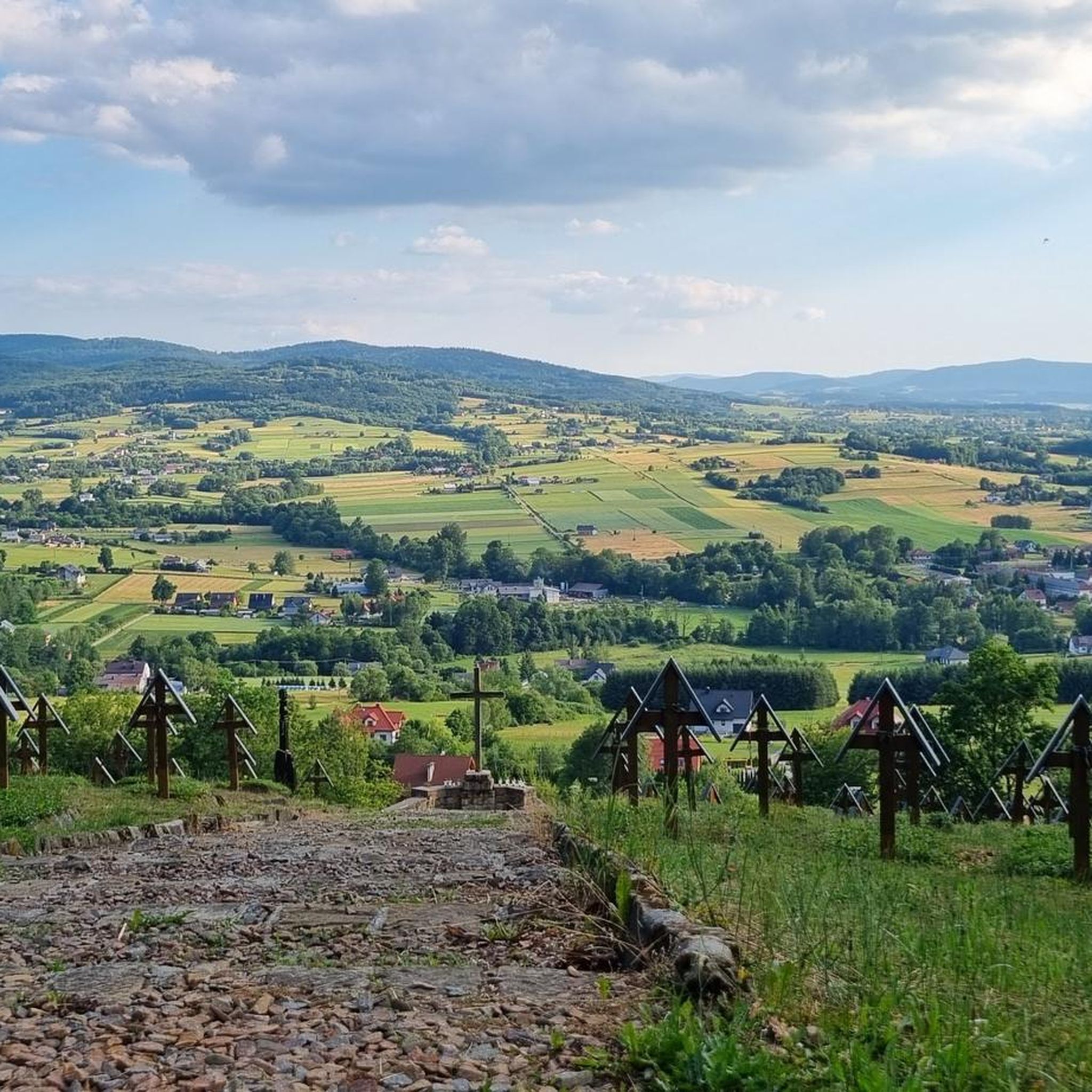
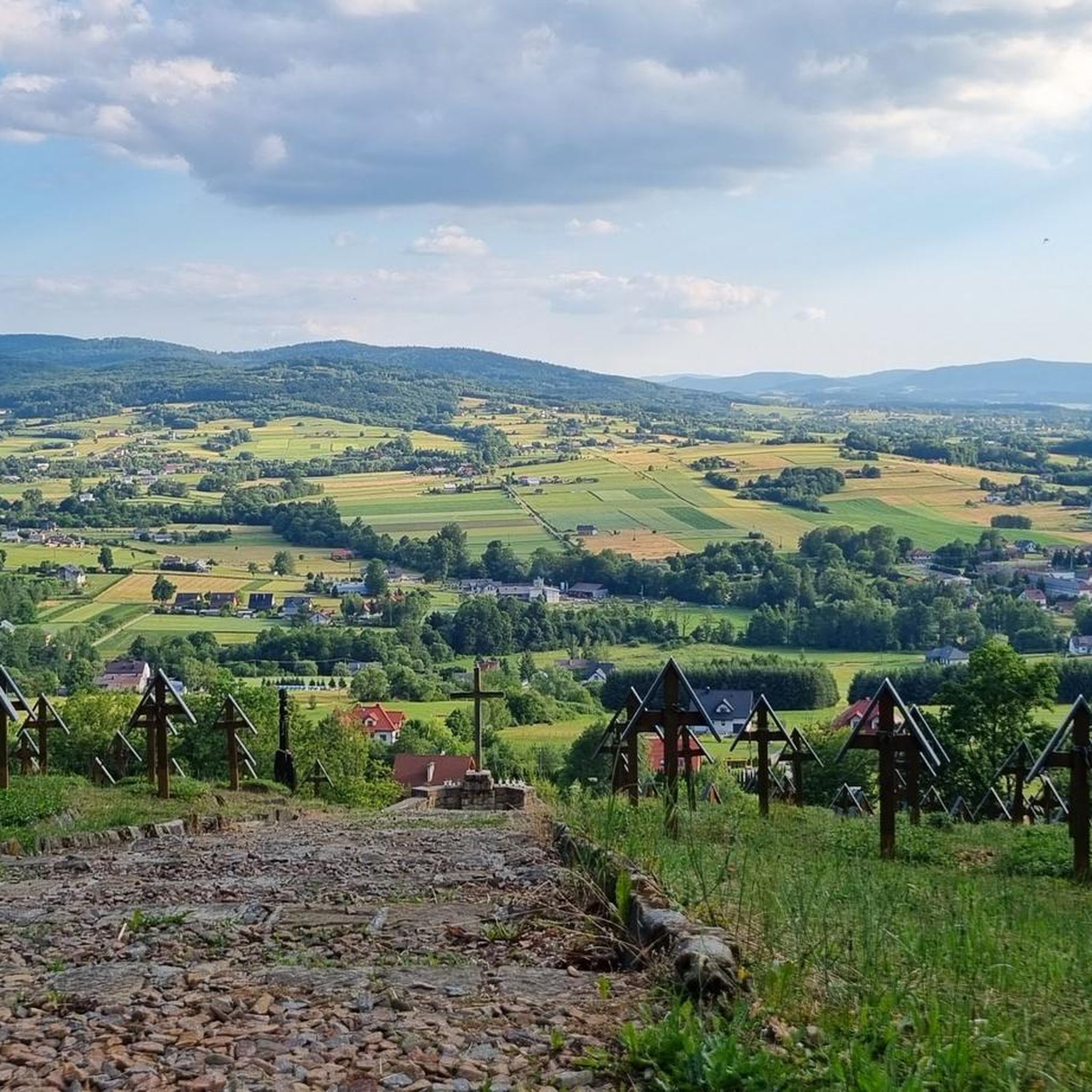
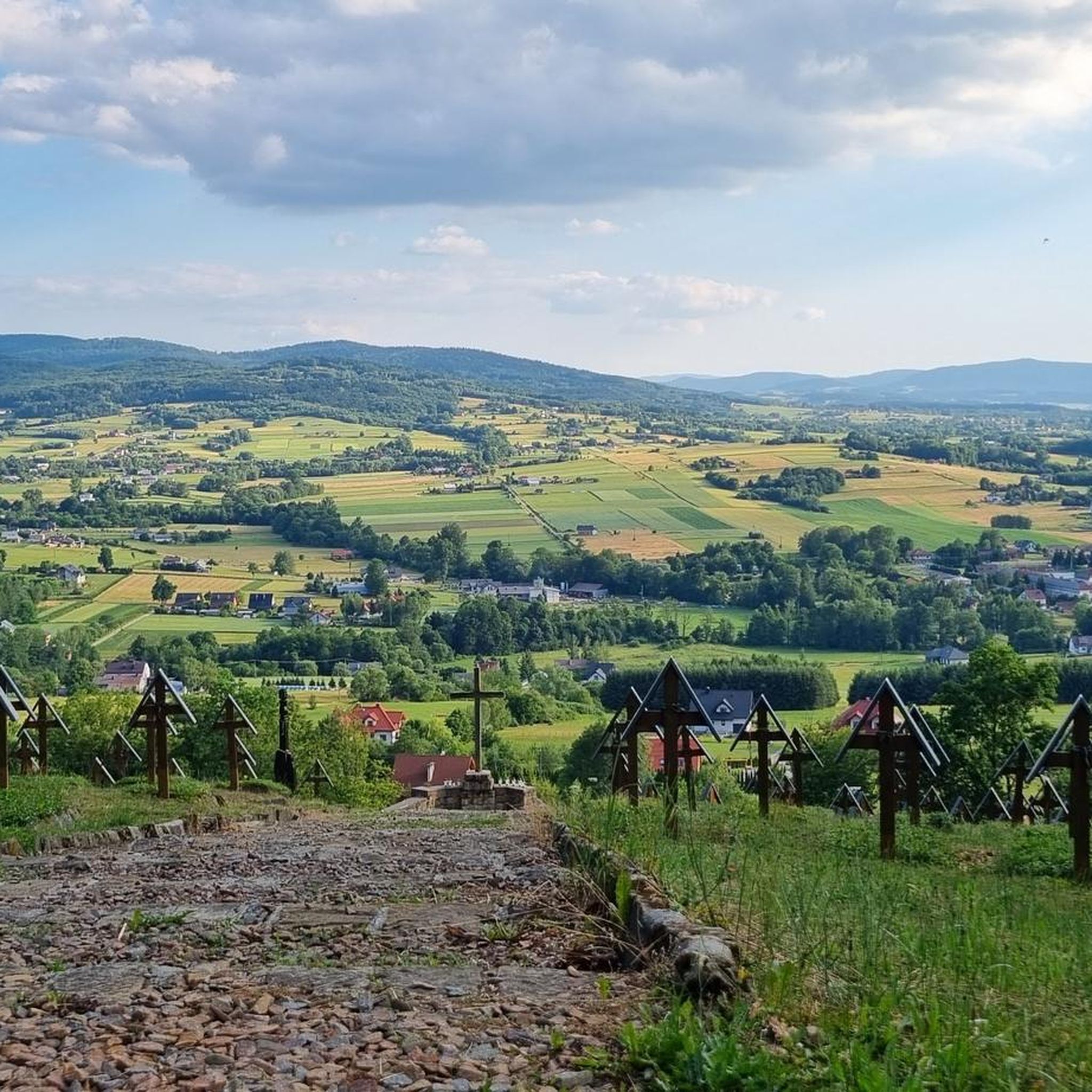
In 1784, large masses of earth slid down the slopes of Maślana. In 1913, Jelenia Góra triggered another landslide, which reached catastrophic proportions and destroyed a large forest area and several buildings in the Szklarki settlement. Strange folds in the terrain and numerous lakes in the depressions formed. In the landslide area there is a lake, commonly called "Beskidzkie Morskie Oko". Its area is about 80 m² and its depth is about 4 m.
4
0

According to one legend, a witch is a woman who was turned into a rock for cursing a priest who was rushing with the Blessed Sacrament to a sick person. Another legend says that witches and witches from all over the area met here for the Sabbath. The second legend seems to be still valid, considering that for several years there has been a mysterious fire ring at the foot of the rock - probably created by witches who met here. The safest way to get to the rock is from the parking lot via a footbridge hanging over the road, designed to make it easier for tourists to safely explore the "Petrified City". Source: https://skamienilemiasto.pl/skamieniale-miasto/legendy/
1
0
Frequently Asked Questions
What are the main geological attractions near Łużna?
The most prominent geological attraction is the Skamieniałe Miasto Nature Reserve near Ciężkowice. This reserve features extraordinary sandstone rock formations, including shapes resembling pyramids, pulpits, and mushroom rocks, formed over 60 million years ago. Another significant site is the Witch Waterfall (Wodospad Czarownic), located within the Ciężkowice Gorge, which showcases a multi-meter high waterfall and unique rock walls.
Are there any family-friendly natural monuments in the Łużna area?
Yes, the Skamieniałe Miasto Nature Reserve is considered family-friendly. It offers a blue tourist trail for exploration, and guided tours with animators are available, which include games, puzzles, and stories to engage younger visitors. The fanciful rock formations and associated legends also make it an engaging experience for families.
What unique plant species are protected as natural monuments in the region?
In the village of Szalowa, within the Gmina Łużna, you can find a group of two European bladdernut (Kłokoczka południowa) clumps protected as a natural monument. This rare species (Staphylea pinnata) is native to central and southern Europe and is notable for its beautiful white flowers in spring and distinctive bladder-like fruit capsules. Historically, its seeds were used to make rosaries.
What kind of legends are associated with the natural monuments?
The Skamieniałe Miasto Nature Reserve is rich in folklore. One popular legend tells of a town turned to stone as punishment for a knight's broken hospitality. The prominent Witch Rock (Czarownica) within the reserve is said to resemble a witch's profile, with legends suggesting it's a woman turned to stone for cursing a priest, or a meeting place for witches' sabbaths.
Are there hiking opportunities near the natural monuments around Łużna?
Yes, there are several hiking opportunities. The hiking guide for Łużna features routes like the 'Hiking loop from gmina Ciężkowice' (easy, 3.3 km) and the 'Jelenia Góra Nature Reserve loop from Cmentarz wojenny nr 74 – Szymbark' (moderate, 7.7 km). The Skamieniałe Miasto Nature Reserve itself has a blue tourist trail that takes about 45 minutes to traverse.
What is the 'Witch Waterfall' and what makes it unique?
The Witch Waterfall (Wodospad Czarownic) is a natural monument located within the Ciężkowice Gorge. It's unique for its deep gorge with a stream flowing through, culminating in a waterfall several meters high. The rock walls are covered in mosses, and rare, legally protected plant species grow on rocky shelves. The gorge's unique microclimate, where sunlight barely penetrates, creates a tranquil and almost mystical environment, especially impressive when it freezes into an icefall in winter.
Is there a specific protected tree in Łużna?
Yes, a specific oak tree in Łużna, located on plot number 228/2, is registered as a natural monument. It has a circumference of 350 cm and a height of 25 m, designated for protection in 1953. While on private property, its status highlights its ecological significance to the local landscape.
What amenities are available at the Skamieniałe Miasto Nature Reserve?
The Skamieniałe Miasto Nature Reserve offers practical amenities for visitors, including paid parking, ticket offices, and gastronomic facilities. There are also benches and tables, particularly on the west side in the Gorge of Scouts, for visitors to rest.
What is the Jelenia Góra Nature Reserve known for?
The Jelenia Góra Nature Reserve is located on the southern slopes of the Maślana Góra massif. It was created to protect a fragment of a sycamore forest and a site of the tongue fern (Phyllitis scolopendrium). The reserve also features a landslide area with a waterless ravine, bordered by boulders and scree, making it an interesting site for geological and botanical observation.
Can I find cycling routes near the natural monuments?
Absolutely. The region offers various cycling routes. You can explore the cycling guide for Łużna for options like the 'Bike Path Along the River – Szymbark Castle loop from Moszczenica Małopolska' (moderate, 40.8 km) or the 'Manor House in Szalowa – Cafe Passion loop from Stróże' (moderate, 23.8 km). For road cycling, the road cycling guide provides routes such as the 'Biecz Town Square loop from Moszczenica Małopolska' (easy, 41.5 km).
What is the 'Beskidzkie Morskie Oko' and where is it located?
The 'Beskidzkie Morskie Oko' is a landslide lake located in Szymbark, on the slope of Maślana Góra, within the Morskie Oko Landslide Lake (Beskid Mountains) highlight. It is one of the largest flysch landslide lakes in the Polish Carpathians, formed by significant landslides in 1784 and 1913. While its area is about 80 m² and depth about 4 m, it can partially or completely dry out in summer. A black-marked walking path has been established to make it easier for tourists to find.
What is the best time to visit the natural monuments around Łużna?
The natural monuments offer different experiences throughout the year. Spring and summer are ideal for enjoying the lush greenery and the unique flora like the European bladdernut in bloom. Autumn provides picturesque landscapes with changing foliage. The Witch Waterfall is particularly unique in winter when it can freeze into a large icefall, offering a different kind of scenic beauty.
Most popular attractions around Łużna

Get inspired with the komoot mobile app


Explore more
Extend your search for the best caves by checking out these guides of the top ones around Łużna:
