Top 20 Natural Monuments around Nossa Senhora Da Tourega
Best natural monuments around Nossa Senhora Da Tourega include significant megalithic structures and natural landscapes. This region in Portugal is characterized by its ancient history, with prehistoric sites integrated into the rural environment. Visitors can explore a landscape that combines archaeological importance with natural beauty, featuring cork oak forests and tranquil water bodies. The area offers opportunities to experience unique natural features alongside human-made monuments from millennia past.
Best natural monuments around Nossa Senhora Da Tourega
- The most popular natural…
Last updated: July 13, 2026
Almendres Cromlech
Highlight • Historical Site
Translated by Google •
Tip by

Almendres Menhir
Highlight • Monument
Translated by Google •
Tip by
Sign up now to discover places like this
Get recommendations on the best single tracks, peaks, & plenty of other exciting outdoor places.
Sign up for free
Giraldo Castle
Highlight • Castle
Tip by

Great Dolmen of Zambujeiro
Highlight • Historical Site
Source wikimedia
Translated by Google •
Tip by

Great Cork Oak
Highlight • Natural Monument
Tip by
Sign up for free to discover even more natural monuments around Nossa Senhora Da Tourega.
Sign up for free
Already have an account?
Start today with a free account
Your next adventure awaits.
Login or Signup
Tips from the Community

Cromeleque dos Almendres, located near Évora, is the largest and most important megalithic monument in the Iberian Peninsula. Built between the late 6th and 3rd millennium BC, it is about 2000 years older than Stonehenge. VisitEvora +3 This "Portuguese Stonehenge" is composed of about 95 granite monoliths (menhirs) arranged in circles and ellipses on a gentle slope in the Serra do Monfurado. VisitEvora +1
1
0
The Cromeleque dos Almendres, located in Nossa Senhora de Guadalupe, Évora, is the most important megalithic monument on the Iberian Peninsula and one of the largest in Europe. Composed of about 95 stone monoliths (menhirs) arranged in concentric circles, this enclosure is about 2,000 years older than the famous Stonehenge. 👍🥾
1
0

Giraldo Castle, or Geraldo Castle, is located in Nossa Senhora de Guadalupe, in the current parish of Nossa Senhora da Tourega and Nossa Senhora de Guadalupe, in the Municipality of Évora, District of Évora, in Portugal. It is a castro, a proto-historic fortified structure with origins in the Bronze Age or even the Chalcolithic, but with traces of later occupations. It has a subcircular plan and an outer perimeter of 114 meters. The wall that has survived to the present day probably belonged to a period of medieval occupation. Sources from the 15th century refer to the fortification, associating it with the presence of Geraldo Sem Pavor, a warrior who conquered Évora from the Muslims in 1165. It is currently in the process of being classified.
5
1
The site in Nossa Senhora da Tourega e Nossa Senhora de Guadalupe has been continuously occupied since 3000 B.C. and 1000 A.D. It was founded on a castro fortified proto-historic structure, with its origin in the Bronze Age, Chalcolithic, with vestiges from older settlements. During the Middle Ages it was sporadically re-occupied and reconstructed. Records from the 15th century indicate that the castle was associated with Giraldo Sem Pavor, a warrior who conquered Évora from the Muslims in 1165. Today the site is being analyzed for classification.
5
0
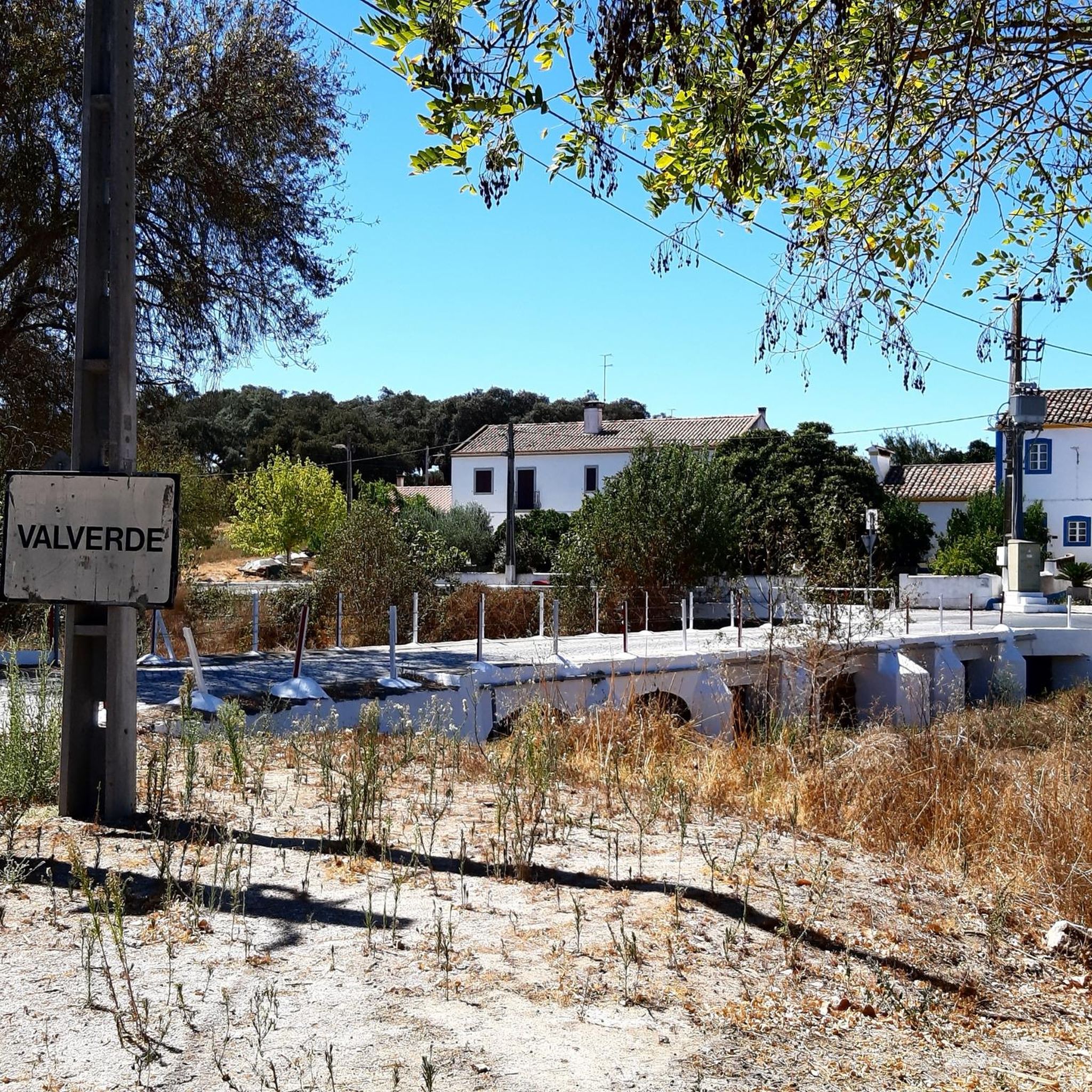
Great Dolmen of Zambujeiro (Portuguese: Anta Grande do Zambujeiro) is a megalithic monument located in Nossa Senhora da Tourega, near Valverde, in the municipality of Évora, considered one of the biggest such structures in the Iberian Peninsula.
5
1
Anta Grande do Zambujeiro, also known as Anta Grande do Zambujeiro de Valverde, is a megalithic dolmen-type monument near Valverde, Évora, Alentejo, Portugal, one of the largest in the Iberian Peninsula. A large number of archaeological finds found during the excavations are housed in the Évora Museum. Anta Grande do Zambujeiro was declared a National Monument in 1971 by decree law 516/71 of 22 November.
5
1
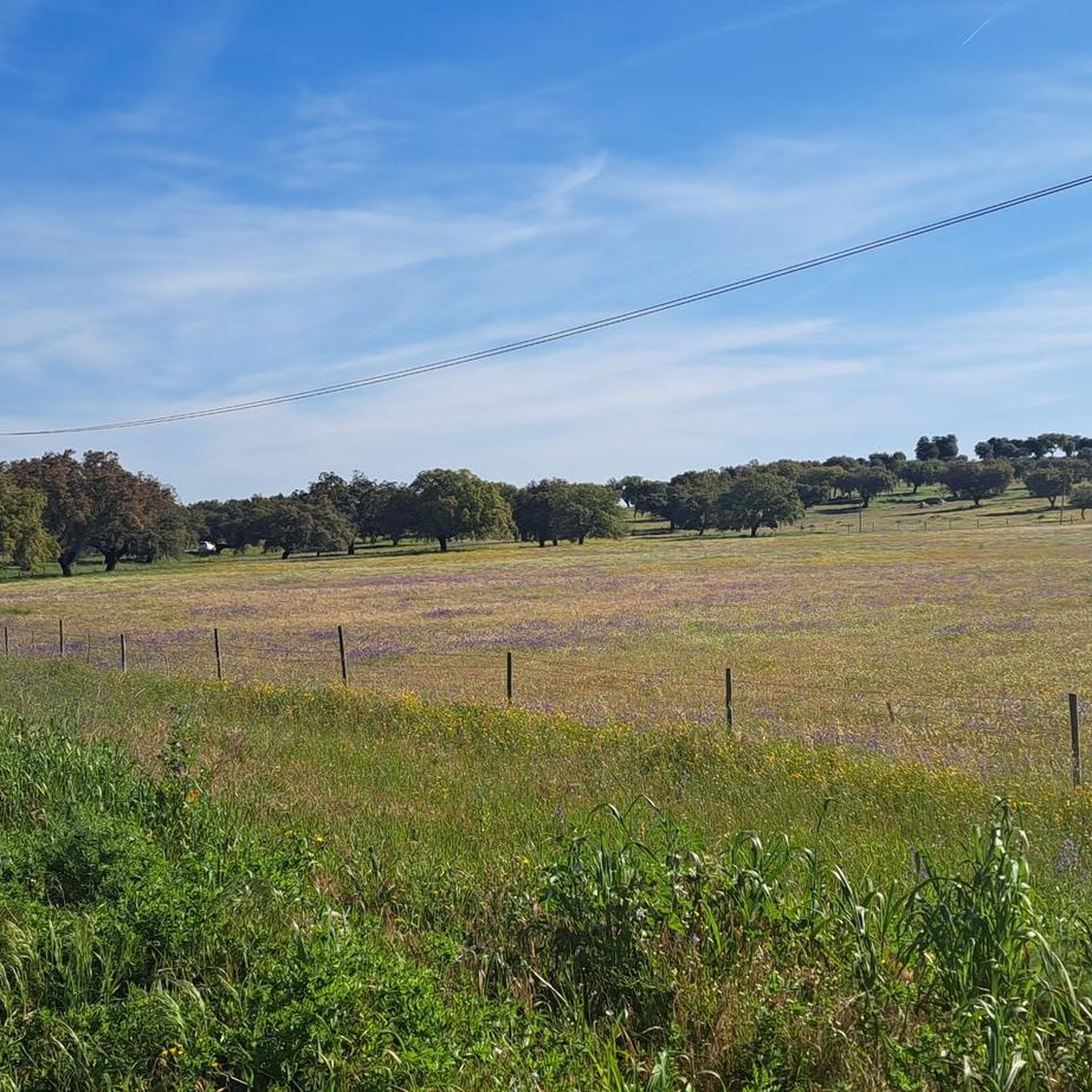
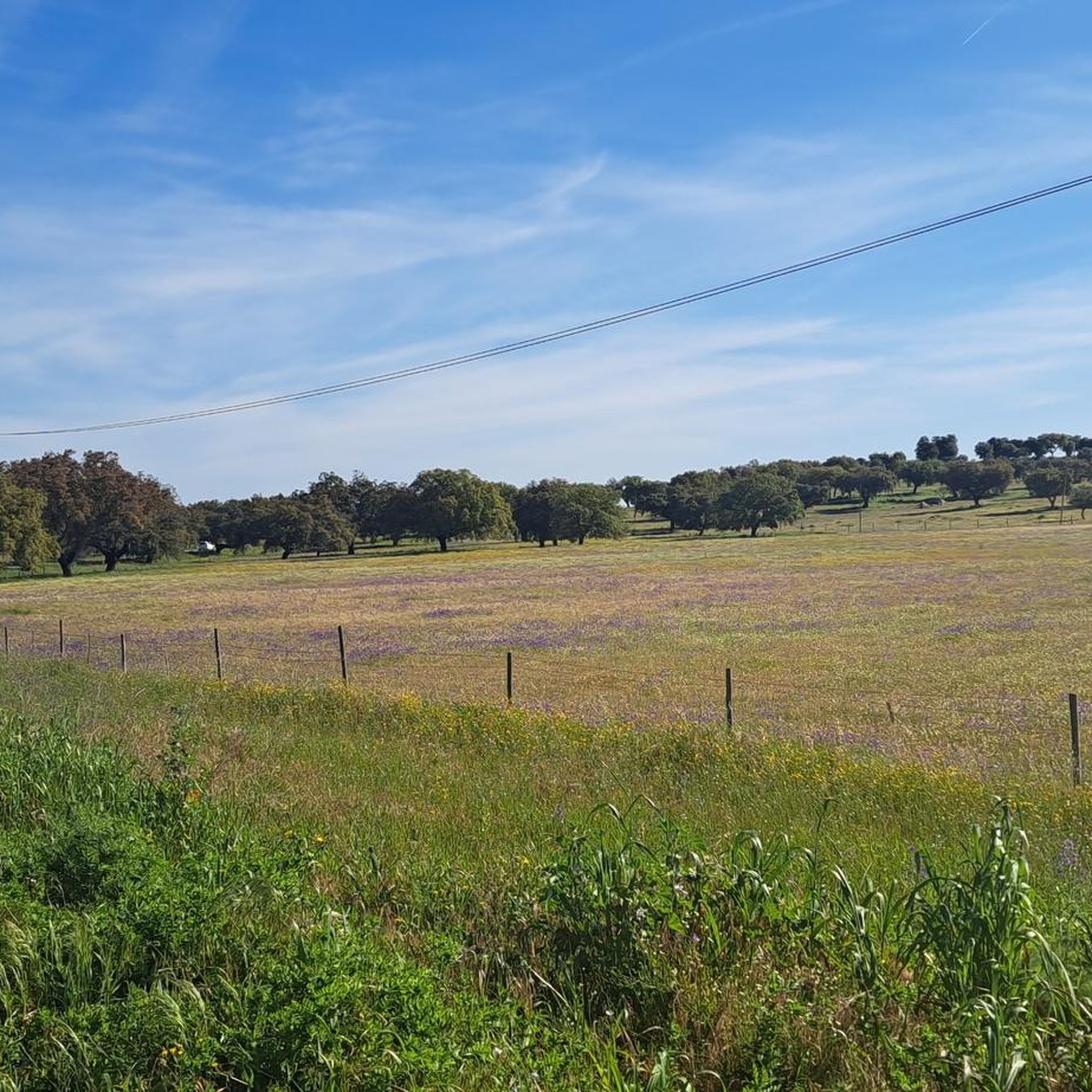
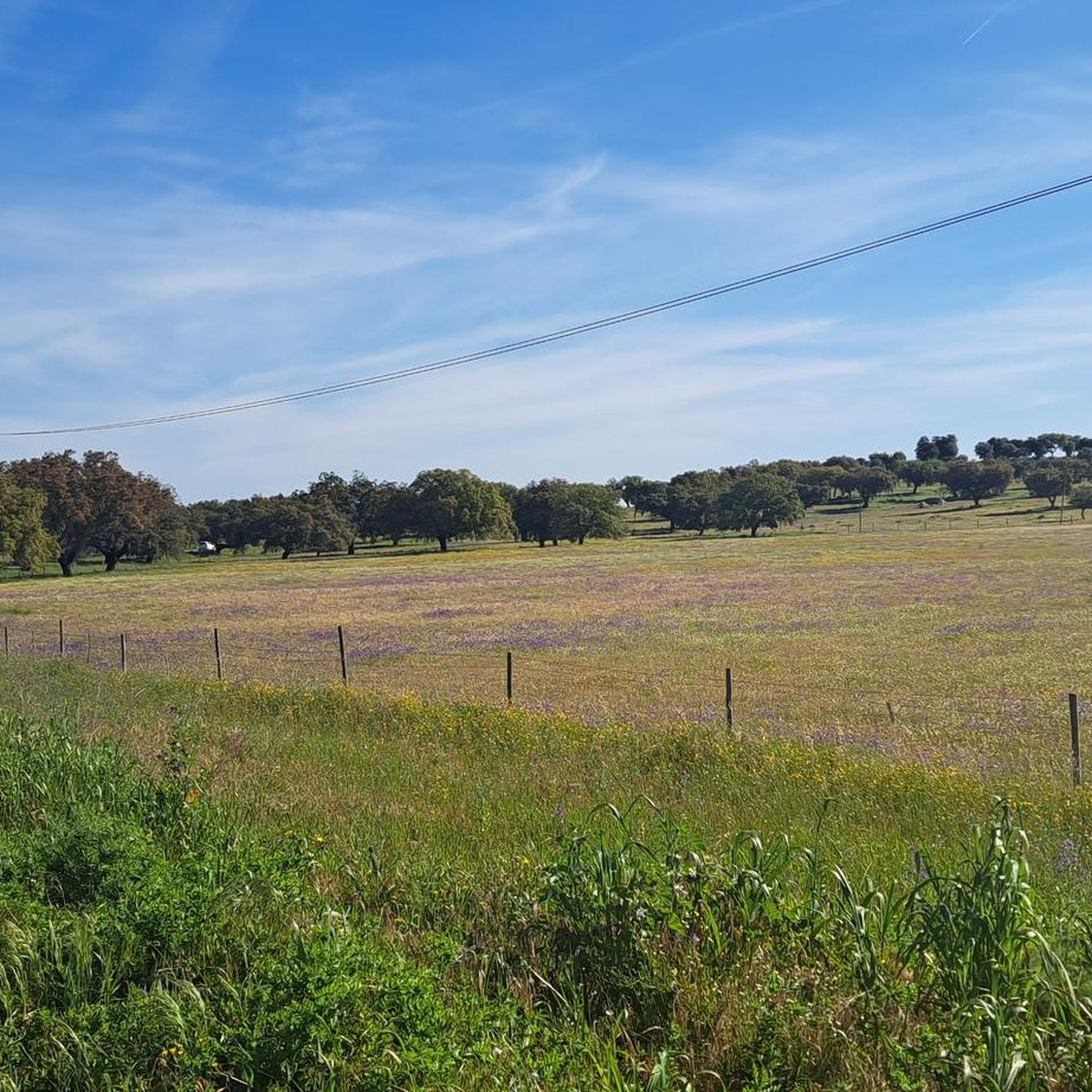
The Montado is an agrosilvopastoral system explored at several levels – trees, bushes and herbs – according to the potential of each region. On the tree level it can be made up of oaks like cork oak (Quercus suber), holm oak (Q. rotundifolia) and less frequently pyrene oak (Q. pyrenaica) and portuguese oak (Q. faginea), in pure or mixed populations with variable densities. The ground cover is occupied by pastures used by cattle or is used for dry land crops on a rotation system. The natural pastures can be occupied by shrubs, in variable proportions. Humans are an integral and fundamental part of this ecosystem. It was through our clearing action that the montados were created, ever since we started intervening on our natural surroundings. Human management is necessary, in a more or less intensive way, in order to maintain the montado. Without this intervention, the system evolves, naturally to form a dense forest, where people have more difficulty obtaining resources. The way this process of transformation of the Mediterranean forest developed influenced the structure of the system as it presents today. Some older practices still persist, now without context, making more difficult the adaptation of the system to the new ways of agrarian production. Other ways emerged, some well adapted to the system, other causing more or less serious disturbances. The montado is a system for using the soil developed on a physical background that involves climate, pedological and geomorphological factors with specific characteristics. It is why this ecosystem is restricted to such a limited area, when compared to other ecosystems in our planet.
5
0
Typical Alentejo farm. Private property. Not open to visitors...
3
0
Frequently Asked Questions
What are the most significant natural and archaeological sites to visit around Nossa Senhora Da Tourega?
The region is renowned for its impressive megalithic structures and natural landscapes. Key sites include the Almendres Cromlech, one of Europe's oldest and largest megalithic ensembles, and the Great Dolmen of Zambujeiro, one of the largest dolmens on the Iberian Peninsula. You can also find the Almendres Menhir nearby, an impressive standing stone with ancient carvings.
What makes the Almendres Cromlech a must-see attraction?
The Almendres Cromlech is a truly remarkable site, predating Stonehenge by more than 1000 years. It consists of nearly 100 standing stones arranged in circular and elliptical formations, with some featuring ancient carvings. Visitors often describe it as a profoundly significant archaeological site with a spiritual atmosphere, set amidst peaceful cork and holm oak trees. It offers a unique glimpse into early human civilization and astronomical observations.
Can you tell me more about the Great Dolmen of Zambujeiro?
The Great Dolmen of Zambujeiro is one of the largest dolmens on the Iberian Peninsula, built between approximately 4000 B.C. and 3500 B.C. It served as a cemetery and possibly for religious purposes. Its massive vertical stones and large capstone are a testament to the engineering prowess of its ancient builders. Many archaeological finds from this site are housed in the Évora Museum.
Are there any unique natural features besides the megalithic sites?
Yes, beyond the ancient stone monuments, the region features beautiful cork oak forests, which are part of the Montado ecosystem. You can also visit the Barragem da Tourega (Tourega Dam), which creates a tranquil reservoir offering expansive water views and opportunities for peaceful walks and birdwatching. These natural settings provide a serene backdrop to the historical sites.
Are there hiking opportunities near these natural monuments?
Absolutely. The area around Nossa Senhora Da Tourega offers various hiking trails that allow you to explore the natural and historical landscape. For instance, you can find routes like the 'Megalithic Circuit of Évora' or a loop connecting the Almendres Menhir and Almendres Cromlech. You can discover more hiking options on the Hiking around Nossa Senhora Da Tourega guide.
What kind of cycling routes are available in the Nossa Senhora Da Tourega area?
The region provides several road cycling routes for those looking to explore on two wheels. Routes vary in distance and difficulty, such as the 'Valverde – Évora City Walls loop' or longer rides like the 'Checkpoint 3, Évora – View of Alqueva Reservoir loop'. For detailed information and route options, check out the Road Cycling Routes around Nossa Senhora Da Tourega guide.
Are there easy walking trails suitable for beginners or families?
Yes, there are several easy walking trails in the area perfect for beginners or families. For example, the 'Almendres Cromlech loop from Almendres Cromlech' is an easy 5 km route. Many trails around Évora, such as loops from Giraldo Square, are also considered easy. You can find more options in the Easy hikes around Nossa Senhora Da Tourega guide.
What is the best time of year to visit the natural monuments in Nossa Senhora Da Tourega?
The best time to visit is generally during the spring (March to May) or autumn (September to November). During these seasons, the weather is milder and more pleasant for exploring the outdoor sites. Summers can be very hot, and winters can be cooler and wetter, which might impact the comfort of your visit.
Is there parking available at the major natural monuments?
Parking is generally available near the major megalithic sites like the Almendres Cromlech and the Great Dolmen of Zambujeiro. While some approach roads, especially to the Cromlech, might be unpaved for the last few kilometers, they are typically accessible by car. Specific parking details might vary, so it's always good to check local signage upon arrival.
What do visitors enjoy most about the natural monuments around Nossa Senhora Da Tourega?
Visitors frequently praise the profound historical significance and the serene, unspoiled natural environment. The sheer age and scale of sites like the Almendres Cromlech and the Great Dolmen of Zambujeiro leave a lasting impression. Many appreciate the quiet beauty of the cork oak forests and the opportunity to step back in time, experiencing a unique blend of archaeology and nature.
Are there any facilities like cafes or restaurants near the natural monuments?
The natural monuments are often situated in rural settings, so direct facilities like cafes or restaurants immediately adjacent to the sites are limited. It's advisable to plan your visit with this in mind, perhaps bringing snacks and water. The nearby city of Évora offers a wide range of dining options and amenities, which are a short drive away.
How long should I allocate to visit the main natural monuments?
To fully appreciate the main sites like the Almendres Cromlech, Almendres Menhir, and the Great Dolmen of Zambujeiro, it's recommended to allocate at least half a day. This allows for travel between sites, ample time for exploration, and enjoying the surrounding natural landscapes without feeling rushed. If you plan to hike, you'll need to extend your visit accordingly.
Most popular routes around Nossa Senhora Da Tourega
Most popular attractions around Nossa Senhora Da Tourega

Get inspired with the komoot mobile app


Explore more
Extend your search for the best caves by checking out these guides of the top ones around Nossa Senhora Da Tourega:
