Top 7 Natural Monuments around Bela
Natural monuments around Bela showcase a landscape where human history and natural features intertwine. The region features ancient archaeological sites, elevated viewpoints, and unique agricultural formations. These locations offer insights into the area's past and provide diverse natural settings. The terrain includes summits and historical hillforts, indicating a varied topography.
Best natural monuments around Bela
- The most popular natural monument is Terraced Fields of the Vez Valley, a natural monument that represents a significant relationship between human activity and…
Last updated: June 30, 2026
Terraced Fields of the Vez Valley
Highlight (Segment) • Structure
Translated by Google •
Tip by

Alto San Nomedio Summit and Hermitage
Highlight • Summit
Translated by Google •
Tip by

Sign up now to discover places like this
Get recommendations on the best single tracks, peaks, & plenty of other exciting outdoor places.
Sign up for free
A Coutada Petroglyphs
Highlight • Historical Site
Translated by Google •
Tip by

On the terraces of the Vez Valley
Highlight (Segment) • Structure
Translated by Google •
Tip by
Castro de Lira and Chapel of San Amaro
Highlight • Historical Site
Tip by

Sign up for free to discover even more natural monuments around Bela.
Sign up for free
Already have an account?
Start today with a free account
Your next adventure awaits.
Login or Signup

Tips from the Community

Locally known as socalcos, these are platforms built on granite walls to utilize steep slopes and transform them into farmland. This ancient method allowed for the production of grain and pasture in an extremely mountainous environment. The Sistelo cultural landscape, comprised of these terraces, is recognized as a National Monument.
4
0

Between Padrão and Porta Cova, the terraces of the Vez Valley wind their way down the hillside like ancient steps carved into the mountain. Created by human hands to tame the earth, today they offer a magical setting for running: a path of ancient, irregular slabs that tests you and fills your eyes. Here, each step echoes ancient stories. It is no coincidence that this rural wonder was consecrated as one of the “7 Wonders of Portugal”.
2
1
The terraces of the Vez Valley, between Padrão and Porta Cova, are a masterpiece of the relationship between man and nature. Created by our ancestors to cultivate the land and ensure their livelihood, they change with each season, painting the landscape with ever-new colors. It is no wonder that this unique landscape was elected one of the “7 Wonders of Portugal” in the Rural Village category.
1
0

high with views and climb to pre iosa, stellar observatory and chapel
0
0

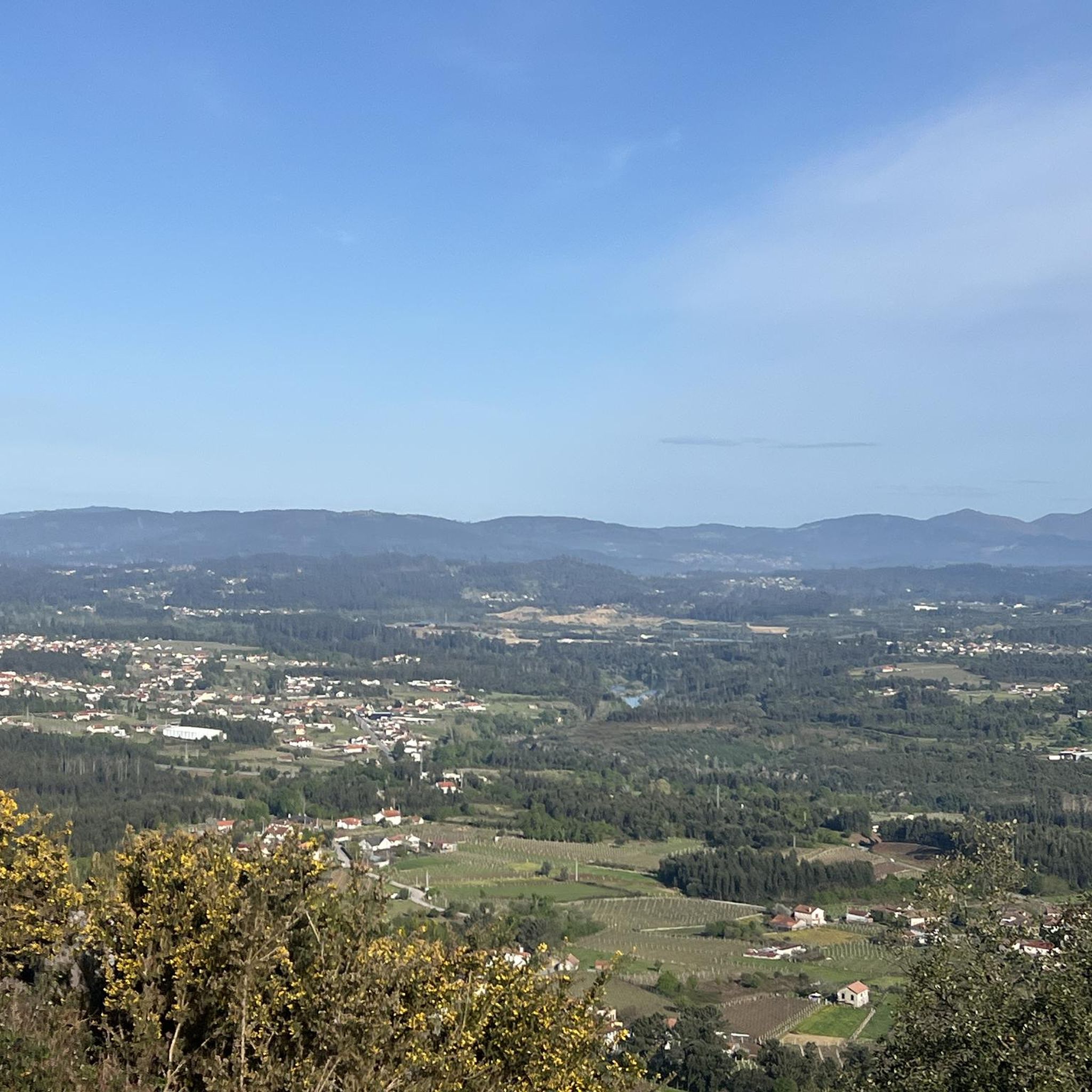
The top of Alto San Nomedio (Coto Grande) at 690m altitude. At the same top we will find the hermitage of San Nomedio and spectacular views
1
0
The Concello de As Neves has a rich natural and cultural heritage. Among its main archaeological resources is one of the main petroglyph stations in Galicia.
9
0

The Concello of As Neves suffered devastating fires in October 2017. The fires destroyed 90% of the forest, all of San Domenio as well as the neighboring mountains were completely burned. However, after this ecological disaster, one of the most important archaeological discoveries of the last twenty years came to light, known as the petroglyphs of A Coutada , in Taboexa. Located in the parish of Taboexa, whose past is full of archaeological finds. Its petroglyphs, its mythical and legendary Castro Altamira, and its Roman presence (Note: bronze figure of the god Mercury found at the Capela San Bartolome) and many other discoveries make this parish a place without equal. Reference: Galicia Máxica https://www.galiciamaxica.eu/galicia/petroglifos-as-coutadas-taboexa/
2
0
Castro de Lira is located on one of the peaks that form the Monte da Costa and is the highest of an iron age fort (castro). There isn’t much left to see but the vistas are quite nice. Cut into the rock there is an altar and close by several deep bowls cut into the rock. The early inhabitants the “os mouros”, held rituals here and like most other pagan places of worship it was in the 18th century Christianized with a chapel. On January 15, during the celebration of San Amaro, a priest fills the historic basins with water to bless the surrounding farmlands, surely a similar tradition inherited from centuries ago. It is said that there were passageways at the top of San Amaro but the neighbors decided to plug them to prevent the cattle from falling into them. The baroque chapel is very simple. It has a quadrangular plan, a gabled roof and a facade formed by a lintel door and two windows on both sides. Two pinnacles on the sides and a simple belfry adorned with a Latin cross on top.
2
0
Frequently Asked Questions
What types of natural monuments can I explore around Bela?
The natural monuments around Bela offer a blend of human history and natural features. You can discover unique agricultural formations like the Terraced Fields of the Vez Valley, historical sites such as the A Coutada Petroglyphs, and elevated viewpoints like the Alto San Nomedio Summit and Hermitage, which provide expansive views.
Are there any historical or archaeological natural monuments in the Bela region?
Yes, Bela is rich in historical natural monuments. You can visit the A Coutada Petroglyphs, a significant archaeological discovery featuring one of the main petroglyph stations in Galicia. Another notable site is Altamira Hillforts, a site with a castrexo settlement that dates back over two thousand years. Additionally, Castro de Lira and Chapel of San Amaro combines an Iron Age fort with a historic chapel.
Which natural monuments offer the best viewpoints around Bela?
For spectacular views, head to the Alto San Nomedio Summit and Hermitage, which stands at 690 meters altitude and offers panoramic vistas. The Castro de Lira and Chapel of San Amaro also provides nice views from its location on one of the peaks of Monte da Costa. The Altamira Hillforts, situated on a 328-meter mound, offers a unique perspective of the surrounding landscape.
Can I go hiking near the natural monuments around Bela?
Absolutely! The Bela region offers numerous hiking opportunities. You can find various routes, including easy and moderate options, that allow you to explore the natural monuments and surrounding areas. For more details on routes, check out the Hiking around Bela guide.
Are there family-friendly hiking trails near Bela's natural monuments?
Yes, there are several easy hiking trails suitable for families near Bela's natural monuments. For example, the 'A Coutada Petroglyphs loop from A Lomba' is an easy 4.45 km route. You can find more easy options in the Easy hikes around Bela guide.
What makes the Terraced Fields of the Vez Valley a significant natural monument?
The Terraced Fields of the Vez Valley are considered a masterpiece of the relationship between humans and nature. These terraces were created by ancestors for cultivation and change colors with each season, painting the landscape with ever-new hues. This unique landscape was even elected one of the “7 Wonders of Portugal” in the Rural Village category.
What outdoor activities, besides hiking, can I do near these natural monuments?
Beyond hiking, the Bela region is excellent for cycling. There are routes for various difficulty levels, including the 'Minho River Ecopista' for an easy ride or more challenging routes like 'Fortress of Valença loop from As Neves'. Explore these options in the Cycling around Bela guide.
What is the best time to visit the natural monuments around Bela?
The natural monuments around Bela, particularly the terraced fields, display changing colors with each season. This suggests that the region offers beauty year-round. For hiking and cycling, spring and autumn generally provide pleasant weather, while summer can be ideal for enjoying the views, though it might be warmer.
Are there any natural features related to water in the broader Bela region?
While the specific natural monuments in this guide focus more on historical and agricultural landscapes, the broader Bela region (referring to areas like Bela Krajina in Slovenia or Brela in Croatia) is known for significant water features. These include the picturesque Krupa River Spring and Kolpa River in Bela Krajina, or the beautiful beaches and crystalline sea in Brela, Croatia. However, the natural monuments highlighted in this guide are not directly associated with these specific water bodies.
What do visitors enjoy most about the natural monuments around Bela?
Visitors particularly appreciate the unique blend of natural beauty and rich cultural heritage. The Terraced Fields of the Vez Valley are admired for their seasonal color changes and the ingenuity of their creation. The Alto San Nomedio Summit and Hermitage is loved for its spectacular views, while the A Coutada Petroglyphs offer a fascinating glimpse into ancient history.
Are the natural monuments around Bela suitable for dog owners?
While specific dog-friendly policies for each individual natural monument are not detailed, many outdoor areas and trails in the region are generally accessible for dogs, especially on leash. When planning your visit, it's always a good idea to check local regulations for specific sites or protected areas to ensure a pleasant experience for both you and your dog.
What kind of geological wonders can be found in the Bela region?
The natural monuments highlighted in this guide, such as the Alto San Nomedio Summit and the hillforts, showcase the region's varied topography. While not strictly 'geological wonders' in the sense of caves or unique rock formations like those found in other 'Bela' regions (e.g., Suchá Belá Gorge in Slovakia or Zmajevaca Pit in Brela), the landscape itself, with its summits and historical hillforts, offers interesting geological formations that have been shaped over time.
Most popular routes around Bela
Most popular attractions around Bela

Get inspired with the komoot mobile app


Explore more
Extend your search for the best caves by checking out these guides of the top ones around Bela:
