Top 3 Natural Monuments around Bustelo
Best natural monuments around Bustelo are found in a region characterized by its diverse natural landscapes and historical significance. The area features river valleys, mountain passes, and ancient sites, reflecting a long interaction between human activity and the natural environment. This region offers opportunities to explore ecological systems, geological formations, and historical landmarks.
Best natural monuments around Bustelo
- The most popular natural monument is Path along the Bestança, a trail that descends through the valley of the River Bestança,…
Last updated: June 30, 2026
Path along the Bestança
Highlight (Segment) • Trail
Translated by Google •
Tip by

Portas de Montemuro
Highlight • Mountain Pass
Translated by Google •
Tip by
Sign up now to discover places like this
Get recommendations on the best single tracks, peaks, & plenty of other exciting outdoor places.
Sign up for free
Cabrum Natural Pools
Highlight • Lake
Translated by Google •
Tip by

Menhir of Marco da Jogada
Highlight • Monument
Translated by Google •
Tip by
Rio Paiva
Highlight • River
Translated by Google •
Tip by

Start today with a free account
Your next adventure awaits.
Login or Signup
Popular around Bustelo

Tips from the Community

A bridge over the Paiva River that can be crossed by bicycle. On the Vila Nova village side, there is a very steep climb.
0
0
A bridge over the Paiva River connecting the banks between the villages of Reriz and Vila Nova.
0
0

At Portas de Montemuro, the landscape stretches out without limits. Here, tables and benches invite you to take a break and enjoy the view, while the national road 321, popular with cyclists, marks the 1,215 metres of altitude. The highest peak of the Montemuro mountain range, at 1,381 metres, is nearby, to the east. Nearby, the ruins of the Wall of Portas de Montemuro preserve echoes of a distant past. Mentioned in the Inquiries of 1258, they reveal traces of an ancient fortified settlement from the Iron Age, possibly linked to the Castro culture. Later, the site was reused by the Romans and, at the time of the Reconquista, by D. Afonso Henriques, the first king of Portugal.
0
0
On the vast plateaus of Montemuro, time can be seen in stone. Between moss-covered mounds, solitary menhirs and ancient sacred circles, the landscape tells stories that date back to prehistoric times. Near the wind farm, this ancient presence lives on. The Marco da Jogada and the tombs next to the chapel of São Pedro do Campo are just some of the landmarks that unite past and present.
1
0
At Portas de Montemuro, the landscape stretches out without limits. Here, tables and benches invite you to take a break and enjoy the view, while the national road 321, popular with cyclists, marks the 1,215 metres of altitude. The highest peak of the Montemuro mountain range, at 1,381 metres, is nearby, to the east. Nearby, the ruins of the Wall of Portas de Montemuro preserve echoes of a distant past. Mentioned in the Inquiries of 1258, they reveal traces of an ancient fortified settlement from the Iron Age, possibly linked to the Castro culture. Later, the site was reused by the Romans and, at the time of the Reconquista, by D. Afonso Henriques, the first king of Portugal.
1
0
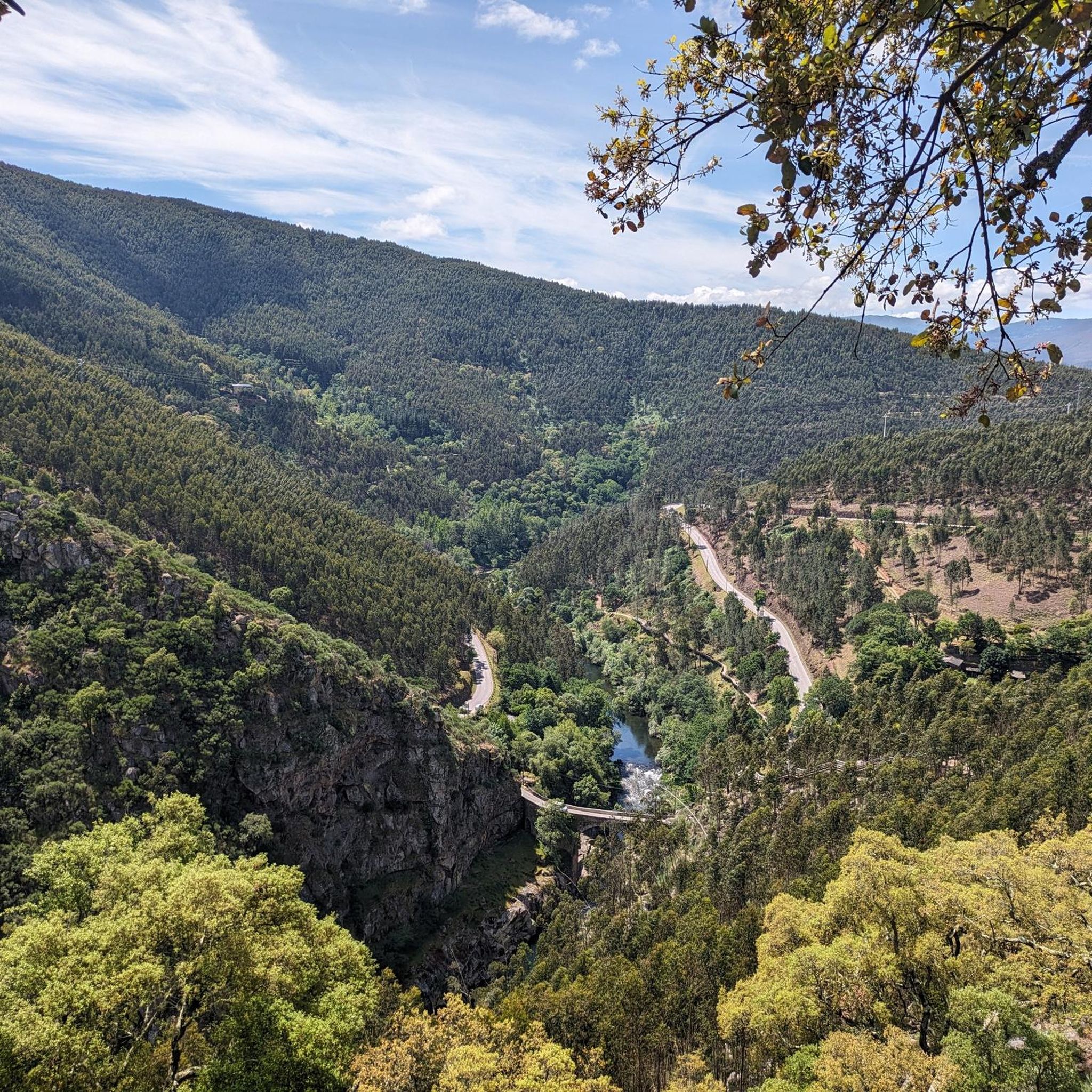
This path descends through the valley of the River Bestança along one of the old roads that lead to the Prado area. The Bestança rises at Portas de Montemuro and flows into the Douro: 13.5 kilometres of crystal-clear water, it is one of the purest rivers in Europe. Its ecological balance sustains otters, trout and genets, while since ancient times, mills scattered throughout the valley have used its waters to grind cereals, especially corn, preserving a valuable rural heritage.
1
0
On the imposing plateaus of Montemuro, the landscape bears traces of human presence over the centuries. Here, among the first stone constructions in the region, there are prehistoric tombs, solitary menhirs and ancient sacred sites, such as cromlechs. Here, near the wind farm, these traces of the past still echo. The Marco da Jogada and several mounds near the chapel of São Pedro do Campo are testament to this heritage. Interestingly, the sacred remains in these heights, where modern chapels stand not far from these ancient necropolises.
1
0

A beautiful discovery on the edge of the EN222. Easily accessible natural pools with fresh running water (so-called wells). On foot it is possible to advance up the river to a waterfall. There is a picnic area nearby and a drinking fountain in the parking lot on the opposite side of the road.
2
0
Frequently Asked Questions
What kind of natural features can I expect to see around Bustelo?
The region around Bustelo is characterized by diverse natural landscapes. You can explore river valleys, such as the one carved by the pure waters of the River Bestança, and impressive mountain passes like Portas de Montemuro, which offers expansive views. The area also features natural pools and ancient forests.
Are there any historical or archaeological sites among the natural monuments?
Yes, several natural monuments in the Bustelo area also hold significant historical value. Portas de Montemuro, for instance, features ruins of an ancient fortified settlement from the Iron Age, later reused by Romans. The Menhir of Marco da Jogada is another site showcasing prehistoric tombs, solitary menhirs, and ancient sacred circles, reflecting human presence dating back millennia.
What are some popular trails or paths to explore these natural monuments?
One of the most popular trails is the Path along the Bestança, which descends through the valley of the River Bestança. This trail allows you to experience one of Europe's purest rivers and its ecological balance, along with ancient mills scattered throughout the valley.
Are there family-friendly natural monuments or activities in the area?
Absolutely. The Cabrum Natural Pools are easily accessible and family-friendly, offering fresh running water for swimming and a nearby picnic area. You can also explore further up the river to a waterfall, making it a great spot for a day out with children.
What kind of wildlife can be spotted near the natural monuments?
The ecological balance of the River Bestança, for example, sustains diverse wildlife. Visitors might spot otters, various species of trout, and genets. The region's natural environments are home to a variety of local flora and fauna.
What outdoor activities can I do near these natural monuments?
Beyond exploring the natural monuments themselves, the Bustelo area is excellent for cycling. You can find various routes for both road cycling and general touring. For example, there are challenging road cycling routes like the 'Portas de Montemuro – Serra de Montemuro loop' or scenic cycling tours such as the 'Rio Paiva – Ermida do Paiva loop'. You can find more details on these and other routes in the Road Cycling Routes around Bustelo and Cycling around Bustelo guides.
Where can I find expansive views of the landscape?
For breathtaking panoramic views, head to Portas de Montemuro. This mountain pass, at 1,215 meters of altitude, offers an unobstructed landscape stretching out without limits. It's an ideal spot to take a break and enjoy the scenery.
Is there a place to swim or cool off during warmer months?
Yes, the Cabrum Natural Pools provide easily accessible natural pools with fresh running water, perfect for cooling off. There's also a picnic area nearby, making it a pleasant spot to spend a warm day.
What is the significance of the River Bestança?
The River Bestança is renowned for its crystal-clear water, making it one of the purest rivers in Europe. Its ecological balance supports diverse wildlife, and historically, its waters powered numerous ancient mills scattered throughout the valley, preserving a valuable rural heritage.
Are there any ancient stone structures or megaliths to see?
Yes, the Menhir of Marco da Jogada is a notable site where you can observe ancient stone structures. The area features solitary menhirs, prehistoric tombs, and ancient sacred circles, offering a glimpse into the region's distant past and early human settlements.
What do visitors enjoy most about the natural monuments around Bustelo?
Visitors particularly appreciate the pristine natural beauty, the opportunity to connect with nature, and the historical depth of the sites. The crystal-clear waters of the River Bestança, the refreshing Cabrum Natural Pools, and the expansive views from Portas de Montemuro are frequently highlighted as memorable experiences.
Can I cycle near the natural monuments?
Yes, cycling is a popular activity. The national road 321, which passes through Portas de Montemuro, is particularly popular with cyclists. There are also various cycling routes that incorporate natural monuments and scenic landscapes, as detailed in the Cycling around Bustelo guide.
Most popular routes around Bustelo
Most popular attractions around Bustelo

Get inspired with the komoot mobile app


Explore more
Extend your search for the best caves by checking out these guides of the top ones around Bustelo:
