Top 4 Natural Monuments in Brückerwald
Natural monuments in Brückerwald offer a tangible connection to the region's history and ecological significance. This area features distinct natural features and landmarks, including ancient burial sites and historically significant trees. Brückerwald provides opportunities to explore both natural landscapes and cultural heritage. The region's natural monuments are well-preserved points of interest for visitors.
Best natural monuments in Brückerwald
- The most popular natural monument is Quartz Mining Information Point, a man-made monument that provides details on the region's geological past.…
Last updated: June 30, 2026
Quartz Mining Information Point
Highlight • Monument
Translated by Google •
Tip by

Siebenbürgen Burial Mounds
Highlight • Historical Site
Translated by Google •
Tip by
Sign up now to discover places like this
Get recommendations on the best single tracks, peaks, & plenty of other exciting outdoor places.
Sign up for free
Vespereiche (Lunch Oak)
Highlight • Natural Monument
They almost always owe their existence to their former function as snack trees, dating back to the days when numerous farmhands and maids worked in the fields …
Translated by Google •
Tip by
Vesper Oak
Highlight • Natural Monument
They almost always owe their existence to their former function as vesper trees from the times when the numerous farmhands and maids did their work in the …
Translated by Google •
Tip by
Start today with a free account
Your next adventure awaits.
Login or Signup
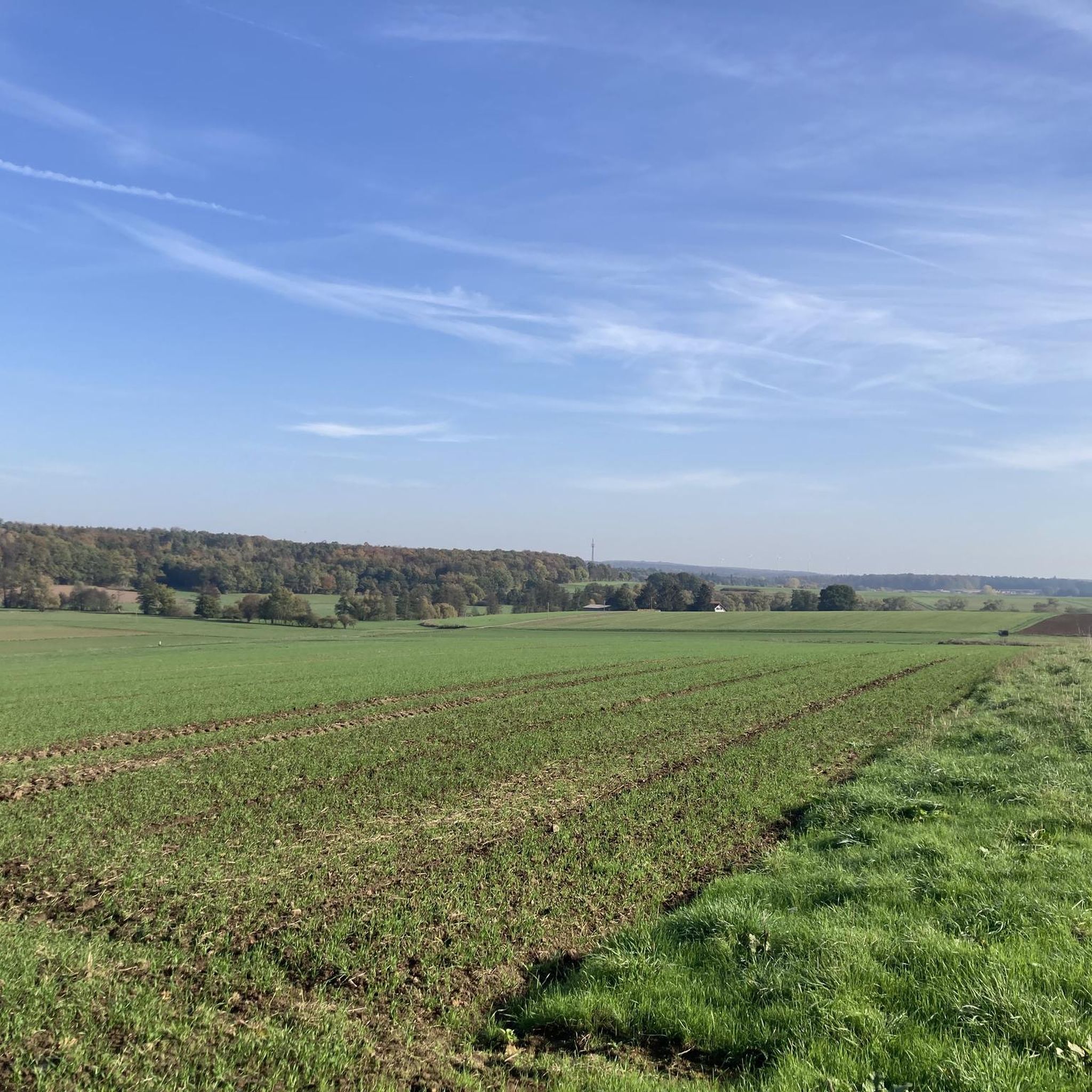

Tips from the Community

A solitary tree! They almost always owe their existence to their former function as snack trees, dating back to the days when numerous farmhands and maids worked in the fields and gathered for refreshment breaks in the shade of the trees, where they were provided with food and drinks from their respective farms. The name "coffee trees," commonly used in the Schwalm region, has been retained for some of these tree shapes to this day. These "coffee trees" were mostly linden and oak trees. Since the advancement of technology and mechanization in agriculture has long since replaced the work of farmhands and maids, the solitary trees have also lost their original significance. In many cases, plowing too close to the rootstock contributes to the premature aging of the trees. Source: https://www.kulturpfade-schwalm.de/orte/baumsolitaere.html
5
0

A solitaire tree! They almost always owe their existence to their former function as vesper trees from the times when the numerous farmhands and maids did their work in the fields and came together in the shade of the trees for refreshment breaks and were provided with food and drinks from their respective farms. The common name “coffee tree” in Schwalm has been preserved to this day for some of these tree shapes. Most of the “coffee trees” were linden and oak trees. Since technology and mechanization in agriculture have long since replaced the work of farmhands and maids, the solitary trees have also lost their original meaning. Plowing too close to the rootstock often contributes to premature aging of the trees. Source: https://www.kulturpfade-schwalm.de/orte/baumsolitaere.html
5
0
The early medieval burial mound "Transylvania" is located here. It probably dates back 1300 years. Approximately from the time when Bonifatius visited Amöneburg. The archaeological monument has 25 burial mounds. You can already see the small unnatural hills from the path. The name "Transylvania" is probably the name for "Seven Mountains". Seven in the sense of many. One, two, three, lots!
5
0
Quartzites (rocks of the year 2012) are sedimentary rocks. The mineral quartz is very hard and weather-resistant. Due to the warm, humid climate in the Tertiary, about 40 million years ago, a special quartzite was formed here. Tertiary quartzite was mined in the Bridge Forest until the 1950s.
5
0
Come here and find out more. Interesting.
5
0
Go there and read. Interesting!
4
0
Frequently Asked Questions
What historical natural monuments can I explore in Brückerwald?
Brückerwald is home to significant historical natural monuments. You can visit the Siebenbürgen Burial Mounds, an early medieval archaeological site with 25 visible mounds dating back approximately 1300 years. Another notable site is the Quartz Mining Information Point, which details the region's geological past and the history of quartzite mining until the 1950s.
Are there family-friendly natural monuments in Brückerwald?
Yes, several natural monuments in Brückerwald are suitable for families. The Quartz Mining Information Point offers an educational experience about the region's geology. Both the Vespereiche (Lunch Oak) and the Vesper Oak are solitary trees that provide picturesque spots for contemplation and are generally easy to access, making them pleasant stops for families.
What kind of natural features can I expect to see among Brückerwald's natural monuments?
You'll encounter a mix of natural and historically significant features. The Siebenbürgen Burial Mounds present unique, small, unnatural hills within a forest setting. The Vespereiche (Lunch Oak) and the Vesper Oak are majestic solitary trees, embodying natural beauty and cultural heritage. The Quartz Mining Information Point highlights geological formations related to quartzite.
Are there hiking trails near the natural monuments in Brückerwald?
Absolutely! Brückerwald offers various hiking opportunities near its natural monuments. You can find routes like the 'Kreuz und Quer (Cross and Across) Geotour' or shorter, easy loops such as 'Brückerwald – Construction trailer in the Brückerwald loop'. For more details and a wider selection of trails, check out the Hiking in Brückerwald guide.
Can I go cycling near the natural monuments in Brückerwald?
Yes, Brückerwald provides excellent cycling routes that pass by or are close to the natural monuments. Options range from easy loops like 'View of Amöneburg – Brücker Mill loop' to more challenging rides. For a comprehensive overview of cycling paths, explore the Cycling in Brückerwald guide or the Road Cycling Routes in Brückerwald guide.
What is the significance of the Siebenbürgen Burial Mounds?
The Siebenbürgen Burial Mounds are an early medieval archaeological monument, dating back approximately 1300 years. They consist of 25 visible burial mounds, appearing as small, unnatural hills. These mounds offer a tangible connection to ancient burial practices and the region's past, providing insight into early medieval history around the time Boniface visited Amöneburg.
What is the story behind the Vesper Oak?
The Vespereiche (Lunch Oak) and Vesper Oak are solitary trees that historically served as 'vesper trees' or 'coffee trees'. They provided shade and a gathering point for farmhands and maids during refreshment breaks in the fields. These trees embody a piece of the region's agricultural heritage and the daily lives of its past inhabitants, symbolizing endurance and connection to the land.
Is there parking available at the natural monuments in Brückerwald?
While specific parking information for each individual monument isn't detailed, natural monuments in Brückerwald are generally accessible. For popular sites and trailheads, you can often find designated parking areas nearby. It's advisable to check local signage upon arrival or consult specific route details on komoot for parking suggestions.
What is the best time of year to visit Brückerwald's natural monuments?
Brückerwald's natural monuments can be enjoyed throughout the year. Spring and autumn offer pleasant temperatures for hiking and cycling, with vibrant foliage or blooming nature. Summer is ideal for longer outdoor activities, while winter can provide a serene, snow-covered landscape, though some trails might be more challenging. Always check local conditions before your visit.
What do visitors enjoy most about the natural monuments in Brückerwald?
Visitors appreciate the unique blend of natural beauty and historical significance. The Siebenbürgen Burial Mounds are noted for their archaeological interest and distinct landscape. The Vespereiche (Lunch Oak) and Vesper Oak are valued for their cultural heritage and picturesque setting. The Quartz Mining Information Point is praised for its interesting insights into local geology and history.
Are dogs allowed on trails around the natural monuments in Brückerwald?
Generally, dogs are welcome on trails in natural areas like Brückerwald. However, it's always recommended to keep them on a leash, especially near historical sites or in areas with wildlife, and to clean up after them. Specific rules might apply to certain protected areas, so look for local signage.
What is the difficulty level of trails around Brückerwald's natural monuments?
The trails around Brückerwald's natural monuments vary in difficulty. For instance, the area around the Siebenbürgen Burial Mounds is categorized as intermediate. Many routes are easy to moderate, making them suitable for a range of fitness levels. You can find detailed difficulty ratings for specific routes in the Hiking in Brückerwald guide.
Most popular routes in Brückerwald
Most popular attractions in Brückerwald

Get inspired with the komoot mobile app


Explore more
Extend your search for the best caves by checking out these guides of the top ones in Brückerwald:
