Top 4 Mountain Passes in Copa
Best mountain passes in Copa are found within Peru's Cordillera Blanca and Huayhuash mountain ranges, offering high-altitude routes and scenic landscapes. This region is part of the Andes, characterized by its rugged peaks and remote wilderness. The area provides opportunities for exploring challenging terrain and experiencing the natural environment of the Andes.
Best mountain passes in Copa
- The most popular mountain passes is Trapecio Pass, a mountain pass with viewpoints, lakes, and natural monuments. This pass offers views at…
Last updated: July 15, 2026
Jurau Pass Descent
Highlight • Mountain Pass
Translated by Google •
Tip by

Trapecio Pass
Highlight • Mountain Pass
Translated by Google •
Tip by

Sign up now to discover places like this
Get recommendations on the best single tracks, peaks, & plenty of other exciting outdoor places.
Sign up for free
Tapush Pass
Highlight • Mountain Pass
Translated by Google •
Tip by
Ascent to Paso Tapush
Highlight (Segment) • Mountain Pass
Translated by Google •
Tip by
Ascent to Paso San Antonio
Highlight (Segment) • Mountain Pass
Translated by Google •
Tip by
Start today with a free account
Your next adventure awaits.
Login or Signup
Popular around Copa
Other adventures in Copa

Tips from the Community

Hello Mia, I'm a little confused by your comment. The Jurau Pass is not considered easy but it is a much easier and less steep alternative to the San Antonio and Santa Rosa Pass. I haven't done the tour yet (plan is next year) but I found quite a lot of information about it. I would therefore be very happy to hear back from you as to whether it is actually that demanding or whether you perhaps meant the San Antonio. Best wishes Piet
0
0

The descent from the Jurau Pass to Juraucocha is completely pathless and very steep. There are a few cairns, but not enough to orient yourself in the scree desert. The GPX track here is very imprecise. There are countless steep cliffs that must be avoided. It is possible to descend to Juraucocha, but it is very challenging. Going uphill is a lost cause without a guide.
0
0

On the way you always had great views of the surrounding mountains and you passed small shepherds' huts.
1
0
The climb from Huayllapa to the top of the pass takes a long time, but at the top you are rewarded with a great view.
0
0
The steep and strenuous climb up to Paso San Antonio (5,020 meters) is worth it. With every step the panorama gets better.
1
0
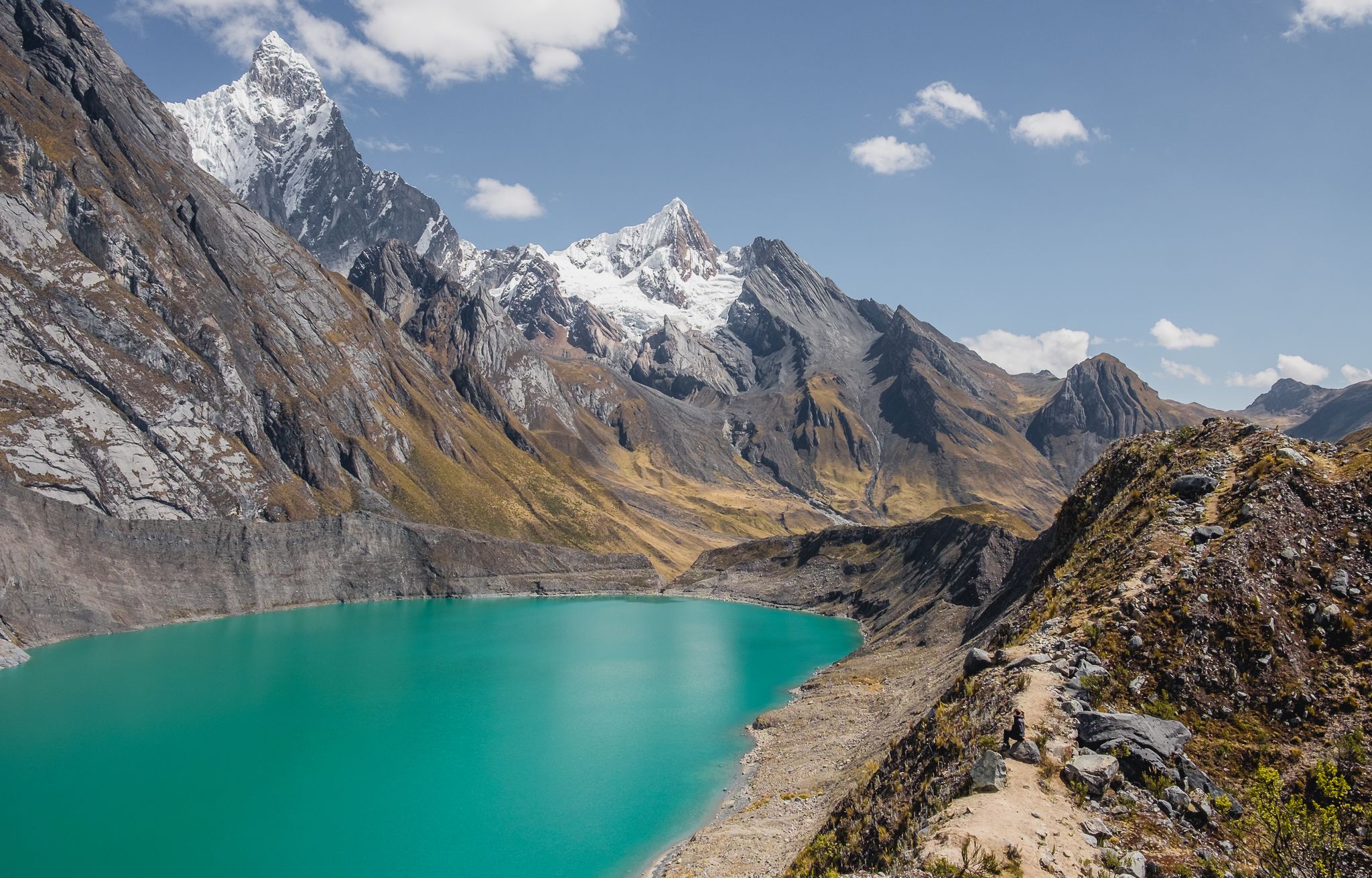
Breathtaking views await you on this 5,040 meter high mountain pass. There are bright blue lakes in the valley and a mighty glacier rises opposite.
0
0
Frequently Asked Questions
What is the general difficulty level of mountain passes in Copa?
The mountain passes in Copa, particularly those in the Cordillera Blanca and Huayhuash ranges, are generally considered challenging to intermediate. Many routes involve high altitudes, steep ascents, and can be strenuous. For example, Trapecio Pass and Ascent to Paso San Antonio are known for their challenging nature and high elevations exceeding 5,000 meters.
Which mountain passes in Copa offer the most spectacular views?
For breathtaking panoramic views, Trapecio Pass is highly recommended, offering vistas at over 5,040 meters with bright blue lakes and glaciers. The Ascent to Paso San Antonio also provides increasingly better panoramas with every step of its strenuous climb.
What kind of natural features can I expect to see around Copa's mountain passes?
The region around Copa's mountain passes is characterized by spectacular Andean landscapes. You can expect to see majestic peaks, numerous glaciers, high-altitude lakes with vibrant blue hues, and rugged, remote wilderness. The Cordillera Blanca alone boasts over 50 peaks exceeding 15,000 feet, 700 glaciers, and 300 lakes.
Are there any easy mountain passes for beginners in Copa?
Most mountain passes in the Copa region are rated as intermediate to challenging due to high altitudes and demanding terrain. While there isn't a specific 'easy' pass highlighted, routes like Tapush Pass and Ascent to Paso Tapush are described as intermediate, offering trails and viewpoints that might be more accessible than the most challenging ascents, but still require a good level of fitness and acclimatization.
When is the best time to visit the mountain passes in Copa?
The best time to visit the high-altitude mountain passes in the Cordillera Blanca and Huayhuash ranges, including those near Copa, is generally during the dry season, which runs from May to September. During these months, you can expect more stable weather, clearer skies, and less precipitation, making trekking and climbing conditions more favorable.
Are there multi-day hiking opportunities around Copa's mountain passes?
Yes, the region is renowned for multi-day trekking and mountaineering expeditions. The routes to summit peaks like Nevado Copa and traverses within the Huayhuash range often involve multi-day treks, establishing base camps and high camps. These offer immersive experiences in the high Andes.
Do I need permits to access mountain passes in the Copa region?
Yes, many of the mountain passes and trekking routes in the Copa region are located within protected areas, such as Huascarán National Park. Access to these areas typically requires permits or entrance fees. It's advisable to check with local authorities or tour operators in towns like Huaraz for the most current permit requirements before planning your trip.
What cultural experiences can I find near the mountain passes in Copa?
The Copa District, traversed by the Huayhuash mountain range, is home to indigenous citizens of Quechua descent. Visitors may encounter small shepherds' huts along trails, as mentioned near the Ascent to Paso Tapush, offering glimpses into the local way of life and a rich cultural experience.
What should I know about the descent from Jurau Pass?
The descent from Jurau Pass to Juraucocha is described as extremely challenging. It is completely pathless, very steep, and involves navigating a scree desert with numerous steep cliffs. While some cairns exist, they are often insufficient for orientation. Attempting this descent without a guide is not recommended, and going uphill from Juraucocha is considered a lost cause without expert assistance.
Are there opportunities for skiing near Copa's mountain passes?
Yes, the western slopes of Nevado Copa, a prominent mountain in the Cordillera Blanca, offer high-elevation skiing opportunities. However, visitors should be aware of potential crevasse risks and ensure they are adequately prepared and equipped for such conditions.
What makes the mountain passes in Copa unique compared to other regions?
The mountain passes in Copa are unique because they are part of the Cordillera Blanca, which is the highest tropical mountain range in the world. This offers a distinct combination of high-altitude challenges, glacial landscapes, and a rich biodiversity found only in tropical Andes environments. The region's remote wilderness and dramatic peaks also contribute to its unparalleled character.
Most popular attractions in Copa

Get inspired with the komoot mobile app


Explore more
See even more epic mountain passes by checking out these guides in Copa:
