Top 10 Natural Monuments in Bhutan
Best natural monuments in Bhutan are characterized by a landscape where over 70 percent of the country is covered in forests, offering untouched environments and rich biodiversity. The region features a variety of geographic formations, including vast glacial valleys, high mountain passes, and extensive national parks. Bhutan's natural settings often hold deep spiritual significance, with many sites serving as important pilgrimage destinations. This combination of pristine nature and cultural heritage provides diverse opportunities for exploration.
Best natural monuments in Bhutan
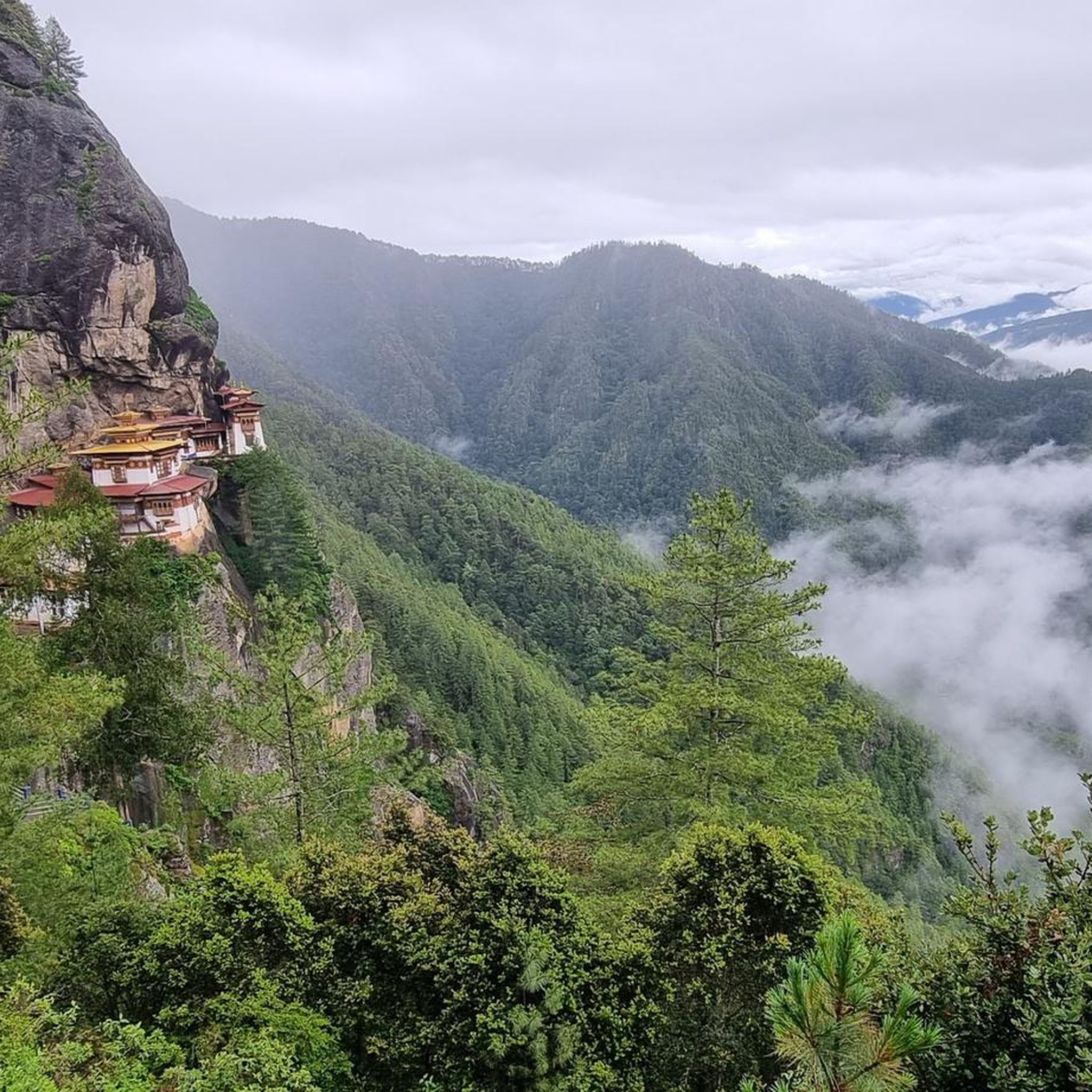
- The most popular natural monuments is Tiger's Nest Monastery (Paro Taktsang), a religious_building located on a south-facing cliff at an altitude of 3,120 meters. This Buddhist temple complex is one of Bhutan's most important pilgrimage sites, known for its dramatic setting and historical significance.
- Another must-see spot is Prayer Flags Viewpoint, a viewpoint where prayer flags are placed on windy mountain slopes. Visitors can observe the colorful flags, which represent the five elements of nature, and experience a cultural practice believed to carry prayers to heaven.
- Visitors also love Taktsang Waterfall, a waterfall that falls deep into a gorge. This 100-meter-high waterfall is encountered on the path leading to the Tiger's Nest Monastery, offering a notable natural feature along the route.
- Bhutan is known for its diverse natural monuments, including valleys, mountain passes, rivers, and national parks. These areas offer a variety of landscapes to explore, from high-altitude summits to serene lakes and dense forests.
- The natural monuments in Bhutan are appreciated by the komoot community, with 11 highlights featuring 11 photos and receiving 31 upvotes.
Last updated: August 31, 2026
Tiger's Nest Monastery (Paro Taktsang)
Highlight • Religious Site
The cave later became a holy shrine and attraction for Buddhist monks. The temple complex was founded around the cave in 1692 and has been a place of work for many great Buddhist teachers and masters over the centuries.
‘Paro Taktsang‘ was damaged by fire in 1951, burned down in 1995 and was completely rebuilt in 2005.
orientalarchitecture.com/sid/1611/bhutan/paro/taktsang-palphug-monastery
atlasobscura.com/places/paro-taktsang-tigers-nest-monastery
Translated by Google •
Tip by

Motithang Takin Preserve
Highlight • Natural Monument
The animals in the Motithang Takin Preserve were once part of a small zoo. The King of Bhutan considered it inappropriate for a Buddhist country to keep animals in captivity and released them. Since the takin did not want to leave the site, the area was declared a nature reserve.
atlasobscura.com/places/motithang-takin-preserve
en.wikipedia.org/wiki/Motithang_Takin_Preserve
Translated by Google •
Tip by
Sign up now to discover places like this
Get recommendations on the best single tracks, peaks, & plenty of other exciting outdoor places.
Sign up for free
Taktsang Waterfall
Highlight • Waterfall
Translated by Google •
Tip by
Prayer Flags Viewpoint
Highlight • Viewpoint
visitbhutan.com/page.php?id=15
Translated by Google •
Tip by
Bonte La Pass
Highlight • Mountain Pass
Translated by Google •
Tip by
Paro Chhu River
Highlight • River
Translated by Google •
Tip by
Tshophu Lakes
Highlight • Lake
Translated by Google •
Tip by
Hidden Valley (Northeast of Bonte La, Jigme Dorji National Park)
Highlight • Viewpoint
Translated by Google •
Tip by
View of Gangkhar Puensum
Highlight • Viewpoint
In the 1980s, four expeditions failed to climb the main peak. Mountaineering has been banned in Bhutan since 2003.
en.wikipedia.org/wiki/Gangkhar_Puensum
Translated by Google •
Tip by
Stupa with View of Jomolhari
Highlight • Religious Site
Translated by Google •
Tip by
Start today with a free account
Your next adventure awaits.
Login or Signup
Popular around Bhutan
Tips from the Community

Taktshang, also spelled Taktsang or Tiger's Nest, is a Buddhist monastery in the Paro Valley in the Kingdom of Bhutan. The word Taktshang is Tibetan and literally translates to "Tiger's Den." It is located at an altitude of 3,120 meters in the Himalayas and is only accessible by a hike of several hours or by mule. The monastery complex is a frequently photographed cultural landmark of the Kingdom of Bhutan. The monastery was consecrated in 1692 and includes the Taktsang Senge Samdup Cave, where, according to legend, Guru Padmasambhava meditated for three years, three months, three weeks, three days, and three hours in the 8th century. Padmasambhava, also known as the Guru with the Eight Names and holding the honorific title Rinpoche, brought Buddhism to Bhutan. The monastery is dedicated to him. Source: https://de.wikipedia.org/wiki/Taktshang
2
0
Drukpa Kunley, a religious preacher and skilled tantric practitioner, was asked by the people of Bhutan to perform a miracle. After consuming an entire cow and a goat, he joined the goat's head to the cow's skeleton, thus creating the takin. This magical animal, called Dong Gyem Tsey (Takin), became a common sight in the hills of Bhutan and was declared the national animal due to its religious significance. Source: https://www.drukasia.com/bhutan/thimphu/takin-enclosure/
2
0
Besides Gangkhar Puensum, other Himalayan peaks are also visible depending on the weather. In my case, Masang Kang (7194m) was visible.
1
0

The absolute highlight that is visited on every trip to Bhutan. The climb is quite strenuous but very worthwhile.
1
0

The high valley northeast of the ‘Bonte La’ pass is also known as the ‘Hidden Valley’. The extensive area extends over heights between approx. 4,600 and 4,750 m and is surrounded by mountain ranges with heights of over 5,000 m. In the north lies the steep edge of the Tshophu lakes.
1
0
The two Tshophu lakes are located in a side valley at an altitude of 4,380 m. Access to the lakes is from Jangothang. Trekking groups on the Jomolhari Trek continue uphill from the lakes to the Bonte La pass (4,890 m). Groups on other treks in the region, such as the ‘Snowman Trek’, make a day trek to the Tshophu lakes to acclimatise to the altitude.
1
0
A day's stage on the Jomolhari Trek leads over the high mountain pass Bonte La with an altitude of 4,890 m. The ascent usually takes place from Jangothang (4,100 m) and goes past the Tshophu lakes (4,380 m); after crossing the pass, the hike leads south down into the valley of the 'Dhumzo Chhu' and the homestead at 'Soi Yakse' (3,820 m).
1
0
The Jichu Drake and Jomolhari glaciers at an altitude of about 4,300 m are the main sources of the Paro Chhu River in the Jigme Dorji National Park. The Paro Chhu flows southeast of the city of Paro at an altitude of about 2,300 m into the Thimphu Chhu and is called the Wong Chhu, which is also known as the Raidāk River in its lower reaches. This river is a tributary of the mighty mountain stream Brahmaputra.
1
0
Frequently Asked Questions
What kind of natural landscapes can I expect to see in Bhutan?
Bhutan offers a diverse range of natural landscapes, from vast, U-shaped glacial valleys like Paro Valley and Phobjikha Valley, to high mountain passes such as Dochula Pass, and extensive national parks like Jigme Dorji National Park. Over 70 percent of the country is forested, providing untouched environments, alpine meadows, and serene rivers.
Where can I observe unique wildlife in Bhutan's natural monuments?
For wildlife enthusiasts, Phobjikha Valley is famous as the winter home of the endangered black-necked cranes. Jigme Dorji National Park is a large protected area where you might spot rare species like snow leopards, blue sheep, takin, and musk deer. The Motithang Takin Preserve offers a chance to see Bhutan's national animal, the takin, in a semi-natural habitat.
Are there any significant mountain passes offering panoramic views?
Yes, Dochula Pass, situated at 3,100 meters, provides stunning panoramic views of the eastern Himalayan mountain range on clear days, adorned with 108 stupas. Another notable pass is Bonte La Pass, which also offers scenic vistas.
What are some unique geological features in Bhutan?
Bhutan is home to several unique geological features. Mebar Tsho, also known as The Burning Lake, is a sacred site in Tang Valley with significant religious importance. Additionally, Jomolhari and Gangkhar Puensum are majestic mountains, with Gangkhar Puensum being the highest unclimbed mountain in the world, offering breathtaking natural landmarks.
What kind of outdoor activities are available near Bhutan's natural monuments?
Many natural monuments offer opportunities for outdoor activities. For example, the Phobjikha Valley features rolling hills and marshlands with walking trails. The Paro Valley is ideal for hiking, with scenic trails leading to forests and viewpoints. You can find various hiking options, including easy and moderate trails, by exploring guides like Easy hikes in Bhutan and Hiking in Bhutan.
Are there family-friendly natural monuments in Bhutan?
Yes, the Motithang Takin Preserve is considered family-friendly, offering an accessible way to see Bhutan's national animal. Many valleys, like Paro Valley, also provide peaceful landscapes suitable for family walks and photography.
What is the best time to visit Bhutan's natural monuments?
The best time to visit Bhutan's natural monuments generally depends on the specific region and activity. Spring (March to May) and autumn (September to November) offer pleasant weather, clear skies, and vibrant landscapes, making them ideal for trekking and sightseeing. During these periods, you're more likely to experience clear views from high passes like Dochula Pass.
Are there any sacred natural sites in Bhutan?
Bhutan's natural settings often hold deep spiritual significance. Mebar Tsho (The Burning Lake) is a highly sacred pilgrimage destination where relics are believed to have been discovered. The Tiger's Nest Monastery (Paro Taktsang), dramatically perched on a cliff, is one of Bhutan's most important pilgrimage sites, with its natural setting being integral to its sacred appeal.
What are the permit requirements for visiting natural monuments in Bhutan?
Bhutan has a unique tourism policy that includes a Sustainable Development Fee (SDF) for visitors. This fee contributes to the country's development and conservation efforts. Specific permits may also be required for certain trekking routes or protected areas like Jigme Dorji National Park. It's advisable to check the latest requirements with official sources like visitbhutan.com before your trip.
Can I find challenging trails for experienced hikers near these natural monuments?
Yes, for experienced hikers, challenging trails are available. Jigme Dorji National Park features extensive trekking routes, and the Jomolhari mountain range within the park offers demanding treks. Highlights like Tshophu Lakes and the Hidden Valley (Northeast of Bonte La, Jigme Dorji National Park) are also categorized as challenging. The path to the Tiger's Nest Monastery, while popular, also involves a significant ascent.
What do visitors enjoy most about Bhutan's natural monuments?
Visitors often appreciate the pristine and untouched natural environments, the rich biodiversity, and the serene atmosphere. The blend of breathtaking scenery with deep spiritual and cultural significance, such as the colorful Prayer Flags Viewpoint or the dramatic Taktsang Waterfall, creates a unique and memorable experience. The commitment to conservation also resonates strongly with many.
Most popular routes in Bhutan
Most popular attractions in Bhutan

Get inspired with the komoot mobile app


Explore more
Extend your search for the best caves by checking out these guides of the top ones in Bhutan:
