Top 17 Natural Monuments around Dobersberg
Best natural monuments around Dobersberg are found within the Waldviertel region of Austria, offering a blend of geological formations and diverse ecosystems. The area is characterized by its riverine landscapes, forests, and meadows, providing varied natural features. Dobersberg is situated in a region with ancient rock formations, including granite, gneiss, and schist. These natural monuments offer opportunities for exploration and experiencing the authentic Waldviertel landscape.
Best natural monuments around Dobersberg
- The most popular natural monuments is Predigtstuhl Summit (718 m)…
Last updated: July 8, 2026
Predigtstuhl Summit (718 m)
Highlight • Summit
Translated by Google •
Tip by

Bründl Chapel and the Healing Spring
Highlight • Religious Site
In the summer months of July and August there is a mass every Thursday at 8 a.m.
In addition, there are festive …
Translated by Google •
Tip by
Sign up now to discover places like this
Get recommendations on the best single tracks, peaks, & plenty of other exciting outdoor places.
Sign up for free
Thayatal Nature Park Dobersberg
Highlight • Natural Monument
Translated by Google •
Tip by

Linden Avenue Between Speisendorf and Raabs an der Thaya
Highlight (Segment) • Natural Monument
The protected parts of the state road 8065 extend over the cadastral communities Alberndorf, Raabs an der Thaya and Speisendorf. An …
Translated by Google •
Tip by

Paulstein Natural Monument
Highlight • Natural Monument
Translated by Google •
Tip by

Sign up for free to discover even more natural monuments around Dobersberg.
Sign up for free
Already have an account?
Start today with a free account
Your next adventure awaits.
Login or Signup
Other adventures around Dobersberg

Tips from the Community

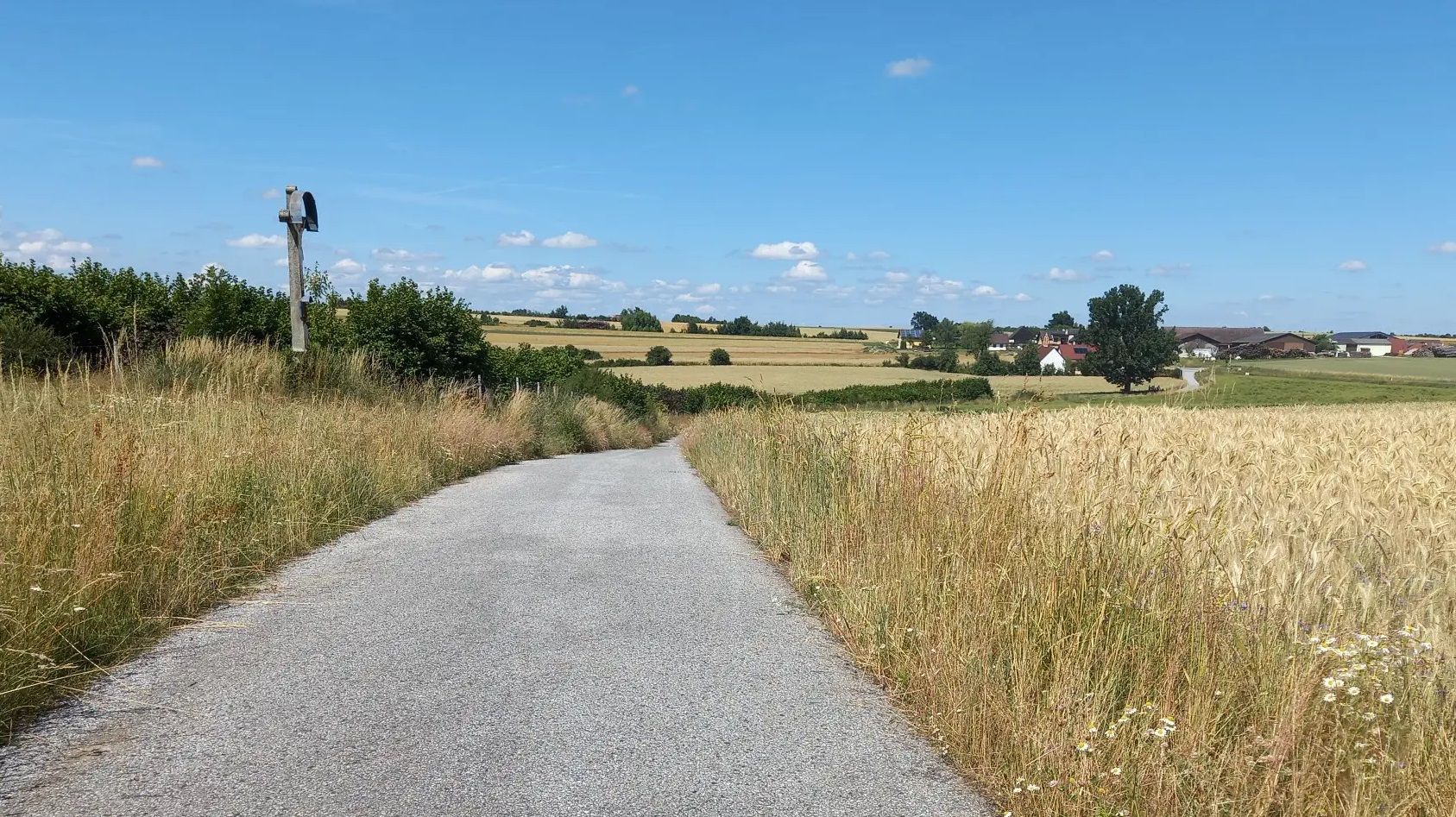
Beautiful avenue on the gravel road. Looks like a time machine: 80 years back 😊
1
0

An impressive rock by the wayside.
0
0

As one of 1,600 natural monuments in Lower Austria, the Paulstein is located directly on the Thaya and offers you not only a beautiful view, but also wonderful nature all around.
1
0

Riding this 6 kilometer long old linden tree alley on the unpaved road by bike is very special, as such routes have become very rare. Yes, they are almost impossible to find anymore.
0
0

A graceful, beautiful chapel
0
0
A great hiking destination that you can hike to in many variations.
1
1

Text of the information board on the Bründl (mineral spring) At Landesstraße 60 between DIETMANNS and Waidhofen there is a spring that does not freeze over even in severe winters and whose water is said to have healing properties for various eye diseases. On an old beech tree, near the source, there was a picture of Mary, which was visited by many people as early as the 18th century. These private pilgrimages also came to the ears of the district chief von Krems in 1758 and he, together with the dean of Waidhofen / Thaya, ordered the removal of the picture, which then came to the parish church of Groß-Sieghart. However, this official act did not stop the pilgrimages. As before, thousands of people made the pilgrimage to the place where the image of the Mother of God hung. In 1865, two men, Mr. Frankl (from Matzles and Mr. Willinger (from Ulrichschlag) bei Bründl a Marterl, which still stands here today. When the LH60 was rebuilt in 1961, it was found that the spring rises directly under the street about 50 meters further west to its current location.
1
0
Text on the information board for Bründlkapelle The impetus for the construction of the Bründlkapelle was given by an innkeeper named Juliana Wenzl from Münichreit, who presented the master mason Bauer from Dietmanns with 4,000 guilders. Mr. Bauer continued to collect money and donations in kind and persuaded Mr. Krippl from Ulrichschlag and Mr. Prohaska from Dietmanns to provide the building site free of charge. The further management was in the hands of Mr. Dechant Gstettner who was pastor in Groß-Siegharts from 1876-1907. A Viennese architect drew up the first plans, which were subsequently simplified as the current Bründl Chapel is executed. Mr. Michael Freiberger from Groß-Siegharts was commissioned as the master builder. The construction negotiations began on December 15, 1888 and on July 22, 1894 the foundation stone was consecrated by the St. Pölten Bishop Rössler. The completed chapel was consecrated on September 8, 1902.
1
0
Frequently Asked Questions
What unique natural features can I explore around Dobersberg?
The Dobersberg area, particularly within the Waldviertel region, offers a variety of natural features. You can discover the near-natural river landscapes and charming meanders of the Romantic Thayatal, explore unique microclimates in a Fern Gorge, or visit prominent cliffs like the Lorelei Rock Pulpit. Additionally, the Paulstein Natural Monument is an impressive rock formation directly on the Thaya River, offering beautiful views.
Are there family-friendly natural monuments in Dobersberg?
Yes, several natural monuments are suitable for families. The Thayatal Nature Park Dobersberg, covering 200 hectares, is freely accessible and offers a mix of forest, meadow, and river environments perfect for family exploration. The Bründl Chapel and the Healing Spring is also noted as family-friendly, combining natural beauty with a historical and cultural site.
What kind of geological formations can be found in the Dobersberg region?
The Dobersberg region is characterized by a diverse geological bedrock, including some of Austria's oldest rock formations. These consist of granite, gneiss, and schist, which have been shaped by the Thaya River over time. The Paulstein Natural Monument is a prime example of these impressive rock formations along the Thaya.
What outdoor activities can I do near the natural monuments?
The natural monuments around Dobersberg are excellent starting points for various outdoor activities. You can enjoy road cycling on routes like the Thayatal Cycle Path, explore running trails such as those around the Thayatal Nature Park Dobersberg, or tackle MTB trails that lead past scenic spots like the Thaya River. For more detailed routes, check out the guides for Road Cycling Routes around Dobersberg, Running Trails around Dobersberg, and MTB Trails around Dobersberg.
Are there any historical sites among the natural monuments?
Yes, some natural monuments also hold historical significance. The Predigtstuhl Summit (718 m), the highest point in the Waidhofen an der Thaya district, was historically a popular destination with a lookout tower known as the 'pyramid' in the 1930s. While the views are now largely obscured, its past as a hiking destination and its local lore make it a notable historical natural monument.
Where can I find unique cycling experiences near Dobersberg?
For a truly unique cycling experience, visit the Linden Avenue Between Speisendorf and Raabs an der Thaya. This 6-kilometer-long unpaved road is lined with protected lime trees, offering a special journey that feels like stepping back in time. It's a wonderful gravel road for cyclists seeking something out of the ordinary.
What is the Thayatal Nature Park Dobersberg like?
The Thayatal Nature Park Dobersberg is a 200-hectare natural monument located at the northern bend of the meandering Thaya. It protects natural riparian forest and cultural landscapes, characterized by a contrasting mix of forest, meadow, and river environments. This park offers a wealth of scenic attractions and a variety of flora and fauna, making it ideal for relaxation and discovery.
Can I find viewpoints among the natural monuments?
Yes, the region offers several viewpoints. The Predigtstuhl Summit (718 m), despite its views being largely obscured by trees now, was historically a significant viewpoint. The Paulstein Natural Monument also provides beautiful views of the surrounding nature and the Thaya River. Additionally, prominent rock formations like the Lorelei Rock Pulpit typically offer impressive vistas of the valley.
What is the Bründl Chapel and Healing Spring?
The Bründl Chapel and the Healing Spring is a popular pilgrimage church with a nearby spring known as 'Marienbründl.' The water from this spring is traditionally believed to have healing properties, particularly for eye diseases. It's a site rich in local history and spiritual significance, offering a tranquil natural setting.
What kind of wildlife can I expect to see in the Dobersberg natural monuments?
The diverse ecosystems within the Dobersberg natural monuments, especially in the Romantic Thayatal and the Thayatal Nature Park Dobersberg, support a rich variety of flora and fauna. The mix of riverine environments, wet meadows, alluvial forests, and slope forests creates habitats for numerous species. While specific animals are not detailed, the region's biodiversity makes it a good spot for observing local wildlife.
Are there any natural monuments that are particularly good for hiking?
Many natural monuments in Dobersberg are excellent for hiking. The Predigtstuhl Summit (718 m) is a popular destination for hikers, offering various routes through the surrounding forest. The Thayatal Nature Park Dobersberg also provides numerous trails through its diverse landscapes of forest, meadow, and river environments. The Lorelei Rock Pulpit is typically accessed via scenic hiking paths.
Most popular attractions around Dobersberg

Get inspired with the komoot mobile app


Explore more
Extend your search for the best caves by checking out these guides of the top ones around Dobersberg:
