Top 20 Natural Monuments around Rangsdorf
Best natural monuments around Rangsdorf include a variety of protected areas and unique landscapes south of Berlin. The region features lakes, wetlands, and historical sites, offering diverse natural features. These areas provide habitats for various species and opportunities for outdoor activities. Rangsdorf's natural monuments reflect its diverse ecosystems and geological history.
Best natural monuments around Rangsdorf
- The most popular natural monuments is Dörferblick Viewpoint, a viewpoint that is an artificial mountain offering views over meadows and the airport. It…
Last updated: October 24, 2026
View of the villages
Highlight • Viewpoint
Translated by Google •
Tip by

Tiergarten Königs Wusterhausen Nature Reserve
Highlight • Forest
Translated by Google •
Tip by

Sign up now to discover places like this
Get recommendations on the best single tracks, peaks, & plenty of other exciting outdoor places.
Genshagen Castle and Park
Highlight • Castle
Translated by Google •
Tip by

View from Dörferblick
Highlight • Viewpoint
Translated by Google •
Tip by
Weinberg Glienick
Highlight • Natural Monument
Translated by Google •
Tip by

Sign up for free to discover even more natural monuments around Rangsdorf.
Already have an account?
Start today with a free account
Your next adventure awaits.
Other adventures around Rangsdorf

Tips from the Community

From the 84-meter-high Glienick vineyard, there are several viewpoints offering distant vistas. At the top, there is a picnic table and benches, and as of December 2025, some chairs will also be available.
0
0

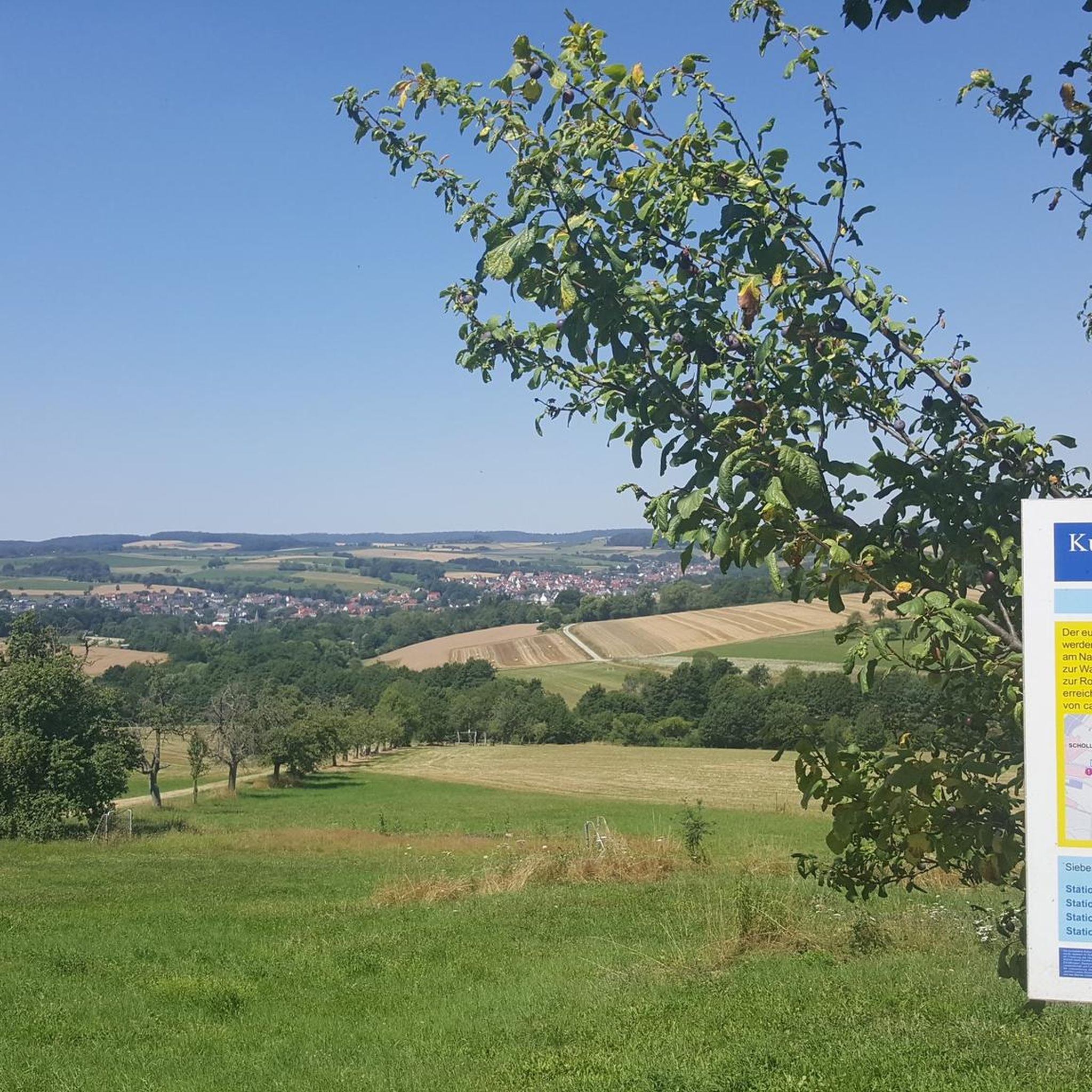
With good visibility, you can see the airport on one side and the TV tower on the other.
1
0

it drives or runs well and you have pure nature
0
0

At the end of the 19th century the area became a popular tourist destination. A number of restaurants were built around the "Tiergarten", of which only "Riedels Gasthof" still exists today. In the course of the prince's settlement in 1926, the forestry office in Königs Wusterhausen became Prussian state property. In 1989, a forest educational trail was laid out in the "Tiergarten" for the first time. In 1994, a forest youth group renewed the nature trail at great expense. For Brandenburg Day 2008, the nature trail was again provided with boards by the forester's office in Königs Wusterhausen. According to the forest function mapping of the state of Brandenburg, the area is designated as a recreational forest.
0
0
South of the Staabe and east of the Krimnicksee, the soldier king Friedrich Wilhelm I, who often stayed at his nearby Wusterhausen hunting lodge, had a zoo laid out in 1725 in a 900-hectare forest area for hunting and to protect the wild stocks. The area is now a recreation area with up to 270-year-old oak trees and has been a nature reserve since 1995 under the name Tiergarten. The Neue Mühle hiking trail leads from Königs Wusterhausen via the castle park and the Neue Mühle lock through the zoo and back to Königs Wusterhausen.
0
0

Genshagen Castle is a mansion built between 1878 and 1880 in the former Gutsdorf Genshagen of the same name, a district of Ludwigsfelde in the Brandenburg district of Teltow-Fläming. It is southwest of Berlin. Genshagen was first mentioned in 1289 and was divided before the 15th century. The larger part came into the possession of the von Otterstedt family, a significantly smaller part to the von Zicker family. Before 1655 the noble von Hake family acquired Otterstedt's share. The Zicker share came in 1677 to Friedrich August von Thümen. In 1700, a manor house was built in the former Otterstedt share, when Lewin Friedrich von Hake married Maria Dorothea, née Schaefferin. Wilhelm von Hake kept the estate throughout the wars of liberation. From 1791 to 1819 the Genshagener manor house served as the district office of the district of Teltow.[1] His son, Ludwig von Hake, sold it in 1838 for 130,000 Reichstaler to the royal Prussian Privy Councilor Karl Ferdinand Schulz. He commissioned Anton Gebauer with the administration for many decades. In September 1854, father Karl Ferdinand[3] left the manor house, which now belonged to the debt-free estate, to his daughter Friederike Pauline von Eberstein as a wedding gift on the occasion of her marriage to Max Freiherr von Ebenstein, a second lieutenant in the Emperor Franz Grenadier Regiment. On her behalf, a new manor house was built between 1878 and 1880 under the direction of the Berlin building inspector Lindemann, which after the conversion in the 1910s was primarily referred to as a palace. A one-storey, thirteen-axle rendered building in the Neo-Renaissance style was built on a high base with bossage. In their explanations in Die Guts- und Herrenhäuser im Landkreis Teltow-Fläming, Hiltrud and Carsten Preuss describe a symmetrical façade structure with “decorative façade decoration”. In the middle on the courtyard side was a flight of steps that stretched three axes wide. Visitors entered a portico that bore a triangular gable with the von Eberstein coat of arms. On the park side, another flight of steps led into the park. In the mansard roof there were ten dormer windows on the courtyard side, which were arranged above the window axes on the ground floor. After the von Eberstein family moved in, the manager used the old manor house as a residence and manager's house. In 1888 a distillery was built. (Source Wikipedia)
1
0

There are several ways to enter the Tiergarten sculpture path near Königs Wusterhausen, including here at the Neue Mühle. There is also a small parking lot as well as this orientation board with all ten locations of the wooden sculptures along the circular route.
0
0

The farmer Berthold is the Till Eulenspiegel of the area. On the information board you can read how he pulled his head out of the noose.
0
0
Frequently Asked Questions
What kind of natural features can I expect to see around Rangsdorf?
Rangsdorf's natural monuments offer a diverse range of features. You'll find expansive lakes like Rangsdorfer See and Nymphensee, ecologically significant wetlands such as the Glasowbach Wetland and Zülowgrabenniederung, and forested areas like the Tiergarten Königs Wusterhausen Nature Reserve. There are also elevated viewpoints like Dörferblick Viewpoint and Weinberg Glienick, offering scenic vistas.
Are there family-friendly natural monuments around Rangsdorf?
Yes, several natural monuments are suitable for families. The Dörferblick Viewpoint is considered family-friendly, offering easy access and panoramic views. The Tiergarten Königs Wusterhausen Nature Reserve also welcomes families, with information boards on local flora and fauna. Additionally, the Nymphensee is a popular spot for swimming and boating, providing recreational opportunities for all ages.
What outdoor activities can I do near these natural monuments?
The region around Rangsdorf offers a variety of outdoor activities. You can enjoy hiking, cycling, and mountain biking on numerous trails. For example, there are several hiking routes around Rangsdorf Lake, including the "Wild Nature at Rangsdorf Lake" loop. Cycling enthusiasts can explore routes like the "Kiessee Pramsdorf – Mittenwalde Old Town loop." Mountain biking trails also exist, such as the "Swimming spot at Kiessee – View of Rangsdorfer See loop." For more detailed routes, you can explore the hiking guide, cycling guide, and MTB guide for Rangsdorf.
Are there any historical sites among the natural monuments?
While primarily natural, some sites have historical connections. The Tiergarten Königs Wusterhausen Nature Reserve was originally established as a hunting ground by Frederick William I in 1725. Additionally, Genshagen Castle and Park, while a castle, is listed as a natural monument and historical site, offering a blend of natural beauty and historical architecture.
What is the best time to visit the natural monuments in Rangsdorf?
The best time to visit depends on your interests. Spring and autumn are ideal for birdwatching at Rangsdorfer See, as it's a significant resting place for migratory birds. Summer is perfect for water sports like swimming, sailing, and pedal boating on Rangsdorfer See and Nymphensee. In winter, if the shallow Rangsdorfer See freezes, it attracts ice sailors and skaters. Hiking and cycling can be enjoyed throughout the warmer months.
Can I go swimming or do other water sports at the lakes?
Yes, Rangsdorfer See and Nymphensee are popular for water activities. Rangsdorfer See offers swimming at a small sandy beach, along with sailing, rowing, surfing, and pedal boating. Nymphensee, a former gravel pit, is also utilized for swimming, fishing, and boating, known for its clear waters.
Are there good places for birdwatching in Rangsdorf?
Rangsdorfer See is an excellent location for birdwatching. It serves as a significant resting place for thousands of migratory birds during their spring and autumn migrations, making it a prime spot to observe various species.
What is the significance of the Glasowbach Wetland?
The Glasowbach Wetland (Glasowbach-Niederung) is a species-rich wetland area, important for its unique ecosystem. A nature trail winds through its picturesque stream valley, particularly impressive on its western side, offering opportunities to observe wetland flora and fauna. The Glasowbach itself is often covered with duckweed, creating a vibrant green spectacle.
Are there any geological points of interest?
Yes, for those interested in geology, Rangsdorf has an erratic boulder that was registered as a natural monument in 2021. Unearthed during work at the Rangsdorf cemetery, these boulders are remnants from the ice age, providing a tangible connection to the region's glacial history.
What do visitors enjoy most about the natural monuments in Rangsdorf?
Visitors frequently appreciate the panoramic views from spots like Dörferblick Viewpoint, which offers vistas over meadows, the airport, and surrounding villages. The tranquility and ancient trees of the Tiergarten Königs Wusterhausen Nature Reserve are also highly valued. Many enjoy the diverse recreational opportunities provided by the lakes and the scenic beauty of the wetland areas.
Are there viewpoints offering scenic vistas of the area?
Yes, Rangsdorf features several excellent viewpoints. The Dörferblick Viewpoint, an artificial mountain, provides panoramic views of surrounding villages, parts of Berlin, and the airport. Weinberg Glienick is another elevated point offering views towards Berlin and the natural landscape. The Weinberg near Machnower See also provides scenic views of the surrounding villages.
What is the situation with Machnower See?
Machnower See, located at the southern end of Rangsdorf, is a smaller lake that is currently undergoing significant natural silting, resulting in two separate water bodies. While its shorelines are largely inaccessible, it holds ecological significance due to its ongoing natural processes and the unique wetland habitat it creates. It is primarily used by local angling clubs.
Most popular routes around Rangsdorf
Most popular attractions around Rangsdorf

Get inspired with the komoot mobile app


Explore more
Extend your search for the best caves by checking out these guides of the top ones around Rangsdorf:
