Top 20 Natural Monuments around Geraberg
Natural monuments around Geraberg are situated at the northern edge of the Thuringian Forest in the Gera Valley. This region offers a landscape shaped by both natural processes and historical human activity, particularly its geological past. The area features sites that blend natural beauty with industrial heritage, such as the Braunsteinmühle and its associated Braunsteinweg, which highlight local geology and manganese mining history. Visitors can explore a variety of natural and historically significant landmarks within this scenic setting.
Best natural…
Last updated: June 24, 2026
Kickelhahn Tower
Highlight • Viewpoint
Translated by Google •
Tip by

Schneekopf Summit and Observation Tower (Thuringia Stamp Point No. 68)
Highlight • Summit
Translated by Google •
Tip by

Sign up now to discover places like this
Get recommendations on the best single tracks, peaks, & plenty of other exciting outdoor places.
Sign up for free
Highest Point of the Rennsteig
Highlight • Summit
Translated by Google •
Tip by

Plänckner's viewpoint (Großer Beerberg)
Highlight • Viewpoint
Translated by Google •
Tip by

Burnt Stone Tunnel
Highlight • Cave
A tunnel steeped in history, after which an incredibly beautiful view opens up. Be sure to take a break and enjoy the view.🥰
Translated by Google •
Tip by

Sign up for free to discover even more natural monuments around Geraberg.
Sign up for free
Already have an account?
Start today with a free account
Your next adventure awaits.
Login or Signup
Popular around Geraberg



Tips from the Community

The burnt out stone at Oberhof is an artificial breakthrough through the rock. It was important for the Lütsche Flößgraben when it was built. The alternation of fire and ice-cold water made the stone brittle and could be worked with mining tools. A 38 m long, 2.3 m high and 2.2 m wide tunnel was created. If you follow the path further you come to the “Hohen Stein” with a wonderful view. The path back to Oberhof leads past the upper Sieglitzteich. Source: http://www.wandern-im-thueringer-wald.de/ausbrenner-stein-luetsche-floessgraben
13
0

Explorer of the Thuringian Forest. In 1829 he undertook the first continuous hike along the Rennsteig.
21
0
You can't get more nature than on the 170km long Rennsteig. There are also a number of raised bogs to see.
16
0

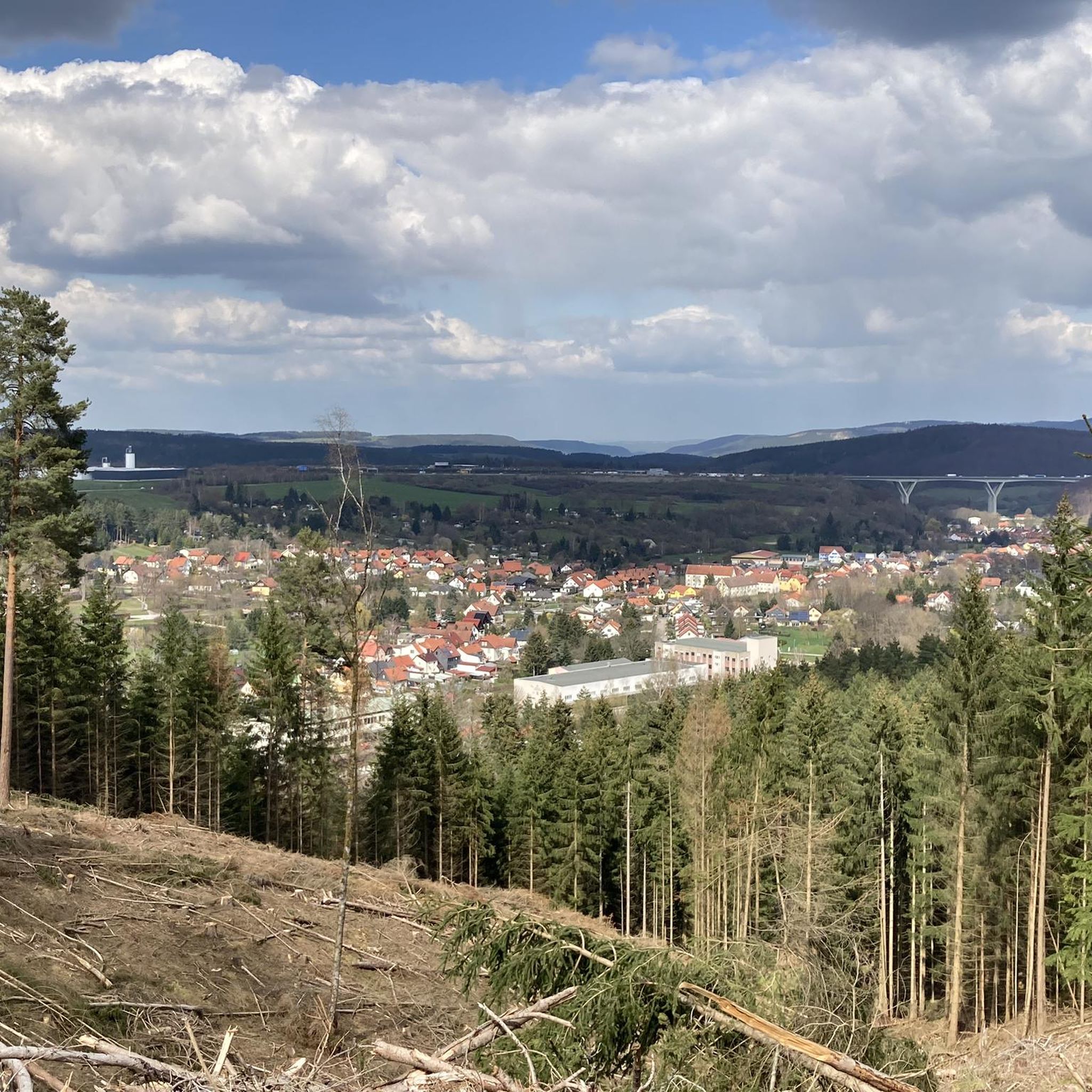
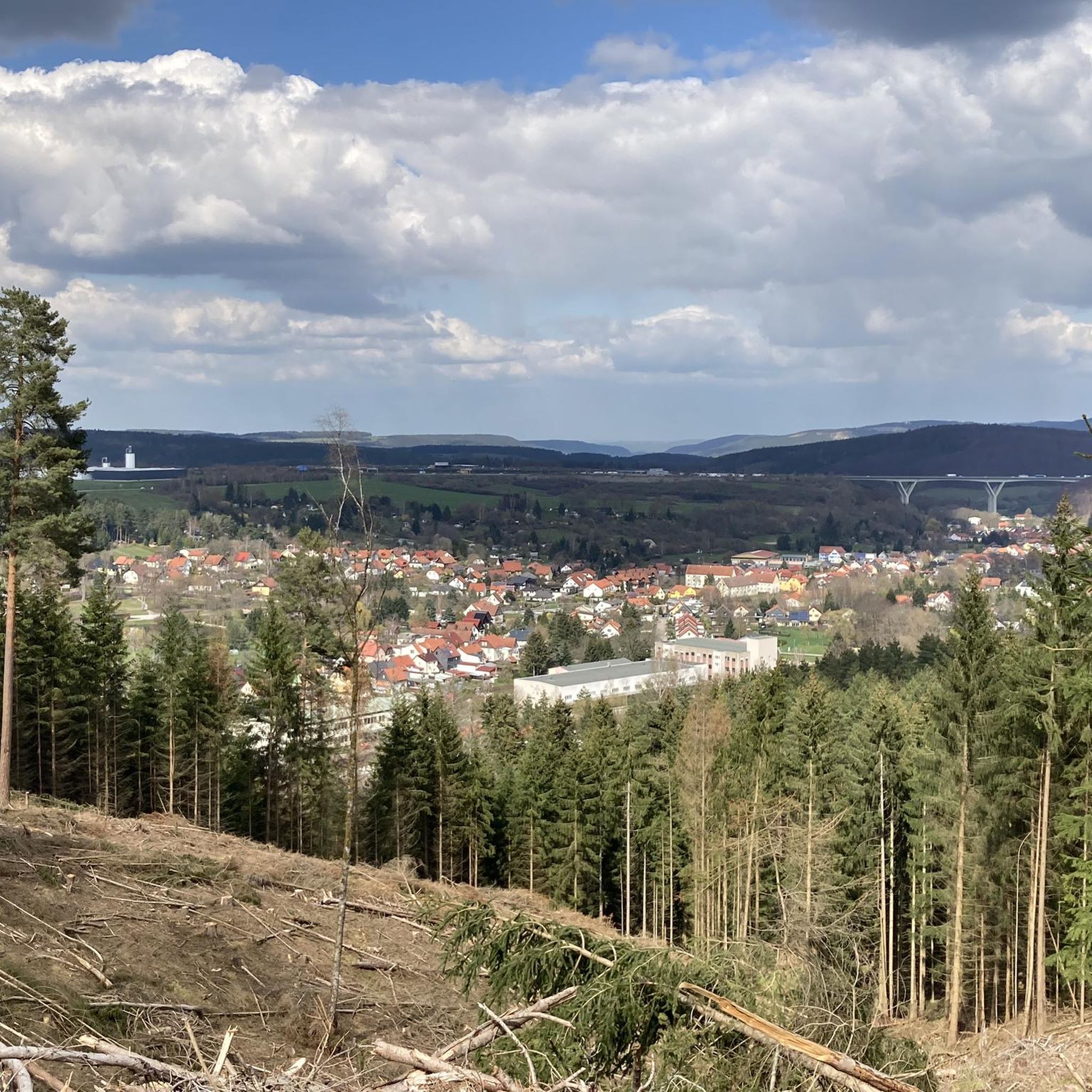
Here at 978 m you have a really great all-round view of other peaks in the Thuringian Forest and the Rhön, up to the Ettersberg near Weimar and Oberhof. With very good visibility, such as winter inversion weather conditions, the view extends to the Brocken in the Harz Mountains, to the Schneeberg (Fichtelgebirge) and to the western Ore Mountains. You can also see the “Wilde Gera” (A 71) motorway bridge, the largest arched bridge in Germany with a span of 252 m. https://schneekopf.eu/ And if you want, you can crack the 1000 meter mark here on the observation tower for three euros. Diligence also has its price.
56
2

Very nice vantage point with a successful lookout tower
16
0

The tunnel was built by miners in 1704. You can easily walk through it without a lamp. In winter there are wonderful icicles. A nice highlight on the hike.
14
0

Great view, you have to enjoy it!
30
1

A photo is a must when you get there!
17
0
Frequently Asked Questions
What unique natural and historical sites can I explore around Geraberg?
Geraberg offers a blend of natural beauty and industrial heritage. A unique site is the Braunsteinmühle Geraberg, an old manganese mill that provides insights into the region's geological past and mining history. You can also explore the associated Braunsteinweg, a trail leading to historical mining locations. For a natural and historical experience, visit the Burnt Stone Tunnel, a medieval tunnel through rock that opens to a beautiful view.
Are there any significant viewpoints among the natural monuments around Geraberg?
Yes, the region boasts several impressive viewpoints. The Kickelhahn Tower features a lookout tower from 1855, offering expansive views. Another must-see is the Schneekopf Summit and Observation Tower, the second highest elevation in Thuringia, providing magnificent panoramic views. Additionally, Plänckner's viewpoint on the Großer Beerberg offers a fantastic vista of Suhl and beyond.
What kind of historical insights can I gain from visiting natural monuments in this area?
The Geraberg area is rich in geological and industrial heritage. The Braunsteinmühle, a former manganese mill, showcases the region's significant manganese mining history. Its outdoor area features a Lapidarium with worked stones, preserving cultural and geological artifacts. The Burnt Stone Tunnel is also a historical site, a medieval tunnel originally created to facilitate wood removal.
Are the natural monuments around Geraberg suitable for families?
Many natural monuments in the Geraberg area are family-friendly. Sites like the Kickelhahn Tower, Schneekopf Summit, Highest Point of the Rennsteig, and Plänckner's viewpoint are all noted as suitable for families. The Braunsteinweg also offers an educational trail experience for all ages.
What outdoor activities can I do near these natural monuments?
The region around Geraberg is excellent for various outdoor activities. You can explore numerous cycling routes, including options for gravel biking, road cycling, and general cycling tours. The Braunsteinweg offers a dedicated trail for walking and learning about the mining history. Many natural monuments, such as the Highest Point of the Rennsteig, are accessible via hiking trails.
What is the best time to visit the natural monuments around Geraberg?
The best time to visit the natural monuments around Geraberg generally depends on your preferred activities. Spring and autumn offer pleasant temperatures for hiking and cycling, with beautiful foliage in autumn. Summer is ideal for enjoying the scenic Gera Valley and the Kneipp hydrotherapy pool at the Braunsteinmühle. While some areas are accessible in winter, always check local conditions for snow and ice, especially for higher elevations like the Schneekopf Summit.
Are there any easy walking routes to natural monuments in Geraberg?
Yes, there are options for easier walks. The Braunsteinweg is a dedicated trail that allows visitors to explore historical mining locations, offering a direct experience of the landscape. While some highlights like the Highest Point of the Rennsteig can be reached from parking lots with relatively short walks, it's always good to check the specific trail difficulty for each route.
What do visitors enjoy most about the natural monuments around Geraberg?
Visitors frequently praise the magnificent panoramic views from sites like the Schneekopf Summit and Plänckner's viewpoint. The unique historical aspect of the Burnt Stone Tunnel, with its unexpected beauty, is also highly appreciated. Many enjoy the combination of natural scenery with the historical and industrial insights offered by the Braunsteinmühle and its surroundings.
Can I find places to eat or refresh near the natural monuments?
Yes, some natural monuments offer facilities for refreshment. The Kickelhahn Tower has a restaurant, and the Schneekopf Summit also features a nice hut with good food. Near the Braunsteinmühle, you can find a Kneipptretbecken (hydrotherapy pool) to refresh your feet in the cool water of the Zahme Gera river.
Are there any hidden gems or less-known natural features worth discovering?
Beyond the well-known viewpoints, the Braunsteinmühle Geraberg itself can be considered a hidden gem for those interested in the unique intersection of nature, industry, and local heritage. Its Lapidarium and the educational Braunsteinweg offer a deeper dive into the region's geological past that might be overlooked by casual visitors. The peaceful and picturesque setting of the mill directly on the banks of the Gera river is also a delight.
What should I wear when visiting the natural monuments in Geraberg?
When visiting the natural monuments around Geraberg, it's advisable to wear comfortable, layered clothing suitable for outdoor activities. Sturdy hiking shoes are recommended, especially if you plan to explore trails or visit sites like the Burnt Stone Tunnel or the Schneekopf Summit. Even in warmer months, a light jacket or rain gear can be useful, as weather in the Thuringian Forest can change.
Is the Highest Point of the Rennsteig easily accessible?
The Highest Point of the Rennsteig is relatively easy to reach. You can access it on foot from two parking lots: either near the Suhler Hütte (about 1.2 kilometers away) or the slightly closer Suhler Ausspanne (about 1.1 kilometers away). While the point itself is marked by a hollow pole, the path along the viewing platform nearby offers an even better view.
Most popular routes around Geraberg
Most popular attractions around Geraberg

Get inspired with the komoot mobile app


Explore more
Extend your search for the best caves by checking out these guides of the top ones around Geraberg:
