Top 20 Natural Monuments around Hünstetten
Natural monuments around Hünstetten offer a diverse range of natural features within the Taunus region of southern Hesse. The municipality is characterized by gentle hills and dense forests, providing a scenic backdrop for outdoor activities. These sites, often notable trees or geological formations, hold local significance and contribute to the area's natural heritage. Hünstetten's landscape is well-suited for exploration, with numerous trails weaving through its natural settings.
Best natural monuments around Hünstetten
- The most popular natural monuments is Hohe Kanzel…
Last updated: May 11, 2026
Roman Spring Zollhaus
Highlight • Natural Monument
Translated by Google •
Tip by

View from the Mensfelder Kopf
Highlight • Viewpoint
Offers a fantastic view of Limburg and towards Feldberg
Translated by Google •
Tip by

Sign up now to discover places like this
Get recommendations on the best single tracks, peaks, & plenty of other exciting outdoor places.
Sign up for free
Mill weir on the Wörsbach
Highlight • River
Translated by Google •
Tip by

Hollow Stone
Highlight • Natural Monument
Translated by Google •
Tip by

Hohe Kanzel
Highlight • Summit
There is no visibility because the trees are now too big. Nevertheless, a nice cozy place.
Translated by Google •
Tip by

Sign up for free to discover even more natural monuments around Hünstetten.
Sign up for free
Already have an account?
Start today with a free account
Your next adventure awaits.
Login or Signup


Other adventures around Hünstetten

Tips from the Community

5/26/24: Unfortunately the spring is closed; the tap has been removed. The same goes for the Johannisquelle nearby. Tip: Sauerbrunnen in nearby Rückershausen. Tastes delicious!
2
0

A beautiful border, which was, however, under water during our visit on May 23, 2024.
2
0

Simply beautiful!😍 Idyllic, lots of natural forest, the water is always more or less nearby😍
4
0

great source. Nicely done.
2
1

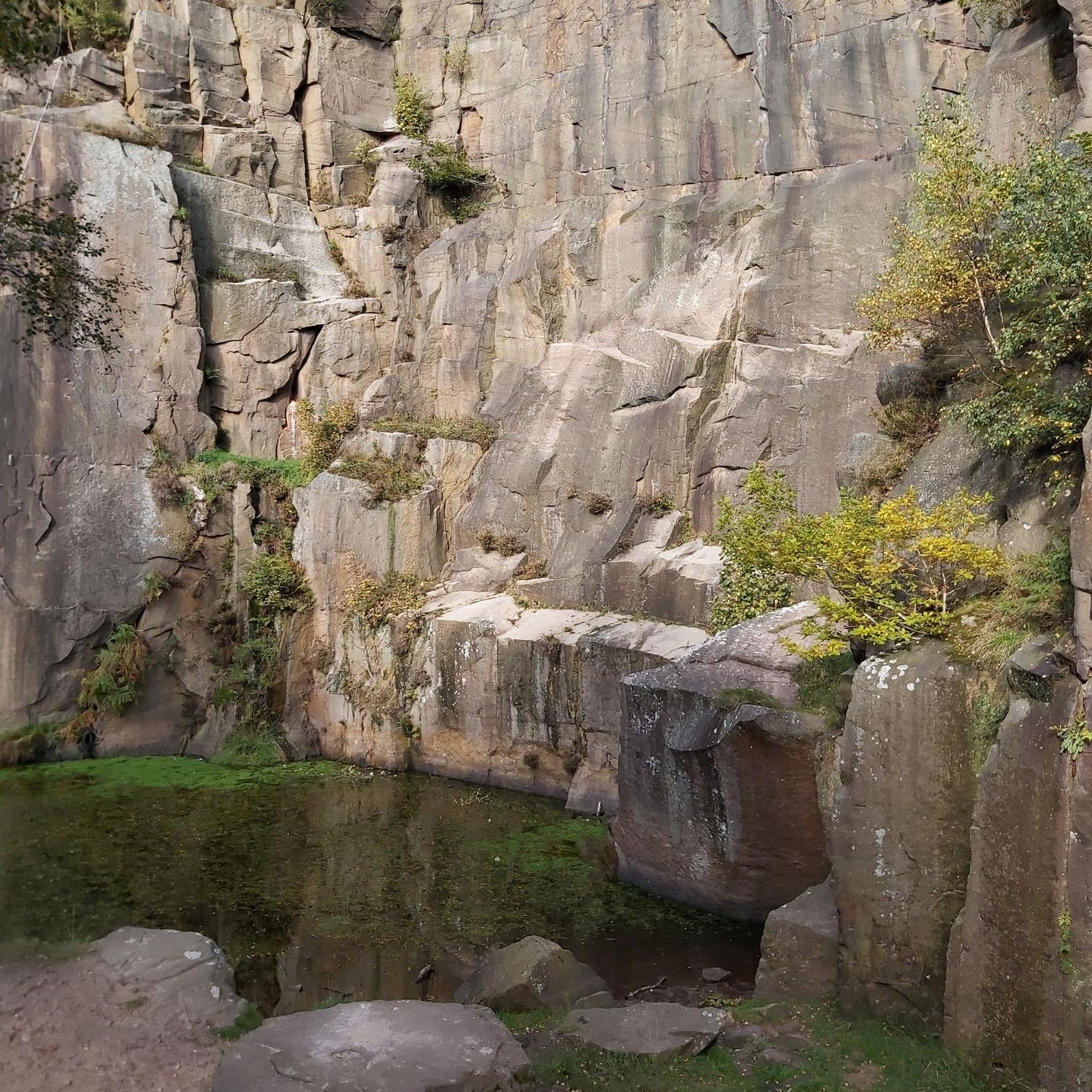
A natural monument from Taunuscuarzit. The "Hohle Stein", a designated natural monument, is a striking group of rocky cliffs made of Taunus quartzite north-west of the Buchwaldkopf. A higher proportion of silicic acid or quartz (chemical: SiO,), which we know in crystalline form as rock crystal, amethyst or rose quartz, ensured that this quartzite area of the main Taunus ridge was protected from intensive weathering in the humid and warm tropical climate in the Paleogene (from 65 to 23.8 million years) was dissected out as "Härtling™. Such outstanding rock formations in the landscape often served as places of worship and mystical places in Central Europe's prehistoric times. It is not known whether this was also the case with Hohlen Stein. There is no evidence or lore for it. But there is at least evidence that humans stayed in the Oberjosbach area in prehistoric times. A mystical place? Early evidence of humans are also three burial mounds near the Oberjosbach forester's lodge. What is the nature of these burial mounds is unclear. However, hundreds of such graves are known from the Taunus region, dating from the Bronze Age (16th to 12th centuries). century B.C. BC) and the Iron Age (earlier Hallstatt period 8th to 5th century BC). The rocks of the Hohle Stein also testify to the powerful forces of mountain building. In some places they have a rock surface with scratches and grooves, which are caused by two rock bodies sliding past each other during mountain formation. These surfaces are called armor, an old mining term. The "Hollow Stone" The earliest evidence of humans in the district of Oberjosbach comes from the New Stone Age, the Neolithic (5600-2200 BC). In 1973, while digging in the "Saalbachfeld", a woman from Oberjosbach came across a stone that showed traces of human processing. This is a smaller ax from the early Stone Age, the material of which, a slate, probably comes from the Main gravel. Although this find does not prove that the district was settled, it does provide evidence of the at least temporary presence of hunters and gatherers before about 2300 BC. Chr.
6
0

Fresh, cool drinking water. At 30 degrees in the shade (and there's not much of that in the Aartal) it's an absolute highlight for me.
4
0
Old Roman spring, which was renovated with a lot of commitment - a big thank you to the helpers! The water tastes slightly ferrous, fizzes slightly and is refreshing. Ideal for filling up the drinking bottles, the water has drinking water quality and is checked regularly 👍
2
0

The most beautiful section on the circular route Wörsbachtal - Emsbachtal. Forest paths in very good condition. No cars.
5
0
Frequently Asked Questions
What are some of the most notable natural monuments in Hünstetten?
Beyond the popular spots, Hünstetten is home to several significant natural monuments. You can visit the impressive Marktplatzlinde (Market Square Lime Tree) in Strinz-Trinitatis, known for its unique growth and historical importance. Another ancient tree is the large Eiche (Oak Tree) by the forester's house in Wallrabenstein. For a unique natural feature, explore the Roman Spring Zollhaus, an iron-rich spring perfect for refilling water bottles during a hike.
What kind of natural features can I expect to see among Hünstetten's natural monuments?
Hünstetten's natural monuments showcase a variety of features, from ancient trees to unique geological formations and scenic viewpoints. You'll find the distinctive Marktplatzlinde and the ancient Eiche, as well as the Roman Spring Zollhaus with its fizzy, iron-tasting water. The region also offers impressive vistas from locations like the View from the Mensfelder Kopf.
Are there family-friendly natural monuments in Hünstetten?
Yes, several natural monuments in Hünstetten are suitable for families. The Roman Spring Zollhaus is a great spot for a break, and its unique water can be an interesting experience for children. The View from the Mensfelder Kopf and Hollow Stone are also categorized as family-friendly, offering accessible natural beauty. Additionally, the broader Hünstetten area features the 'Naturerlebnispfad Hünstetten' (Nature Experience Path), which is designed for families to connect with nature.
What outdoor activities can I do near Hünstetten's natural monuments?
The Hünstetten region is excellent for outdoor activities. You can enjoy various hiking trails, including easy routes like the 'Beuerbach Lake loop' or 'Idyll in the Forest loop'. For gravel biking, explore routes such as 'View of Ardeck Castle – Ardeck Castle Ruins loop'. Running enthusiasts can find trails like 'Schieferfelsen Wörsbach – Stream access in Wörsbachtal loop'. You can find more details on these activities in the Easy hikes around Hünstetten, Gravel biking around Hünstetten, and Running Trails around Hünstetten guides.
Are there hiking trails near these natural monuments?
Absolutely. Hünstetten is well-suited for hiking, with numerous trails weaving through its scenic landscapes. You can find easy hikes like the 'Beuerbach Lake loop' (5.25 km) or the 'Idyll in the Forest loop' (4.34 km). For more challenging options, consider routes that pass by viewpoints like the Hohe Kanzel. Explore more hiking options in the Easy hikes around Hünstetten guide.
What do visitors enjoy most about the natural monuments in Hünstetten?
Visitors particularly appreciate the diverse natural beauty and the tranquility offered by Hünstetten's natural monuments. The Roman Spring Zollhaus is loved for its refreshing, cool drinking water, especially on warm days. The View from the Mensfelder Kopf is highly rated for its fantastic 360-degree panoramic views. Many also enjoy the 'cool trails' and natural surroundings found at the Hollow Stone.
Are there any viewpoints among the natural monuments in Hünstetten?
Yes, Hünstetten offers several excellent viewpoints. The View from the Mensfelder Kopf provides a fantastic 360-degree panorama towards Limburg and Feldberg. While the Hohe Kanzel is the highest point in the area, its view is now obscured by trees, but it remains a cozy spot for a break. For an elevated perspective, the Kellerskopf Observation Tower offers a fantastic panorama over the Rhine-Main area to the Odenwald.
Can I bring my dog to the natural monuments in Hünstetten?
Many of the natural areas and monuments in Hünstetten are dog-friendly. For instance, the Roman Spring Zollhaus is a great stop for both you and your dog. The numerous hiking and running trails throughout the region, such as those in the Wörsbachtal, are generally welcoming to dogs, making it an ideal destination for outdoor adventures with your canine companion. Always ensure dogs are kept on a leash where required.
What is the Kellerskopf Observation Tower and what does it offer?
The Kellerskopf Observation Tower is a prominent viewpoint near Hünstetten. Standing approximately 20 meters high, it offers a fantastic panorama extending over the Rhine-Main area to the Odenwald, Palatinate Forest, and North Palatinate Bergland. Adjacent to the tower is the Kellerskopf mountain inn, providing a place to relax and refuel after your climb. It's a great spot to reward yourself for the effort of the ascent.
Are there any natural monuments with historical significance in Hünstetten?
Yes, several natural monuments in Hünstetten hold historical significance. The Marktplatzlinde in Strinz-Trinitatis, for example, is deeply intertwined with the community's past and serves as a historical landmark in the village square. The ancient Eiche in Wallrabenstein also stands as a testament to the enduring natural heritage of the region. Additionally, the Roman Spring Zollhaus is considered a historical site, hinting at its long-standing use and importance.
What is the 'Hollow Stone' and what can I do there?
The Hollow Stone is a natural monument known for its unique geological formation and is a popular spot for outdoor enthusiasts. Visitors particularly enjoy the 'nice singletrack' trails around it, making it a fun destination for mountain biking or hiking. It offers a cool trail experience within natural surroundings.
Most popular routes around Hünstetten
Most popular attractions around Hünstetten

Get inspired with the komoot mobile app


Explore more
Extend your search for the best caves by checking out these guides of the top ones around Hünstetten:
