Top 20 Natural Monuments around Obermoschel
Best natural monuments around Obermoschel are found in a landscape characterized by diverse natural features, including significant rock formations and historical trees. This region in Rhineland-Pfalz offers a variety of natural landmarks that reflect its geological past and ecological value. Visitors can explore ancient standing stones and protected trees, providing insight into the area's natural heritage. The terrain presents opportunities for walking routes and appreciating natural features.
Best natural monuments around Obermoschel
- The most popular natural monuments is Rotenfels Cliff…
Last updated: July 8, 2026
Rheingrafenstein Castle Ruins
Highlight • Castle
Enjoy the nature!
Translated by Google •
Tip by

View of Bad Münster am Stein-Ebernburg from the Rotenfels
Highlight • Viewpoint
Translated by Google •
Tip by

Sign up now to discover places like this
Get recommendations on the best single tracks, peaks, & plenty of other exciting outdoor places.
Sign up for free
View of Rheingrafenstein Castle
Highlight • Viewpoint
View from the town of Bad Münster am Stein.
Its origins are legendary: the devil is said to have built the castle on the steep, 245 m …
Translated by Google •
Tip by

Rotenfels Cliff
Highlight • Natural Monument
Translated by Google •
Tip by

View from the Gans (Bad Kreuznach)
Highlight • Viewpoint
Translated by Google •
Tip by

Sign up for free to discover even more natural monuments around Obermoschel.
Sign up for free
Already have an account?
Start today with a free account
Your next adventure awaits.
Login or Signup
Other adventures around Obermoschel

Tips from the Community

You don't see a wall like this very often in flat country
7
0

👑 Rheingrafenstein Castle Ruins – The Rock Boss on the Cycle Path Tip: Stop here! The Rheingrafenstein ruins sit dramatically perched on a 136-meter-high porphyry cliff above the Nahe River – one of the most impressive sights of the entire tour. The castle was the ancestral seat of the famous Wildgraves and Rhinegraves (until it was blown up in 1689). The view from the cycle path is phenomenal! If you really want to go up (and have enough energy), you can take the small hand-pulled ferry across and take the steep hiking trail to the ruins. It's worth it for the view over the Nahe Valley, but honestly: My legs were already tired enough from cycling. The panoramic view from below is worth its weight in gold! A must-have for your photo collection!
1
0

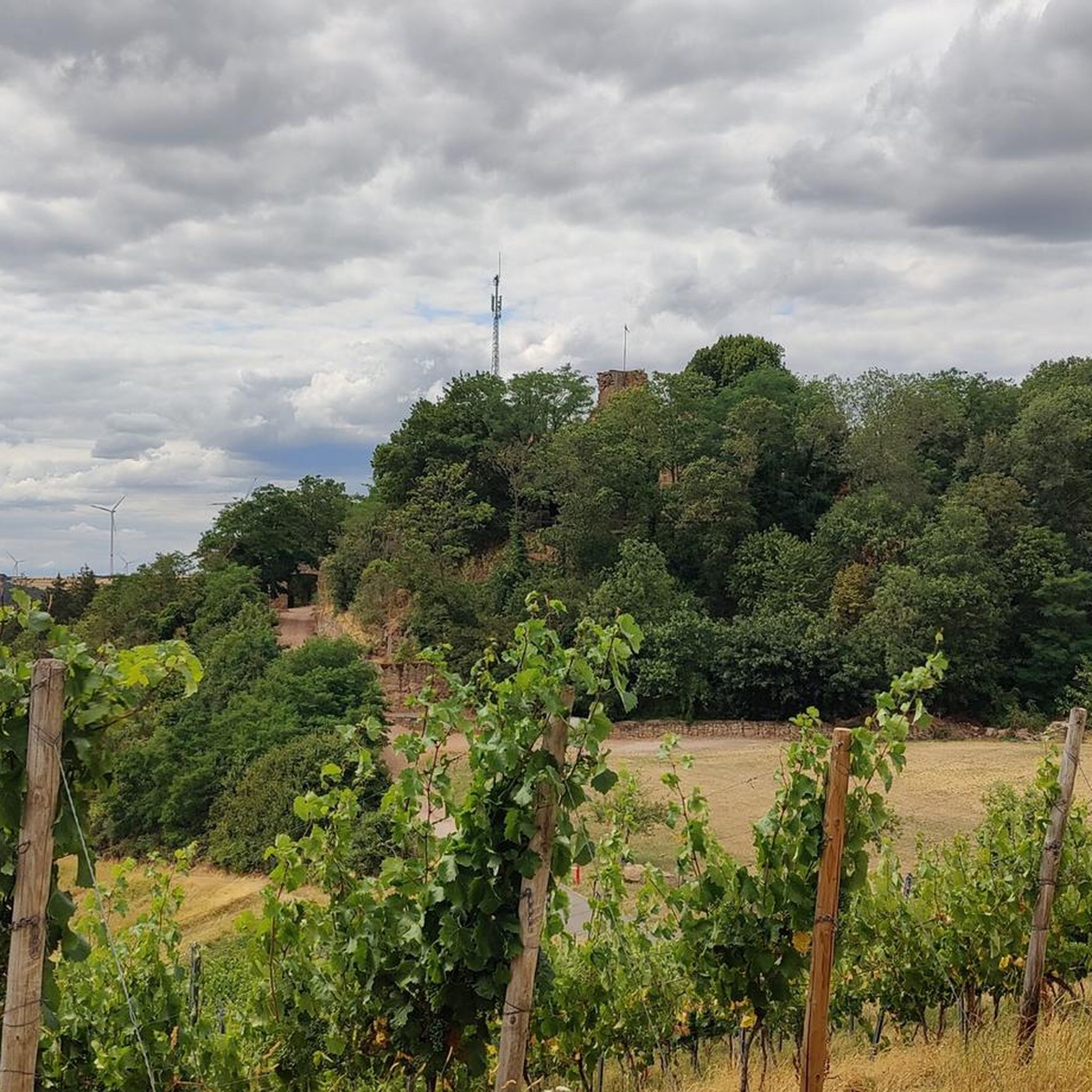
Rheingrafenstein Castle sits enthroned on a steep porphyry cliff (245 meters high) directly above the Nahe River near Bad Münster am Stein-Ebernburg. Legend has it that the devil himself built the castle—a reference to its dramatic location and mystical aura. In fact, it likely dates back to the 11th century and was the ancestral seat of the Lords of Stein, later the Wildgraves and Rhinegraves. In 1689, it was blown up by French troops under Louis XIV, and since then it has been a ruin—but an extremely impressive one.
3
0

Beautiful rock with the Rheingrafenstein castle ruins. It is said that the devil is said to have built the castle. In any case, the castle was blown up by the French troops under Louis XIV.
4
2

You can take the ferry here, walk up to the ruins and enjoy the view. If you like, you can continue on the way to the spa gardens of Bad Kreuznach. It's worth it.
5
1

Impressive rock massif! Distant views from the edge of the rock. Not just a single vantage point, but continuous great views! https://www.bad-kreuznach-tourist.de/aktiv-und-natur/wandern/ https://www.wanderinstitut.de/premiumwege/rheinland-pfalz/vitaltour-rotenfels/ https://www.bad-muenster-am-stein.de/content/download/1905/14368/version/1/file/3x3+Rotenfels.pdf
7
0

One of the most beautiful viewpoints in the area. Also a beautiful nature reserve. The view of the impressive cliff face from the Nahe near Münster or Norheim is also worth seeing.
8
0

When the weather is clear, the view is stunning!
8
1
Frequently Asked Questions
What are some notable natural monuments around Obermoschel?
Beyond the well-known spots, you can explore the impressive Rheingrafenstein Castle Ruins, which features a natural keep carved out of rock and offers panoramic views of the Huttental and Nahe Valley. Another significant site is the prehistoric Menhir von Obermoschel, also known as 'Der Lange Stein,' an ancient standing stone with historical and cultural significance. The View of Bad Münster am Stein-Ebernburg from the Rotenfels also provides breathtaking vistas from the highest rock face between the Alps and Scandinavia.
Are there any historical natural monuments in the area?
Yes, the region boasts several natural monuments with historical connections. The Menhir von Obermoschel is a prehistoric standing stone, offering a tangible link to early human inhabitants and local folklore. Additionally, the Rheingrafenstein Castle Ruins are a natural monument where the castle's keep was carved directly from the rock, blending natural formation with historical architecture. The Luitpoldlinde Obermoschel, a designated natural monument, also has historical ties, likely commemorating an event or figure from the past.
What kind of natural features can I expect to see?
The natural monuments around Obermoschel showcase diverse features. You'll find dramatic cliffs like the Rotenfels Cliff, which is of volcanic origin. There are also serene lakes such as Silver Lake (Lemberg Nature Reserve), nestled within a basin surrounded by rock walls. Prehistoric standing stones like the Menhir von Obermoschel and significant trees like the Luitpoldlinde also contribute to the unique natural landscape.
Are there family-friendly natural monuments around Obermoschel?
Yes, several natural monuments are suitable for families. Silver Lake (Lemberg Nature Reserve) is considered family-friendly, offering a quiet spot to relax. The View from the Gans (Bad Kreuznach) is also listed as family-friendly, providing magnificent views over the spa towns and being accessible via various hiking routes.
What are the difficulty levels of exploring these natural monuments?
The difficulty varies depending on the specific monument and the approach route. Many viewpoints and natural monuments, such as the View of Bad Münster am Stein-Ebernburg from the Rotenfels, involve intermediate climbs. The Rheingrafenstein Castle Ruins are also categorized as intermediate to challenging due to the terrain. However, some areas like the Silver Lake (Lemberg Nature Reserve) are easily accessible, often just a short walk from parking.
What outdoor activities can I do near these natural monuments?
The region around Obermoschel offers a variety of outdoor activities. You can find numerous hiking trails, including easy loops like 'Prayer and Mining House – Moschellandsburg Ruins loop' or moderate ones like 'Mine Entrance at Schloßberg – Historic Center of Obermoschel loop.' For cyclists, there are routes such as 'Alsenz Town Hall – German Sandstone Park Alsenz loop.' Mountain bikers can explore trails like 'Niederhausen Dam – View of Ebernburg Castle loop.' You can find more details on these activities in the hiking, cycling, and MTB guides for Obermoschel.
Are there hiking trails near the natural monuments around Obermoschel?
Yes, there are many hiking trails that allow you to explore the natural monuments. For instance, the View from the Gans (Bad Kreuznach) can be integrated into tours ranging from 2 to 8 kilometers. The Emil-Jacob-Weg (KH 8) opens up the hiking area from Salinental. You can discover more hiking routes and their difficulties in the hiking guide for Obermoschel.
What do visitors enjoy the most about the natural monuments in Obermoschel?
Visitors frequently praise the magnificent panoramic views, especially from spots like the Rheingrafenstein Castle Ruins and the Rotenfels. The unique geological formations, such as the volcanic origin of the Rotenfels, and the tranquility of places like Silver Lake are also highly appreciated. The historical significance of sites like the Menhir von Obermoschel adds another layer of interest for many.
Can I bring my dog to the natural monuments?
While specific regulations for each natural monument can vary, generally, dogs are welcome on trails and in natural areas around Obermoschel, provided they are kept on a leash and owners clean up after them. It's always a good idea to check local signage at each specific site for any restrictions.
What is the best time to visit the natural monuments around Obermoschel?
The natural monuments around Obermoschel can be enjoyed throughout the year, but spring and autumn often offer the most pleasant conditions for hiking and exploring. During these seasons, the weather is typically mild, and the landscapes are vibrant with blooming flora or colorful foliage. Summer is also suitable, though it can be warmer, while winter offers a different, often quieter, experience, especially if there's snow.
Where can I find parking near the natural monuments?
Parking availability varies by location. For popular spots like the Silver Lake (Lemberg Nature Reserve), there is often designated parking just a few hundred meters away. For other natural monuments, parking might be available at trailheads or in nearby villages. It's advisable to check specific access points for each monument when planning your visit.
Are there any unique geological features to explore?
Absolutely. The Rotenfels Cliff is a prime example, being of volcanic origin and considered the highest rock face between the Alps and Scandinavia. The Rheingrafenstein Castle Ruins also feature a natural keep carved directly from the rock, showcasing the area's geological history. The Menhir von Obermoschel, made of Melaphyr, is another significant geological and historical artifact.
Where can I find refreshments or accommodation near the natural monuments?
Obermoschel and its surrounding towns offer various options for refreshments and accommodation. While specific cafes or pubs might not be directly adjacent to every natural monument, you can find establishments in the nearby villages. It's recommended to plan your route and check for options in towns like Bad Münster am Stein-Ebernburg or Obermoschel itself for dining and lodging.
Most popular routes around Obermoschel
Most popular attractions around Obermoschel

Get inspired with the komoot mobile app


Explore more
Extend your search for the best caves by checking out these guides of the top ones around Obermoschel:
