Top 20 Natural Monuments around Diefenbach
Natural monuments around Diefenbach are located in Rhineland-Palatinate, Germany, within a largely forested side valley of the Alf river. The surrounding Volcanic Eifel region showcases the area's rich volcanic history and offers diverse natural features. This landscape provides opportunities to explore unique geological formations and serene natural settings.
Best natural monuments around Diefenbach
- The most popular natural monuments is Strohner Lava Bomb, a natural monument that is a massive 120-ton basalt sphere with a diameter of almost five meters.…
Last updated: June 24, 2026
Klidinger Waterfall
Highlight • Waterfall
Translated by Google •
Tip by

Elf Grotto and Elbesbach Waterfall
Highlight • Cave
The …
Translated by Google •
Tip by

Sign up now to discover places like this
Get recommendations on the best single tracks, peaks, & plenty of other exciting outdoor places.
Sign up for free
Falkenlay Stone Age Caves
Highlight • Cave
Showing Translation
Tip by

Lava Flow in the Alftal Valley
Highlight • Natural Monument
The violent eruptions of the Wartgesberg volcanism were due to the high proportion of gas in the glowing magma rising from a depth …
Translated by Google •
Tip by

Strohner Lava Bomb
Highlight • Natural Monument
Translated by Google •
Tip by

Sign up for free to discover even more natural monuments around Diefenbach.
Sign up for free
Already have an account?
Start today with a free account
Your next adventure awaits.
Login or Signup
Tips from the Community

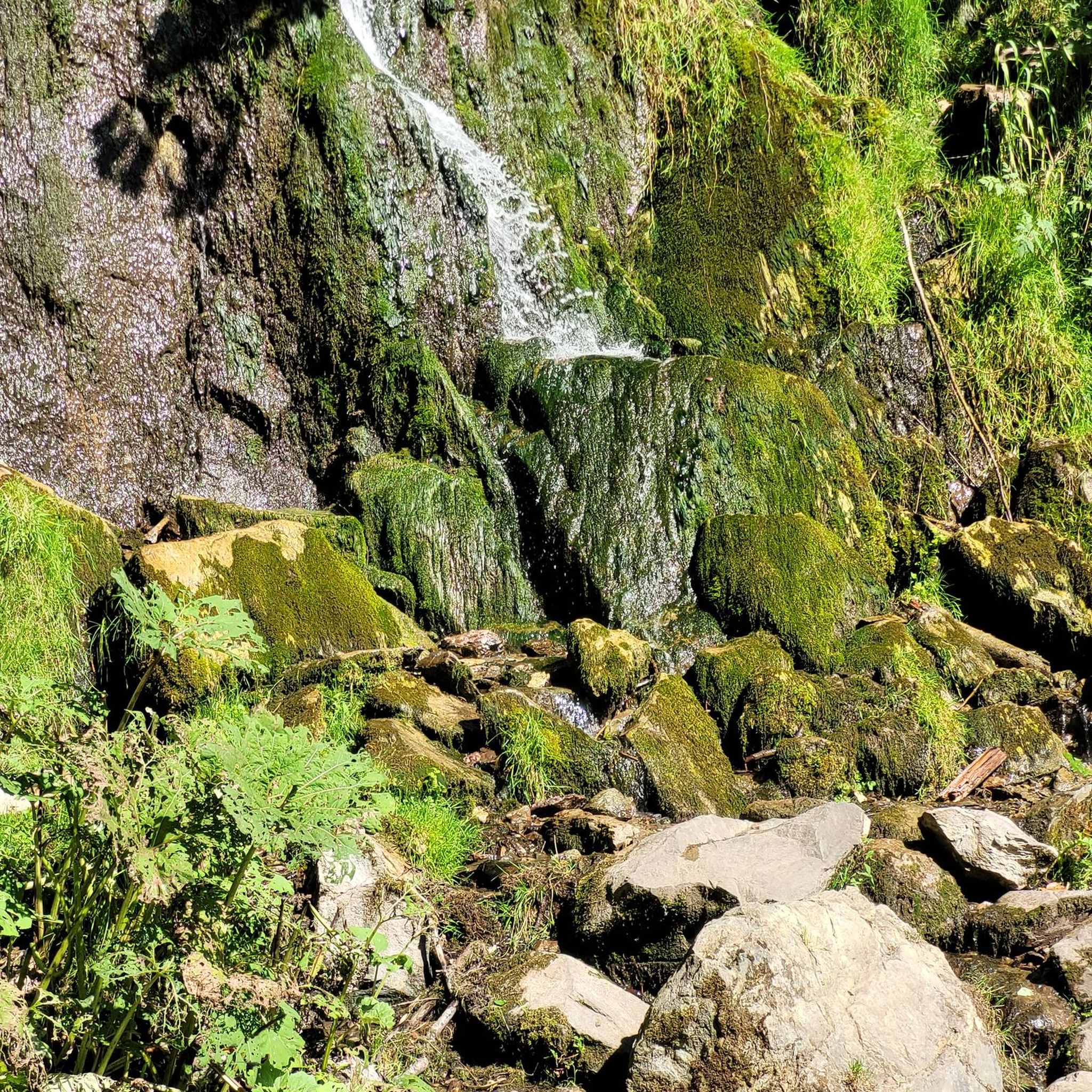
The wooden beams and planks are gone. Now there's a walkable grating. The last few meters to the waterfall are adventurous, but secured with a rope. The waterfall is impressive 😍
3
0

We have seen many waterfalls on our tours and we were very positively surprised that there is such a great waterfall here in the Eifel and the path there is really great... rustic, steep, impressive... sturdy shoes are definitely recommended here... what great highlights do we have here in this region. Simply great!!!
6
0

Pay attention to your equipment on the climb. The path is very steep and slippery. If you have dogs with you, only go up if they are well trained, otherwise please don't go up, it's too dangerous. Footwear is the most important thing here.
3
0

Caves and a nice rest area with information board
2
0

Wonderful, climbing passage necessary to reach the waterfall, so sturdy shoes and sure-footedness are absolutely necessary
3
0

Nice VIP highlight with the passage grotto, the waterfall and the Teufelsbrück. Belongs to a hike around Bad Bertrich.
26
0

On site you can find out more about the lava flow on the display board, which poured into the Alftal in early times when the volcanoes in the Eifel were still active. This is where the longest lava flow in the Eifel came from.
7
0
When workers in the Wartgesberg quarry carry out an explosion in 1969, they are amazed! A round chunk of five meters in diameter broke away from the middle of the quarry wall. A lava bomb? Even experts are not sure at first, because it is difficult to imagine that the volcanic forces of the Eifel were sufficient to throw 120 tons through the air. A core drilling brings clarity: During the eruption of the Wartgesberg volcano, a piece of rock broke loose from the crater wall and rolled into the vent. Similar to a snowball, which gets bigger and bigger as it rolls down a slope, the chunk rolls through magma that sticks to its surface. With the next eruption, the ball is ejected again and then rolls down again. This is repeated a few more times until the sphere is buried by the crater wall, only to reappear many thousands of years later.
6
0
Frequently Asked Questions
What other significant natural monuments can I explore near Diefenbach?
Beyond the well-known sites, you can discover the Klidinger Waterfall, the highest waterfall in the Eifel with a 28-meter drop, accessible via an adventurous path with ropes. Another unique spot is the Lava Flow in the Alftal Valley, which represents the longest lava flow in the Eifel, showcasing the region's intense volcanic past.
Are there family-friendly natural monuments around Diefenbach?
Yes, several natural monuments are great for families. The Elf Grotto and Elbesbach Waterfall is particularly popular, often called the 'Cheese Grotto' due to its unique rock formations. It's easily accessible via a 2.4 km walking trail, making it manageable even for children. The Falkenlay Stone Age Caves also offer an exciting exploration opportunity for kids, with smaller caves in volcanic rock that were once inhabited by Stone Age hunters.
What kind of geological features can I expect to see in the natural monuments near Diefenbach?
The region is rich in volcanic geology. You'll encounter features like the massive Strohner Lava Bomb, a 120-ton basalt sphere, and the unique rock formations of the Elf Grotto, shaped by ancient lava flows. The area also features maars, such as Pulvermaar, which are volcanic lakes formed by explosive eruptions, and cinder cones like Römerberg, all testament to the Volcanic Eifel's dynamic past.
What outdoor activities can I do near these natural monuments?
The area around Diefenbach offers a variety of outdoor activities. You can find numerous cycling routes, including challenging options like the 'Holzmaar – Großes Schlitzohr Tunnel loop' for touring bicycles, or the 'Pulvermaar – Volcano Café Strohn loop' for road cycling. Gravel biking is also popular, with routes such as the 'Strohner Switzerland – Cycle path on a railroad line loop'. For more details on these and other routes, you can explore the Cycling around Diefenbach, Gravel biking around Diefenbach, and Road Cycling Routes around Diefenbach guides.
Are there any historical sites among the natural monuments?
Yes, the Falkenlay Stone Age Caves are a notable historical site. Archaeological finds indicate that these caves, located in the volcanic rock of the Falkenlay, were inhabited by Stone Age hunters between 4000 and 2000 BC. They offer a glimpse into early human history within a natural setting.
What is the best time to visit the natural monuments around Diefenbach?
The natural monuments are generally enjoyable year-round. Spring and autumn offer pleasant temperatures for hiking and exploring, with vibrant foliage in autumn. Summer is ideal for activities like swimming in Pulvermaar. Even in winter, some trails remain accessible, offering a serene, snow-dusted landscape, though some adventurous paths might require more caution.
What makes Pulvermaar a special natural monument?
Pulvermaar is a remarkable natural monument, known as one of the deepest maar lakes in the Eifel, reaching over 70 meters. Formed by a volcanic explosion, it boasts exceptional water quality and is surrounded by Römerberg, a tuff and cinder cone, and Strohner Märchen, a rare high moor. It's a nature reserve offering opportunities for swimming, boating, fishing, and hiking, with informative displays explaining its geological history.
What do visitors enjoy most about the natural monuments near Diefenbach?
Visitors frequently highlight the unique geological formations and the sense of adventure. The Klidinger Waterfall, for instance, is praised for its 'adventurous path' and 'great natural spectacle'. The Elf Grotto is loved for its 'fairy tale' atmosphere and resemblance to 'stacked cheese wheels', making it a memorable experience for all ages.
Are there any natural monuments that are particularly challenging to access?
The Klidinger Waterfall offers a more challenging experience. Its adventurous path involves crossing a creek on makeshift tree trunks and a steep ascent with ropes to reach the base of the waterfall. Sturdy shoes and sure-footedness are recommended for this particular natural spectacle.
Can I find information about the volcanic history of the region at these sites?
Absolutely. Many sites provide detailed information about the Eifel's volcanic past. For example, the Strohner Lava Bomb has an explanatory information board detailing its formation. The Lava Flow in the Alftal Valley also features on-site boards explaining its origin as the longest lava flow in the Eifel. Additionally, the nearby Volcano House Strohn offers an interactive exhibition for those interested in volcanoes.
Are there any natural monuments suitable for a quiet, reflective experience?
Yes, the Pulvermaar area, with its stunning maar lake and the surrounding nature reserve, offers tranquility and a deep connection with nature. The 'Strohner Märchen' high moor within this area is a rare natural phenomenon, home to diverse flora and fauna, providing a peaceful setting for observation and reflection.
Most popular attractions around Diefenbach

Get inspired with the komoot mobile app


Explore more
Extend your search for the best caves by checking out these guides of the top ones around Diefenbach:
