Top 20 Natural Monuments around Buschvitz
Natural monuments around Buschvitz are situated in the geographical center of Rügen Island, providing access to several notable natural attractions. The region features diverse landscapes, including coastal areas, forests, and unique geological formations. These sites offer opportunities to experience the natural beauty and ecological significance of the Rügen coastline. The area is characterized by its tranquil environments and commitment to nature conservation.
Best natural monuments around Buschvitz
- The most popular natural monuments is Clifftop Trail Granitz (Southeast Rügen Biosphere Reserve)…
Last updated: June 25, 2026
Clifftop Trail Granitz (Southeast Rügen Biosphere Reserve)
Highlight • Trail
Translated by Google •
Tip by

Clifftop Trail Binz–Sellin
Highlight • Trail
Translated by Google •
Tip by

Sign up now to discover places like this
Get recommendations on the best single tracks, peaks, & plenty of other exciting outdoor places.
Sign up for free
Schmachter Lake
Highlight • Lake
Translated by Google •
Tip by

Dwarf beeches (Witches' Forest) in the Semperwald
Highlight • Natural Monument
Translated by Google •
Tip by
Flint Fields of Rügen
Highlight • Natural Monument
Translated by Google •
Tip by

Sign up for free to discover even more natural monuments around Buschvitz.
Sign up for free
Already have an account?
Start today with a free account
Your next adventure awaits.
Login or Signup
Tips from the Community

The Witches' Forest is a group of trees consisting of dwarf beeches that are over 80 years old. These bizarre, magical and mysterious trees can be seen from far away. The branches of the trees are so bizarrely intertwined that from a distance it almost looks like a giant umbrella. A truly mystical place.
13
2

The ten dwarf beeches in the Semper Forest Park are a very rare variety of common beech. They were planted in 1920. Süntel beeches, also known as witchwood, rarely live longer than 160 years.
9
2

At this point near Lietzow - in one of the magically light-filled beech forests typical of Rügen - you will find a unique collection of so-called dwarf beeches: these are one or two handfuls of strangely gnarled beeches that form a circle and create a dense, dome-like canopy. Definitely worth a visit!
6
0

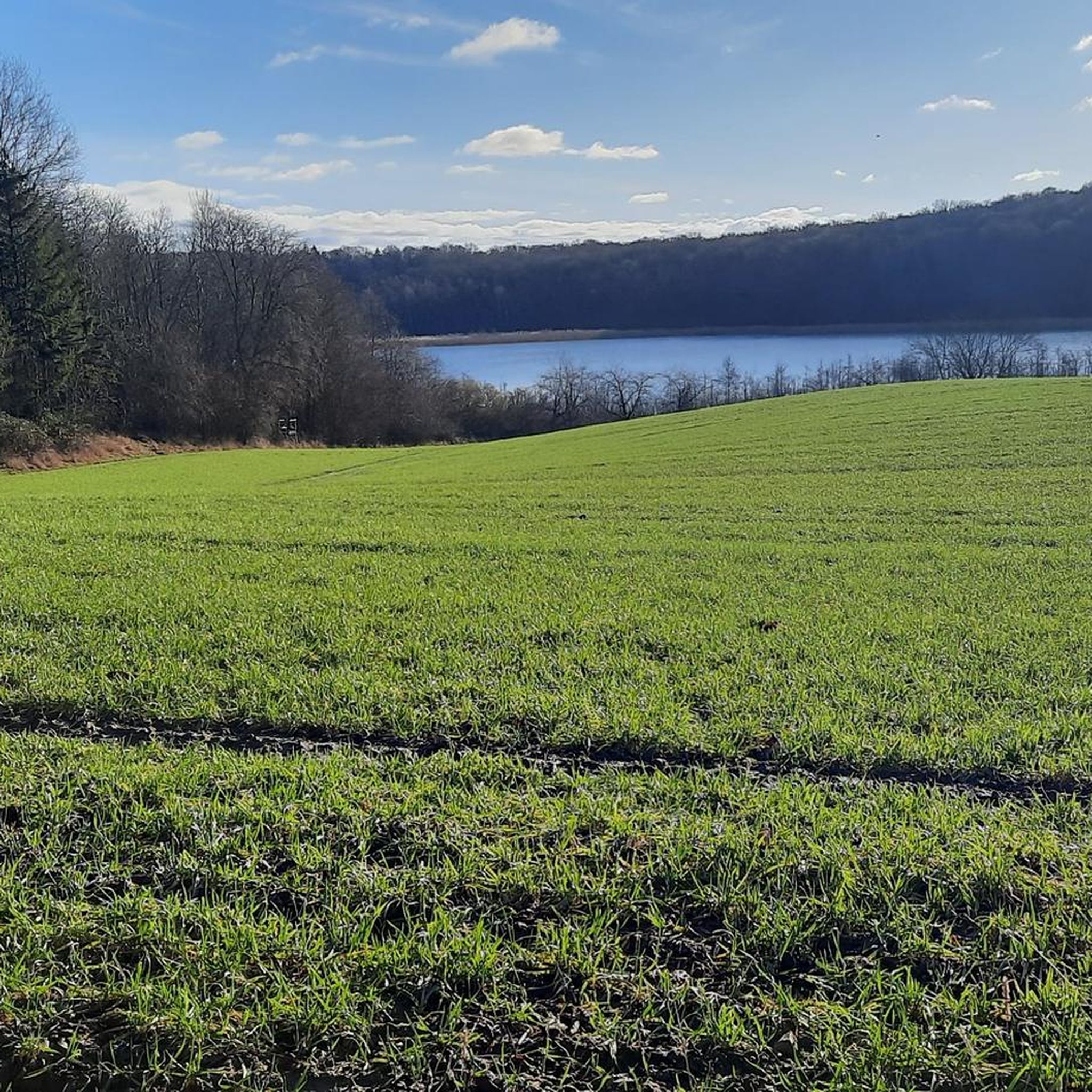
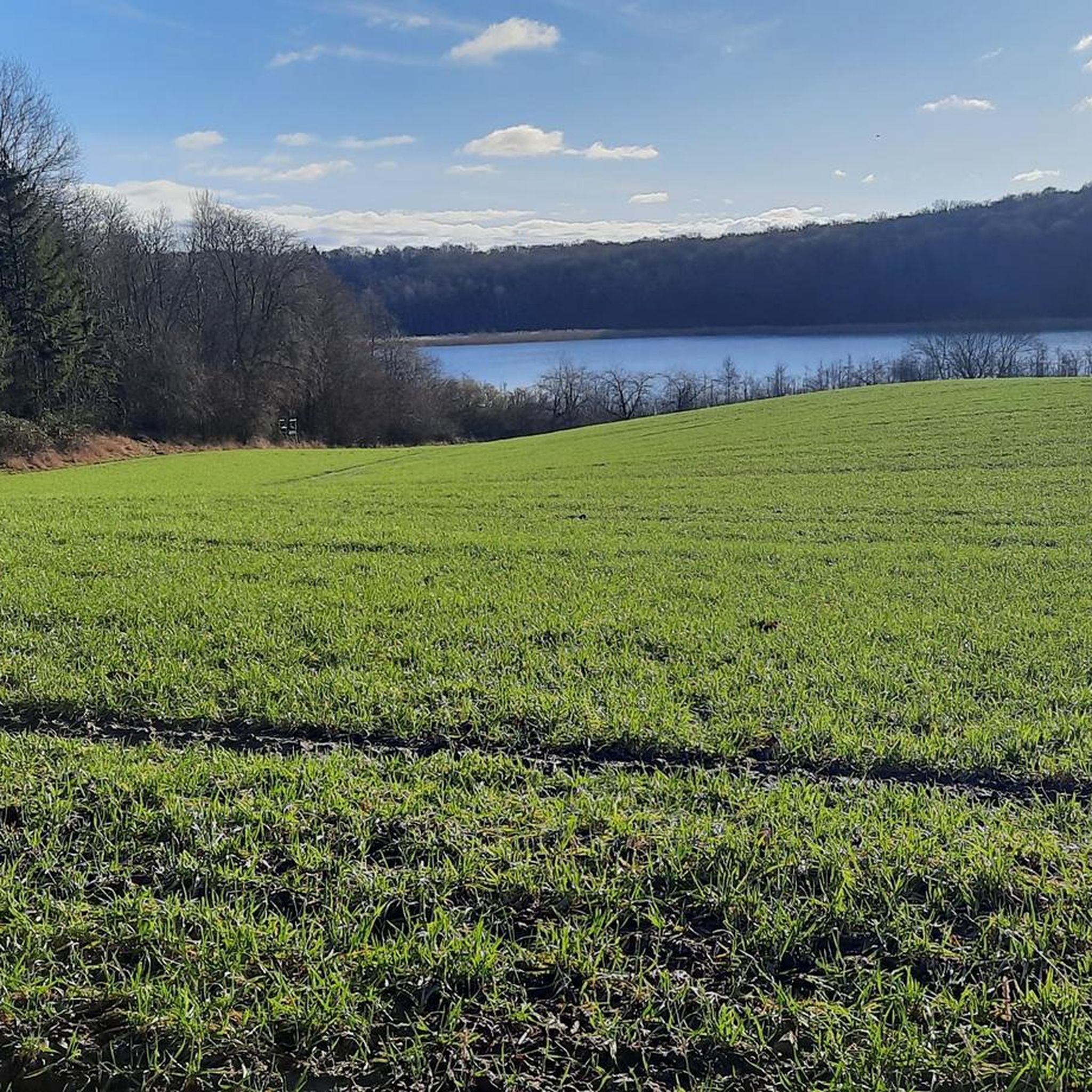
A beautiful lake with a really well thought out promenade 👍
3
0

The flint fields on Rügen near Neu Mukran, southwest of Sassnitz, are unique in Germany. They are also called the "Stone Sea". Strictly speaking, they are located in the "Schmalen Heide", a narrow, elongated strip of land between Neu Mukran and Binz. It is a stone landscape - 90 percent made of flint - interspersed with islands of vegetation. This area of around 40 hectares has been a nature reserve since 1935. Volunteers ensure that the vegetation does not spread too uncontrollably and overgrow the flint fields. Heather and juniper islands break up the stone world a little. It is said that adders are native here. But don't worry, they usually stay away from people. But how did this natural spectacle come about? The sea washed the flint out of the chalk cliffs around 3,500 to 4,000 years ago and storm surges eventually washed away the stone walls. https://www.sassnitz-ruegen.de/feuersteinfelder-ruegen-neu-mukran/
7
0
Anyone heading for the so-called Schmale Heide will recognize them from afar: the Rügen flint fields! Located near the towns of Mukran and Prora, the flint fields are almost like a German Stonehenge. One cannot help but wonder who placed this "sea of stone" in the landscape. Was it giants, goblins or other mysterious creatures, even aliens? The imagination is certainly stimulated when one sees the Rügen flint fields. But anyone who studies the sea of stones in a scientific way can find out: 3,500 to 4,000 years ago, not entirely unusual for the region in its then form, a number of storm surges raged, which with their enormous force ensured that the flints that were literally hurled out of the limestone deposits on the Jasmund peninsula found a new home in the Schmale Heide. The flint stones lay there as if they were made to last forever and bravely defied the attempts of the heather plants to settle on them. https://www.reiseland-ruegen.de/ausflugsziele-sehenswuerdigkeiten/feuersteinfelder-ruegen/
8
1

. A wonderful natural path through the beech forests of the Granitz, there was a smell of mushrooms, the leaves of the beech trees and the Baltic Sea blew its relatively mild breezes through the forest, just beautiful
13
0

Nice place to build a little something out of the stones.
8
1
Frequently Asked Questions
What unique natural features can I explore around Buschvitz?
The region offers diverse natural features. You can discover the unique geological formations of the Flint Fields of Rügen, where storm surges created impressive flint stone walls. Another highlight is the Dwarf beeches (Witches' Forest) in the Semperwald, known for their bizarre growth forms creating a mystical atmosphere. Additionally, the Cascade ponds in Semper Forest Park provide a tranquil setting with restored ponds important for amphibians.
Are there natural monuments suitable for families with children near Buschvitz?
Yes, several natural monuments are family-friendly. The Dwarf beeches (Witches' Forest) in the Semperwald offer a magical experience for all ages with their unique trees. The Flint Fields of Rügen are also suitable for families, providing an open landscape where children can explore the interesting stone formations.
What are the best natural monuments for hiking with scenic views?
For scenic views and hiking, consider the Clifftop Trail Granitz (Southeast Rügen Biosphere Reserve), which meanders through beech forests along the steep coast, offering beautiful views of the Baltic Sea. Another excellent option is the Clifftop Trail Binz–Sellin, featuring primeval nature along the high bank with sea views. The extensive Bodden-Panoramaweg also offers diverse landscapes along the water's edge.
Can I find historical sites among the natural monuments near Buschvitz?
While primarily natural, the region does offer a blend of nature and history. The Hügelgräberfeld (Tumulus field) northwest of Buschvitz is an ancient burial ground that serves as both a historical and natural monument, offering a glimpse into the past within an undisturbed landscape.
What is the best time of year to visit the natural monuments around Buschvitz?
The best time to visit depends on your interests. Spring and autumn offer pleasant temperatures for hiking and fewer crowds. However, if you're interested in birdwatching at the Halbinsel Pulitz, note that access is restricted from January 15th to July 15th to protect nesting birds. Summer provides warmer weather for coastal trails, but can be busier. The Dwarf beeches (Witches' Forest) are an attraction in every season, with a rainproof canopy in summer and visible snake-shaped branches after leaf fall.
Are there opportunities for birdwatching near Buschvitz?
Yes, the region is excellent for birdwatching. The Halbinsel Pulitz (Pulitz Peninsula) is a crucial bird breeding ground, though access is restricted from January 15th to July 15th. The Nonnensee (Lake Nonnen) is another vital breeding and sanctuary for numerous bird species, with a circular path and a birdwatching tower near Dreschvitz providing excellent observation opportunities.
What kind of hiking trails are available near the natural monuments?
You'll find a variety of hiking trails. The Clifftop Trail Granitz and Clifftop Trail Binz–Sellin offer intermediate routes along the coast. The Bodden-Panoramaweg is an extensive trail guiding hikers through meadows, forests, and along the water. For more options, you can explore various routes in the Hiking around Buschvitz guide, including easy circular paths around Nonnensee.
Are there any natural monuments with viewpoints?
Yes, several natural monuments offer excellent viewpoints. Both the Clifftop Trail Granitz and the Clifftop Trail Binz–Sellin provide fantastic views of the Baltic Sea. The Flint Fields of Rügen also offer expansive views of their unique landscape.
What other outdoor activities can I do near the natural monuments around Buschvitz?
Beyond hiking, the area around Buschvitz offers opportunities for various outdoor activities. You can find numerous running trails, including loops around Nonnensee or towards Bergen. For cyclists, there are many road cycling routes that explore the island's diverse landscapes.
Are the natural monuments around Buschvitz accessible for visitors with dogs?
Many natural areas and trails around Buschvitz are dog-friendly, especially the numerous hiking paths. For instance, the circular path around Nonnensee is a pleasant route for walks with dogs. However, always ensure your dog is on a leash and check for specific signage, particularly in protected bird breeding areas like the Halbinsel Pulitz, where restrictions may apply.
How long should I plan for a visit to the natural monuments?
The duration of your visit can vary greatly. Short walks around the Dwarf beeches (Witches' Forest) or the Cascade ponds might take an hour or two. Exploring the Flint Fields of Rügen can also be a shorter visit. For clifftop trails like Granitz or Binz–Sellin, plan for half a day or more, depending on the length of your hike. The extensive Bodden-Panoramaweg can be explored in sections over several hours.
What is the terrain like on the trails around the natural monuments?
The terrain varies from well-maintained paths to more natural, sometimes uneven, forest trails. Clifftop trails like those in Granitz and between Binz and Sellin can involve some gentle ascents and descents. The Flint Fields are an open, stony landscape. Paths around Nonnensee are generally flat and easy. Always wear appropriate footwear for outdoor exploration.
Most popular routes around Buschvitz
Most popular attractions around Buschvitz

Get inspired with the komoot mobile app


Explore more
Extend your search for the best caves by checking out these guides of the top ones around Buschvitz:
