Attractions and Places To See around Villars-le-Comte - Top 20
Best attractions and places to see around Villars-le-Comte. This small municipality in the canton of Vaud, Switzerland, is characterized by its rural landscape, with a significant portion dedicated to farming and forest. While Villars-le-Comte itself does not host major tourist attractions, its tranquil setting offers insights into traditional Swiss village life. Nearby towns provide points of interest, including historical sites and religious buildings.
Best attractions and places to see around Villars-le-Comte
- The most popular attractions is Romont, a settlement…
Last updated: July 6, 2026
Saint-Étienne Reformed Church, Moudon
Highlight • Religious Site
Translated by Google •
Tip by

Collegiate Church of the Assumption of Mary, Romont
Highlight • Religious Site
Romont's collegiate church dates from the 13th and 15th centuries. It is dedicated to the Assumption of Mary. In the choir there are choir stalls, whose wooden …
Translated by Google •
Tip by

Sign up now to discover places like this
Get recommendations on the best single tracks, peaks, & plenty of other exciting outdoor places.
Sign up for free
Abbey of La Fille-Dieu
Highlight • Religious Site
Translated by Google •
Tip by

Château de Lucens
Highlight • Castle
Translated by Google •
Tip by

Cremin Village and Historic Bread Oven
Highlight • Historical Site
Small village in the commune of Lucens with its four-poster dating from 1813, the festival is the last Sunday in May: bread, pizza, cakes cooked …
Translated by Google •
Tip by

Sign up for free to discover even more attractions around Villars-le-Comte.
Sign up for free
Already have an account?
Start today with a free account
Your next adventure awaits.
Login or Signup
Tips from the Community

L'abbaye de la Fille-Dieu is a monastery of Cistercian nuns located near the town of Romont in the canton of Fribourg (Switzerland). Founded in the 13th century, the abbey has experienced the vicissitudes of history, but the praise of God and monastic life were never interrupted. At the beginning of the 20th century, it affiliated with the Cistercian Order of the Strict Observance (Trappist).
0
0

The abbey "La Fille-Dieu" is a place of silence and prayer. It is located directly on the Way of St. James. Even today, some nuns still live in the monastery and practice their faith here. The Benedictine nuns have been at home here continuously since 1268. Important! The religious community is happy to offer travelers accommodation and sells homemade delicacies in the monastery shop. This includes an aromatic honey mustard that is made according to an old recipe found in the monastery. While the nuns hold their devotions in the church, it is open to the public. Silence and respect are the top priority.
0
0
The church tower of Saint-Etienne was once an integral part of the fortifications. Easily recognizable by its solid construction and the loopholes on the sides. In the tower passage there is an interesting information board stating that Wolfgang Amadé Mozart and his family stopped in Moudon in 1766 on their journey through Switzerland.
1
0
Reminiscent of Friborg Cathedral, but smaller.
0
0

The Collegiate Church of Romont dates from the 13th and 15th centuries. It is dedicated to the Virgin of the Assumption. It is in the choir that the stalls are located, a series of wooden seats reserved for members of the clergy, who were numerous at the time. The first church of Romont was consecrated in the 13th century. Destroyed by fire in the 15th century, it was immediately rebuilt, in molasse*, in a flamboyant Gothic style. It is dedicated to Our Lady of the Assumption. Every Good Friday at 3 p.m. in Romont, the procession of the Mourners takes place, a tradition widely relayed by the media and which brings together Romont residents and visitors, believers or laypeople. It commemorates the Passion of Christ by referencing the compassion of the women of Jerusalem along the route to Mount Golgotha.
0
0
The first mention of a church dedicated to Saint Stephen in Moudon dates from 1134-1143, although its existence probably dates back further. Located outside the medieval village centered on the hill, it was then the counterpart to the Notre-Dame chapel located at the top of this hill1. Nicknamed “the cathedral of Broye” by the city's inhabitants, it is the largest parish church in the canton of Vaud and one of the best examples of radiant Gothic style in French-speaking Switzerland2. Construction began around 1281, the date of the enclosure flanking the apse wall, and was completed around 1330 with the construction of the last three vaults and the western rose. The bell tower, openworked at its base by the town gate, was erected between the years 1417 and 1436. Chapels were then added to the sides. The simple plan, without transept, evokes a Cistercian influence with its three naves and its rectangular choir, but in elevation the style is radiant Gothic. The vaults are decorated with paintings in 1506-1512. The stalls from 1499-1502 are the work of sculptors Rodolphe Pottu, Peter Vuarser and Mattelin Vuarser. The communion table, Gothic, dates from 1564. The molasse pulpit was built in 1695. The baroque buffet organ from 1764 is by the maker Adrien-Joseph Pottier and the sculptors Joseph Dellion and Charles Puidoux. Finally, the stained glass windows date from 1935-1937 (Ernest Biéler), and 1951-1953 (Charles Clément)2. The church was restored several times, in 1836-1839 by the architect Henri Perregaux3, then again in 1896-1897, in 1934-1935, in 1949-1974 (with interruptions)2. The church is listed as a Swiss cultural property of national importance. Source Wikipedia
0
0

The Reformed Church of Saint-Étienne, also known as the Temple of Saint-Étienne, is a Protestant church in the commune of Moudon in the canton of Vaud, Switzerland. It is a parish church of the Evangelical Reformed Church of the canton of Vaud
1
0
"Closer to Heaven". Romont's collegiate church dates from the 13th and 15th centuries. It is dedicated to the Assumption of Mary. In the choir there are choir stalls, whose wooden seats were formerly reserved for the clergy. The decoration of the oak and walnut furniture is remarkable. It is said that the fantastic figures of the lower parts inspired John Howe for The Lord of the Rings. The collegiate church alone forms a history of stained glass with incredible works from the Middle Ages. Source: https://fribourg.ch/de/romontregion/architektur-und-denkmaeler/stiftskirche/
0
0
Frequently Asked Questions
What historical sites can I explore near Villars-le-Comte?
The region offers several historical sites. You can visit the medieval town of Romont, which features a castle and well-preserved buildings. Another significant site is the Saint-Étienne Reformed Church in Moudon, known for its radiant Gothic style and historical importance. Don't miss the Château de Lucens, a fairytale-like castle, and the historic Cremin Village with its 1813 bread oven.
Are there any castles or medieval towns to visit in the area?
Yes, the medieval town of Romont is a must-see, offering a unique view over the green countryside and featuring its own castle. Additionally, the picturesque Château de Lucens, with its turrets and annexes, is well worth a visit.
What religious buildings are worth visiting near Villars-le-Comte?
You can explore the Saint-Étienne Reformed Church in Moudon, which is the largest parish church in the canton of Vaud and a prime example of radiant Gothic architecture. Another notable site is the Abbey of La Fille-Dieu, a Benedictine monastery located directly on the Way of St. James, where you can find homemade specialties in its monastery shop.
Can I find family-friendly attractions around Villars-le-Comte?
Yes, several attractions in the vicinity are suitable for families. The medieval town of Romont offers historical exploration. The Saint-Étienne Reformed Church in Moudon and the Abbey of La Fille-Dieu are also listed as family-friendly. Additionally, Cremin Village, with its historic bread oven, can be an interesting stop.
What outdoor activities can I do near these attractions?
The area around Villars-le-Comte is excellent for outdoor activities. You can find various cycling routes, including touring bicycle routes like the 'Bridge over the Broye – Path Along the Broye loop from Lucens' and road cycling routes such as the 'Chateau d'Estavayer le Lac – Estavayer-le-Lac loop from Lucens'. For mountain biking, there are trails like the 'Refuge des Alpes – The Broye Singletrack loop from Lucens'. You can find more details on these activities in the Cycling around Villars-le-Comte, Road Cycling Routes around Villars-le-Comte, and MTB Trails around Villars-le-Comte guides.
Are there cycling routes suitable for different skill levels?
Yes, the nearby cycling routes cater to various skill levels. For touring bicycles, you can find moderate routes like the 'Bridge over the Broye – Path Along the Broye loop from Lucens'. Road cycling offers moderate options such as the 'Chateau d'Estavayer le Lac – Estavayer-le-Lac loop from Lucens'. Mountain bikers can choose from easy trails like the 'Slalom MTB Trail Cremin loop from Lucens' to more moderate ones like the 'Hazel Tunnel – Vallon des Vaux loop from Villars-le-Comte'. Explore these options in the dedicated cycling and MTB guides.
What kind of views can I expect in the region?
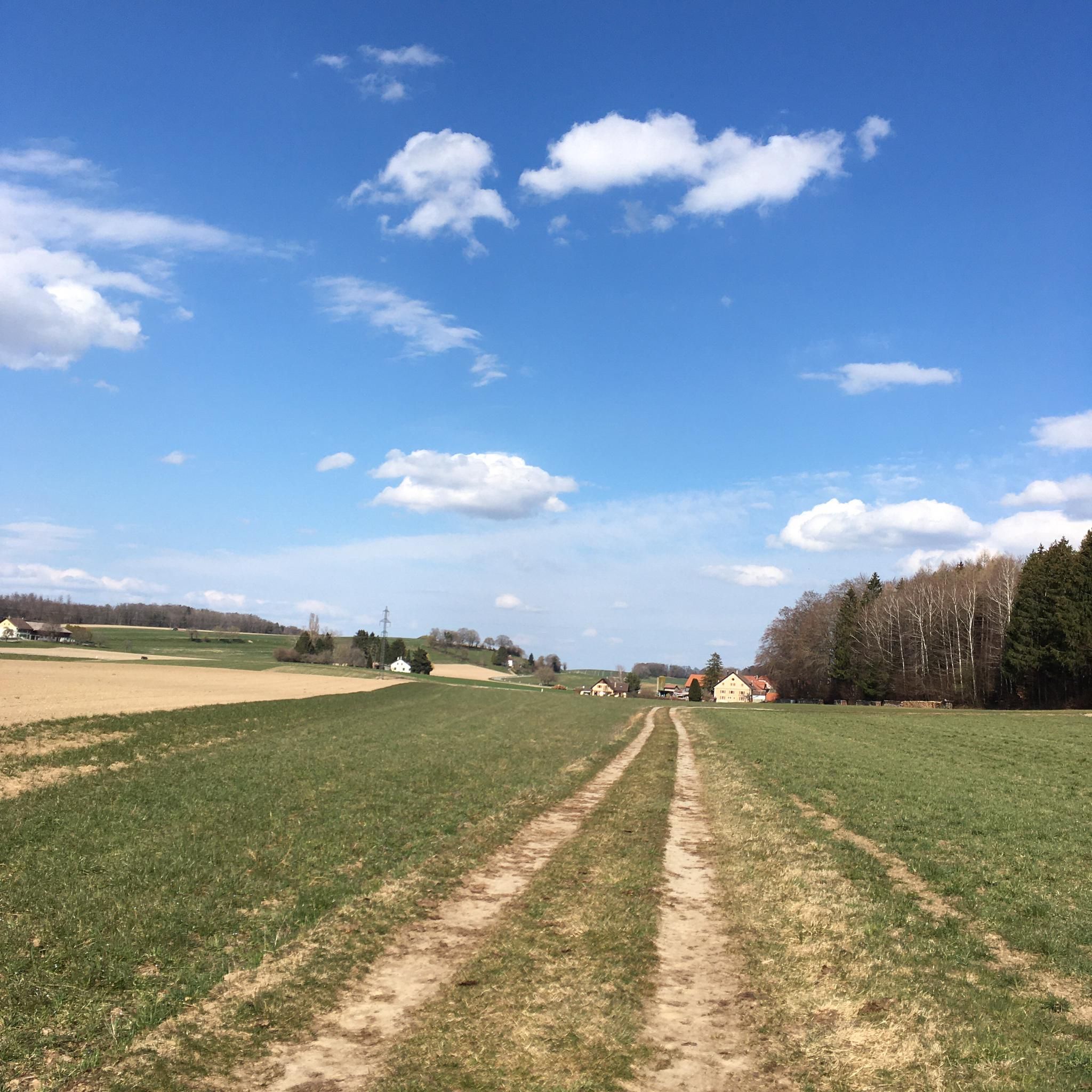
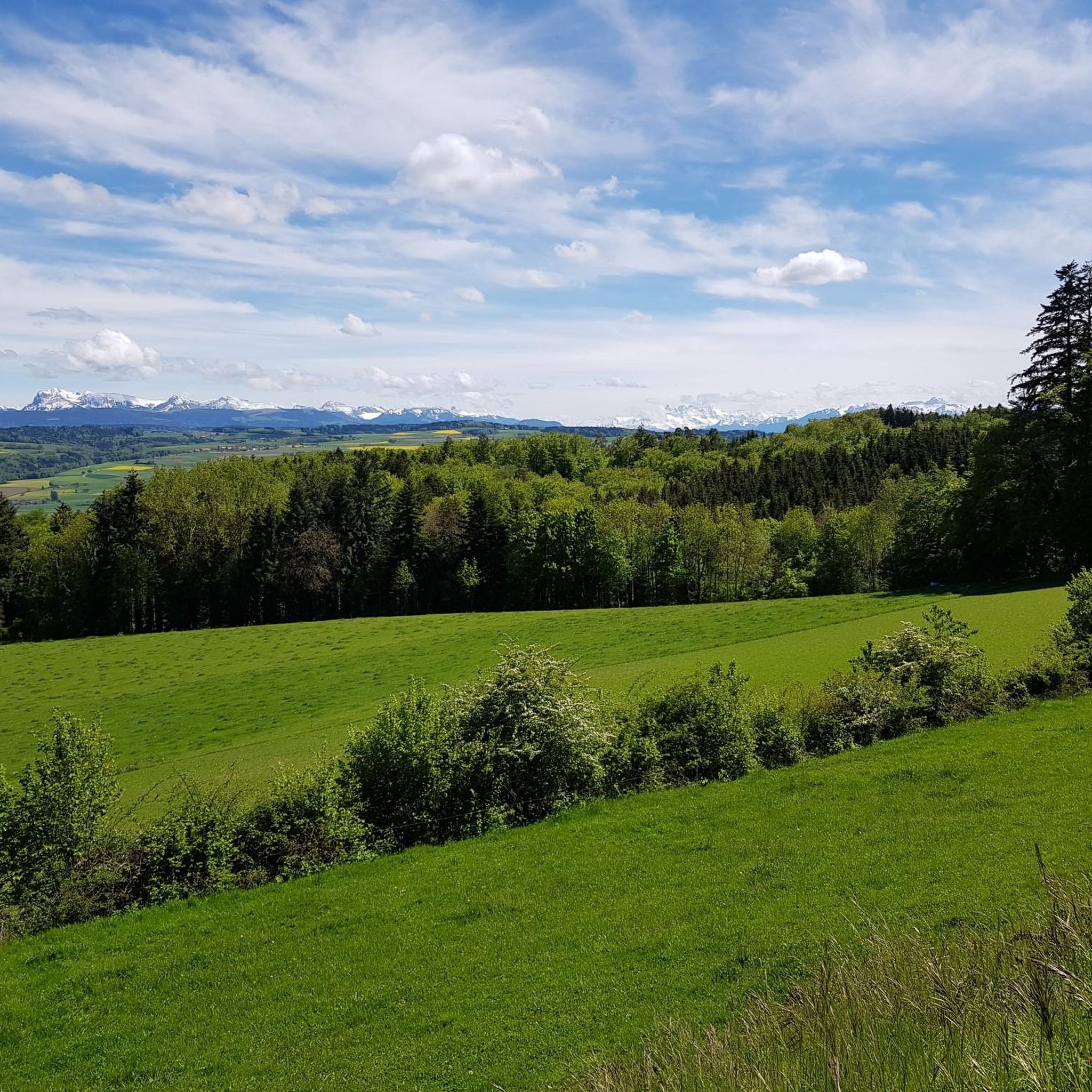
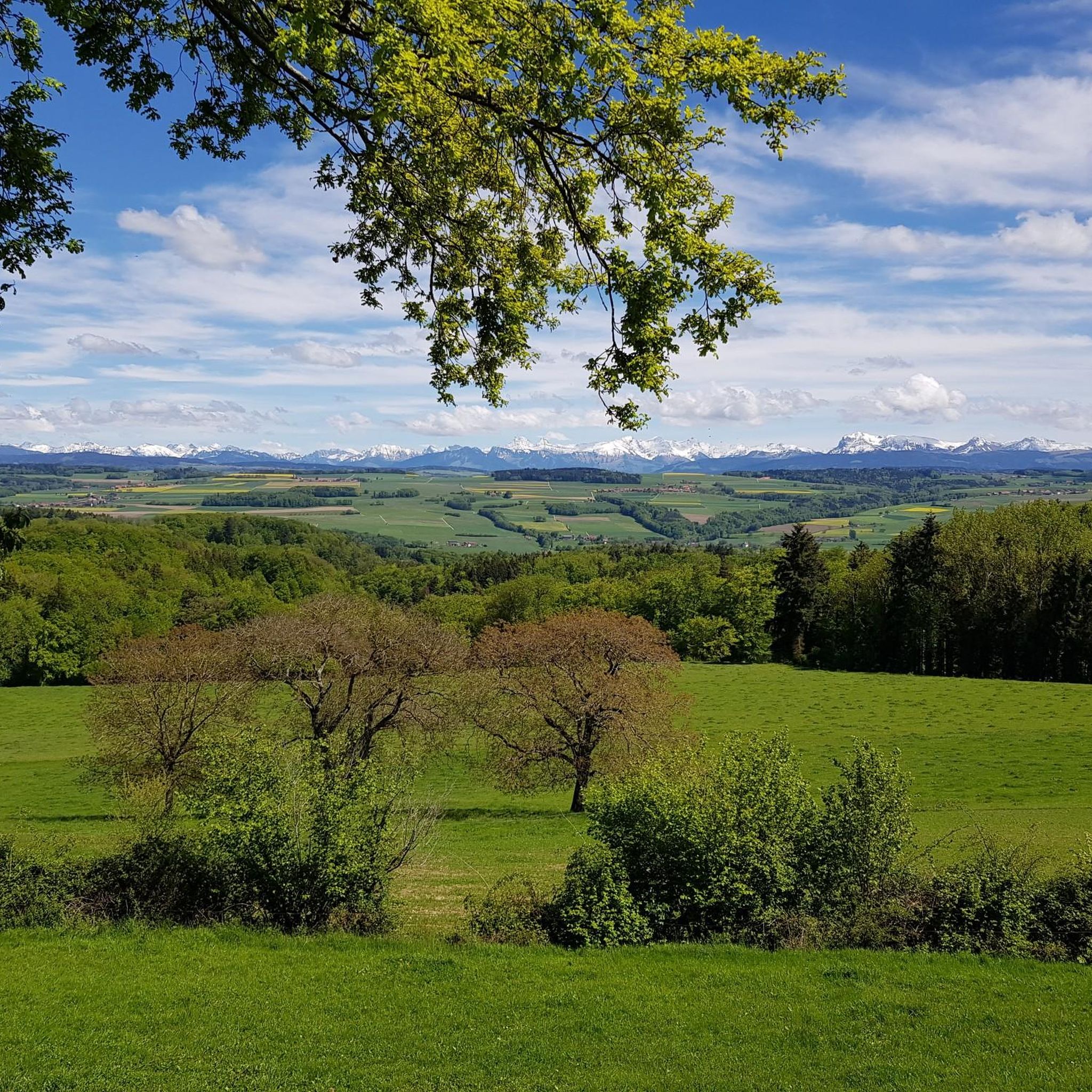
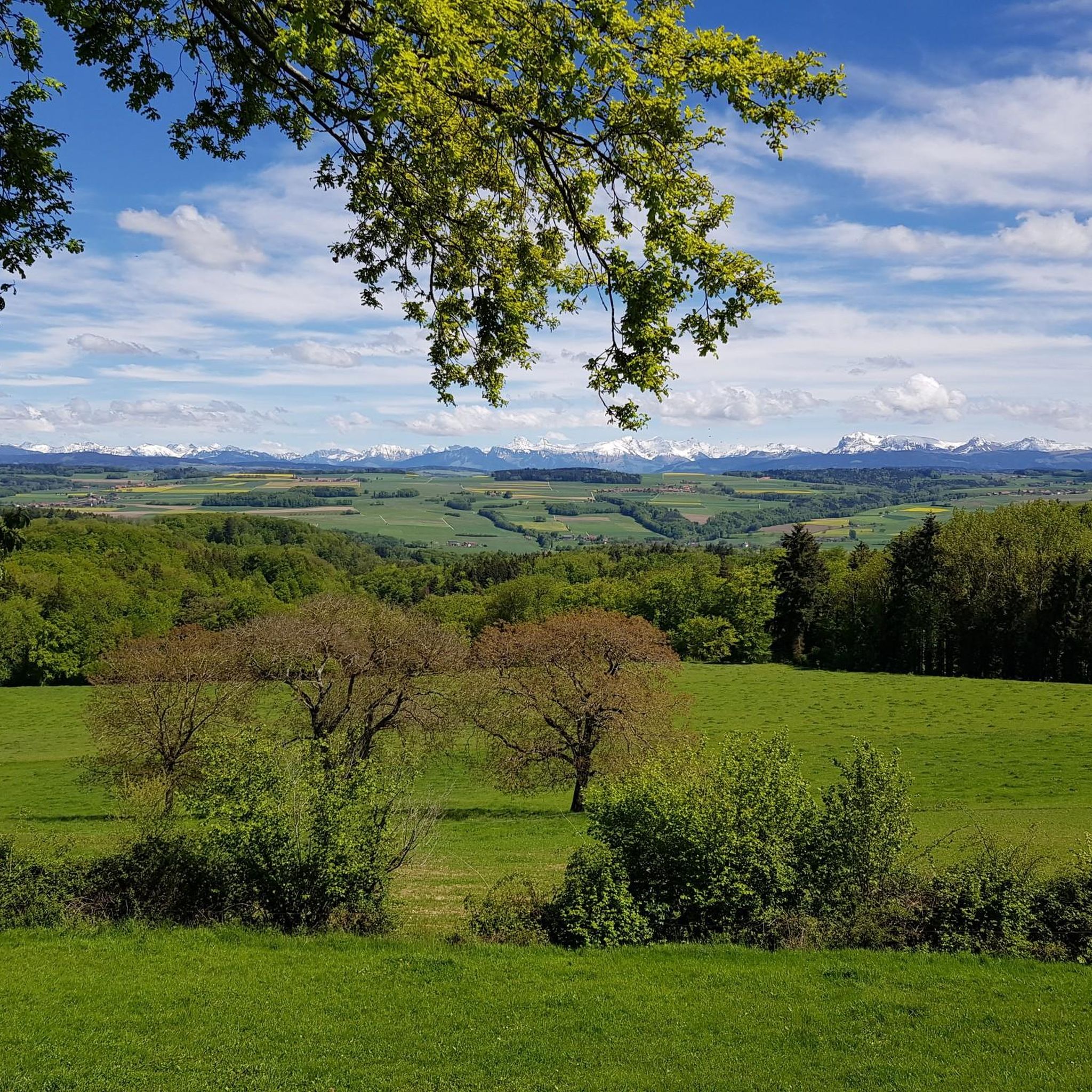
The region, characterized by its rural landscape, offers scenic views. From the elevated position of Romont, you can enjoy unique vistas over the green countryside. The Château de Lucens also provides a viewpoint, allowing you to appreciate the surrounding area.
What makes the Abbey of La Fille-Dieu unique?
The Abbey of La Fille-Dieu is unique for its continuous Benedictine presence since 1268 and its location directly on the Way of St. James. It offers accommodation for travelers and sells homemade specialties, including an aromatic honey mustard made from an old monastery recipe, in its monastery shop.
Is there a place where I can experience traditional Swiss village life?
Villars-le-Comte itself, with its tranquil, rural setting, offers insights into traditional Swiss village life. For a specific experience, consider visiting Cremin Village, known for its historic bread oven from 1813, which hosts a festival on the last Sunday in May where bread, pizza, and cakes are cooked in a wood fire.
What do visitors enjoy most about the attractions around Villars-le-Comte?
Visitors particularly appreciate the rich cultural and architectural heritage, such as the impressive stained glass windows in Romont and the historical significance of the Saint-Étienne Reformed Church. The charming, well-preserved buildings and unique views from places like Romont are also highly valued by the komoot community.
How can I learn more about the history of the region?
To delve deeper into the region's history, you can explore the historical sites mentioned, such as the medieval town of Romont and the Saint-Étienne Reformed Church in Moudon, which has an information board detailing its past, including a visit by Wolfgang Amadé Mozart. The Château de Lucens also has a rich history, having once been home to the son of Sir Arthur Conan Doyle.
Most popular routes around Villars-le-Comte
Most popular attractions around Villars-le-Comte

Get inspired with the komoot mobile app


Explore more
Still not found the Highlight you’re looking for? See guides of the top attractions in other regions:
