The best traffic-free bike rides in Saaledurchbruch Bei Rothenburg
4.5
(76)
935
riders
2
rides
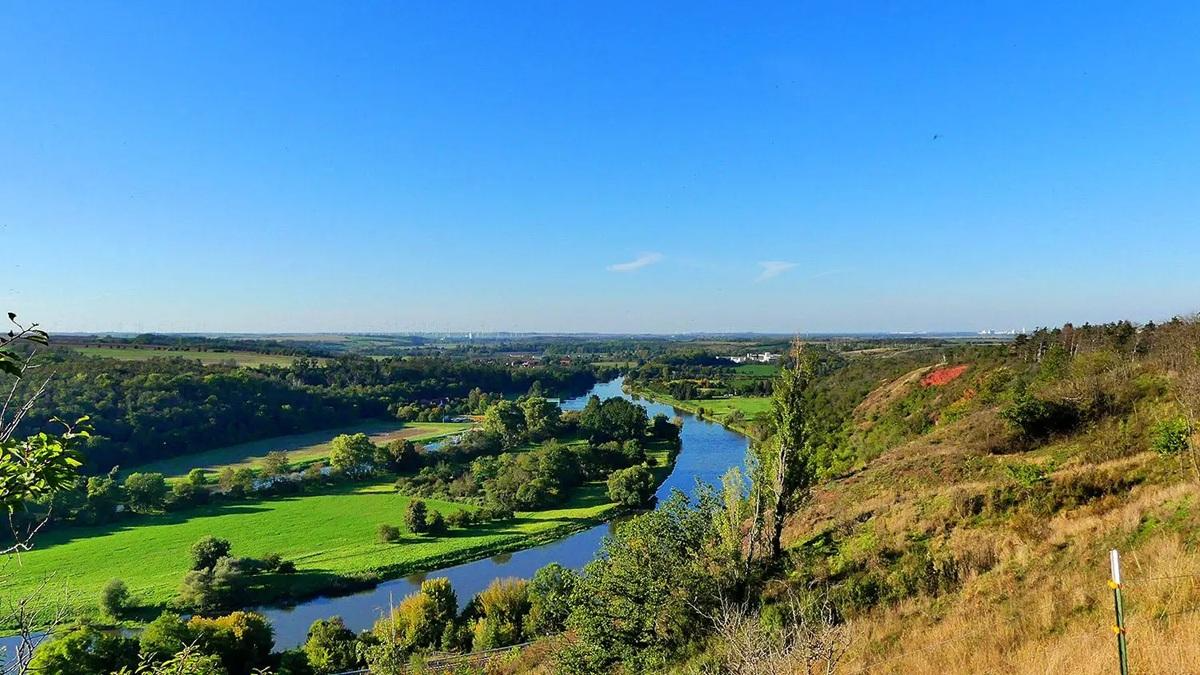
No traffic road cycling routes in Saaledurchbruch Bei Rothenburg navigate a landscape shaped by the Saale River's breakthrough through the Halle-Hettstedter Gebirge. This area features steep slopes, dry grasslands, and river floodplains. The terrain includes unique geological formations of Upper Carboniferous sandstones and Zechstein outcrops, offering varied surfaces for road cycling. The region is characterized by its ecological significance, with diverse habitats along the river and on the hillsides.
Best no traffic road cycling routes in Saaledurchbruch Bei Rothenburg
- The…
Last updated: May 12, 2026
4.5
(20)
159
riders
54.5km
02:22
220m
220m
Moderate road ride. Good fitness required. Some segments of this route may be unpaved and difficult to ride.
7
riders
Easy road ride. Great for any fitness level. Mostly well-paved surfaces and easy to ride.

Sign up for free
5.0
(1)
9
riders
Moderate road ride. Great for any fitness level. Some segments of this route may be unpaved and difficult to ride.
Our route recommendations are based on thousands of hikes, rides, and runs completed by other people on komoot.
Start today with a free account
Your next adventure awaits.
Login or Signup



Tips from the Community

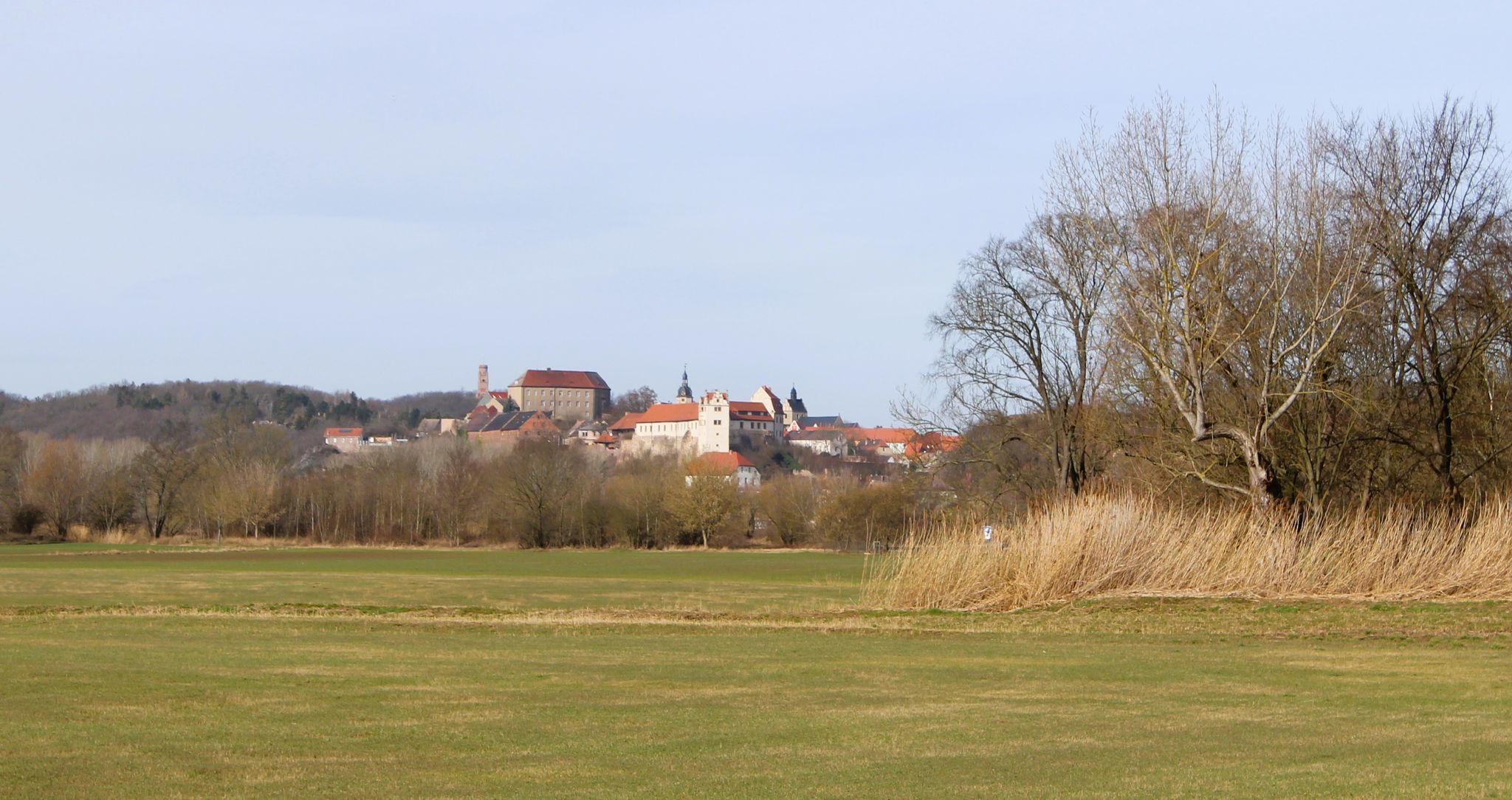
At least the tower is clearly visible from the cycle path.
0
0

An impressive sight even from a distance!
0
0

Yes, everything can be found in Gröna
1
0

In 1565, the gatekeeper's house was built on the upper castle. The keep of the upper castle appears already ruinous in Merian's 1640 account. It was completely demolished in 1697. The upper castle burned down in the town fire of 1660. In 1663, the Trothas sold their fief to Johann Heinrich von Menius. He built the Menius House on the town side from 1663 to 1689. The lower castle was sold in 1446 by Archbishop Friedrich to Koppe von Ammendorf and Caspar aus dem Winckel. The Ammendorf family received the Saale side of the castle, and the Winkel family the town side. In 1555, the Winkel family acquired the Ammendorf share, thus becoming the owner of the entire lower castle. Around 1600, the lower castle underwent extensive expansion under Christoph aus dem Winckel. Three gables in Baroque style were added to the courtyard side of the Ammendorf house. The striking Winkel Tower at the northern tip was built in 1606. Between 1768 and 1770, the Winkel House was renovated in the Rococo style. In 1795, the Winkels sold the entire Wettin estate to the von Merode family, who sold it to Prince Louis Ferdinand of Prussia on November 4, 1803. Louis Ferdinand had the Winkel Palace expanded once again for residential purposes until 1806. After his death, the lower castle was used solely for commercial purposes. The tenants established a brewery and a distillery in the buildings. Between 1806 and 1813, the gatehouse on the north side was demolished and the access road was widened. Around 1830, the upper floors of the north and south wings were demolished. The keep, which had long been in ruins, was demolished in 1860, as was St. Peter's Church in 1840. Several outbuildings were built on the castle grounds in the 19th and 20th centuries. They still define the castle's appearance today. The area around the gate of the Lower Castle was significantly altered after 1930 when it was used as a Gauführerschule (district leader school) for the Nazi Party. In the early 1950s, the Finance School for Farmers moved into the Lower Castle. Source: https://de.wikipedia.org/wiki/Burg_Wettin
4
0
The Altzell Annals name a Dietrich II as Count of Wettin. After Dietrich's assassination in 1034, his son Thimo inherited the county. His son, Conrad II, was known as "the Great," an important figure in Saxon history. He resided at the castle from 1091 onward. The rulers of several Central German landgraviate and margraviate (e.g., Meissen, Thuringia), as well as the rulers of Saxony and Thuringia, and, for a time, of Poland, Great Britain, Belgium, and other European states, descended from the Counts of Wettin. In 1123, Conrad appointed ministerials from the Schochwitz family as burgraves. They had to step down when Henry, Conrad's son, resided at the castle from 1156 onward. The construction of the upper castle as a burgrave's castle should be seen in this context. There were now two castles on the castle rock, each with a separate outer bailey. In 1217, the Wettin line of the counts died out. The Wettin Counts of Brehna inherited Wettin. On November 14, 1288, Otto IV of Brehna sold the County of Wettin to the Archbishop of Magdeburg. It was transformed into an archiepiscopal office. The Counts of Brehna were members and supporters of the Knights Templar. Count Frederick II was a Knight Templar and fell at Acre on October 16, 1221. His son Dietrich donated the town of Mücheln to the Order around 1240. A noble family called the Wettin, which temporarily held the castle as a fief, is not related to the margravial family. The castle's subsequent history, from around 1300 onward, is linked to a complicated fiefdom system. The upper castle and the lower castle were divided into several fiefs with associated lands. Important fiefdoms were the Schraplausche and Trotha fiefdoms on the upper castle. In 1440, the von Trotha family owned both fiefdoms of the upper castle. Since 1592, the Schraplausche fiefdom had been owned by the Prince of Brandenburg. Source: https://de.wikipedia.org/wiki/Burg_Wettin
4
0
The early development of Wettin Castle, like many old castles, is shrouded in the mists of history. It is assumed that a Slavic castle complex already existed in Carolingian times, which became the center of an early German castle ward during the German Eastward Settlement. The Slavic name of the nearby deserted village of Pögritz means "below the castle."[1] The name Wettin can be traced back to the Old Sorbian vitin. Vitin comes from the Old Sorbian root vit, which translates as "welcome!". Accordingly, the town of Wettin, located at a ford on the Saale River, with its castle, was a controlled gateway from Germanic to Slavic regions, particularly into the Gau Nudzici, whose eponymous town of Neutz is not far from Wettin. The castle was first mentioned in a charter of King Otto I dated July 29, 961, as Vitin civitas (City of Wettin). Wettin is a castle ward town that owes tithes to the Moritz Monastery in Magdeburg. In 1157, it appears as "In burcwardo Witin in villa que dictur Pothegrodice" (in the castle ward Wettin in the place where P. is mentioned), and in 1126 as Witin. The name of the village of Pögritz, located near the castle, can be traced back to the Slavic word podgrad (in the 12th century, Pothegrodice), meaning "under the castle." Whether it was a Slavic settlement beneath a Slavic rampart or a later settlement beneath the German castle remains to be determined. What is certain, however, is that Wettin was the central location of an important castle ward. The castle ward belonged to the domain of Margrave Rikdag. His relative Dedo was granted the County of Wettin in the 10th century. Source: https://de.wikipedia.org/wiki/Burg_Wettin
4
0
Wettin Castle, also known as Schloss Wettin, is a heavily built-over hilltop castle in the town of Wettin in the Saalekreis district of Saxony-Anhalt. It is the ancestral seat of the House of Wettin, margraves, electors, and kings of Saxony. Source: https://de.wikipedia.org/wiki/Burg_Wettin
6
0
Frequently Asked Questions
How many no traffic road cycling routes are available in Saaledurchbruch Bei Rothenburg?
Saaledurchbruch Bei Rothenburg offers several dedicated no traffic road cycling routes. You can find options ranging from easy to moderate difficulty, allowing you to explore the unique landscapes of the Saale River breakthrough.
Are there any easy no traffic road cycling routes suitable for beginners?
Yes, there is an easy route perfect for beginners or those seeking a relaxed ride. The Saalebrücke Alsleben – Saale Bridge Nelben loop from Schleuse Alsleben is approximately 21.8 km long and features minimal elevation gain, making it a pleasant option for all skill levels.
What kind of landscapes can I expect on these no traffic road cycling routes?
The routes in Saaledurchbruch Bei Rothenburg traverse a diverse landscape shaped by the Saale River. You'll encounter dramatic steep slopes, unique dry grasslands, and lush Saale floodplains with old river arms and riparian forests. The area is ecologically significant, home to rare plant species thriving in its warm, dry conditions.
Are there any challenging no traffic road cycling routes in the area?
While there are no routes explicitly rated as 'difficult' in this selection, the moderate routes offer a good challenge. For instance, the View of Bernburg Castle – Bernburg Lock loop from Könnern covers nearly 55 km with over 220 meters of elevation, providing a substantial ride for experienced cyclists.
What are some interesting sights or attractions along the no traffic road cycling routes?
You can discover several points of interest. The Scenic country road between Friedeburg and the bridge is a highlight in itself, offering pleasant, low-traffic cycling. You might also encounter historical elements like the Church in Schlenze Village or the Schifffahrtssäule Rothenburg. The Rothenburg–Brucke Ferry (Saale) offers a unique river crossing experience.
Are there any circular no traffic road cycling routes?
Yes, all the featured no traffic road cycling routes in this guide are designed as loops. This allows you to start and end your ride at the same point, such as the Evangelical Church Merkewitz – Wettin Ferry loop from Nauendorf (Saalkreis), which offers a scenic circular tour.
What do other road cyclists enjoy most about cycling in Saaledurchbruch Bei Rothenburg?
The area is highly rated by the komoot community, with an average score of 4.5 stars from 79 ratings. Reviewers often praise the quiet, scenic roads, the unique natural beauty of the Saale breakthrough, and the opportunity to experience nature away from heavy traffic.
What is the best season for no traffic road cycling in Saaledurchbruch Bei Rothenburg?
The best season for road cycling in Saaledurchbruch Bei Rothenburg is generally spring through autumn. During these months, the weather is most favorable for enjoying the scenic routes and the unique flora of the dry grasslands. Spring brings blooming wildflowers, while autumn offers vibrant foliage.
Is there public transport access to the no traffic road cycling routes?
While specific public transport connections directly to every route start point can vary, the region is generally accessible. For detailed information on train or bus services to towns near the Saale Cycle Path, it's advisable to check local public transport schedules for connections to places like Könnern or Alsleben.
Are there cafes or places to stop for refreshments along the routes?
The routes pass through or near several villages and towns along the Saale River. While not every route has a cafe directly on the path, you can often find opportunities for refreshments in places like Könnern, Alsleben, or other small communities. Planning your stops in advance is recommended.
Can I find routes that follow the Saale Cycle Path but are specifically no traffic?
Yes, the broader Saale-Radweg (Saale Cycle Path) runs through the area, and many sections, especially those away from larger towns, offer minimal car traffic. The routes highlighted here are specifically chosen for their low-traffic nature, often utilizing dedicated cycle paths or very quiet country roads alongside the river.
Most popular routes in Saaledurchbruch Bei Rothenburg
Most popular attractions in Saaledurchbruch Bei Rothenburg

Get inspired with the komoot mobile app


Explore more
Browse the best Road cycling routes in other regions.
