The 20 Most Amazing Peaks in Amberg-Sulzbach
Best mountain peaks in Amberg-Sulzbach are characterized by impressive limestone cliffs, extensive forests, and charming river valleys. The region offers diverse landscapes for hikers and nature enthusiasts, featuring both prominent summits and peaks with historical significance. These mountains provide recreational opportunities and offer various viewpoints across the Franconian and Upper Palatinate countryside.
Best mountain peaks in Amberg-Sulzbach
- The most popular mountain peaks is Ossinger Observation Tower and Ossinger Hut, a viewpoint that features an observation tower and a hut.…
Last updated: July 7, 2026
Ossinger Observation Tower and Ossinger Hut
Highlight • Viewpoint
Translated by Google •
Tip by

St. John's Chapel Above Königstein
Highlight • Religious Site
Translated by Google •
Tip by

Sign up now to discover places like this
Get recommendations on the best single tracks, peaks, & plenty of other exciting outdoor places.
Sign up for free
Hartenfels Summit and Castle Ruins
Highlight • Summit
Translated by Google •
Tip by

Amberg Transmitter (Rotbühl)
Highlight • Monument
Translated by Google •
Tip by

Buchberg Summit
Highlight • Summit
Translated by Google •
Tip by
Rotbühl Summit (673 m)
Highlight • Summit
Translated by Google •
Tip by

Summit cross on Osterlochfelsen
Highlight • Summit
Translated by Google •
Tip by
Kohlbühl Summit Cross
Highlight • Summit
Translated by Google •
Tip by

Pilgrimage Church of St. John the Baptist on Johannisberg
Highlight • Religious Site
Translated by Google •
Tip by

Gottvaterberg
Highlight • Summit
Translated by Google •
Tip by
Sign up for free to discover even more peaks in Amberg-Sulzbach.
Sign up for free
Already have an account?
Start today with a free account
Your next adventure awaits.
Login or Signup
Popular around Amberg-Sulzbach
Bavaria-Bohemia long-distance cycling trail – Crossing borders
Jurasteig — hiking in the heart of Bavaria
The National Natural Landscapes in Bavaria
City, country, lake – VGN leisure tips 2025
Nature, the outdoors and adventure – hiking through the VGN's nature parks
11 Days on the Erzweg Quality Hiking Trail
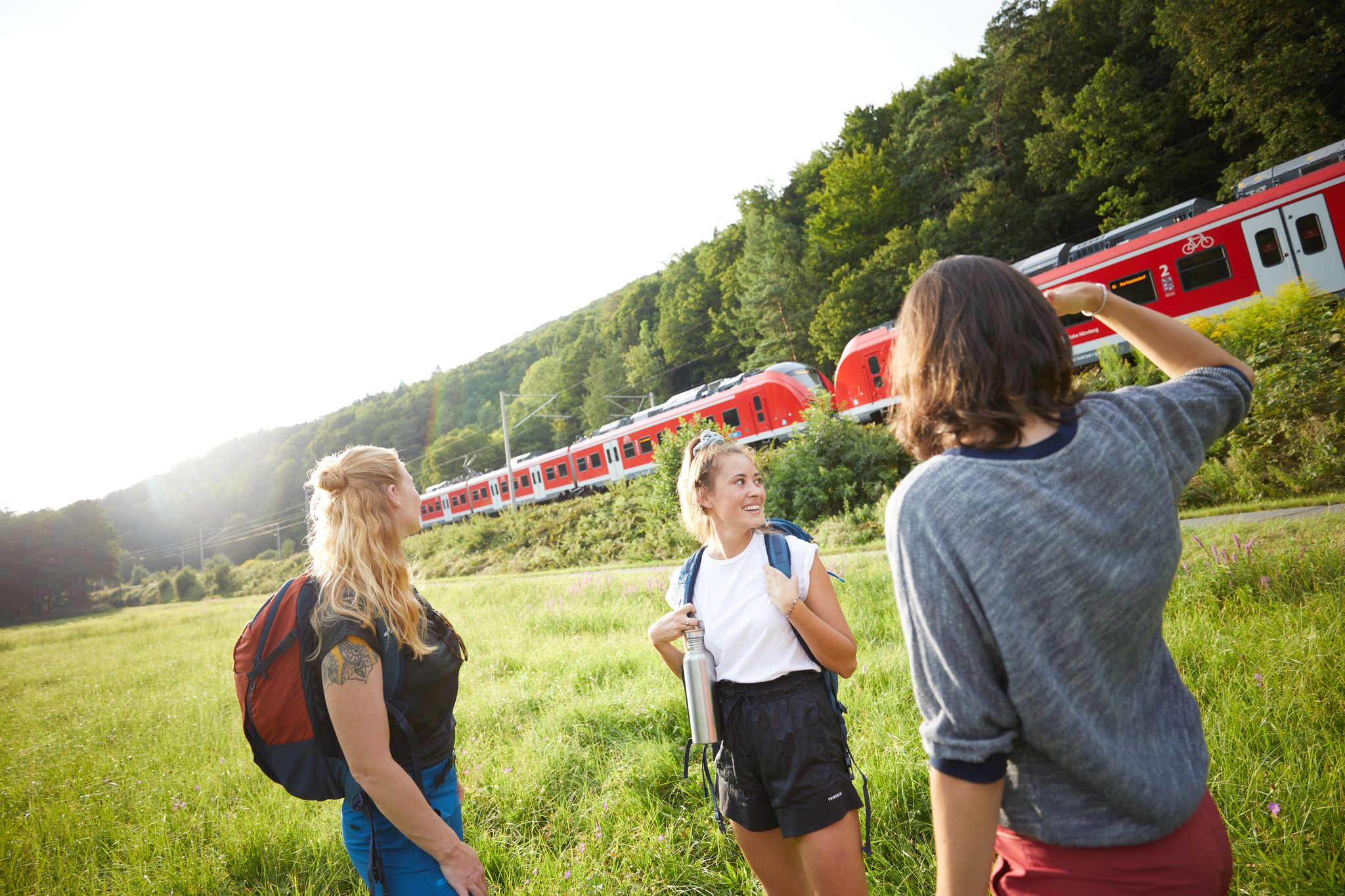
All aboard for summer hiking with Germany’s VGN
Full of views and fun – VGN leisure tips 2022
Wine, woods & walking trails — Best of VGN hiking tips
Explore southern Germany – hiking and biking with the VGN
Other adventures in Amberg-Sulzbach


Tips from the Community

Pilgrimage Church of St. John the Baptist The Johannisberg Church stands on the 605 meter high Johannisberg of the same name, the westernmost foothills of the Upper Palatinate Forest, on the western edge of a prehistoric ring wall. The Count Palatine Frederick IV, a strict Calvinist, considered this "human work as an attempt to impair the sovereignty of God". He promptly had the church blown up in 1594. Half a century later (1652) the church was rebuilt on the Johannisberg. It consists of a nave covered with a gable roof, a square choir flanked on both sides by sacristies with oratories above, a facade tower in the west covered with an eight-sided curved helmet, and a chapel at the southwest corner of the nave, which sits under a pent roof. The top floor of the facade tower houses the bell tower, in which three church bells hang. The altars, the artistic coffered ceiling, the picturesque double gallery and the benches were made by Matthias Pösl from Oberviechtach. The interior of the nave is covered with a coffered ceiling, that of the choir with a lancet vault. The sacristies are covered with groin vaults. The parapets of the nave, which is equipped with two-story galleries, are decorated with pictures from the lives of John, the four evangelists and the four doctors of the church. On the high altar, which dates from 1712, the image of John the Baptist is surrounded by the large figures of his parents, Zacharias and Elisabeth, and outside by the apostles John and James. The side altars from 1717 are dedicated to Mary and Lawrence. The pulpit was taken over in 1715 from the predecessor chapel of the Amberg Mariahilfberg Chapel. As early as 1688, an outside chapel was added to the Johannisberg Church for larger crowds of pilgrims. They even built an outdoor pulpit. During the extension work in 1712/13, the chapel was demolished and rebuilt in 1729. The beautiful acanthus altar in the chapel was created by Hans Ulrich from Vilseck. The Johannisberg Church is the highest church in the Amberg-Sulzbach district. Services are held every year on the Johannisberg Festival and on the Mountain Rescue Festival on the second Sunday in August. Since 1983, a Stations of the Cross have led to the mountain church. Source: Information board
3
0
Burgstall Hartenfels The site of the abandoned spur castle is located in the Middle Franconian Jura, on a southwest-facing rocky spur of the Great Hartenfels at 530.6 m above sea level. The castle was probably built during the 13th century by the Lords of Neidstein, but there is no mention of the castle itself. It is only mentioned indirectly in a document dated February 21, 1268, in the name of Heinrich von Hertenvels. In addition to the high medieval fortification on the Hartenfels, there are also the remains of a prehistoric structure at the same location. A long section of the rampart, about half a meter high, has been preserved, which arches around the mountain spur outside the moat of the medieval castle and thus sealed it off. Today, the site of the former castle is completely overgrown with forest, and only two ditches and the remains of the foundation walls of the former ring wall have survived. The former hilltop castle was once divided into two areas, an outer bailey at the transition from the spur to the flat summit area or plateau of the Hartenfels, and a main castle at the rocky tip of the mountain spur, in the best protected place by nature. The outer bailey was protected by a two-meter-deep and about ten-meter-wide moat. The area of the outer bailey is irregularly shaped, as it was adapted to the rocky terrain between the plateau and the rocky spur. As it was easily attacked from the plateau, it had to be protected on its north-east side by a strong wall, of which a 4.50-meter-wide and one-meter-high rampart still remains. Approximately in the middle of this rampart, a 3.80-meter-wide break gives an idea of the former entrance to the castle, and even today you enter the castle grounds at this point. The main castle has a trapezoidal area about 50 meters long and 25 meters wide. On its west and south sides it is well protected by the vertical drop of the rocks by several meters and the steep eastern slope also offered sufficient protection. Only at the northwest corner is a small remnant of a wall still visible above ground. There are no further traces of construction on the flat surface of the main castle, apart from an almost square pit in the middle of the area. This pit measures 4 by 3.50 meters and could be the remains of a cistern or a cellar room. Source: Excerpts from www.wikipedia.de
2
0


The St. John's Chapel is located above Königstein and is definitely worth a climb on the beautiful hiking trails.
0
0

Chapel on a beautiful hill. Very idyllic
1
0
A beautiful hill for a chapel, very idyllic.
1
0

The summit of the Rotbühl is decorated with a small cross and a nice bench to relax. At 673m, it is the highest point in the Amberg Sulzbach district. The Buchberghütte nearby and the cross-country skiing center also make it interesting for hikers and mountain bikers.
2
0

Very beautiful chapel. The view from there is also highly recommended.
2
0
Frequently Asked Questions
What are some of the most prominent mountain peaks in Amberg-Sulzbach?
The Amberg-Sulzbach region features several notable peaks. Among them, the Ossinger stands out with its observation tower, offering panoramic views. The Rotbühl Summit is the highest point in the district, while the Buchberg Summit is the second highest, known for its stone altar. Other significant peaks include Hartenfels, Gottvaterberg, and Mariahilfberg.
Which mountain peaks offer the best panoramic views in the region?
For breathtaking vistas, the Ossinger Observation Tower is highly recommended, providing unforgettable panoramic views of the Franconian and Upper Palatinate countryside. The Hartenfels Summit offers beautiful views to the south and west, while the Gottvaterberg also provides wonderful views from its summit benches.
Are there any mountain peaks with historical or cultural significance?
Yes, several peaks have historical or cultural importance. The Hartenfels Summit features a rock tower and castle ruins, making it interesting for those keen on geology and history. Additionally, St. John's Chapel Above Königstein is a small, renovated chapel offering a peaceful spot with a view, and the Pilgrimage Church of St. John the Baptist on Johannisberg is another significant religious site.
What unique natural features can I discover on the mountain peaks of Amberg-Sulzbach?
The region is characterized by impressive limestone cliffs and extensive forests. On the Gottvaterberg, you can find unique flora, especially the blooming Quendel from summer to autumn, along with silver thistle, arnica, and fragrant cowslip. The Hartenfels Summit features a mighty rock tower made of franco dolomite.
Are there family-friendly mountain peaks or easy walks suitable for children?
While many peaks offer intermediate trails, the Amberg Transmitter (Rotbühl) is categorized as family-friendly. For easier walks, consider routes like the 'Hansel and Gretel Rocks – Turk's Rock loop from Burgruine Lichtenegg' or the 'Vogelherd Grotto – Weissingkuppe Rock Labyrinth loop from Maximiliansgrotte', which are part of the Easy hikes in Amberg-Sulzbach guide.
What is the best time of year to hike the mountain peaks in Amberg-Sulzbach?
The region is beautiful throughout the warmer months. Summer to autumn is particularly pleasant, especially on peaks like the Gottvaterberg, where the unique Quendel flora is in bloom. Spring also offers vibrant greenery, while autumn provides stunning foliage.
What outdoor activities can I do near these mountain peaks?
Beyond hiking the peaks, Amberg-Sulzbach offers a variety of outdoor activities. You can explore numerous hiking trails, including easy, moderate, and difficult options, as detailed in the Hiking in Amberg-Sulzbach guide. For cyclists, there are gravel biking routes like the 'Lauterach Valley Cycle Path' and 'Pegnitz Riverside Trail', found in the Gravel biking in Amberg-Sulzbach guide.
Are there challenging hiking routes for experienced hikers?
Yes, for those seeking a challenge, the region offers routes with significant elevation gain. The Rotbühl Summit, as the highest point, provides a challenging ascent. Additionally, some routes in the Hiking in Amberg-Sulzbach guide, such as 'Sky watching and cave views: on the edge of the Höhenglücksteig', are rated as difficult.
What do visitors enjoy most about the mountain peaks in Amberg-Sulzbach?
Visitors particularly appreciate the diverse landscapes, from impressive limestone cliffs to charming river valleys. The panoramic views from observation towers like the Ossinger are a major draw. Many also enjoy the peaceful spots for reflection, the unique flora on peaks like Gottvaterberg, and the historical elements found at sites like Hartenfels.
Are there any mountain peaks that are particularly good for climbing?
The Hartenfels Summit near Neukirchen is ideal for climbers. Its mighty rock tower, made of franco dolomite, serves as a climbing garden, offering a unique experience for those interested in both climbing and geology.
Can I find places to rest or get refreshments near the mountain peaks?
Yes, for example, the Ossinger features the Ossinger Hut, which is managed and offers hearty meals. Many peaks also have benches or rest areas, such as the Gottvaterberg with its summit benches to enjoy the views.
Most popular routes in Amberg-Sulzbach
Most popular attractions in Amberg-Sulzbach

Get inspired with the komoot mobile app


Didn’t find what you were looking for?
Discover Amberg-Sulzbach’s best peaks and summits by region:
Explore more
See even more amazing summits in Amberg-Sulzbach with these guides:
