The best traffic-free bike rides in Riserva Naturale Mont Mars
4.4
(34)
1,002
riders
7
rides
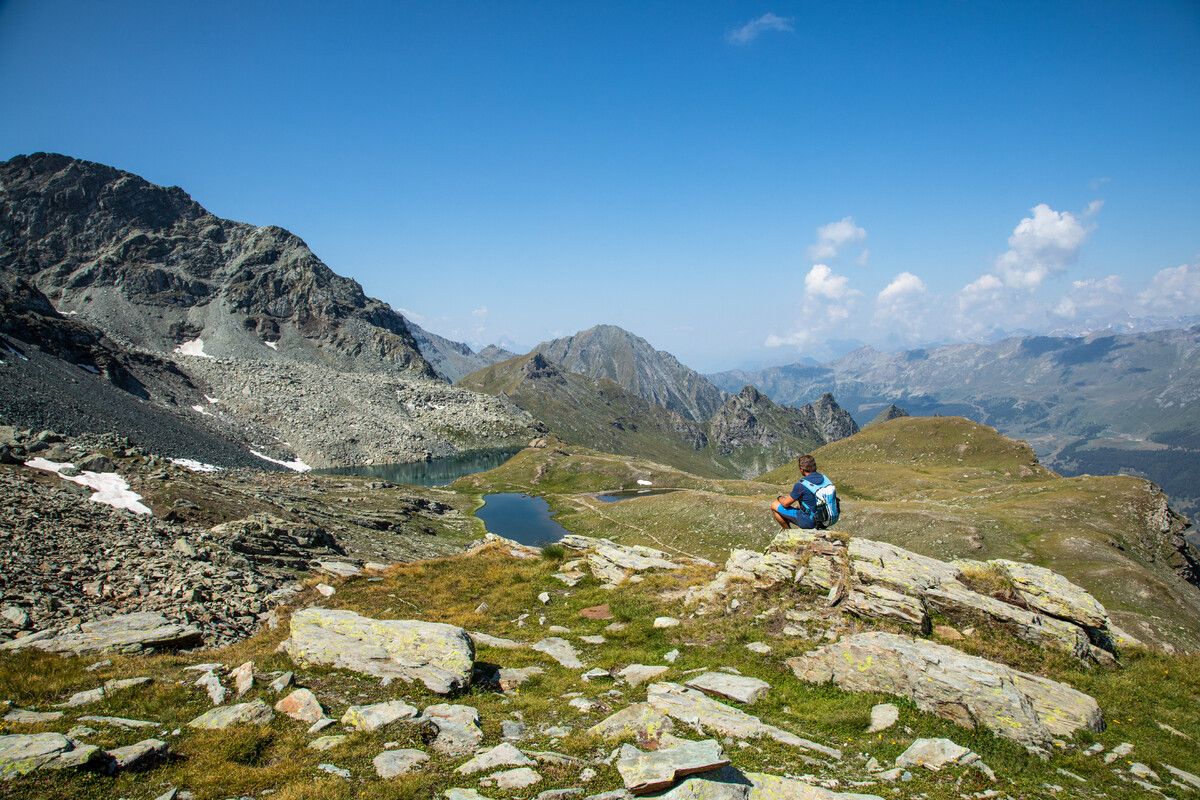
No traffic touring cycling routes in Riserva Naturale Mont Mars traverse a landscape shaped by glacial activity, featuring terraced rock basins, small lakes, and marshlands. The terrain varies from dense larch and deciduous forests at lower altitudes to expansive green alpine meadows and rocky areas higher up. The region is characterized by its diverse flora and fauna, with elevations reaching the 2,600-meter-high Monte Mars. Historic mule tracks and paths crisscross the reserve, offering varied cycling experiences.
Best no traffic touring cycling routes in Riserva Naturale Mont Mars
- The most popular no traffic touring cycling route is Monumental Cemetery of Oropa – Oropa Sanctuary loop from Oropa, a 19.3 miles (31.0 km) trail that takes 2 hours 16 minutes to complete. This route offers diverse scenery, including forests and alpine meadows.
- Another top favourite among local touring cyclists is Monumental Cemetery of Oropa – Oropa Sanctuary loop from Sordevolo, a difficult 16.5 miles (26.6 km) path. This trail winds through varied landscapes, including areas with glacial lakes and historic paths.
- Local touring cyclists also love the Lillianes War Memorial – Ponte in Pietra di Lillianes loop from Lillianes, a 14.8 miles (23.9 km) trail leading through dense forests and alpine meadows, often completed in about 2 hours 13 minutes.
- Touring cycling in Riserva Naturale Mont Mars is defined by glacial lakes, alpine meadows, and historic mule tracks. The network offers options for different ability levels, from moderate to difficult routes.
- The routes in Riserva Naturale Mont Mars are highly rated by the komoot community with an average score of 4.7 stars from over 30 reviews. More than 1000 touring cyclists have used komoot to explore Riserva Naturale Mont Mars's varied terrain.
Last updated: May 13, 2026
5.0
(1)
47
riders
31.0km
02:16
700m
710m
Hard bike ride. Very good fitness required. Mostly paved surfaces. Suitable for all skill levels.
7
riders
30.2km
02:57
1,270m
1,270m
Hard bike ride. Very good fitness required. Mostly paved surfaces. Suitable for all skill levels.

Sign up for free
13
riders
29.3km
02:56
1,210m
1,210m
Hard bike ride. Very good fitness required. You may need to push your bike for some segments of this route.
5.0
(2)
27
riders
17.5km
01:23
300m
300m
Moderate bike ride. Good fitness required. Mostly paved surfaces. Suitable for all skill levels.
8
riders
30.9km
03:14
1,110m
1,110m
Hard bike ride. Very good fitness required. Mostly paved surfaces. Suitable for all skill levels.
Get access to more routes and recommendations from other explorers.
Sign up for free
Already have an account?
Our route recommendations are based on thousands of hikes, rides, and runs completed by other people on komoot.
Start today with a free account
Your next adventure awaits.
Login or Signup

Other adventures in Riserva Naturale Mont Mars


Tips from the Community

The parish church of San Rocco, consecrated in 1661 in the center of Lillianes, is an example of 17th-century Alpine religious architecture built on a previous 15th-century chapel. The three-nave building with Baroque carved wooden altars is distinguished by its imposing stone bell tower that dominates the village near the Lys stream. The structure was the heart of community life, historically linked to the chestnut economy and livestock farming, serving as the main gathering point for the valley's population. A significant historical detail is the presence, in the immediate vicinity of the entrance, of a specific stone niche called Crierel. From this elevated position, the town crier or local authorities "shouted" resolutions, decrees, and sentences to the population gathered in the churchyard, ensuring the dissemination of rules in an era of low literacy. This custom transformed the area in front of the church into an operational public forum, where civil power officially manifested itself to manage the daily life of the village.
0
0
The stone bridge of Lillianes, completed in 1733, represents a hydraulic work of exceptional value for the Lys Valley, being the only historic bridge in the region structured on four round arches. The choice of this configuration, supported by robust piers equipped with cut-water spurs, was dictated by the need to span a section of the Lys stream particularly subject to violent floods. The roadway, made with a characteristic donkey-back shape in local stone, hosts a votive shrine dedicated to Saint Roch in the center, historically placed to protect travelers against pestilences. A relevant anecdote concerns the complex financing of the work: the local community, in order not to depend exclusively on central subsidies, chose to heavily tax themselves through the "taglioni" system, a form of mandatory contribution based on land ownership. It is said that the families of the village contributed not only with money but also by providing labor and materials, as the bridge was considered vital for the economy linked to the chestnut trade and transhumance. Another curious detail concerns its incredible resistance: during past floods, while other wooden or lighter structures were swept away, the bridge of Lillianes remained intact, consolidating its fame as an indestructible monument and a symbol of unity for the entire valley population.
0
0

Lauretana Graglia water establishment on the road between Graglia and Bossola
0
0
junction between the road coming from Graglia and the road to Tracciolino which connects Andrate and Oropa
0
0
Language Follow Edit Il Sacro Monte di Graglia is a pre-Alpine locality situated in Graglia, in the province of Biella, in Piedmont, a few kilometers west of the provincial capital. It is located at the foot of the more majestic peak of Mombarone, almost on the border with the Aosta Valley; it mainly hosts the sanctuary of the same name (812 meters above sea level), dedicated to the Black Madonna and linked to the cult of Our Lady of Loreto, in the Marche. It is therefore part of that system of pre-Alpine devotional complexes that characterized a widespread popular Marian and Christian religiosity, which expressed itself between Piedmont and Lombardy starting from around the 16th century, such as, for example, the re-enactment of the Passion of Christ in the nearby town of Sordevolo, or other similar localities such as Sacro Monte di Arona, Sacro Monte di Oropa, Sacro Monte di Varallo, Sacro Monte di Ghiffa.
0
0
The first few kilometres starting from Andrate are on a dirt road that is not very smooth in some sections.
0
0
Cemetery just outside Oropa on the Tracciolino road towards Andrate
0
0
To reach Trappa, take a detour on the Tracciolino road between Andrate and Oropa
0
0
Frequently Asked Questions
How many no-traffic touring cycling routes are available in Riserva Naturale Mont Mars?
There are 7 dedicated no-traffic touring cycling routes in Riserva Naturale Mont Mars. These routes range in difficulty, with 3 moderate and 4 difficult options, offering diverse experiences for cyclists looking to explore the region's stunning alpine landscapes away from vehicle traffic.
What kind of terrain can I expect on the no-traffic touring cycling routes?
The routes traverse varied terrain, reflecting the reserve's glacial origin. You'll encounter paths through dense larch and deciduous forests at lower altitudes, expansive green alpine meadows, and rocky areas higher up. Some routes may follow ancient mule tracks, providing a mix of surfaces suitable for touring bikes.
Are there any circular no-traffic touring cycling routes?
Yes, several routes are designed as loops, allowing you to start and end in the same location. For example, the difficult-rated Monumental Cemetery of Oropa – Oropa Sanctuary loop from Oropa offers a substantial circular journey. Another option is the Lillianes War Memorial – Ponte in Pietra di Lillianes loop from Lillianes, also a challenging circular route.
What are some scenic viewpoints or attractions I can see along the routes?
The Riserva Naturale Mont Mars offers breathtaking panoramas of iconic mountains like Monviso, Gran Paradiso, Mont Blanc, Matterhorn, and Monte Rosa. Along the routes, you might encounter picturesque glacial lakes such as Barma Lakes and Upper Lago Lungo. You can also visit mountain refuges like Rifugio della Balma or the Colle della Barma — Shelter and Cross, which offer stunning views and a place to rest.
What is the best season for touring cycling in Riserva Naturale Mont Mars?
The best season for touring cycling in Riserva Naturale Mont Mars is typically from late spring to early autumn (May to October). During these months, the snow has usually melted from the higher elevations, and the weather is generally more stable and pleasant for cycling. The flora is vibrant, and wildlife is more active.
Are there any easy no-traffic touring cycling routes suitable for beginners or families?
While the region offers stunning scenery, the no-traffic touring cycling routes in Riserva Naturale Mont Mars are generally rated as moderate to difficult. There are no routes specifically categorized as 'easy' in this selection. Cyclists should be prepared for elevation gains and varied terrain. The Viewpoint of Lower Burcina – Bric Burcina Summit and Tower loop from Pollone is a moderate option, which might be more approachable for those with some experience.
What wildlife might I encounter while cycling in the reserve?
Riserva Naturale Mont Mars is home to diverse fauna. In wetlands and near lakes, you might spot grass frogs, char, and white-throated dippers. Alpine fields and prairies are inhabited by common grass snakes, crows, rock pipets, black redstarts, cuckoos, woodchucks, chamois, hares, and foxes. Higher up, the Ptarmigan and alpine finch frequent Mont Mars' northern face, and the Golden eagle hunts in the area.
Is public transport available to access the cycling routes?
While specific public transport connections directly to the start points of all cycling routes might be limited, the Aosta Valley region has a public transport network. It's advisable to research local bus services or train connections to nearby towns like Fontainemore, which serves as a gateway to the reserve, and then plan your cycling route from there. Always check schedules in advance.
Where can I find parking near the no-traffic touring cycling routes?
Access points to the reserve, particularly in towns like Fontainemore, typically offer parking facilities. For routes starting from specific locations like Oropa or Lillianes, there are usually designated parking areas available. It's recommended to check the specific starting point of your chosen route for the most convenient parking options.
What do other touring cyclists enjoy most about cycling in Riserva Naturale Mont Mars?
The area is highly rated by the komoot community, with an average score of 4.65 out of 5 stars from 37 ratings. Reviewers often praise the stunning natural beauty, the tranquility of the no-traffic routes, and the challenging yet rewarding climbs that offer incredible panoramic views of the surrounding alpine peaks.
Are there any specific regulations or permits required for cycling in the Riserva Naturale Mont Mars?
As a natural reserve, there are regulations in place to protect the environment. While general cycling is often permitted on designated trails, it's always best to check for any specific rules regarding cycling within the Riserva Naturale Mont Mars, especially concerning protected areas or sensitive habitats. You can find more information on the official regional tourism website: visitmonterosa.com.
Most popular routes in Riserva Naturale Mont Mars
Most popular attractions in Riserva Naturale Mont Mars

Get inspired with the komoot mobile app


Explore more
Browse the best Cycling routes in other regions.
