The best traffic-free bike rides in Guernsey
4.4
(249)
3,435
riders
15
rides
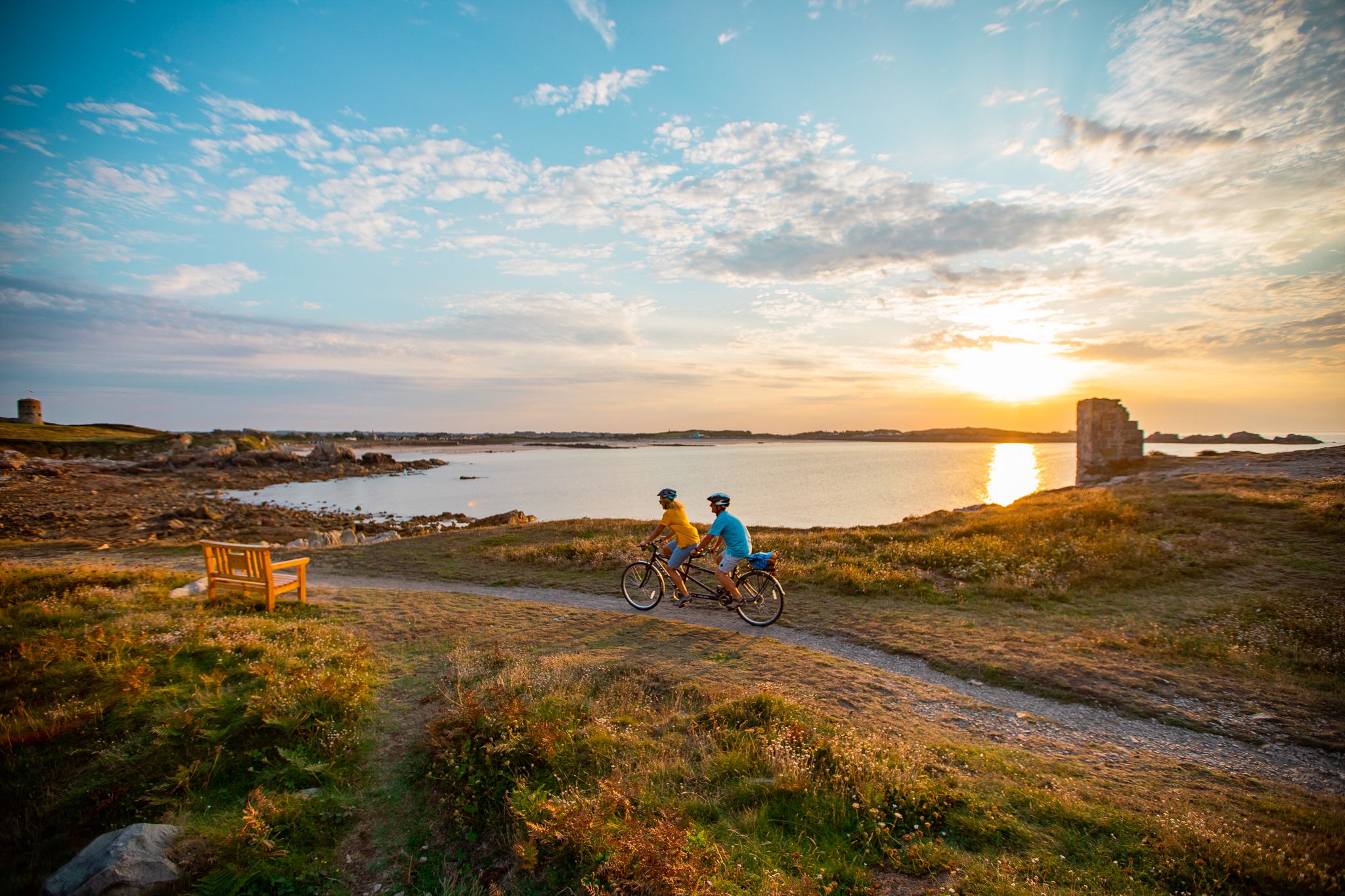
No traffic touring cycling routes in Guernsey traverse a diverse landscape, characterized by rugged coastlines, expansive sandy beaches, and verdant pastoral countryside. The island features varied terrain, from dramatic cliffs in the south to flat, quiet lanes in the north and west. Its network of "Ruettes Tranquilles" provides dedicated routes, ensuring a peaceful experience through green fields and forested valleys. These routes often offer panoramic vistas of the Channel Islands and France.
Best no traffic touring cycling routes in Guernsey
…Last updated: September 2, 2026
4.4
(7)
62
riders
12.1km
01:07
200m
200m
Hard bike ride. Good fitness required. You may need to push your bike for some segments of this route.
22
riders
15.5km
01:11
190m
190m
Moderate bike ride. Good fitness required. Mostly paved surfaces. Suitable for all skill levels.

Sign up for free
4.3
(4)
58
riders
10.6km
00:51
150m
150m
Easy bike ride. Great for any fitness level. Mostly paved surfaces. Suitable for all skill levels.
4.0
(2)
42
riders
17.1km
01:12
200m
200m
Moderate bike ride. Good fitness required. Mostly paved surfaces. Suitable for all skill levels.
5.0
(1)
16
riders
22.9km
01:26
190m
190m
Moderate bike ride. Good fitness required. Mostly paved surfaces. Suitable for all skill levels.
Get access to more routes and recommendations from other explorers.
Sign up for free
Already have an account?
Our route recommendations are based on thousands of hikes, rides, and runs completed by other people on komoot.
Start today with a free account
Your next adventure awaits.
Login or Signup

Tips from the Community

Built in 1820, St Peter's Church was designed to quell the rise of Methodism in favour of Anglicanism on Sark. It's a fine sight on this spectacular island.
1
0

The Pilcher Monument is a granite obelisk that's a private memorial to a Victorian maritime tragedy off the coast of Sark. Erected by Mrs Pilcher and her children sometime after 1886, it was more than a than a commemoration of her husband's death, intending it to serve as a warning to future mariners and visitors about the dangers of the sea around Sark.
1
0
Snacks with a view! Serving a selection of beverages and sweet and savoury foods, it's a great pitstop at the south end of Sark. Usually open from 10.30 am to 4:30 pm, weather dependent. Check their Facebook for details.
0
0
Of all Alderney's many forts, the Nunnery is the oldest. This is because it dates back to the 4th century and today stands as perhaps the most intact Roman small fort in Britain. Of course, the intervening years have seen many changes to the fort, including by German troops during the Second World War.
0
0
Gannet Rocks, locally known as Les Etacs and Ortac, are two rugged, isolated sea stacks. Together, they host a globally significant breeding colony of Northern Gannets, supporting approximately 8,700 pairs—which equates to over 1% of the entire global population.
0
0
Fort Tourgis is a 1850s Victorian citadel, originally built to house 346 men and mount 33 guns to protect the Alderney Breakwater. It was later transformed into Stutzpunkt Türkenburg (Strongpoint Turk's Castle) by the occupying German forces during World War II.
0
0
Clonque Causeway is a spectacular 400-metre (1,312-ft) tidal causeway which connects the main island of Alderney to Fort Clonque, a 19th-century sea fort. The causeway and drawbridge are submerged at high tide, making careful timing essential for access.
0
0
Alderney Lighthouse, also known as Mannez Lighthouse, is a 32-metre (105-ft) stone tower, built in 1912 by Trinity House. It guides ships away from the treacherous waters of the Alderney Race. It became automated in 1997 and is now controlled remotely from Harwich,.
0
0
Frequently Asked Questions
What makes Guernsey ideal for no-traffic touring cycling?
Guernsey is particularly well-suited for touring cyclists due to its extensive network of quiet lanes, known as "Ruettes Tranquilles." These routes prioritize cyclists, walkers, and horse-riders, with a recommended speed limit of 15 mph for vehicles, ensuring a peaceful and safer experience away from heavy traffic. The island's compact size also means diverse landscapes are easily accessible by bike.
How many no-traffic touring cycling routes are available in Guernsey?
There are 9 dedicated no-traffic touring cycling routes listed in this guide for Guernsey. These routes range from easy to moderate difficulty, offering options for various skill levels. For example, you can explore the easy Fort Tourgis loop from Mannez Quarry or the slightly more challenging Gannet Rock loop from Alderney.
Are there any easy routes suitable for beginners or families?
Yes, the majority of the no-traffic touring cycling routes in Guernsey are rated as easy, making them ideal for beginners or family outings. For instance, the Cows in the Pasture loop from St Martin is an easy 9.6 km ride, perfect for a relaxed exploration of the island's pastoral countryside. Another great option is the Alderney Lighthouse loop from Alderney.
What kind of landscapes can I expect on these routes?
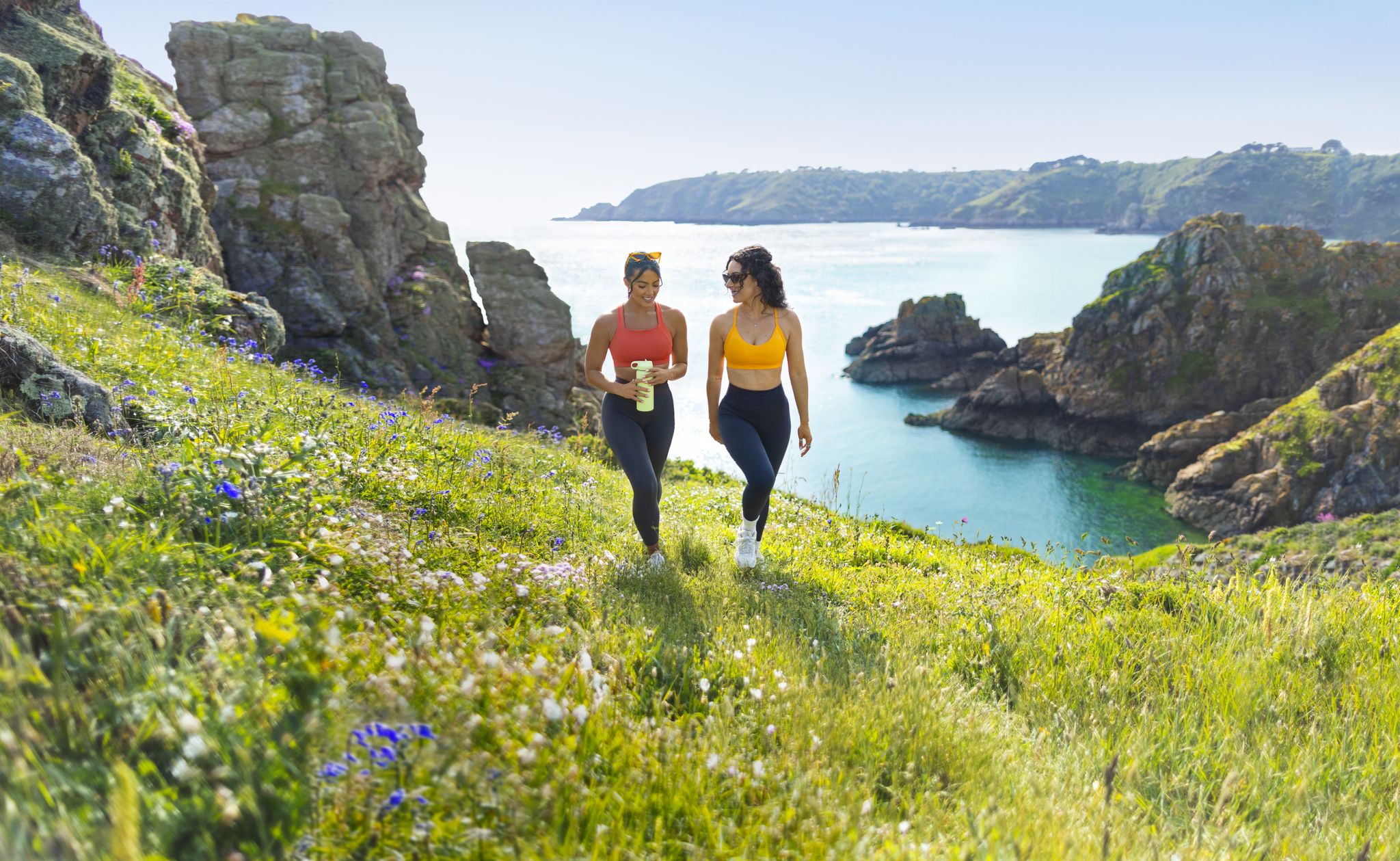
Guernsey's no-traffic routes offer a diverse range of landscapes. You'll encounter rugged coastlines and dramatic cliffs, expansive golden sandy beaches, and verdant pastoral countryside characterized by high hedgerows and green fields. Routes often weave through picturesque fields, woodlands, and bays, providing panoramic vistas and spectacular sea views, especially from areas like the Jerbourg Peninsula.
What attractions can I see along the no-traffic touring cycling routes?
Many routes pass by or near significant attractions. You can visit historical sites like the German Underground Hospital (Hauptverbandsplatz) or the ancient Le Déhus Dolmen. The intricate The Little Chapel is also a popular stop. For natural beauty, look out for the Venus Pool or the scenic Baie du Moulin Huet. These routes offer a blend of natural and historical points of interest.
Are there any circular no-traffic touring cycling routes in Guernsey?
Yes, many of the no-traffic touring cycling routes in Guernsey are designed as circular loops, allowing you to start and end at the same point. Examples include the St Saviour's Church – Scenic Country Lane loop from St Martin and the Gannet Rock loop from Alderney, providing convenient options for exploration without needing return transport.
What do other touring cyclists enjoy most about cycling in Guernsey?
The no-traffic touring cycling routes in Guernsey are highly rated by the komoot community, with an average score of 4.4 stars from 146 ratings. Reviewers often praise the tranquility of the "Ruettes Tranquilles," the stunning coastal and countryside scenery, and the sense of safety provided by the low vehicle traffic. The accessibility of historical sites and natural landmarks directly from the routes is also frequently highlighted.
Is it possible to access these routes using public transport?
Guernsey has a comprehensive bus network that covers most of the island, making it possible to reach various starting points for cycling routes. While specific bus routes that accommodate bicycles may vary, the island's compact size and the nature of its quiet lanes mean that many areas are accessible, allowing you to combine cycling with public transport for a flexible touring experience. For detailed bus information, it's advisable to check local transport schedules.
What is the best time of year for no-traffic touring cycling in Guernsey?
The spring (April-May) and autumn (September-October) months are generally considered ideal for no-traffic touring cycling in Guernsey. During these periods, the weather is typically mild and pleasant, with fewer crowds than in peak summer. The island's natural beauty is also at its best, with spring blooms or autumn colors enhancing the scenic routes. Summer offers warmer temperatures but can be busier, while winter can be cooler and wetter.
Are there options for bike hire in Guernsey?
Yes, cycle hire, including e-bikes, is readily available across Guernsey. This makes it convenient for visitors who do not bring their own bicycles to explore the island's diverse no-traffic routes. You can find various rental shops, particularly in and around St Peter Port and other popular areas, offering a range of bikes suitable for touring.
Where can I find more information about cycling in Guernsey?
For additional information on cycling infrastructure, routes, and general guidance for cyclists in Guernsey, you can visit the official government cycling page at www.gov.gg/cycling or explore more routes and experiences on visitguernsey.com.
Most popular attractions in Guernsey

Get inspired with the komoot mobile app


Explore more
Browse the best Cycling routes in other regions.
