The best hikes from bus stations around Gescher
4.5
(566)
2,415
hikers
126
hikes
Bus station hiking trails around Gescher navigate a landscape characterized by gently rolling terrain, expansive forests, and wide fields. The region features significant nature reserves such as Fürstenkuhle and Kuhlenvenn, which preserve unique moorland and fen environments. The small Berkel River also flows through the area, offering scenic riverside paths. This diverse geography provides varied backdrops for outdoor activities.
Best bus station hiking trails around Gescher
- The most popular bus station hiking route is Kuhlenvenn – Kuhlenvenn loop from Fürstenkuhle…
Last updated: July 10, 2026
4.4
(35)
141
hikers
9.32km
02:21
10m
10m
Moderate hike. Good fitness required. Easily-accessible paths. Suitable for all skill levels.
4.6
(15)
47
hikers
Easy hike. Great for any fitness level. Easily-accessible paths. Suitable for all skill levels.

Sign up for free
4.7
(9)
36
hikers
6.52km
01:40
20m
20m
Easy hike. Great for any fitness level. Easily-accessible paths. Suitable for all skill levels.
4.6
(13)
27
hikers
14.9km
03:47
50m
50m
Moderate hike. Good fitness required. Easily-accessible paths. Suitable for all skill levels.
5.0
(3)
17
hikers
8.17km
02:05
30m
30m
Moderate hike. Good fitness required. Easily-accessible paths. Suitable for all skill levels.
Get access to more routes and recommendations from other explorers.
Sign up for free
Already have an account?
Our route recommendations are based on thousands of hikes, rides, and runs completed by other people on komoot.
Start today with a free account
Your next adventure awaits.
Login or Signup
Popular around Gescher
Other adventures around Gescher

Tips from the Community

The Kuhlenvenn nature reserve is a natural pearl in the agriculturally shaped cultural landscape.
0
0

Unfortunately, there was nothing to see except geese, beautiful landscape
0
0

Interesting natural landscape. Many grey geese.
0
0

The Fürstenkuhle is a nature reserve of approximately 99 hectares and an FFH area of approximately 87 hectares within the city limits of Gescher.
0
0

The former raised bog has been largely drained and converted into pastureland. These pastures are now managed extensively, meaning minimal use of resources (fertilizers, pesticides, machinery) and labor. A few Heck cattle graze on the pastures to keep the grasslands flat and open. In some areas, shallow pools have been created to provide a habitat for marsh and aquatic animals and plants. Here, one can find, for example, smooth newts, common frogs, moor frogs, slow worms, and adders. A birch-dominated bog forest now grows on the dried-out peat. Emerging shrubs are removed at irregular intervals to maintain open areas. Along the paths, oaks, rowan trees, and alder buckthorn have been planted among the birches. The over 4,000 square meter heath pond (also called Fürstenkuhle) is an important refuge for various, sometimes rare, animal and plant species. Together with the adjacent moorland and dry and wet heaths, it offers diverse habitats, especially for endangered plant and animal species such as the round-leaved sundew, one of the few carnivorous plants in Germany, and the rare moor frog. During the mating season in March, the males display a vibrant blue coloration to attract the females. Their loud courtship chorus can be heard from afar. Visitors can also observe teal, shoveler, greenshank, snipe, and reed warbler. (Source: various information panels in the Fürstenkuhle)
2
0
The Fürstenkuhle (Prince's Hollow) is part of the northern section of the Weiße Venn (White Fen), formerly the largest moorland area in the Münsterland region. The name does not originate from a prince, but rather derives from the Low German term "Voskenkuhle" (foxhole). It refers to the moor and heathland pond area, considered a remnant of the once vast Weiße Venn. The name evolved over time from its original Low German form to its current form. (Wikipedia) In the 20th century, peat was extracted on a large scale from the Weiße Venn. The remaining moorland area, the Fürstenkuhle, was first designated a nature reserve in 1942, encompassing only 26.9 hectares. Today, the protected area covers approximately 100 hectares. The remaining core moorland zones are now very small. Nevertheless, they exhibit the typical species composition and are of great importance for habitat and species conservation. The EU (European Union) has therefore declared this area a NATURA 2000 site.
2
0
The peat layer formed over time by sphagnum mosses is up to 1.5 meters thick. To protect the delicate plants and structures, narrow wooden walkways have been built in the core area. Cycling is prohibited in the Fürstenkuhle to prevent damage to the sensitive plants along the narrow paths, especially when passing pedestrians. 🚲⛔
3
0
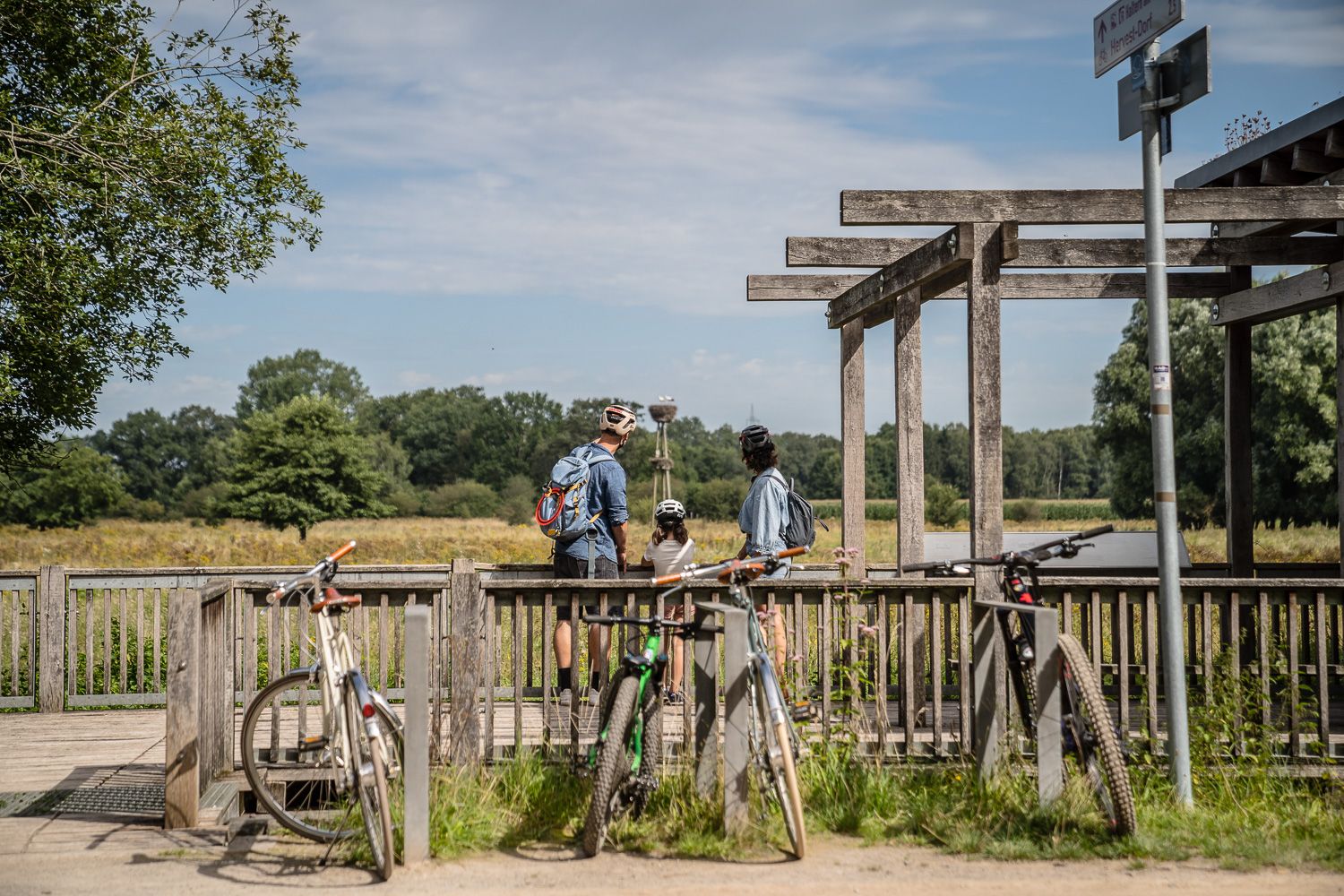
This viewing platform stands on the southeast side of the lake. From the top, there is a good view of the entire lake. The lake was created by excavations and has since become a paradise for waterfowl and other rare animal species. Two information panels are located nearby. In this protected area, in addition to mallards and teals, gadwalls and shovelers have already bred. Other waterfowl, such as pintails and garganeys, can be observed during migration in spring. From mid-September, the first flocks of greater white-fronted geese are "lured" by the presence of greylag geese, and gradually barnacle and bean geese arrive, finding their winter quarters here. Towards the end of winter, in addition to numerous small birds, sometimes several thousand waterfowl of various species, such as divers, mergansers, herons, and rails, can be found. With a bit of luck, one can see the slender hen harriers in winter, hovering just above the ground in a graceful flight, searching for prey. From April onwards, marsh harriers migrate through with the same elegant flight style. Another special feature is the all-white great egret, and less frequently the small little egret, which migrate to their distant breeding grounds in spring. (Source: Information panel)
3
0
Frequently Asked Questions
How many bus-accessible hiking trails are available around Gescher?
There are over 120 hiking trails around Gescher that are accessible from bus stations. These routes offer a variety of experiences, from easy strolls to more challenging treks through the diverse landscapes of the Münsterland region.
What is the typical terrain like on bus station hiking trails near Gescher?
The terrain around Gescher is characterized by gently rolling landscapes, expansive forests, wide fields, and picturesque meadows. Many trails pass through significant nature reserves like Fürstenkuhle and Kuhlenvenn, offering glimpses of moorlands and fen regions. You'll also find scenic paths along the Berkel River.
What is the best time of year to hike from Gescher's bus stations?
The best seasons for hiking in Gescher are spring and autumn. In spring, the region comes alive with blooming flora, including thousands of daffodils near Velen. Autumn offers mild weather and vibrant fall colors, making for particularly scenic walks.
Are there easy hiking trails accessible from Gescher's bus stations?
Yes, there are many easy hiking trails available. Over 80 of the bus-accessible routes are classified as easy. A great option for a gentle walk is the Fürstenkuhle – Fürstenkuhle Nature Reserve loop from Fürstenkuhle, which is just under 4 km long and offers a pleasant experience through nature.
Can I find moderate hiking routes starting from a bus station in Gescher?
Absolutely. There are over 40 moderate hiking routes accessible from bus stations in Gescher. For a rewarding moderate hike, consider the Kuhlenvenn – Kuhlenvenn loop from Fürstenkuhle, which covers about 9.3 km and allows you to explore the beautiful Kuhlenvenn area.
Are there circular hiking routes available from bus stations in Gescher?
Yes, many of the bus-accessible trails around Gescher are circular, allowing you to start and end at the same point, often near a bus stop. An example is the Berkelauen – Ponds in the Berkel Valley loop from Gescher, which is an easy 6.5 km loop offering scenic views along the Berkel River.
What natural features or landmarks can I expect to see on these bus-accessible hikes?
You can expect to encounter diverse natural features. Many routes pass through important nature reserves like Fürstenkuhle and Kuhlenvenn, known for their unique moorland and fen landscapes. The Berkel River offers scenic riverside paths. You might also discover highlights such as the Historic Sand Pit (Sandkuhle) in Coesfelder Heide or the Heidesee Nature Reserve – Coesfelder Heath.
Are there any interesting historical sights or attractions near the bus station hiking trails?
Yes, the region around Gescher is rich in history. While hiking, you might come across historical landmarks such as the St. Pankratius Church in Gescher or the impressive moated castles in Ahaus and Raesfeld. For a cultural experience, consider exploring Gescher's historical sights, including the old town hall square, which can be integrated into your walking tour.
Are the bus station hiking trails around Gescher suitable for families?
Many of the bus-accessible trails are very suitable for families, especially the numerous easy routes. The region offers options like the "Waldlehrpfad" (forest nature trail) mentioned in regional research, which provides an educational and enjoyable experience for children. The Kuhlenvenn nature trail – Kuhlenvenn loop from Klye is an easy 6.7 km option that families might enjoy.
Are there dog-friendly hiking trails accessible from Gescher's bus stations?
Most hiking trails around Gescher are dog-friendly, allowing you to enjoy the natural beauty with your canine companion. It's always recommended to keep dogs on a leash, especially when passing through nature reserves or near livestock, and to clean up after them. The varied landscapes of forests and fields provide ample space for enjoyable walks.
What do other hikers enjoy the most about hiking in Gescher?
The area is highly rated by the komoot community, with an average score of 4.5 stars from over 500 ratings. Reviewers often praise the quiet woodlands, the well-maintained paths through nature reserves like Fürstenkuhle and Kuhlenvenn, and the overall peaceful atmosphere that makes for a relaxing outdoor experience.
Are there any facilities or shelters along the bus-accessible hiking routes?
Yes, you can find various facilities and shelters along some routes. For instance, the Weifes Venn Shelter and Bike Service Station offers a place to rest. Other highlights include the Shelter with games table and the Almsick Shelter, providing convenient spots during your hike.
Most popular routes around Gescher
Most popular attractions around Gescher

Get inspired with the komoot mobile app


Explore more
Browse the best Hikes in other regions.
