Attractions and Places To See around Arrábida/Espichel - Top 20
Best attractions and places to see around Arrábida/Espichel include a remarkable combination of natural landscapes and cultural heritage less than an hour south of Lisbon. This region features dramatic coastlines, limestone mountains, and diverse ecosystems. Visitors can explore historical landmarks, protected natural areas, and scenic viewpoints. The area offers a variety of points of interest for those seeking outdoor activities and cultural exploration.
Best attractions and places to see around Arrábida/Espichel
- The most popular attractions is Cape Espichel Lighthouse, a man-made monument that was first established in the 15th century. The current hexagonal tower was built in 1790 and is one of the oldest lighthouses in Portugal, providing crucial navigation for ships.
- Another must-see spot is Windmills of Serra do Louro, a collection of historical man-made monuments. These windmills, some older and some newer, were once an important industry for processing cereals.
- Visitors also love Hermitage of Memory, a religious building with medieval origins. This small chapel is built on the spot where, according to legend, the Virgin Mary appeared, and features 18th-century tile panels depicting the story.
- Arrábida/Espichel is known for its historical sites, natural features, and cultural landmarks. The region offers a variety of attractions to see and explore, from ancient lighthouses to scenic viewpoints and religious buildings.
- The attractions around Arrábida/Espichel are appreciated by the komoot community, with over 100 upvotes and 48 photos shared.
Last updated: July 7, 2026
Cape Espichel Lighthouse
Highlight • Monument
The current tower was inaugurated in 1790, in 1865 it was fueled by oil, changing fuel in 1886, when its light began to be powered by incandescent petroleum vapour and, much later in 1926, by electricity.
In 1983 this lighthouse had a lighting device installed, called a first order, which emitted light in groups of four white flashes, instead of the old fixed light system. With this new system it now had a luminous range of twenty-eight nautical miles (forty-five kilometres).
The support structure for the lighthouse was extended to the sides around 1900.
In 1947 a new era in terms of lighting was entered. An aero-maritime optical device was installed, which had previously been in service with the Cabo da Roca Lighthouse. This new dioptic - catadioptic optic called fourth order, a large model, has a focal length of thirty centimeters, producing single flashes, now with a luminous range of forty-two nautical miles (about sixty-seven kilometers).
Translated by Google •
Tip by

Sanctuary of Our Lady of Cape Espichel
Highlight • Religious Site
The church is incredibly beautiful inside. Unfortunately, photography is not allowed.
Translated by Google •
Tip by

Sign up now to discover places like this
Get recommendations on the best single tracks, peaks, & plenty of other exciting outdoor places.
Sign up for free
Windmills of Serra do Louro
Highlight (Segment) • Monument
Tip by

Hermitage of Memory
Highlight • Religious Site
Translated by Google •
Tip by
Fort of São Filipe, Setúbal
Highlight • Castle
Tip by
Sign up for free to discover even more attractions around Arrábida/Espichel.
Sign up for free
Already have an account?
Start today with a free account
Your next adventure awaits.
Login or Signup
Popular around Arrábida/Espichel
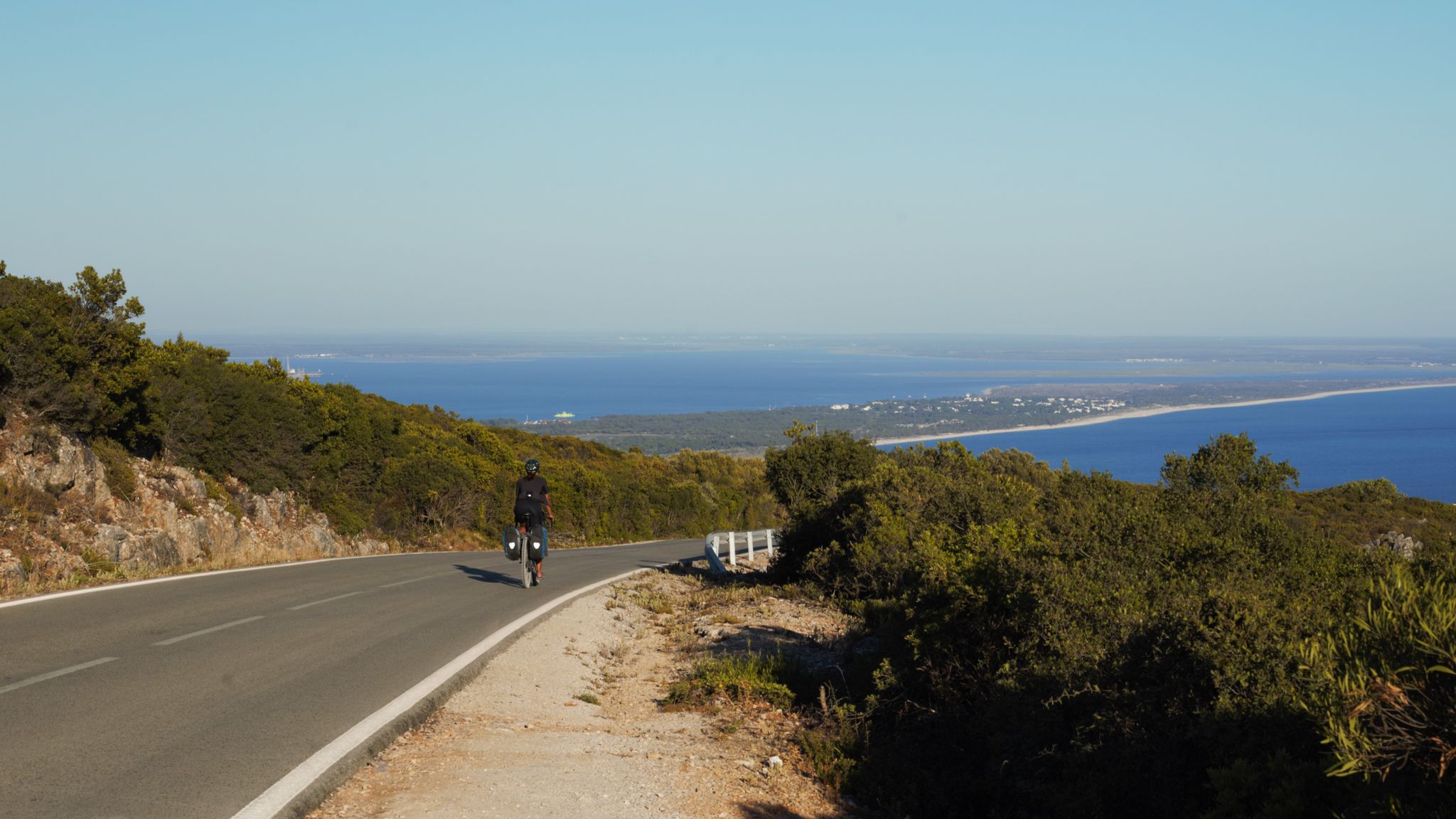
The breaking waves – cycle along the Atlantic coast of Portugal
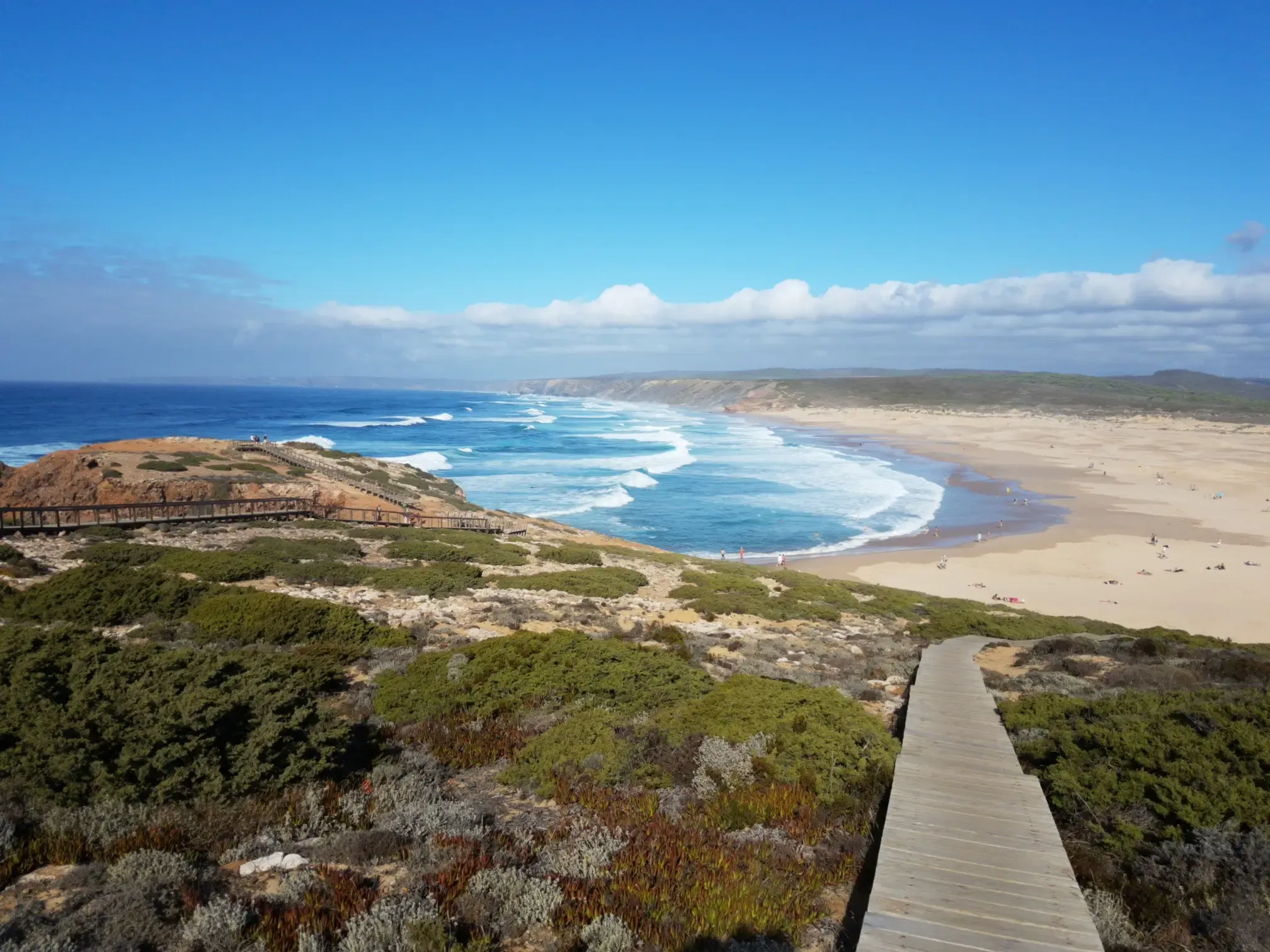
Lisbon to Santo António – The Atlantic Coast of Portugal (south)
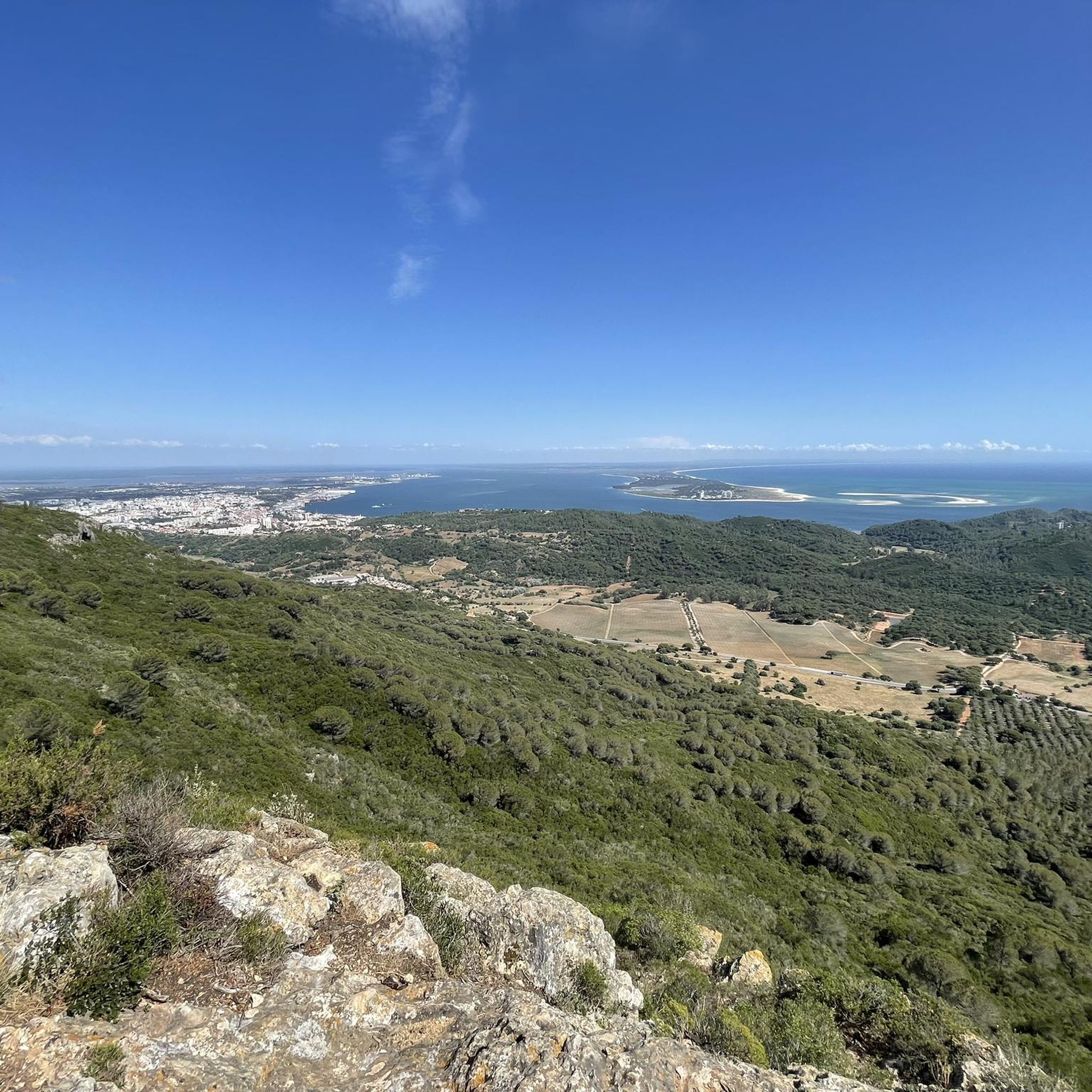
Hiking around Arrábida/Espichel
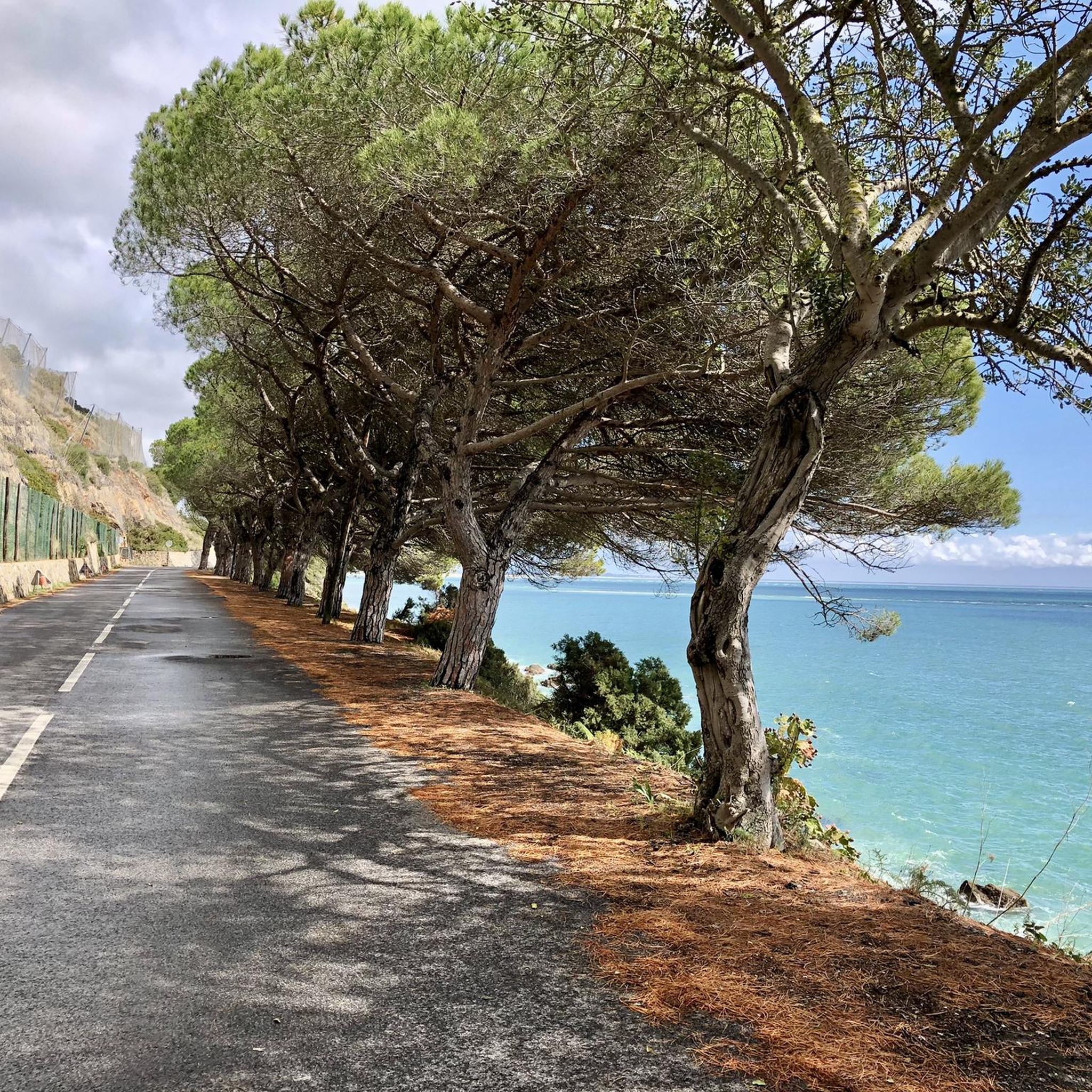
Road Cycling Routes around Arrábida/Espichel
Running Trails around Arrábida/Espichel
Cycling around Arrábida/Espichel
MTB Trails around Arrábida/Espichel

Gravel biking around Arrábida/Espichel


Tips from the Community

These were the "mills" of old, moved by the wind, heavy granite millstones, transformed wheat seeds into flour from which delicious bread was made, which "satisfied" the hunger of those who had little to eat.
1
0

Built in the 18th century, it is an eye-catcher with its baroque architecture and the typical blue and white tiles in which some icons were also kept.
2
0


At the top of the Serra do Louro stand the windmills which, in the not so distant past, were an important industry for processing cereals. The force of the wind hits the open sails, turning an axle, which in turn transmits the rotation to a limestone stone that rotates on another fixed one. These stones, called "millstones", receive the cereal grains between them, transforming them into flour.
6
0

For many centuries, the Portuguese coast was known to foreign ships, especially English ones, as the “black coast”, as there was no lighting system to aid navigation. At the end of the 18th century, the Marquis of Pombal ordered the construction of a network of lighthouses to make it safer, including the one at Cabo Espichel, one of the oldest in Portugal, built in 1790.
6
0
The project for a modern fortification to defend this stretch of the Portuguese coast dates back to the 14th century, with the construction of the Fort of Santiago do Outão, intended to control the entrance to the river bar and access to the medieval town. Aiming to expand this defense, during the reign of D. João III (1521-1557), Brás Dias was given a regiment to be the administrator of the works of the Plaza and Castle of Setúbal (July 31, 1526). Financial difficulties, which even led to the abandonment of overseas positions in North Africa (Fortress of Azamor, Fortress of Arzila, Fortress of Alcácer-Ceguer and Fortress of Safim), may have delayed the development of these works. Dating back to the time of the Philippine dynasty, its relevance is demonstrated by the fact that the sovereign Philip I (1580-1598) himself attended in person, in 1582, the laying of the foundation stone of the new fortification, designed by the Italian architect and military engineer Filippo Terzi (1520-1597). This engineer worked on the works until mid-1594, when he signed a plan and section of the fortification (8 July 1594), which was sent to the Spanish War Council. After his death, the military engineer and architect from Cremona, Leonardo Torriani, was appointed to carry out the works, and they were completed in 1600. In the context of the restoration of independence, during the reign of King John IV (1640-1656), the Governor of Arms of Setúbal, João de Saldanha, expanded this defence by adding a low battery between 1649 and 1655. It is believed that this new structure was intended to make up for the lack of artillery in covering river access to the port. In the 18th century, the chapel inside acquired its tile covering, designed by Policarpo de Oliveira Bernardes (1736). During the Pombaline consulship (1750-1777), it was not immune to the earthquake of 1755 and was used as a School of Artillerymen. In the mid-19th century, a fire destroyed the Casa do Comando, then the residence of the Governor of Arms of Setúbal.
6
0
The Fort of São Filipe de Setúbal, also referred to as the São Filipe Castle or the São Filipe Fortress, is in the city of Setúbal in the Setúbal District, of Portugal. The fort was built on the orders of Philip II of Spain (Philip I of Portugal), who personally witnessed the laying of the cornerstone of the new fortification in 1582. It stands in a dominant position on the right bank of the mouth of the Sado River, overlooking the centre of Setúbal to its east and guarding access to the river. Named after the king during the Iberian Union, the fortress was designed by Giovan Giacomo Paleari Fratino and had the Italian military engineer Filipe Terzi, who worked for the Spanish Royal Court, as its chief engineer. It was completed in 1600 under the guidance of Leonardo Torreano due to the death of Terzi.
6
0
There is news that as early as 1430 the brotherhood of Our Lady of the Cape had installed a lighthouse that was the predecessor of the current lighthouse. The current tower was inaugurated in 1790, in 1865 it was fueled by oil, changing fuel in 1886, when its light began to be powered by incandescent petroleum vapour and, much later in 1926, by electricity. In 1983 this lighthouse had a lighting device installed, called a first order, which emitted light in groups of four white flashes, instead of the old fixed light system. With this new system it now had a luminous range of twenty-eight nautical miles (forty-five kilometres). The support structure for the lighthouse was extended to the sides around 1900. In 1947 a new era in terms of lighting was entered. An aero-maritime optical device was installed, which had previously been in service with the Cabo da Roca Lighthouse. This new dioptic - catadioptic optic called fourth order, a large model, has a focal length of thirty centimeters, producing single flashes, now with a luminous range of forty-two nautical miles (about sixty-seven kilometers).
6
0
Frequently Asked Questions
What kind of natural features can I explore in the Arrábida/Espichel region?
The region is renowned for its diverse natural landscapes. You can explore the dramatic coastlines and limestone mountains of the Serra da Arrábida, which plunge into turquoise waters. Key natural features include idyllic beaches like Galapinhos and Portinho da Arrábida, and the rugged cliffs of the Cabo Espichel coastline. The Parque Marino Luiz Saldanha marine reserve offers rich biodiversity for snorkeling and diving.
What historical and cultural landmarks are a must-see in Arrábida/Espichel?
The region is rich in history. Don't miss the Sanctuary of Our Lady of Cape Espichel, an 18th-century pilgrimage complex, and the nearby Cape Espichel Lighthouse, one of Portugal's oldest. The Hermitage of Memory, a small chapel with medieval origins, is also significant. Further inland, you can visit the Fort of São Filipe in Setúbal, offering panoramic views over the Sado River.
Are there any unique historical sites, such as dinosaur footprints, in the area?
Yes, the Cabo Espichel area is famous for its paleontological discoveries. You can find two sets of dinosaur footprints within the exposed cliffs: Pedra da Mua, featuring sauropod tracks, and Lagosteiros, with Cretaceous tracks. These offer a fascinating glimpse into the region's ancient past.
What outdoor activities can I do near these attractions?
The Arrábida/Espichel region is perfect for outdoor enthusiasts. You can enjoy hiking through the Serra da Arrábida, with trails leading to panoramic viewpoints. Water sports like kayaking, stand-up paddleboarding (SUP), snorkeling, and diving are popular in the marine reserve. For cycling, there are various routes available. You can find more details on specific routes in the Hiking around Arrábida/Espichel, Road Cycling Routes around Arrábida/Espichel, and Cycling around Arrábida/Espichel guides.
Are there hiking trails suitable for families or beginners?
Yes, while some trails can be challenging, there are options for various skill levels. The Serra da Arrábida offers trails through Mediterranean vegetation, and some coastal walks around Cabo Espichel are less strenuous. For specific family-friendly or beginner routes, it's best to consult detailed hiking guides for the area, such as the Hiking around Arrábida/Espichel guide.
Where are the best viewpoints in the Arrábida/Espichel region?
The region boasts numerous stunning viewpoints. The Estrada de Escarpa (N379-1), a scenic coastal road, offers breathtaking vistas from spots like Miradouro do Norte and Miradouro do Portinho da Arrábida. Alto do Formosinho is the highest peak in Arrábida Natural Park, providing 360-degree views, while Serra do Risco offers dramatic cliff-edge perspectives.
Can I bring my dog on trails and to attractions in Arrábida/Espichel?
Many natural trails in the Arrábida Natural Park and around Cabo Espichel are generally dog-friendly, especially if kept on a leash. However, access to specific attractions, religious sites, or protected beach areas might be restricted for pets. Always check local signage or specific attraction rules before visiting with your dog.
What is the best time of year to visit Arrábida/Espichel?
The Arrábida/Espichel region is pleasant for most of the year. Spring (April-June) and early autumn (September-October) offer mild temperatures, fewer crowds, and lush landscapes, ideal for hiking and exploring. Summer (July-August) is perfect for beach activities, though it can be hotter and more crowded. Winters are generally mild, suitable for coastal walks, but some facilities might have reduced hours.
Are there any charming towns or villages to visit nearby?
Absolutely. Azeitão is a charming town known for its wine tasting and traditional Queijo de Azeitão cheese. Sesimbra is a picturesque fishing village with a strong maritime identity, featuring a castle perched above the town and the Fortaleza de Santiago near the harbor. Both offer a delightful cultural experience.
What are the options for public transport to Cabo Espichel and other attractions?
While public transport options exist, they can be limited, especially to more remote natural attractions. Buses connect major towns like Sesimbra and Setúbal. To reach Cabo Espichel, there are bus services, but schedules might be infrequent. For greater flexibility in exploring the diverse attractions, a car is often recommended.
What are the Windmills of Serra do Louro and why are they significant?
The Windmills of Serra do Louro are a collection of historical man-made monuments. These windmills, some older and some newer, were once vital for processing cereals, harnessing the wind to grind grains into flour. They offer a glimpse into the region's agricultural past and provide interesting views from their elevated position.
Are there any religious sites besides the main Sanctuary at Cabo Espichel?
Yes, in addition to the Sanctuary of Our Lady of Cape Espichel and the Hermitage of Memory, you can find the 16th-century Convento de Nossa Senhora da Arrábida nestled within the Serra. Another unique site is the Lapa de Santa Margarida, a small 17th-century chapel hidden within a dramatic sea cave near Portinho da Arrábida, accessible via a steep path.
Most popular routes around Arrábida/Espichel
Most popular attractions around Arrábida/Espichel

Get inspired with the komoot mobile app


Explore more
Still not found the Highlight you’re looking for? See guides of the top attractions in other regions:
