The best traffic-free bike rides around Illschwang
4.2
(21)
176
riders
26
rides
No traffic touring cycling routes around Illschwang are set within the Upper Palatinate Jura in Bavaria, Germany, characterized by rolling hills, extensive forests, and notable rock formations. The region features an idyllic dry valley at 500 meters above sea level, surrounded by wooded, rocky mountain ranges. Cycling routes also follow the Vils river, offering quiet rides through natural landscapes. The area provides a network of well-developed cycling paths suitable for various bike types.
Best no traffic touring cycling routes around…
Last updated: July 24, 2026
4.8
(5)
29
riders
Hard bike ride. Very good fitness required. You may need to push your bike for some segments of this route.
4.5
(2)
11
riders
39.6km
02:51
740m
740m
Hard bike ride. Very good fitness required. Mostly paved surfaces. Suitable for all skill levels.

Sign up for free
11
riders
35.0km
02:14
400m
400m
Moderate bike ride. Good fitness required. Mostly paved surfaces. Suitable for all skill levels.
4.5
(2)
7
riders
12.4km
00:51
220m
220m
Moderate bike ride. Good fitness required. Mostly paved surfaces. Suitable for all skill levels.
4
riders
29.0km
02:18
530m
530m
Hard bike ride. Very good fitness required. Mostly paved surfaces. Suitable for all skill levels.
Get access to more routes and recommendations from other explorers.
Sign up for free
Already have an account?
Our route recommendations are based on thousands of hikes, rides, and runs completed by other people on komoot.
Start today with a free account
Your next adventure awaits.
Login or Signup
Popular around Illschwang

Tips from the Community

Simultankirche St. Willibald The first church was consecrated to St. Martin in 1128 by the Bishop of Eichstätt and served as a branch church of Lauterhofen. In Romanesque times, the church had no tower: the choir was probably only extended into a tower at the end of the 13th century. Instead of the Romanesque fortified church, which was only a ruin, the current hall church was planned in 1794 by the master builder Franz Ignaz Himbsel from Neukirchen. The new building was completed in 1797, but due to the Napoleonic Wars, the church could only be consecrated in 1802. It consists of a nave, a slightly recessed, three-sided choir to the north, and a church tower to the west of the nave, the uppermost floor of which houses the clock and the bell tower, and which is covered by an eight-sided kinked helmet. The interior of the nave, which is spanned by a barrel vault, has double-tiered galleries on three sides. The neo-Gothic high altar by Konrad Weigand was installed in 1869/1870 in place of a Baroque altar. The altarpiece shows the crucifixion scene, framed by the images of the apostle princes Peter and Paul, and the altar is crowned by a figure of St. Willibald. On the choir walls are statues of Mary and John from the 17th century. The side altar, a Marian altar on the west wall of the nave, is a Renaissance work from around 1600. The altar comes from the demolished St. Johannis chapel in nearby Tannlohe. Introduced in 1653, St. Willibald has been used simultaneously to this day. 99 percent of the maintenance costs are borne by the Protestant church community of Fürnried. The remainder is borne by the Catholic church community of Heldmannsberg. Source: Brochure "Sankt Willibald" in Fürnried / www.wikipedia.de
3
0

The loop around Amberg is a scenic experience. Except for 2 short sections on field paths, the circular tour is super easy, with little traffic to ride.
0
0

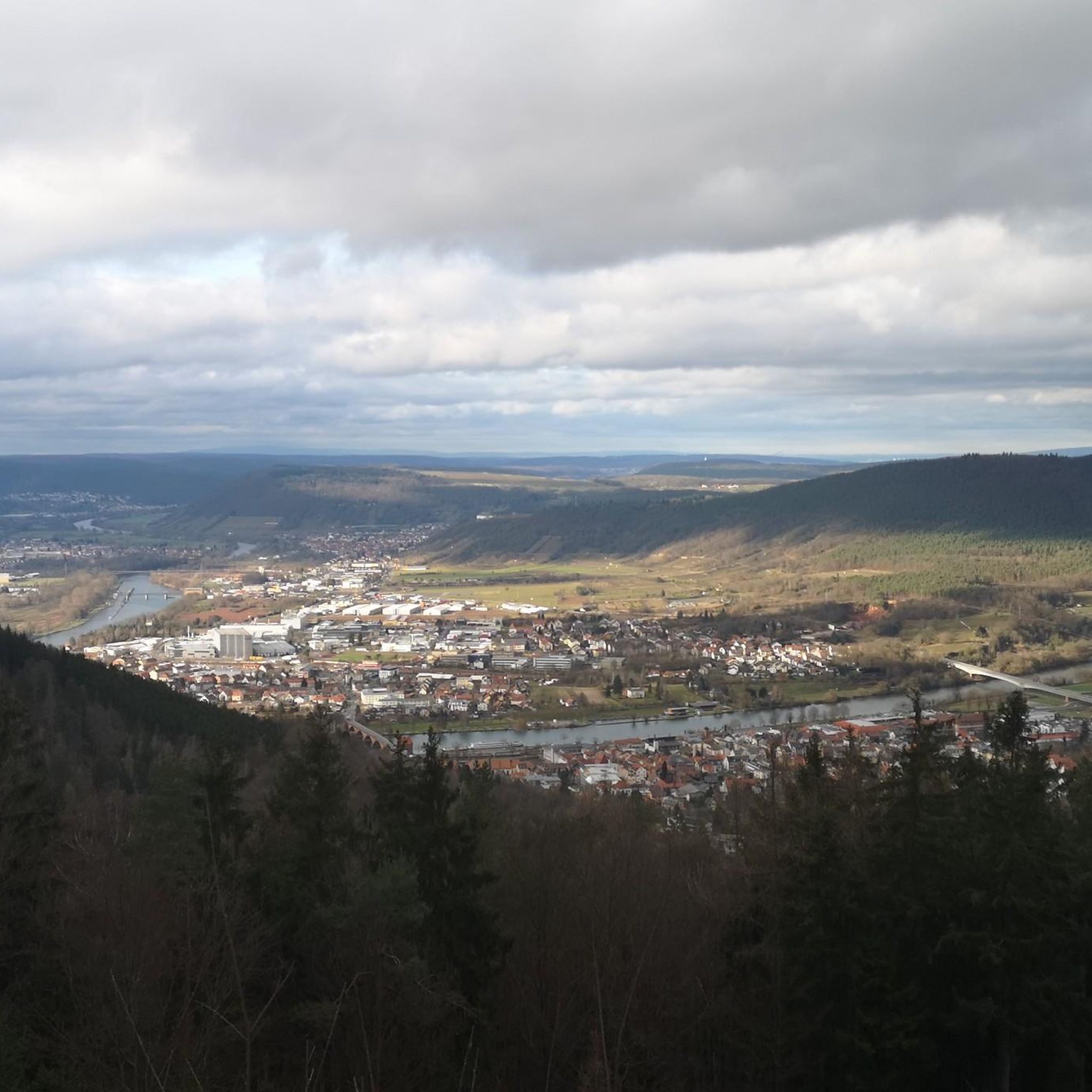
A really nice view
0
0
Pilgrimage Church of the Assumption of Mary The nave of the hall church, built between 1672 and 1674 according to plans by Wolfgang Hurstetter, is adjoined to the east by a chancel of the same width with a three-sided apse. The rectory was built against the west wall of the nave. Rising from the gable roof of the nave to the west is an octagonal bell tower with a pointed pyramidal roof, housing the belfry with three church bells. The church was built in the Baroque style and solemnly consecrated in 1674. At that time, Heldmannsberg was a Catholic enclave in a predominantly Protestant area. Heldmannsberg did not become its own parish until 1779. The Heldmannsberg church is the only Baroque church building in the Nuremberg Land district. The high altar features the altarpiece "Assumption of Mary," painted by Carolus Brauneck in 1730 and originally from Eichstätt. The upper section of the high altar features an elaborate depiction of the Holy Trinity with the Coronation of the Virgin. This Marian figure is the central image of grace for the pilgrimage. The left side altar, erected around 1750, depicts St. Francis Xavier, and its upper section contains images of St. Anne and the Blessed Virgin Mary. The Rococo reliquary on the predella houses a Sacred Heart image from 1760. The right side altar displays an image of St. Joseph, dating from around 1750. Its upper section depicts St. Sebastian. The Baroque pulpit dates from 1678. The paintings on either side of the high altar depict St. Aloysius on the left and St. Florian on the right; both paintings originate from Tannlohe. In a Catholic church, the Sacrament of Penance is administered, which is why penitential images depicting St. Peter and St. Mary Magdalene were placed above the confessionals. These images can be seen today at the rear of the church. There are also other interesting wooden figures to admire in the church. A beautiful 18th-century crucifix is mounted on the north wall, and a so-called "Wies Christ" (a type of statue) is housed in a shrine. Also on the north wall is the figure of St. John Nepomuk. Beneath the gallery sits the image of St. George, the dragon slayer. At the front of the chancel arch, the figures of the patron saints of the diocese adorn the church: St. Willibald and St. Walburga. The organ, built by Joseph Franz Bittner, was installed in the church in 1902/03. Source: Church Guide, Parish and Pilgrimage Church of the Assumption of Mary
3
0


This old railway line is very easy to ride.
0
1

Beautiful autumn tour in the Upper Palatinate
0
0

This bridge is truly a force to be reckoned with and a masterpiece of its time. I was really surprised when I drove over this bridge.
4
0
Frequently Asked Questions
How many no traffic touring cycling routes are available around Illschwang?
There are over 25 dedicated no traffic touring cycling routes around Illschwang. These routes cater to various skill levels, with 14 classified as moderate and 12 as difficult, ensuring a suitable option for most touring cyclists.
What kind of terrain can I expect on no traffic touring routes in Illschwang?
The region around Illschwang features diverse terrain, including rolling hills, extensive forests, and impressive rock formations. Routes often follow quiet side roads and well-developed cycling paths, providing a peaceful experience through natural landscapes. Expect some elevation changes, as the area is characterized by its position in the Upper Palatinate Jura.
Are there any family-friendly no traffic cycling routes in Illschwang?
Yes, Illschwang offers routes suitable for families. The area's network of well-developed cycling paths and quiet side roads makes it ideal for a relaxed family outing. For a shorter, moderate option, consider the Illschwang – Simultaneous Church of St. Vitus loop from Illschwang, which is just over 12 kilometers and allows for a pleasant ride through the local scenery.
What are some notable landmarks or attractions I can see along the no traffic touring cycling routes?
Illschwang's routes often pass by historical and natural highlights. You can explore the impressive Lichtenegg Castle Ruins, which offer panoramic views. The region is also home to the Kastl Monastery Castle and the historic Ziegeltor in Amberg. Many routes are part of the larger Simultankirchen-Radweg, connecting numerous historical churches.
Can I find circular no traffic cycling routes around Illschwang?
Absolutely. Many of the no traffic touring cycling routes in Illschwang are designed as loops, allowing you to start and end in the same location. An example is the challenging Lichtenegg Castle Ruins – Inter Mill (Lower Mill) loop from Illschwang, offering a substantial ride with scenic views.
What is the best time of year to go touring cycling in Illschwang?
The spring, summer, and early autumn months generally offer the best conditions for touring cycling in Illschwang. During these seasons, the weather is typically mild, and the natural landscapes are at their most vibrant. The region's quiet routes through forests and along river valleys are particularly enjoyable when the foliage is green or displaying autumn colors.
Are there options for longer distance no traffic touring routes near Illschwang?
Yes, for those seeking longer distances, Illschwang is part of the extensive Simultankirchen-Radweg, a 400-kilometer route divided into ten day tours. One specific section, Route 4 AS, passes directly through Illschwang. For a challenging local loop, consider the View of Klosterburg Kastl – Hoibrücke Viaduct (Ursensollen) loop from Illschwang, which covers over 53 kilometers.
What do other touring cyclists enjoy most about cycling in Illschwang?
The komoot community highly rates the touring cycling experience in Illschwang, with an average score of 4.3 out of 5 stars from over 120 ratings. Reviewers often praise the peaceful, traffic-free nature of the routes, the beautiful natural scenery, and the well-maintained paths that make for an enjoyable ride through the Upper Palatinate Jura.
Is there public transport access to the no traffic touring cycling routes in Illschwang?
While specific public transport connections directly to every trailhead may vary, Illschwang is a municipality in Bavaria, Germany. For detailed information on public transport options to and from Illschwang, including train and bus schedules that might accommodate bicycles, it's recommended to check local transport provider websites or the official tourism site for Ostbayern: Ostbayern Tourismus.
Where can I find parking for no traffic touring bike trails in Illschwang?
Illschwang is cyclist-friendly, and parking is generally available in and around the municipality. Many routes start directly from the village center or from designated parking areas near trailheads. Specific parking information for individual routes can often be found within the komoot tour details.
Are there any moderate no traffic touring cycling routes available?
Yes, there are 14 moderate no traffic touring cycling routes around Illschwang. A good example is the Illschwang – Post Pond loop from Illschwang, which offers a balanced ride of about 35 kilometers with manageable elevation changes, perfect for those looking for a comfortable yet engaging tour.
Most popular routes around Illschwang
Most popular attractions around Illschwang

Get inspired with the komoot mobile app


Explore more
Browse the best Cycling routes in other regions.
