The best hikes from bus stations in Corfu
4.4
(10299)
43,458
hikers
236
hikes
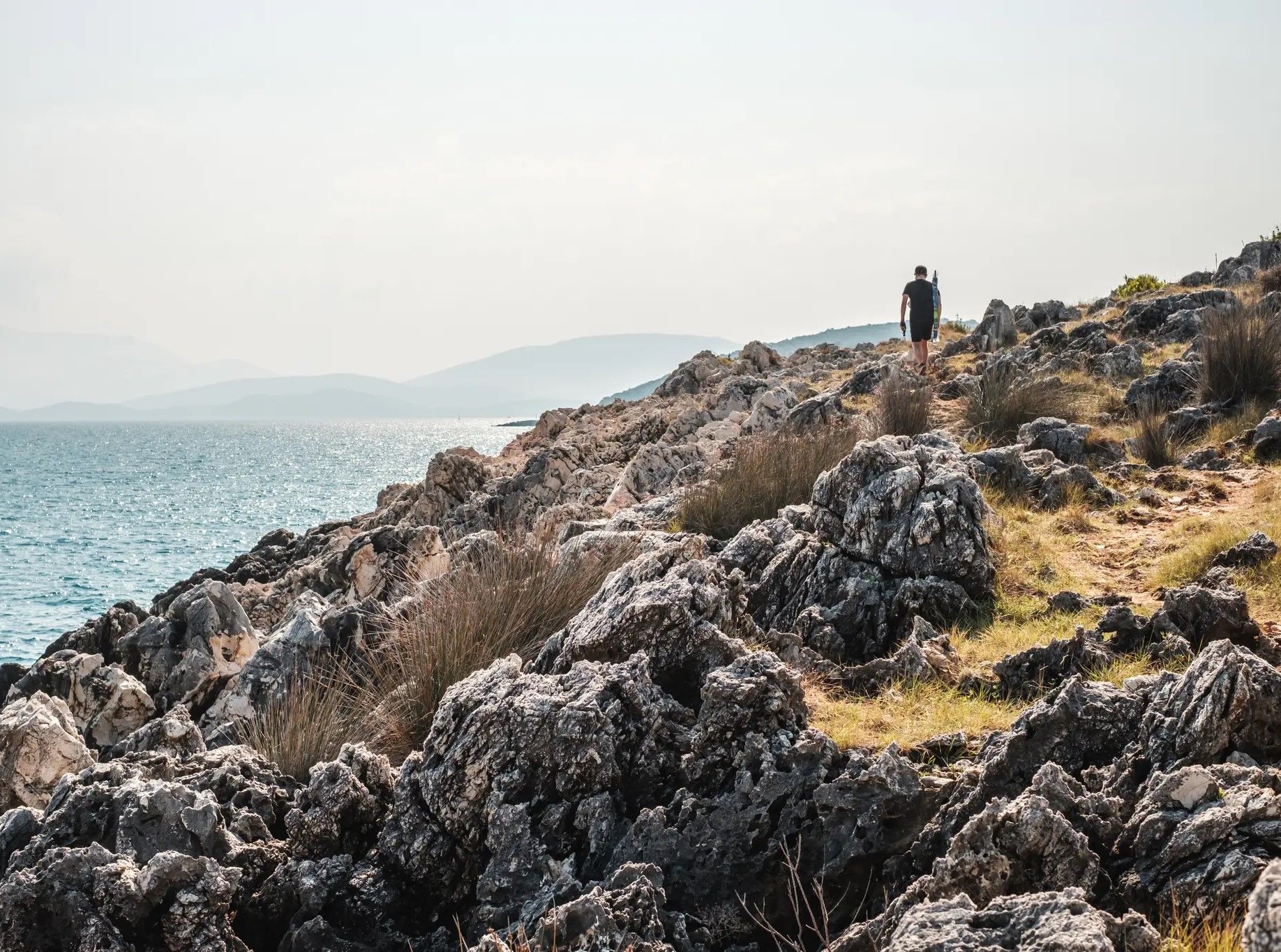
Bus station hiking trails in Corfu traverse a landscape characterized by lush olive groves, rugged hills, and diverse coastlines. The island features an extensive network of footpaths, including sections of the Corfu Trail, which connect traditional villages and natural features. Hikers can explore varied terrain ranging from coastal paths to higher elevations, offering different levels of challenge.
Best bus station hiking trails in Corfu
- The most popular bus station hiking route is View of Cape Drastis – View of Cape…
Last updated: July 11, 2026
4.4
(174)
1,083
hikers
10.2km
02:42
90m
90m
Moderate hike. Good fitness required. Easily-accessible paths. Suitable for all skill levels.
4.8
(201)
703
hikers
21.0km
06:34
720m
720m
Hard hike. Very good fitness required. Mostly accessible paths. Sure-footedness required.

Sign up for free
4.7
(105)
338
hikers
9.62km
03:13
420m
420m
Hard hike. Good fitness required. Sure-footedness, sturdy shoes and alpine experience required.
4.7
(85)
324
hikers
14.2km
04:25
500m
500m
Moderate hike. Good fitness required. Easily-accessible paths. Suitable for all skill levels.
4.7
(60)
362
hikers
Moderate hike. Good fitness required. Easily-accessible paths. Suitable for all skill levels.
Get access to more routes and recommendations from other explorers.
Sign up for free
Already have an account?
Our route recommendations are based on thousands of hikes, rides, and runs completed by other people on komoot.
Start today with a free account
Your next adventure awaits.
Login or Signup


Tips from the Community

(2/2) Shortly after its construction, the fortress was reinforced with an angular fort called Scarpon. The New Fortress played an important role during the last Ottoman siege in 1716, during which military operations were concentrated on the western front of the city. Under British protection (1814–1864), several modifications were made to the fortress, as it was considered particularly important for the defense of the island. The most important was the construction of the imposing defensive barracks, which dominate the upper level of the fortress and were substantially redesigned at that time. A second barracks from the time of British protection (which now houses Corfu's naval base) has been preserved on the lower level of the fortress, along with gunpowder magazines, underground water tanks, and a network of tunnels for communication between the various parts.
0
0
(1/2) The New Fortress, an excellent example of a late Renaissance fortification, was built during Venetian rule (1576–1578) at the northwestern end of Corfu Town on the rocky hill of St. Mark's. It is part of the fortification complex, a project entrusted to the engineer Ferdinardo (Ferrante) Vitelli. The name "New" served to distinguish it from the existing fortification to the east of the town, which has since been called the "Old Fortress." The New Fortress, like the entire western front, adheres to the principles of the bastion system. It consists of two fortification levels. The low level is located to the northeast and protected the commercial port of Spilia. It has two monumental gates. The eastern gate is crowned with the winged Lion of St. Mark, the symbol of the Serenissima, the Republic of Venice. The high level, with the two bastions of the Seven Winds (Sette Venti), protected the town from the west, from the landward side.
0
0

Unbelievable how extensive the fortress is
0
0

There are good cafes here with great views.
0
0

If you go down to past the NAOK Azur restaurant, there is a swimming spot where locals climb into the Ioanian Sea / Yacht Harbor via ladder.
0
0
Angelokastro is one of the most important fortified complexes of Corfu. It was an acropolis which surveyed the region all the way to the southern Adriatic and presented a formidable strategic vantage point to the occupant of the castle. Angelokastro formed a defensive triangle with the castles of Gardiki and Kassiopi, which covered Corfu's defences to the south, northwest and northeast. The castle never fell, despite frequent sieges and attempts at conquering it through the centuries, and played a decisive role in defending the island against pirate incursions and during three sieges of Corfu by the Ottomans, significantly contributing to their defeat. During invasions, it helped shelter the local peasant population. The exact period of the building of the castle is not known, but it has often been attributed to the reigns of Michael I Komnenos also known as Michael I Angelos, the Despot of Epirus, who took Corfu in 1214. Admission fee 2025: 10€
1
0
Angelokastro is one of the most important fortified complexes of Corfu. It was an acropolis which surveyed the region all the way to the southern Adriatic and presented a formidable strategic vantage point to the occupant of the castle. Angelokastro formed a defensive triangle with the castles of Gardiki and Kassiopi, which covered Corfu's defences to the south, northwest and northeast. The castle never fell, despite frequent sieges and attempts at conquering it through the centuries, and played a decisive role in defending the island against pirate incursions and during three sieges of Corfu by the Ottomans, significantly contributing to their defeat. During invasions, it helped shelter the local peasant population. The exact period of the building of the castle is not known, but it has often been attributed to the reigns of Michael I Komnenos also known as Michael I Angelos, the Despot of Epirus, who took Corfu in 1214. Admission 2025: 10€
0
0
From here you can see the Byzantine castle Angelokastro.
0
0
Frequently Asked Questions
How many bus-accessible hiking trails are there in Corfu?
Corfu offers a wide selection of bus-accessible hiking trails. There are over 240 routes available, ranging from easy strolls to more challenging treks, ensuring there's something for every hiker to enjoy.
What types of landscapes can I expect on bus-accessible hikes in Corfu?
Corfu's bus-accessible hikes traverse incredibly diverse landscapes. You can expect to see lush olive groves, rugged hills, dense pine forests, tranquil meadows, and dramatic coastlines with crystal-clear waters. Many routes also pass through traditional villages and historical sites.
Are there any easy, family-friendly hikes accessible by bus in Corfu?
Yes, Corfu has many easy routes suitable for families. For example, the Old Town, Corfu – The Liston, Corfu Town loop from Corfu offers a moderate, relatively flat urban walk, perfect for exploring the historic center. Look for routes marked as 'easy' in the guide for more options.
Can I find challenging bus-accessible hikes in Corfu?
Absolutely. For those seeking a challenge, routes like the Kouramilia Viewpoint – Leans Path, Lakones loop from Palaiokastritsa offer significant elevation gain and longer distances. Another demanding option is the View of Glyfada Beach – View of Myrtiotissa Beach loop from Kokkini, which provides stunning coastal views with a difficult grade.
What natural attractions can I discover on bus-accessible trails?
Corfu's bus-accessible trails lead to many natural wonders. You can visit the iconic View of Cape Drastis with its majestic white cliffs, or explore the unique rock formations of the Canal of Love. The Adventurous bridge – Korission Lake loop from Municipality of Southern Corfu takes you past the tranquil Lake Korission, a haven for birdwatching.
Are there any historical landmarks or points of interest along these routes?
Yes, many trails offer glimpses into Corfu's rich history. The Angelokastro Castle, an ancient Byzantine fortress, is a prominent historical site accessible via hiking routes. You'll also encounter traditional villages and ancient ruins throughout the island's extensive trail network.
Are there circular hiking routes available from bus stations?
Yes, many bus-accessible routes in Corfu are circular, allowing you to start and end your hike at the same point, often conveniently near a bus stop. Examples include the View of Cape Drastis – View of Cape Drastis loop from Sidari and the Adventurous bridge – Korission Lake loop from Municipality of Southern Corfu.
What is the best time of year for hiking in Corfu?
The ideal time for hiking in Corfu is during spring (April, May, June) when the island is covered in wildflowers and the climate is mild. Autumn (September, October) also offers pleasant temperatures. Summers can be very hot, making early morning or late afternoon hikes preferable.
What do other hikers say about the bus-accessible trails in Corfu?
The bus-accessible trails in Corfu are highly rated by the komoot community, with an average score of 4.45 stars. Reviewers often praise the stunning coastal views, the diverse landscapes, and the opportunity to explore traditional villages and historical sites.
Are there any routes that pass by beaches or offer opportunities for wild swimming?
Many coastal routes provide access to beautiful beaches and coves. For instance, the View of Glyfada Beach – View of Myrtiotissa Beach loop from Kokkini passes by scenic beaches. You can also find secluded spots like Gialiskari Beach or Arkoudilas Beach along various trails, perfect for a refreshing dip.
Can I find bus-accessible hikes that include tavernas or places to eat?
Yes, many hiking routes, especially those passing through villages or along popular coastal areas, will have tavernas or cafes where you can stop for refreshments or a meal. It's always a good idea to check the route details on komoot for points of interest like restaurants along the way.
Most popular attractions in Corfu

Get inspired with the komoot mobile app


Explore more
Browse the best Hikes in other regions.
