The best hikes from bus stations around Connemara National Park
4.4
(1773)
8,962
hikers
8
hikes
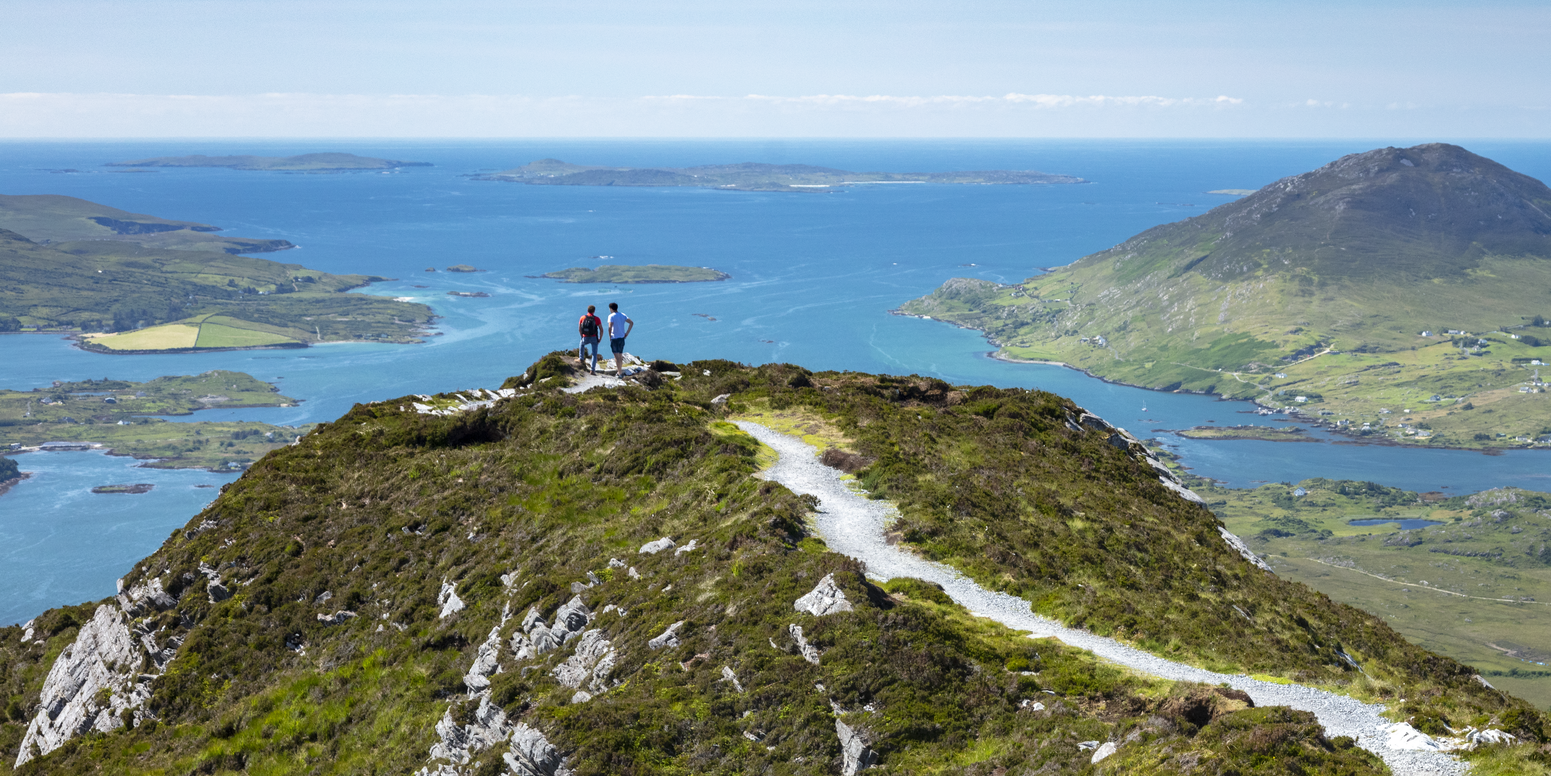
Hiking around Connemara National Park offers diverse landscapes, including portions of the Twelve Bens mountain range, expansive bogs, heathlands, and woodlands. The region features jagged peaks, quartzite summits, and valleys with rivers like the Polladirk. Coastal views are also accessible from higher elevations, providing varied terrain for bus station hiking trails.
Best bus station hiking trails around Connemara National Park
- The most popular bus station hiking route is Diamond Hill Loop, a 4.8 miles (7.8 km) trail that takes…
Last updated: July 12, 2026
4.8
(1568)
7,915
hikers
7.75km
02:34
370m
370m
Moderate hike. Good fitness required. Easily-accessible paths. Suitable for all skill levels.
4.3
(9)
73
hikers
4.23km
01:07
30m
30m
Easy hike. Great for any fitness level. Easily-accessible paths. Suitable for all skill levels.

Sign up for free
4.6
(23)
153
hikers
4.71km
01:29
190m
190m
Easy hike. Great for any fitness level. Easily-accessible paths. Suitable for all skill levels.
4.3
(62)
240
hikers
7.71km
02:09
130m
130m
Moderate hike. Good fitness required. Easily-accessible paths. Suitable for all skill levels.
4.7
(6)
18
hikers
12.9km
03:30
180m
170m
Moderate hike. Good fitness required. Easily-accessible paths. Suitable for all skill levels.
Get access to more routes and recommendations from other explorers.
Sign up for free
Already have an account?
Our route recommendations are based on thousands of hikes, rides, and runs completed by other people on komoot.
Start today with a free account
Your next adventure awaits.
Login or Signup
Popular around Connemara National Park
Other adventures around Connemara National Park


Tips from the Community

An impressive neo-Gothic castle that watches over Clifden. This historic building, built in 1832 by John D'Arcy (the founder of the town), hidden in the greenery at the foot of the Sky Road, breathes the atmosphere of old Ireland. For cyclists, the driveway alone is worth a photo opportunity, with the castle turrets peeking above the trees. An ideal place to celebrate the first altitude meters of the Sky Road or to take a break in an environment where history and luxury meet.
5
0
A spectacular viewpoint where the rugged Atlantic Ocean meets the land of Connemara. Depending on the tide, you will see a deep turquoise bay or a mystical landscape of exposed sandbanks. The bay forms the heart of the region and offers a beautiful contrast to the sharp peaks of the Twelve Bens in the background.
5
0
The vibrant heart of Connemara. This triangular market square breathes character with its colourful facades, cosy pubs, and local craft shops. The two striking church towers that overlook the town give the square a unique silhouette. For cyclists, this is the ideal place to recharge: there is plenty of space to park your bike and enjoy the lively atmosphere from a terrace. A classic endpoint of the R341 coastal route where Irish hospitality awaits you.
6
0
Two stone bridges over the Owenglen River: Ardbear Old Bridge (c. 1789) and Ardbear New Bridge (c. 1824). The old bridge was a filming location for The Quiet Man and lies next to the slope where Daniel O’Connell held a Monster Meeting on 17 September 1843. The new bridge was designed by engineer Alexander Nimmo. The ruins by the river are remains of the small hydroelectric power plant that supplied Clifden with power from 1925 until the early 1950s.
4
0


Frequently Asked Questions
How many hiking trails are accessible directly from bus stations in Connemara National Park?
This guide features 8 hiking routes that are easily accessible from bus stations around Connemara National Park. These include 4 easy and 4 moderate trails, offering a variety of options for different fitness levels.
Which bus routes serve the main hiking areas in Connemara National Park?
The primary bus routes connect to key locations like Letterfrack, which is the gateway to Connemara National Park and the Diamond Hill trails, and Clifden, a vibrant town with several accessible routes. Kylemore Abbey is also a significant stop for hikers.
Are there any circular hiking routes accessible by bus in Connemara National Park?
Yes, many of the trails accessible by bus are circular, allowing you to start and end at the same point. Notable examples include the challenging but rewarding Diamond Hill Loop, the scenic Kylemore Abbey – Waterfall by the Abbey loop, and the pleasant View of Letterfrack – View of Tully Mountain loop.
What kind of terrain can I expect on bus-accessible trails in Connemara National Park?
The terrain varies significantly. You'll encounter well-maintained paths with stone slabs and boardwalks, especially on the popular Diamond Hill trails. Other routes might feature gravel paths, boggy sections (especially after rain), and some ascents on rocky or uneven ground, particularly in mountainous areas. The park's diverse landscape includes mountains, bogs, heathlands, and woodlands.
What natural features and landmarks can I see along these bus-accessible routes?
Connemara National Park is rich in natural beauty. Many trails offer stunning views of the Twelve Bens mountain range, including the highest peak, Benbaun. You can also explore vast expanses of blanket bog, home to unique flora like purple moorgrass and carnivorous plants. The Diamond Hill Summit provides panoramic vistas of Kylemore Abbey and the Atlantic coastline. The valley of Glanmore, with the Polladirk River, is another picturesque spot.
Are there family-friendly hiking options accessible by bus in Connemara National Park?
Absolutely. The park is well-suited for families, with several easy trails designed for a range of abilities. The Lower Diamond Hill Trail, for instance, is a gentle loop around the foothills. The Kylemore Abbey – Waterfall by the Abbey loop is another easy option. The park's visitor center in Letterfrack also offers exhibitions and information, making it a great starting point for families.
Can I bring my dog on the hiking trails in Connemara National Park?
Dogs are generally welcome in Connemara National Park but must be kept on a leash at all times to protect wildlife and livestock, especially the iconic Connemara ponies and sheep that roam freely. Always clean up after your dog. Specific rules may apply to certain areas, so it's always best to check with the National Park website for the latest guidelines.
What is the best time of year to hike in Connemara National Park using public transport?
The best time to visit for hiking is typically from late spring to early autumn (May to September) when the weather is milder and daylight hours are longer. During these months, the purple moorgrass is in bloom, adding vibrant color to the landscape. Public transport services are also generally more frequent during the peak tourist season. Be prepared for changeable weather at any time of year.
Are there places to eat or stay near the bus stops in Connemara National Park?
Yes, both Letterfrack and Clifden, which are key bus stops, offer amenities for hikers. Letterfrack, located at the entrance to Connemara National Park, has cafes, pubs, and accommodation options. Clifden, a larger town, provides a wider selection of restaurants, pubs, and various types of lodging, making it a convenient base for exploring the region by bus.
What do other hikers enjoy most about hiking in Connemara National Park?
The area is highly rated by the komoot community, with an average score of 4.4 stars. Reviewers often praise the breathtaking panoramic views from peaks like Diamond Hill Summit, the well-maintained trails, and the unique, rugged beauty of the Connemara landscape. The sense of wildness and the diverse ecosystems are frequently highlighted as major draws.
Are there any less crowded hiking options accessible by bus?
While Diamond Hill can be popular, exploring trails around Letterfrack or Clifden that venture slightly off the main park routes can offer a quieter experience. For example, the Market Square Clifden – Clifden Castle Ruins loop offers historical interest away from the main park crowds. The Tree Trail and Poetry Trail near the visitor center also provide a more tranquil walk.
Most popular routes around Connemara National Park
Most popular attractions around Connemara National Park

Get inspired with the komoot mobile app


Explore more
Browse the best Hikes in other regions.
