The best traffic-free bike rides around Parque Arqueológico do Vale do Côa
4.7
(3)
127
riders
4
rides
No traffic touring cycling routes around Parque Arqueológico do Vale do Côa traverse a landscape shaped by the Côa River, featuring deep canyons and rugged terrain. The region is characterized by terraced hillsides, prominent schist outcrops, and diverse flora including oak forests, vineyards, and olive groves. This environment offers challenging routes for touring cyclists seeking a serene experience away from major cities. The varied topography provides a demanding yet rewarding cycling experience.
Best no traffic touring cycling routes around Parque…
Last updated: May 16, 2026
9
riders
59.7km
05:33
1,520m
1,520m
Hard bike ride. Very good fitness required. Mostly paved surfaces. Suitable for all skill levels.
9
riders
73.7km
07:14
1,710m
1,700m
Hard bike ride. Very good fitness required. Mostly paved surfaces. Suitable for all skill levels.

Sign up for free
7
riders
38.8km
04:02
1,080m
1,080m
Hard bike ride. Very good fitness required. Mostly paved surfaces. Suitable for all skill levels.
3
riders
Hard bike ride. Very good fitness required. Mostly paved surfaces. Suitable for all skill levels.
3
riders
Hard bike ride. Very good fitness required. Mostly paved surfaces. Suitable for all skill levels.
Our route recommendations are based on thousands of hikes, rides, and runs completed by other people on komoot.
Start today with a free account
Your next adventure awaits.
Login or Signup
Popular around Parque Arqueológico do Vale do Côa
Other adventures around Parque Arqueológico do Vale do Côa

Tips from the Community

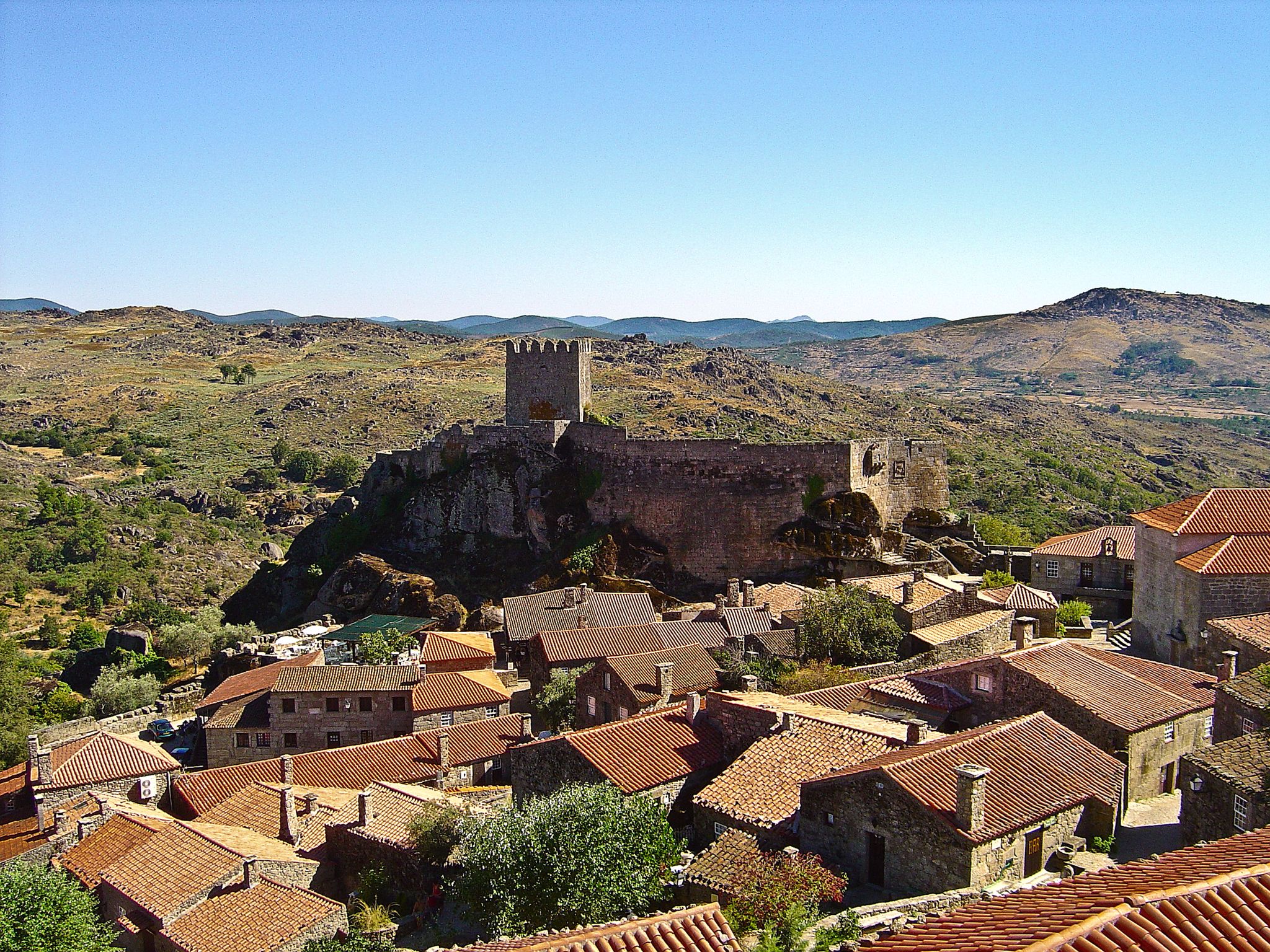
Marialva is a jewel among Portugal's Historic Villages. High above, the castle watches over centuries of conquests and legends, while within the walls still echo the memory of kings, fairs, and battles. Strolling its cobblestone streets is like traveling back in time: from the keep to the Church of Santiago, every detail tells a story. Outside the walls, vineyards and flavors of Beira Alta complete the landscape: roast kid, sheep's cheese, and sweets that preserve the taste of tradition. Here, the village is experienced as much on foot as at the table.
3
0
Nestled in the Serra da Marofa valley, Freixeda do Torrão holds centuries of history. Its name dates back to 1190, and since then, time has left its mark. Among its treasures stands the Parish Church, with Romanesque roots, rebuilt after the devastating fire of 1908 but still faithful to the 16th-century portal that saw its birth. In the heart of the parish, the Solar dos Metelos stands tall with its medieval tower and stately coat of arms, a testament to times of power and distinction.
1
0
Castelo Rodrigo holds millennia of history, from Paleolithic and Roman remains to the Muslim presence in the castle. Conquered and reconquered between the 12th and 13th centuries, it became a town and municipality under King Alfonso IX of León and passed definitively to Portugal in 1297, when King Dinis rebuilt and repopulated the castle. Marked by wars, charters, and restorations, it welcomed pilgrims on their way to Santiago and remains today one of the twelve Historic Villages of Portugal.
2
0
Castelo Rodrigo is a village with a medieval soul, where time has left its deep marks: walls, stone streets and remains of an ancient community of New Christians. Surrounded by magnificent landscapes, from the Douro International Natural Park to the Côa Valley, passing through the Serra da Marofa and the Faia Brava Reserve, this village is an invitation to contemplation and to taste. Here, history is served at the table: Marofa lamb, octopus in migas or rice are flavors that count as much as the books.
1
0

Old Carmelite convent that is located on one side of the road and that allows us to see incredible views of the monastery and its walls.
0
0
Nice road, which leaves us at the entrance to Urros, on a hilly and winding road, good for riding.
0
0
Nice bridge that helps cross this stretch of the Sabor River on a big, tall bridge. Good views of the valley and the surrounding hills.
1
0

Former prison of Castelo Rodrigo.
0
1
Frequently Asked Questions
How many no-traffic touring cycling routes are available in Parque Arqueológico do Vale do Côa?
There are currently 4 dedicated no-traffic touring cycling routes listed in Parque Arqueológico do Vale do Côa. These routes are generally considered difficult, offering a challenging and rewarding experience through the region's unique landscapes.
What is the best time of year for no-traffic touring cycling in the Côa Valley?
The best time to visit for touring cycling is generally late spring and early fall. This avoids the extreme heat of summer, which can see temperatures soar, and allows you to enjoy the diverse flora, such as almond blossoms in early spring or the fiery red leaves of the vineyards in autumn.
Are there any family-friendly no-traffic cycling routes in Parque Arqueológico do Vale do Côa?
The routes currently listed for no-traffic touring cycling in Parque Arqueológico do Vale do Côa are all rated as 'difficult'. While the region offers a tranquil environment, the terrain is characterized by rugged mountains and demanding ascents, making them more suitable for experienced cyclists rather than families with young children.
What kind of landscapes and natural features can I expect to see on these routes?
The routes traverse a dramatic and varied landscape. You'll encounter deep river valleys and gorges carved by the Côa River, diverse flora including oak forests, rocky heathlands, and Mediterranean crops like vineyards and olive groves. The region is also known for its rugged mountains and prominent schist outcrops, offering breathtaking views and a sense of wild nature.
What historical and cultural attractions can I visit along or near the no-traffic cycling routes?
The region is rich in history. You can explore the Côa Museum, which provides an excellent overview of the park's prehistory. Other notable sites include the Ruins of the Pocinho Railway District 🇵🇹, and historic villages and castles like Marialva Castle Ruins. The entire area is a UNESCO World Heritage site, famous for its Paleolithic rock art.
Are there any circular no-traffic touring cycling routes available?
Yes, several of the no-traffic touring cycling routes in the region are circular. For example, the Albufeira do Feiticeiro – Praia Fluvial de Foz do Sabor loop from Torre de Moncorvo offers a challenging 62 km loop, and the Marialva Castle Ruins – Historic Village of Marialva loop from Mêda, Outeiro de Gatos e Fonte Longa is a shorter 28 km option.
What is the typical difficulty and duration for these no-traffic touring cycling routes?
All listed no-traffic touring cycling routes in Parque Arqueológico do Vale do Côa are rated as 'difficult'. They feature significant elevation gains, with some routes like the Larinho Station – View of Torre de Moncorvo loop from Torre de Moncorvo covering over 73 km with 1700m of ascent, typically taking around 7 hours to complete. Shorter difficult routes, like the Castelo Rodrigo Village – Freixeda do Torrão loop from Figueira de Castelo Rodrigo, are around 36 km and can take about 3.5 hours.
What do other touring cyclists enjoy most about cycling in Parque Arqueológico do Vale do Côa?
The area is highly rated by the komoot community, with an average score of 5.0 stars. Reviewers often praise the quietness of the Côa Valley, the stunning natural backdrop of the river valleys, and the unique blend of challenging routes with significant archaeological sites, making for an immersive and serene experience away from traffic.
Are there any specific viewpoints or scenic spots along the no-traffic routes?
Yes, the region offers numerous scenic spots. The Côa River carves a 130-meter-deep canyon, providing spectacular views. You can also find designated viewpoints such as the São Gabriel Viewpoint, offering panoramic vistas of the rugged terrain and river convergence.
Is public transport available to access the no-traffic cycling trails?
While the Côa Valley is generally away from major cities, public transport options directly to specific trailheads might be limited. It's advisable to research local bus services or consider starting points in larger towns like Torre de Moncorvo or Mêda, which may have better connections. For detailed information on reaching the region, you might consult general travel resources for Portugal, such as Visit Portugal.
Are there places to eat or get refreshments along the no-traffic touring routes?
The Côa Valley is known for its tranquil and less populated nature. While some routes pass through or near historic villages, dedicated cafes or pubs directly on the no-traffic trails might be sparse. It's recommended to plan your route with provisions in mind or check for establishments in the villages at the start or end of your chosen tour.
Most popular routes around Parque Arqueológico do Vale do Côa
Most popular attractions around Parque Arqueológico do Vale do Côa

Get inspired with the komoot mobile app


Explore more
Browse the best Cycling routes in other regions.
