The best traffic-free bike rides around National Park del Lake Sanabria
5.0
(3)
494
riders
4
rides
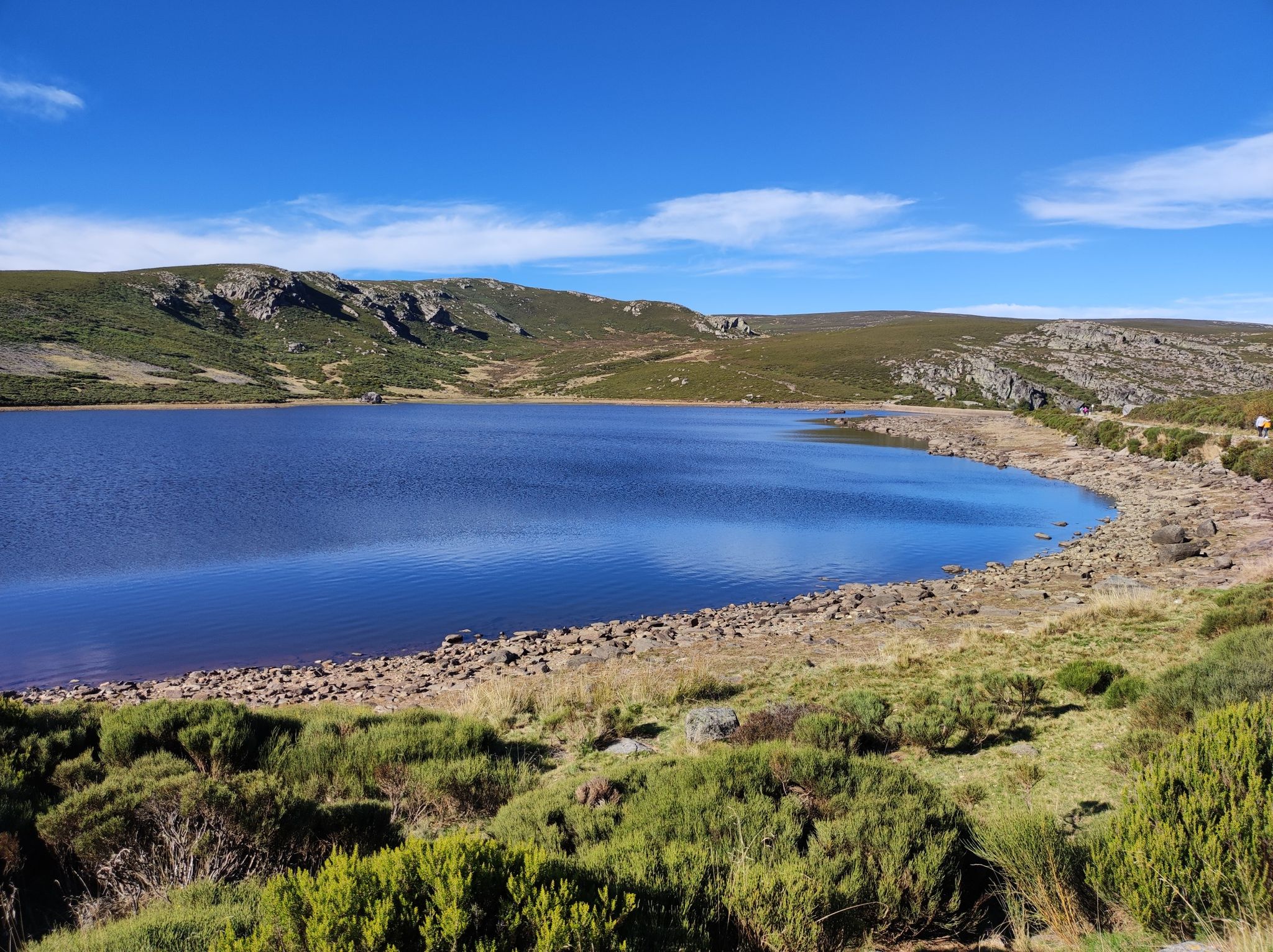
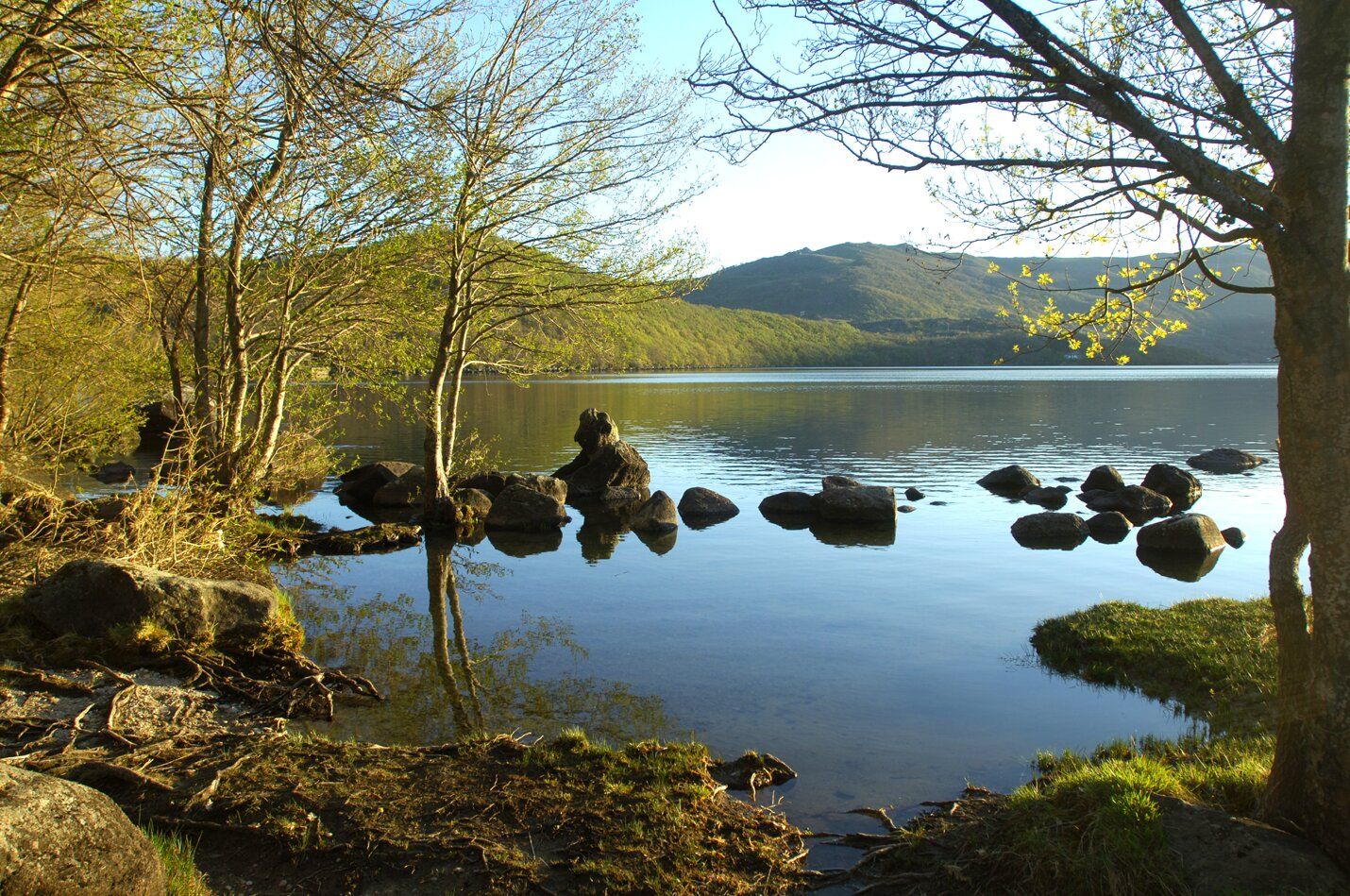
No traffic road cycling routes around National Park del Lake Sanabria traverse a landscape shaped by glacial activity, featuring the Iberian Peninsula's largest natural glacial lake. The region is characterized by mountainous terrain, with elevations ranging from 997 meters at the lakeside to 2,127 meters at Peña Trevinca. Cyclists will encounter rolling formations, wooded slopes dominated by oak forests, and the scenic Tera River gorge. This varied topography provides diverse road cycling opportunities.
Best no traffic road cycling routes around…
Last updated: May 16, 2026
14
riders
59.4km
02:52
810m
810m
Moderate road ride. Good fitness required. Mostly well-paved surfaces and easy to ride.
5.0
(1)
15
riders
47.3km
02:47
1,170m
1,170m
Hard road ride. Very good fitness required. Mostly well-paved surfaces and easy to ride.

Sign up for free
2
riders
97.5km
05:01
1,690m
1,690m
Hard road ride. Very good fitness required. Mostly well-paved surfaces and easy to ride.
44.1km
02:36
1,020m
1,020m
Hard road ride. Very good fitness required. Mostly well-paved surfaces and easy to ride.
5.0
(1)
6
riders
89.3km
05:13
2,110m
2,110m
Hard road ride. Very good fitness required. Mostly well-paved surfaces and easy to ride.
Our route recommendations are based on thousands of hikes, rides, and runs completed by other people on komoot.
Start today with a free account
Your next adventure awaits.
Login or Signup

Other adventures around National Park del Lake Sanabria


Tips from the Community

The Portela da Canda Pass, also known as the Canda Pass or simply A Canda, is a mountain pass of great geographical, historical, and cultural value that connects Galicia (province of Ourense) with Castile and León (province of Zamora). Located in the Sierra Segundera mountain range, within the Galician Massif, it has traditionally been a crossing point for travelers, merchants, and pilgrims. It forms part of the Sanabrés Way of St. James, an extension of the Silver Route (Vía de la Plata), and is the entry point into Galicia for pilgrims coming from the south. The surrounding area features Jacobean sculptures and wayside crosses (cruceiros) that guide the route, the work of the artist Nicanor Carballo.
5
0

very nice place. Was recently voted one of the 10 most beautiful places in Spain. A bit touristy, but not overcrowded
2
1

Personally, I don't like this area a lot. I have seen hares, rabbits, deer, wolves and it's always quiet. I always go alone and explore paths
2
0

Located in the homonymous region, this picturesque town is the ideal location to stay during a visit to the surrounding towns and places. Declared an asset of cultural interest for its historical architectural complex, it has been a military bastion for decades, since the topography favors its defense, still preserving part of its wall. The Castle of the Counts of Benavente, the Romanesque church of Sta. María del Azogue and the hermitage of S. Cayetano, are places of tourist interest.
0
0
Built in the s. XV by the Pimentel family after taking control of the region, the fortress would witness the wars with Portugal in the s. XVIII and the War of Independence, when Portuguese soldiers would face the Serrar Division of the French army.
0
0

Imposing castle from the 15th century, a military fortress that was destroyed in the late 18th century and early 19th century during the War of Independence with Portugal and France. It suffered abandonment until the end of the 20th century, when the library, the Exhibition Hall and the Assembly Hall were installed. It currently houses the Visitor Center and the Municipal Tourism Office.
4
0
Built in the mid-15th century by Don Rodrigo Alonso de Pimentel and Doña María Pacheco (IV Counts of Benavente), it occupies a privileged position on a promontory. Rocky city plan protected by three river channels. It is a castle-fortress built in granite ashlar with a quadrangular walled enclosure and a central tower, the Torre del Homenaje or as it is popularly known “El Macho”.
5
1

Truchas is a small town located at the confluence of the Eria and Truchillas rivers in the region of La Cabrera.
1
0
Frequently Asked Questions
How many no-traffic road cycling routes are featured in National Park del Lake Sanabria?
This guide highlights a selection of four dedicated no-traffic road cycling routes within the National Park del Lake Sanabria, offering diverse experiences for cyclists seeking quiet roads and scenic views.
What is the difficulty level of the no-traffic road cycling routes?
The routes in this guide range from moderate to difficult. For example, the Hermitage of the Incarnation loop from Trefacio is considered moderate, while routes like the Puerto El Peñón loop from El Puente de Sanabria and the Porto and San Sebastián Dam Loop from Lubián present more challenging climbs and longer distances.
Are there any circular no-traffic road cycling routes?
Yes, all the no-traffic road cycling routes featured in this guide are circular, allowing you to start and end your ride at the same point. Examples include the Alto do Ladiairo and Hermisende Loop and the Hermitage of the Incarnation loop from Trefacio.
What natural features can I see along these quiet cycling routes?
The routes often pass through the park's stunning glacial landscapes. You can expect views of Lake Sanabria, the surrounding mountains of Sierra Segundera and Sierra de la Cabrera, and diverse forests. Some routes might offer glimpses of natural wonders like the Sotillo Waterfall or the high-altitude Laguna de los Peces.
What cultural or historical attractions are near the no-traffic cycling routes?
Many routes weave through charming villages. The medieval town of Puebla de Sanabria, a designated Historic-Artistic Site with its 15th-century castle and Romanesque Church of Nuestra Señora del Azogue, is a notable attraction. The Puebla de Sanabria Castle – Old Town of Puebla de Sanabria loop specifically includes this area.
What do other cyclists say about road cycling in National Park del Lake Sanabria?
The komoot community highly rates the cycling experiences here, with an average score of 5.0 stars. Reviewers often praise the stunning glacial landscapes, the quiet roads perfect for no-traffic cycling, and the rewarding climbs that offer breathtaking views.
When is the best time of year for no-traffic road cycling in National Park del Lake Sanabria?
The region is generally best for cycling from spring through autumn. During these seasons, the weather is typically more favorable, and the natural beauty of the park, from blooming flora to autumn colors, enhances the riding experience. Summer offers warmer temperatures, while spring and early autumn provide milder conditions.
Are there any viewpoints along the no-traffic road cycling routes?
Yes, the mountainous terrain and glacial valleys offer numerous opportunities for scenic viewpoints. You can find dedicated spots like the Viewpoint of Lake Sanabria, providing panoramic vistas of the lake and its surroundings, often accessible from or near these quiet routes.
Are there any particularly challenging no-traffic road cycling routes for experienced riders?
Absolutely. Routes like the Puebla de Sanabria Castle – Old Town of Puebla de Sanabria loop, with over 2100 meters of elevation gain, and the Porto and San Sebastián Dam Loop from Lubián, covering nearly 100 km with significant climbing, are designed for experienced cyclists seeking demanding ascents and long distances on quiet roads.
Is parking available near the start of these no-traffic road cycling routes?
Yes, as many routes start from or pass through villages and towns like Trefacio, El Puente de Sanabria, Lubián, and Puebla de Sanabria, you can typically find parking facilities in these locations, making it convenient to access the no-traffic routes.
What kind of landscapes will I encounter on these no-traffic routes?
You will cycle through diverse landscapes shaped by glacial activity, including rolling mountain formations, dense oak forests, and areas with alder, ash, and willow trees. The routes provide constant views of the stunning natural environment, characteristic of the National Park del Lake Sanabria.
Most popular routes around National Park del Lake Sanabria
Most popular attractions around National Park del Lake Sanabria

Get inspired with the komoot mobile app


Explore more
Browse the best Road cycling routes in other regions.
