The best city hikes and walks around Kazimierski Park Krajobrazowy
4.5
(211)
3,537
hikers
21
hikes
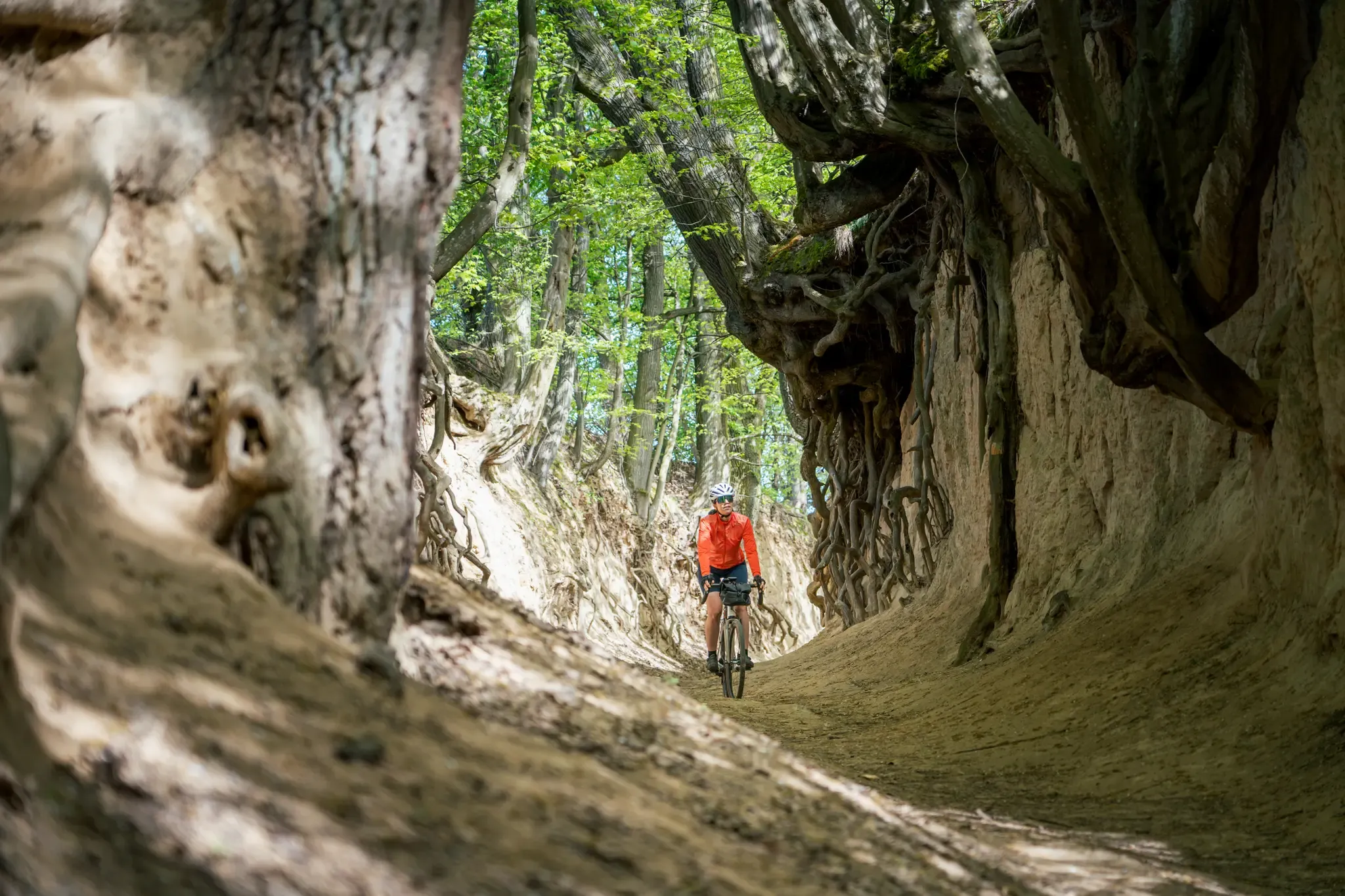
Urban hiking trails around Kazimierski Park Krajobrazowy traverse a landscape shaped by glacial activity and significant loess deposits, creating diverse terrain. The region is characterized by scenic river valleys, notably the Vistula and Wyznica, which feature natural riverbeds, sandbars, and oxbow lakes. A distinctive feature is the dense network of loess gorges, particularly concentrated around Bochotnica, offering unique walking experiences. Limestone uplands and cliffs, including steep Vistula escarpments up to 90 meters high, add to the varied topography.
Best urban…
Last updated: May 16, 2026
4
hikers
Easy hike. Great for any fitness level. Easily-accessible paths. Suitable for all skill levels.
5
hikers
6.17km
01:37
50m
50m
Easy hike. Great for any fitness level. Easily-accessible paths. Suitable for all skill levels.

Sign up for free
4
hikers
7.82km
02:01
40m
40m
Moderate hike. Good fitness required. Easily-accessible paths. Suitable for all skill levels.
8
hikers
Easy hike. Great for any fitness level. Easily-accessible paths. Suitable for all skill levels.
3
hikers
Moderate hike. Good fitness required. Easily-accessible paths. Suitable for all skill levels.
Get access to more routes and recommendations from other explorers.
Sign up for free
Already have an account?
Our route recommendations are based on thousands of hikes, rides, and runs completed by other people on komoot.
Start today with a free account
Your next adventure awaits.
Login or Signup
Popular around Kazimierski Park Krajobrazowy
Other adventures around Kazimierski Park Krajobrazowy

Tips from the Community

Beautifully maintained park with nicely incorporated architecture
0
0

Worth visiting, interesting place.
0
0
It's impressive, I wasn't lucky enough to get in.
0
0
Nice place, interesting history.
0
0

The historic entrance gate to the Czartoryski Gardens.
0
0

The Czartoryski era in Puławy ended in 1831. Prince Adam Jerzy Czartoryski, owner of Puławy since 1812, was sentenced in absentia to beheading by the tsar for his participation in the November Uprising, and all of his estates in the Russian partition were confiscated. Part of the palace and its surroundings were taken to Russia, part was sold at auction, e.g. the Meissonier wainscoting from the Golden Hall. It was possible to save the collections from the Temple of the Sibyl and the Gothic House, as well as the library (about 60 thousand volumes), which were taken in stages to Paris (they later returned to Krakow, where the Czartoryski Museum was established on their basis in 1876). Zofia Zamoyska, née Czartoryska, took some of the sculptures (including "Tancred and Clorinda", a sarcophagus, lions, an obelisk dedicated to Prince Józef Poniatowski) to Podzamcze near Maciejowice, from where they were returned to Puławy in 1947. Many elements of small park architecture disappeared after 1840.
1
0
Czartoryski Palace in Puławy - a palace in Puławy, whose beginnings date back to the second half of the 17th century and are associated with the history of the magnate families: Lubomirski, Sieniawski and, above all, Czartoryski. The first Baroque palace of a semi-defensive nature was built in Puławy in the years 1671-1679 by the Grand Marshal of the Crown Stanisław Herakliusz Lubomirski. The palace was designed by the Dutch architect Tylman van Gameren. The building had a rectangular shape with four alcoves in the corners, and was prepared to perform defensive functions. From this phase of the building, the seventeenth-century Baroque entrance hall with preserved original colonnade and the form and decoration of the vault has been preserved, in a state close to its original. The first garden was also created at that time, of which it is known that there were alleys and regular carpet parterres below the escarpment. In 1706, when Puławy became the property of the Sieniawski family, Swedish troops destroyed the palace and its surroundings during the Great Northern War. Read more https://pl.wikipedia.org/wiki/Pa%C5%82ac_Czartoryskich_w_Pu%C5%82awach
1
0
In the Temple of the Sibyl, Princess Izabela Czartoryska collected family mementos of the Sieniawski, Lubomirski and Czartoryski families, as well as mementos of great Poles: kings, leaders, scholars and poets, which were to remind us of the glorious national past after the partitions of Poland. There were, among others, objects related to Bolesław the Brave, Casimir the Great, Stanisław Żółkiewski, Tadeusz Kościuszko, Nicolaus Copernicus (a brick from the tenement house at Kopernika 30, then considered the birthplace of the astronomer[2]) and Jan Kochanowski. In the lower storey of the Temple, an obelisk dedicated to Prince Józef Poniatowski[3] was placed. In 1830, before the November Uprising, the collections were evacuated to Paris. Then they returned to Kraków, becoming the nucleus of the Czartoryski Princes Museum. In the Temple of the Sibyl, the museum was reactivated only in 1938 and is open to the public to this day.
1
0
Frequently Asked Questions
How many urban hiking trails are available in Kazimierski Park Krajobrazowy?
There are over 20 urban hiking trails in Kazimierski Park Krajobrazowy, offering a variety of experiences within the towns and their immediate surroundings.
Are there easy urban hiking trails suitable for beginners or casual walkers?
Yes, the region offers many easy urban hikes. Out of the available routes, 17 are classified as easy, perfect for beginners or those looking for a relaxed stroll. An example is the Czartoryski Garden Gate loop from Puławy, which is just under 4 km long.
What makes urban hiking in Kazimierski Park Krajobrazowy unique?
Urban hiking here is unique due to the blend of historical towns like Kazimierz Dolny with the dramatic natural landscape. You'll find trails winding through ancient loess gorges, along the scenic Vistula River, and past Renaissance architecture, offering a rich cultural and natural experience.
Are there any circular urban hiking routes?
Yes, many of the urban hiking routes in the area are circular, allowing you to start and end in the same location. For instance, the Czartoryski Palace in Puławy – Czartoryski Museum in Puławy loop from Puławy is a great option for a circular walk.
What is the best time of year for urban hiking in this region?
Spring and autumn are particularly beautiful for urban hiking in Kazimierski Park Krajobrazowy. Spring brings blooming flora and pleasant temperatures, while autumn offers stunning fall foliage in the loess gorges and along the Vistula. Summer is also popular, though it can be warmer.
What interesting sights or landmarks can I see along the urban hiking trails?
The urban hikes often lead you past significant historical and natural landmarks. You can explore the historic well on the Market Square in Kazimierz Dolny, visit the ruins of the Lower castle, or experience the unique geological formations of Korzeniowy Dół Ravine.
Are there any viewpoints offering scenic vistas on these urban hikes?
Absolutely. The region is known for its picturesque views. You can find excellent panoramic spots like Three Crosses Hill, which offers expansive views over Kazimierz Dolny and the Vistula River valley.
Are the urban hiking trails in Kazimierski Park Krajobrazowy suitable for families with children?
Many urban trails are family-friendly, especially the easier, shorter loops. The combination of historical sites, gentle paths, and natural beauty makes them enjoyable for all ages. Consider routes that pass through parks or offer interesting points like the Kazimierz–Janowiec Ferry for an added adventure.
Can I bring my dog on the urban hiking trails?
Generally, dogs are welcome on most hiking trails in Kazimierski Park Krajobrazowy, provided they are kept on a leash and you clean up after them. Always check local signage, especially in nature reserves or specific historical sites, for any restrictions.
Is parking available near the urban hiking trailheads?
Yes, parking is typically available in or near the towns that serve as starting points for urban hikes, such as Kazimierz Dolny and Puławy. Look for designated parking areas within the towns, though they may be paid during peak season.
Are there cafes or places to eat near the urban hiking trails?
Given the urban focus, you'll find numerous cafes, restaurants, and shops in towns like Kazimierz Dolny and Puławy, often directly accessible from or very close to the trailheads. These offer great opportunities for refreshments before or after your hike.
What do other hikers enjoy the most about hiking in Kazimierski Park Krajobrazowy?
The area is highly rated by the komoot community, with an average score of 4.6 stars. Reviewers often praise the unique loess gorges, the charming historical towns, and the scenic views of the Vistula River, highlighting the blend of nature and culture.
Most popular routes around Kazimierski Park Krajobrazowy
Most popular attractions around Kazimierski Park Krajobrazowy

Get inspired with the komoot mobile app


Explore more
Browse the best Hikes in other regions.
