The best traffic-free bike rides around Gelterswoog
4.6
(455)
7,289
riders
5
rides
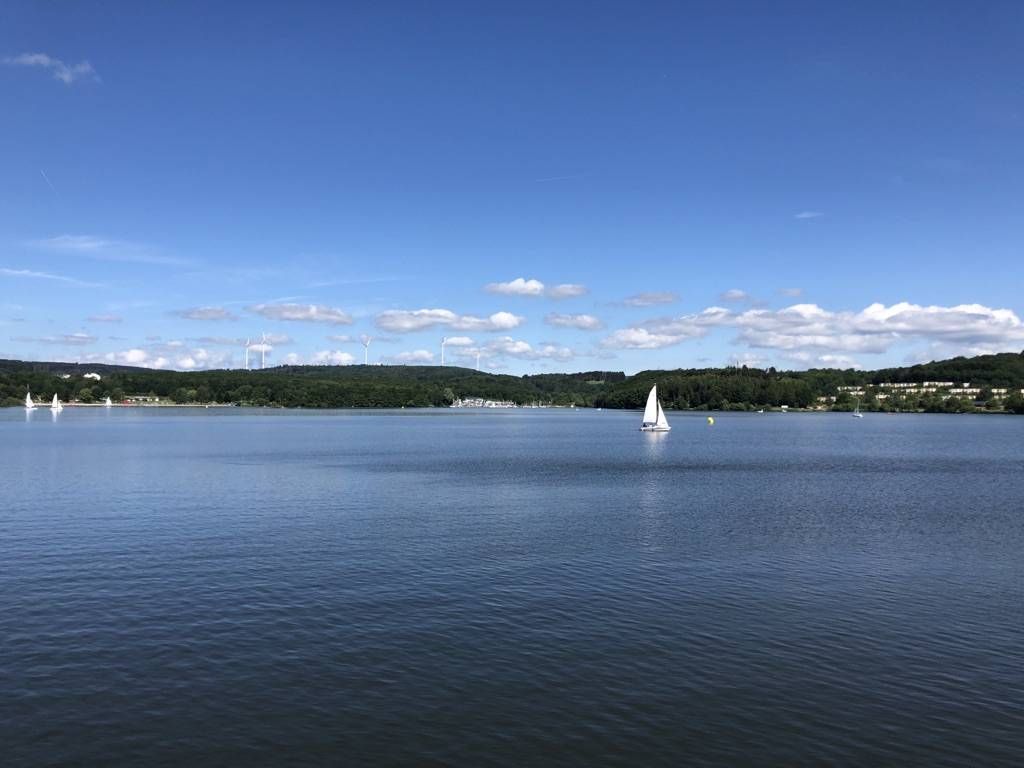
No traffic road cycling routes around Gelterswoog are set within the Palatinate Forest, centered around the Gelterswoog lake, which is the largest reservoir in the region. The landscape features dense woodlands, several smaller ponds in surrounding valleys, and a mix of paved surfaces with varying elevations. This area offers a serene environment for road cyclists, combining natural beauty with diverse terrain suitable for different fitness levels. The region's gentle hills and forest paths provide a quiet setting for cycling away…
Last updated: May 17, 2026
5
riders
13.0km
00:41
160m
160m
Moderate road ride. Great for any fitness level. Some segments of this route may be unpaved and difficult to ride.
4.5
(2)
81
riders
Moderate road ride. Good fitness required. Some segments of this route may be unpaved and difficult to ride.

Sign up for free
4
riders
Moderate road ride. Good fitness required. Mostly well-paved surfaces and easy to ride.
10
riders
Moderate road ride. Good fitness required. Some segments of this route may be unpaved and difficult to ride.
3
riders
Easy road ride. Great for any fitness level. Mostly well-paved surfaces and easy to ride.
Our route recommendations are based on thousands of hikes, rides, and runs completed by other people on komoot.
Start today with a free account
Your next adventure awaits.
Login or Signup

Other adventures around Gelterswoog

Tips from the Community

one of the most beautiful fountains here in Kaiserslautern
0
0

The quarry is partially open, for example when sculpture symposia are held there. Very interesting old mining equipment is in use.
3
0

The Collegiate Church of St. Martin and St. Mary (or Collegiate Church for short) in Kaiserslautern is a Protestant parish church. It is the oldest hall church between the Rhine and Saar rivers and is one of the most important Gothic churches in the Palatinate region. The sandstone building, constructed from ashlars, faces east and is set back slightly from the street front, so that Marktstraße widens here into a roughly triangular square (the former market square). The roofscape is characterized by the octagonal main tower, the two western towers, and the gabled roofs of the northern front. The Collegiate Church dates back to a Premonstratensian monastery, which Emperor Frederick I Barbarossa invited to Kaiserslautern from Leutkirch in Württemberg in 1176. In the 1960s, only the foundations of the three-aisled monastery church in the late Romanesque style, which was initially used, were found. Around 1250, the Premonstratensians began building a new church. First, the present choir was constructed, completed in 1291 with the consecration of the (now defunct) St. Richard's Chapel. Thirty years later, construction of the nave began and was likely completed before 1350. The northern porch was added in the second half of the 14th century, and the two western towers were erected at the beginning of the 16th century. In 1510 or 1511, the Premonstratensian foundation was converted into a secular collegiate foundation, which was dissolved in 1565 during the Reformation. Since then, the church has been a Protestant parish church. At the beginning of the 18th century, the main tower, which originally had only two stories, was raised by a third story. In 1806, the St. Richard's Chapel was demolished (in its place, the pharmacist and then-mayor Goswin Müllinghoff built his home and pharmacy), and in 1819, the cloister was demolished. Extensive renovations were carried out around 1880. The church was severely damaged during World War II. From 1946 to 1950, the church, particularly the main tower, was rebuilt in a simplified form. In 1965, the Gothic sacristy was demolished and the church restored. After excavations in the area of the former monastery, the new church administration building was established there. Source: https://de.wikipedia.org/wiki/Stiftskirche_(Kaiserslautern)#Einzelnachweise
1
0
What a story the golden eagle above the entrance could tell! For over 200 years, it has looked down from its position above the entrance steps onto the square next to the collegiate church. The Adler Pharmacy has existed since 1811, and the Longards have owned it since 1891. In the old pharmacy room, which today serves as a small meeting room for owner Matthias Longard and customers, hangs a picture from 1818. "Procession of the Protestant General Synod of Kaiserslautern from the small town church there to the larger one on August 2, 1818" is the caption below. A crowd of people in a square that has barely changed to this day. Easily recognizable from the northwest: the French imperial eagle. So much for the history of this building: Joh. Goswin Müllinghoff opened the Adler Pharmacy on January 1, 1811. He is said to have acquired the ruins of the dilapidated St. Ricardi's Chapel, which stood next to the collegiate church, as early as 1806. The pharmacist, who was also the town's mayor, had it demolished and built a French Classical-style building on the site in 1809, which housed the pharmacy and living quarters. The Longard era began in 1891. Franz Josef, the great-grandfather of the current owner, was known for his experimental spirit and invented the famous "Yuma ointment," which he patented in 1906. He was succeeded in 1913 by Franz Philipp and his wife Therese. Their two eldest sons died in the war, and the youngest, Wolfgang, took over the pharmacy in 1955 as the tenant and successor to Anton Winstel, later the owner of the Bahnhof-Apotheke (Station Pharmacy). Matthias Longard (born 1959) talks about his father: "Actually, he wanted to study music and German. But after his two brothers remained in Russia, he bowed to the family's wishes and became a pharmacist." The son had just completed a puberty phase in which he was, as he himself describes it, "chaotic and incredibly lazy." One day, when his mother once again saw the chaos in his room and, in response to Matthias's cheeky remark, "I want to study pharmacy," retorted, "You, you'll never be a pharmacist with your messiness," he defiantly resolved: "Now I'll show her." He put his plan into action. He graduated from Hohenstaufen-Gymnasium in 1978 with an average grade of "A," followed by studies in Freiburg, which he successfully completed at the age of 22. .. Source: https://www.rheinpfalz.de/lokal/kaiserslautern_artikel,-unter-dem-adler-_arid,76015.html
0
0

The collegiate church was built by the Premonstratensian Order starting in the late 12th century and dedicated to Mary and Martin. Today, it is a Protestant parish church and is one of the oldest and most important Gothic churches in the Palatinate. The history of the collegiate church is closely linked to Emperor Frederick I, Barbarossa. He summoned Premonstratensian pastors to Kaiserslautern to promote the development of the region and provided land for the construction of a hospice and a monastery complex.
0
0

Old steam locomotive that is now exhibited as a tourist attraction in Otterbach
2
0
A historical highlight with a miniature train, railway romance, and home-brewed Bachbahn beer—ideal for an enjoyable break on the old railway embankment.
2
0

Not just a museum, there’s a great beer garden here 🍻
1
0
Frequently Asked Questions
How many no-traffic road cycling routes are available around Gelterswoog?
There are 7 dedicated no-traffic road cycling routes around Gelterswoog featured in this guide. These routes offer a mix of easy and moderate options, allowing you to enjoy the serene Palatinate Forest without vehicle interference.
Are there any easy no-traffic road cycling routes suitable for beginners or families?
Yes, there are 2 easy routes perfect for beginners or families looking for a relaxed ride. One excellent option is the Gelterswoog – St. Rochus Church Hohenecken loop from Kaiserslautern Pfaffwerk, which offers a gentle introduction to the area's beautiful scenery.
What kind of terrain can I expect on these no-traffic road cycling routes?
The routes primarily feature paved surfaces, ideal for road bikes. You'll cycle through the dense woodlands of the Palatinate Forest, often alongside the Gelterswoog lake and through picturesque valleys like Kolbental and Erlental. While mostly flat around the lake, some routes include gentle climbs and descents as you explore the low hills separating the Sickinger Höhe from the forest.
Are there any circular no-traffic road cycling routes around Gelterswoog?
Many of the routes are designed as loops, allowing you to start and end at the same point. For example, the Summstein / Waldsummen – Piccard Quarry loop from Queidersbach is a moderate circular route that takes you through varied landscapes.
What are some natural features or landmarks I can see along the no-traffic routes?
You'll encounter the beautiful Gelterswoog lake itself, the largest reservoir in the Palatinate Forest, often with red sand beaches. The routes also pass through designated nature reserves like the "Täler und Verlandungszone am Gelterswoog," offering glimpses of smaller ponds (Wooge) and diverse flora and fauna. The historic fish farming landscape, reflected in Kaiserslautern's coat of arms, is a subtle but interesting regional characteristic.
What do other road cyclists enjoy most about the no-traffic routes in Gelterswoog?
The komoot community highly rates the road cycling experience around Gelterswoog, with an average score of 4.6 stars from 449 ratings. Reviewers often praise the peaceful immersion in the Palatinate Forest, the well-maintained paved surfaces, and the opportunity to cycle without car traffic, enjoying the natural beauty of the lake and surrounding valleys.
Is Gelterswoog suitable for road cycling with children?
Yes, the easy no-traffic routes are well-suited for cycling with children. The absence of vehicle traffic makes for a safer and more enjoyable experience. The flat sections around the lake and through the valleys are particularly good for younger riders. Consider the Gelterswoog – St. Rochus Church Hohenecken loop for a family-friendly option.
Can I bring my dog on these no-traffic road cycling routes?
While the routes are generally dog-friendly, it's important to keep your dog on a leash, especially in nature reserve areas and near the lake where wildlife is protected. Always ensure your dog is comfortable with cycling alongside you and be mindful of other cyclists and pedestrians.
What is the best time of year to enjoy no-traffic road cycling around Gelterswoog?
Spring, summer, and early autumn are ideal for road cycling around Gelterswoog. The weather is generally pleasant, and the forest is vibrant. In summer, you can combine your ride with a refreshing swim in the lake. Always check local weather conditions before heading out.
Are there places to eat or stay near the no-traffic road cycling routes?
Yes, the Gelterswoog area offers several amenities. You'll find restaurants and kiosks near the lake, perfect for a break during or after your ride. There's also a hotel and a campsite in the vicinity if you plan an overnight stay, making it convenient for multi-day cycling trips.
Where can I park my car to access these no-traffic road cycling routes?
Parking is available in the Gelterswoog area, often near the lake itself or at designated trailheads. Many routes, like the Cycle path at Silbersee – View of Ramstein Air Base loop, can also be accessed from nearby towns like Kaiserslautern, which may offer more extensive parking options.
Most popular routes around Gelterswoog

Get inspired with the komoot mobile app


Explore more
Browse the best Road cycling routes in other regions.
