The best traffic-free bike rides around Saint-Pierre
4.4
(291)
7,455
riders
79
rides
No traffic touring cycling routes around Saint-Pierre offer diverse landscapes across Reunion Island. The region is characterized by dramatic volcanic scenery, ranging from lush tropical rainforests and verdant forests to open savannah and arid plains. Cyclists can also experience spectacular coastlines with sweeping views of the Indian Ocean and routes that follow rivers. The terrain includes varied surfaces, from paved paths to fire roads, providing a range of experiences for touring cyclists.
Best no traffic touring cycling routes around Saint-Pierre
…Last updated: May 2, 2026
4.9
(9)
256
riders
51.2km
03:56
1,300m
1,300m
Hard bike ride. Very good fitness required. Mostly paved surfaces. Suitable for all skill levels.
3.8
(5)
98
riders
15.3km
00:55
90m
90m
Easy bike ride. Great for any fitness level. Mostly paved surfaces. Suitable for all skill levels.

Sign up for free
5.0
(1)
60
riders
14.8km
01:51
650m
650m
Hard bike ride. Very good fitness required. Mostly paved surfaces. Suitable for all skill levels.
5.0
(2)
37
riders
42.3km
04:20
1,710m
1,710m
Hard bike ride. Very good fitness required. You may need to push your bike for some segments of this route.
5.0
(2)
27
riders
33.3km
03:22
1,400m
1,400m
Hard bike ride. Very good fitness required. You may need to push your bike for some segments of this route.
Get access to more routes and recommendations from other explorers.
Sign up for free
Already have an account?
Our route recommendations are based on thousands of hikes, rides, and runs completed by other people on komoot.
Start today with a free account
Your next adventure awaits.
Login or Signup



Tips from the Community

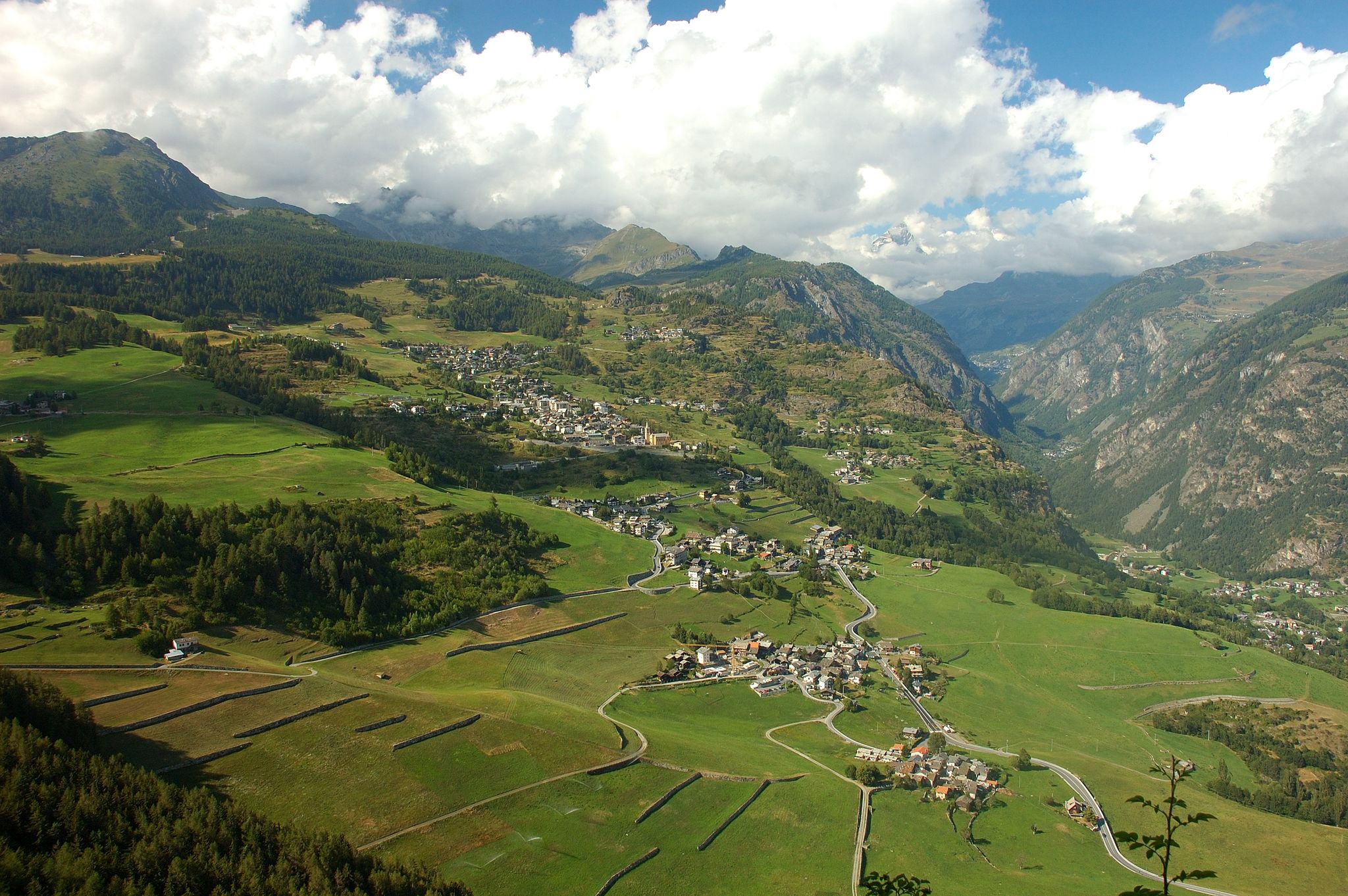
Pila is a mountain resort located at about 1,800 meters above Aosta, known for both winter sports and summer activities. Its position makes it a privileged panoramic viewpoint: on clear days, the view opens up over a large part of the Aosta Valley Alpine arc, from Mont Blanc to the Matterhorn to Monte Rosa.
0
0
Gressan is a municipality at the gates of Aosta, located on the right orographic side of the Dora Baltea and an access point to various climbs towards the higher altitudes of the valley. From here begins one of the most continuous ascents in the area, with regular hairpin bends and constant gradients.
0
0
Valley floor access point a few minutes from Aosta, located near the confluence of the Dora Baltea and the Buthier stream. Several ascents to the surrounding slopes start from here.
0
0

Immersed in the greenery of the Favret meadows, the small church of Santa Maria Maddalena dates back to the 12th century, when it was an autonomous parish dependent on the Chapter of the Cathedral of Aosta. Its apse and bell tower, characterized by an evocative "spur" that supports the structure, preserve intact the imposing sobriety of the primordial Romanesque. Between 1460 and 1463 the church experienced a second artistic splendor: the nave was enlarged and both the external part (facade) and the interior were decorated with a rich cycle of frescoes by Giacomino da Ivrea and his itinerant workshop. The façade features lively scenes: the Mass of Saint Gregory with the blood of Christ filling the chalice; Saint George facing the dragon; Saint Christopher ferrying the Baby Jesus; and, crowning all, Saint Martha, Saint Mary Magdalene and Saint Lazarus. Inside, in the apse, a majestic Christ Pantocrator is revealed surrounded by the symbols of the four evangelists, while on the side walls the twelve Apostles can be distinguished. Under the arch that divides the choir and the nave, fourteen panels tell the stories of Mary Magdalene. The works of the fifteenth century were commissioned by the noble De Villa (or La Tour de Villa), lords of Gressan, or by Giacomo dei Challant, lord of Aymavilles, whose family appears in the frescoed symbols. The building maintained the status of parish until 1786, when it was incorporated into Santo Stefano, thus becoming a simple chapel. In 1938, the church was the subject of passionate restoration: the paintings, covered with lime for centuries, were recovered and brought back to their ancient splendor.
0
0
At the gates of Gressan, next to the Dora Baltea and along the cycle path that connects Sarre to Pontey, there is the splendid green area "Les Îles". Extending over a surface area of 38,959 m2, it is dedicated to the practice of traditional games and surrounded by a 1,028-meter cycle ring, which can also be used as a fitness trail, jogging track and roller skating track. The area is equipped with a children's playground, an artificial sports climbing gym, two fountains and numerous benches. Access is free, but in some periods of the year it may be partially limited to allow training and competitions of traditional local games such as rebatta, fiolet and tzan. In particular, from March 1 to May 31 and from September 1 to October 15, a part of the area and the related section of the cycle path are reserved for these activities. In the immediate vicinity there are bars, restaurants and a private sports center with a swimming pool and padel courts, both indoor and outdoor, with catering service. The entire area is connected to the Montfleury sports center in Aosta via a cycle/pedestrian walkway that crosses the Dora Baltea and is served by two convenient parking lots.
0
0

currently the railway line is interrupted but we managed to leave from Chatillon by bus loading the bikes towards Aosta, then take the cycle path along the Dora Baltea mostly downhill. we found some interrupted sections with diversions
0
0

The Mont Fallère Refuge, at 2,385 m, is located in the valley between Mont Fallère and Monte Rosso di Vertosan. It offers 50 beds in rooms with bathrooms, and has a restaurant with typical cuisine. Open in summer, it can be reached on foot or by mountain bike.
1
1

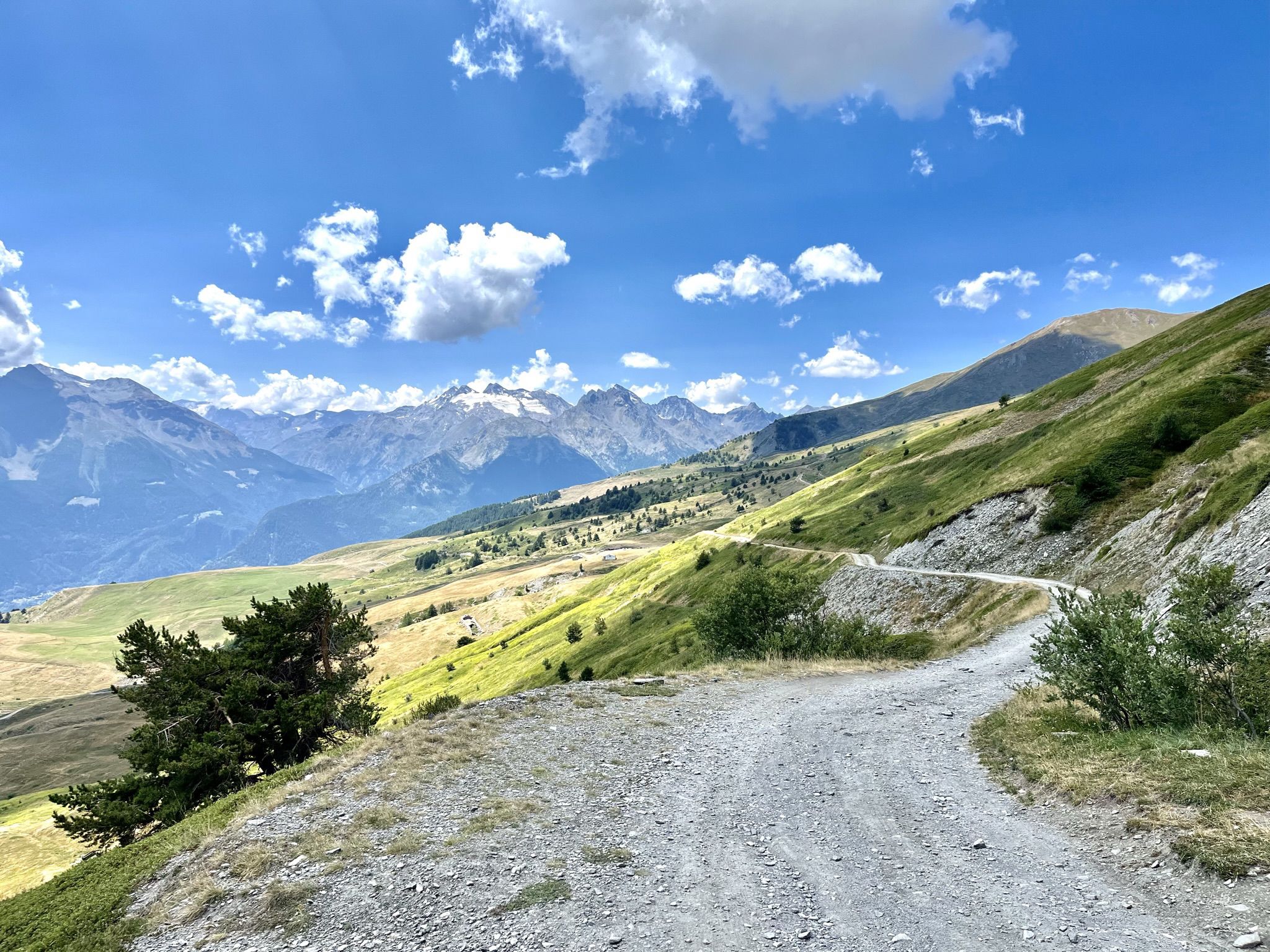
Good gravel path, you can do it with a MTB or Gravel bike
1
0
Frequently Asked Questions
How many no-traffic touring cycling routes are available around Saint-Pierre?
There are over 60 dedicated no-traffic touring cycling routes around Saint-Pierre. These routes offer a variety of experiences, from easy rides to more challenging adventures, ensuring options for different fitness levels.
Are there any easy no-traffic touring cycling routes suitable for beginners in Saint-Pierre?
Yes, Saint-Pierre offers several easy no-traffic touring cycling routes perfect for beginners. One such option is the Arch of Augustus – Porta Pretoria (Aosta) loop from Sarre, which provides a gentle introduction to the region's scenic beauty without significant elevation gains.
What kind of scenic viewpoints can I expect on no-traffic bike trails in Saint-Pierre?
The no-traffic bike trails in Saint-Pierre offer breathtaking scenic viewpoints, showcasing Reunion Island's dramatic landscapes. You can expect sweeping views of the Indian Ocean, lush tropical rainforests, and volcanic terrain. Highlights like Punta Replan offer stunning vistas, while routes near the coast provide constant ocean panoramas.
Are there any circular no-traffic touring cycling routes in Saint-Pierre?
Yes, many of the no-traffic touring cycling routes around Saint-Pierre are designed as circular loops, allowing you to start and end at the same point. An example is the Arch of Augustus – Porta Pretoria (Aosta) loop from Sarre, which is an easy circular route. Another option is the more challenging Oratory at the Border – View of the Castle of Sarre loop from Sarre.
What natural attractions can I discover along these no-traffic cycling routes?
Saint-Pierre's no-traffic cycling routes lead to a variety of natural attractions. You can encounter serene lakes such as Lake Chamolé and Lago Leysser, or marvel at impressive waterfalls like Lenteney Waterfall and Comboé Stream Waterfall. The Marais Nature Reserve also offers a chance to experience diverse ecosystems.
What is the best season for no-traffic bike touring in Saint-Pierre?
Reunion Island, including Saint-Pierre, generally enjoys a tropical climate. The dry season, typically from May to November, is often considered ideal for cycling due to cooler temperatures and less rainfall, making for more comfortable rides on the no-traffic routes. However, the island's diverse microclimates mean conditions can vary, so checking local forecasts is always recommended.
Are there any challenging no-traffic touring routes for experienced cyclists?
Absolutely. For experienced touring cyclists seeking a challenge, Saint-Pierre offers numerous difficult no-traffic routes. The Pollein Green Area – Porta Pretoria (Aosta) loop from Saint-Pierre is a demanding route covering over 56 km with significant elevation. Another option is the Ponte di Introd – Introd Castle loop from Arvier, which also features substantial climbs.
What do other touring cyclists enjoy most about the no-traffic routes in Saint-Pierre?
The no-traffic touring cycling routes in Saint-Pierre are highly rated by the komoot community, with an average score of 4.5 stars from over 300 reviews. Cyclists frequently praise the stunning and diverse landscapes, from volcanic terrain to lush rainforests and ocean views, as well as the tranquility and safety of the car-free paths.
Can I find routes that explore the volcanic landscapes of Reunion Island from Saint-Pierre?
While specific routes directly to Piton de la Fournaise might involve more rugged terrain, many no-traffic touring routes in the Saint-Pierre region offer views and access to the island's unique volcanic heritage. You'll experience dramatic geological formations and varied ecosystems that are characteristic of a volcanic island, providing a truly unique cycling backdrop.
Are there any no-traffic routes that offer a mix of coastal and inland riding?
Yes, Saint-Pierre's location allows for routes that combine the best of both worlds. While specific named routes in our data might focus on one aspect, the region's geography means many paths will transition from vibrant town surroundings to lush inland areas, often with constant views of the Indian Ocean. You can experience both the coastal breeze and the diverse ecosystems further inland.
What kind of elevation changes should I expect on the no-traffic touring routes around Saint-Pierre?
The elevation changes on no-traffic touring routes around Saint-Pierre vary significantly depending on the route's difficulty. Easy routes, like the Arch of Augustus – Porta Pretoria (Aosta) loop from Sarre, have minimal elevation gain (around 90m). However, more difficult routes, such as the Lago delle Rane – Mont Fallère Refuge loop from Villeneuve, can feature substantial climbs, exceeding 1700m of ascent, offering a challenging workout amidst stunning scenery.
Most popular routes around Saint-Pierre
Most popular attractions around Saint-Pierre

Get inspired with the komoot mobile app


Explore more
Browse the best Cycling routes in other regions.
