The best traffic-free bike rides around Ouffet
4.2
(1020)
10,282
riders
19
rides
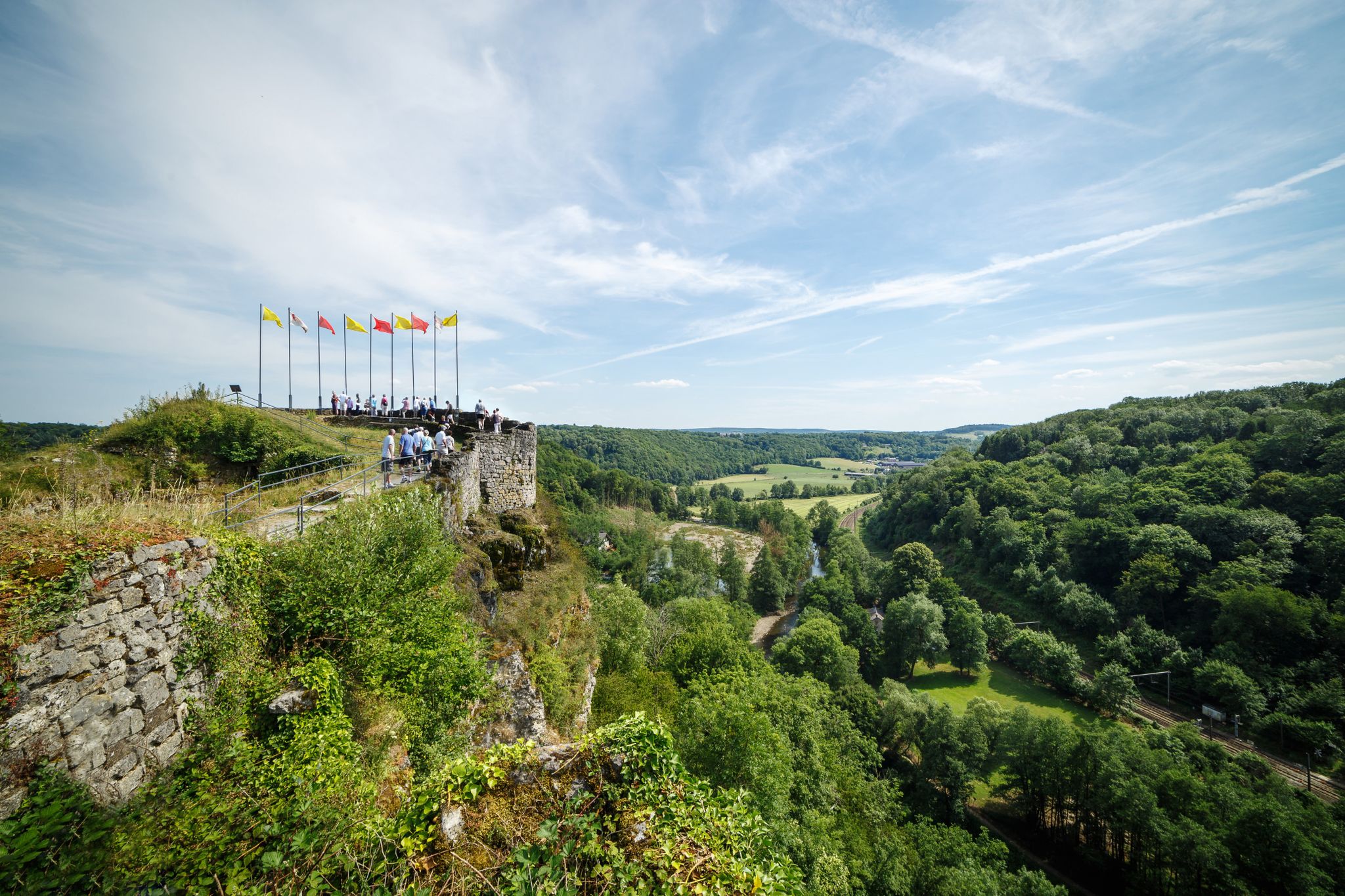
No traffic touring cycling routes around Ouffet are set within the diverse landscapes of Belgium's Liège province. The region is characterized by rolling hills, dense forests of the Ardennes, and scenic river valleys such as the Ourthe and Condroz. Geological features like the Sy Rocks and the Anticline contribute to a varied terrain, providing engaging routes for touring cyclists.
Best no traffic touring cycling routes around Ouffet
- The most popular no traffic touring cycling route is Hamoir – View of…
Last updated: October 31, 2026
4.9
(17)
115
riders
Hard bike ride. Very good fitness required. You may need to push your bike for some segments of this route.
4.8
(4)
16
riders
42.1km
02:42
440m
440m
Moderate bike ride. Good fitness required. Mostly paved surfaces.

5.0
(5)
12
riders
25.8km
01:37
260m
260m
Moderate bike ride. Good fitness required. Mostly paved surfaces.
5.0
(2)
10
riders
21.0km
01:31
270m
270m
Moderate bike ride. Good fitness required. Mostly paved surfaces.
3.0
(2)
6
riders
29.4km
01:55
340m
340m
Moderate bike ride. Good fitness required. Mostly paved surfaces.
Get access to more routes and recommendations from other explorers.
Already have an account?
Our route recommendations are based on thousands of hikes, rides, and runs completed by other people on komoot.
Start today with a free account
Your next adventure awaits.


Other adventures around Ouffet

Tips from the Community

Nice start and finish spot for a beautiful hike with many benches and shade.
0
0

Superb place for gravel bike or mountain bike enthusiasts
2
0
What a beautiful and refreshing bike route, and it's undeniable, is that a solitary or surviving tree🌳?
1
0

Set in beautiful, verdant surroundings, this stunning 35 meters high limestone rock, towers out above the river Ourthe. Also known as the « Roche à Hierneux », the left part of the rock lies under water, while the rock itself numbers 4 intriguing cavities, one of which goes right through the rock.
4
0
Formerly, Hamoir had a simple chapel dependent on Xhignesse. The importance it acquired led to the establishment of the parish church in 1842, of which the church of Xhignesse, which remained a rural village, became the branch. On the site of the current church, a chapel called Notre Dame de Lorette was built in accordance with the testamentary provisions of Jean Del Cour. Begun in 1737, it was completed in 1739, served until 1869 and was replaced by the spacious current church by Abbot André–Joseph Charlier who was parish priest of Hamoir from 1842 to 1878. His portrait, offered by the grateful population, was exhibited at the town hall and it was permanently transferred to the church The church of Hamoir is dedicated to the Holy Virgin. Its plans were designed by the Liège architect Casterman. The work was awarded on 09/26/1867 at the town hall to Jean-Lambert Blandot of Huy, for the sum of 63,200 frs, a cost that unforeseen events brought to 66,714.33 francs. It was completed on 07/22/1871. His personal generosity as much as that of his parishioners allowed the priest Charlier to collect the sum necessary for the construction of the building and the purchase of its furniture. The church has two bells. The first, that of the Notre Dame de Lorette chapel, bears the inscription: Hubert de Donnéa and Julienne de Spirlet, his wife, cast by Gaulard 1843 The second, larger one, comes from Xhignesse and bears the inscription: To the greater glory of God and to the honor of the Saint Virgin, Anno 1783
2
0
The old courthouse is located on two roads (Rue du Ruisseau and Rue de la Justice) in the center of the village of Fairon, on the left bank of the Bloquay, a tributary of the Ourthe. The Bloquay flows against the southwestern part of the building along Rue du Ruisseau. Rue de la Justice branches off from the national road 654 Comblain-au-Pont - Hamoir, crosses the inner courtyard and joins Rue du Ruisseau via an arvô (vaulted passage). In this building was a courthouse of the principality of Stavelot-Malmedy, of which the village of Fairon was a part. This court performed administrative functions and settled minor offenses in the county of Logne, a district of the western part of this abbey principality. These functions lasted until the end of the Ancien Régime (1795). The oldest buildings date back to the 17th century. Then, in 1781 and 1799, two perpendicular wings mainly composed of barns completed the complex, which gradually and then exclusively became a farm. The complex was further modified or completed during the last two centuries.
3
0
The Saint-Martin church consists of a Romanesque tower made of sandstone rubble, probably of medieval origin, as well as a triple nave of three bays in neo-Gothic style, built in 1872 according to the plans of the architect H. Plenus. The church and the cemetery are surrounded by a wall and shaded by a linden tree.
3
0

Castle site with a large castle farm from the early 18th century. The castle itself no longer exists. Two outbuildings, the "Sellerie" and the "Orangerie," now serve as beautiful holiday accommodations.
2
0
Frequently Asked Questions
How many no-traffic touring cycling routes are available around Ouffet?
There are over 400 no-traffic touring cycling routes around Ouffet documented on komoot. These routes offer a wide range of experiences, from easy rides to more challenging adventures, ensuring there's something for every cyclist looking to explore the region away from vehicle traffic.
Are there easy no-traffic touring routes suitable for beginners in Ouffet?
Yes, Ouffet offers a good selection of easy no-traffic touring routes perfect for beginners. You'll find around 50 easy routes that typically feature less elevation gain and shorter distances, allowing for a relaxed introduction to touring cycling in the region. An example is the Comblain-La-Tour – Rock of the Virgin loop from Hamoir, which is relatively flat and short.
What kind of terrain can I expect on no-traffic touring cycling routes near Ouffet?
The no-traffic touring cycling routes near Ouffet traverse diverse terrain. You can expect a mix of rolling hills, dense forests, and scenic river valleys like the Ourthe and Condroz. While many paths are paved, some routes may include unpaved sections, adding to the adventurous nature of the rides. The region is known for its picturesque landscapes and panoramic views.
Where can I find parking for no-traffic touring cycling routes in Ouffet?
While specific parking areas for each route are not always listed, many routes start from towns or villages like Hamoir, where public parking is generally available. It's advisable to check local municipal websites or use navigation apps to locate suitable parking near your chosen starting point.
Is it possible to reach the no-traffic cycling trails around Ouffet using public transport?
Ouffet and its surrounding areas are accessible by public transport, though connections might require some planning. Major cycling infrastructure like the Vennbahn cycle route and EuroVelo 5 pass through the region, which can often be accessed near train stations or bus stops in larger towns. Check local bus and train schedules for the most convenient access points to the trails.
Are there family-friendly no-traffic touring cycling routes in Ouffet?
Yes, many of the easier no-traffic routes are suitable for families. These routes often follow river valleys or dedicated cycle paths, providing a safer and more enjoyable experience for cyclists of all ages. Look for routes marked as 'easy' on komoot, which typically have less challenging terrain and shorter distances.
Can I bring my dog on the no-traffic touring cycling routes around Ouffet?
Generally, dogs are welcome on many outdoor trails in the Ouffet region, especially on paths that are not within protected nature reserves with strict rules. However, it's always best to keep your dog on a leash, especially in forested areas or near livestock, and to check specific route regulations if available. Be mindful of other cyclists and pedestrians.
What is the best time of year to enjoy no-traffic touring cycling in Ouffet?
The best time to enjoy no-traffic touring cycling in Ouffet is typically from spring through early autumn (April to October). During these months, the weather is generally mild and pleasant, with lush greenery and vibrant landscapes. Spring offers blooming flowers, while autumn provides stunning fall foliage, enhancing the scenic beauty of the rides.
What are the conditions like for no-traffic touring cycling in Ouffet during winter?
Winter cycling in Ouffet can be challenging due to colder temperatures, potential for snow or ice, and shorter daylight hours. While some dedicated cycle paths might be maintained, many unpaved sections could become muddy or slippery. It's recommended to check local weather conditions and trail reports before heading out and to be prepared with appropriate gear for cold and wet conditions.
Are there circular no-traffic touring cycling routes available in Ouffet?
Yes, many no-traffic touring cycling routes around Ouffet are designed as circular loops, allowing you to start and end at the same point. This is convenient for those who drive to the starting location. For example, the Hamoir – View of the Valley loop from Hamoir offers a substantial circular ride with scenic views.
What interesting natural features can I see along the no-traffic touring cycling routes?
The Ouffet region is rich in natural beauty. Along your rides, you might encounter the dramatic Sy Rocks, offering breathtaking views above the Ourthe River, or explore the expansive Ardennes Forest. The Ourthe and Néblon rivers also provide picturesque scenery. Keep an eye out for geological wonders like the Anticline near Durbuy.
What do other touring cyclists enjoy the most about touring cycling in Ouffet?
The komoot community highly rates the touring cycling experience in Ouffet, with an average score of 4.36 stars from over 500 ratings. Reviewers often praise the region's diverse landscapes, the tranquility of the no-traffic routes through dense forests and river valleys, and the opportunity to discover charming towns and historical sites along the way.
Are there any historical landmarks or charming towns to visit along the routes?
Absolutely. The region is dotted with historical sites and charming towns. Durbuy, often called 'the smallest town in the world,' with its medieval alleys and castle, is a highlight. Ouffet itself boasts historical buildings, including churches and castle farms. You might also pass by sites like Hoyoux Castle, accessible via various trails.
Most popular attractions around Ouffet

Get inspired with the komoot mobile app


Explore more
Browse the best Cycling routes in other regions.
