The best traffic-free bike rides around Herent
4.4
(84)
1,730
riders
32
rides
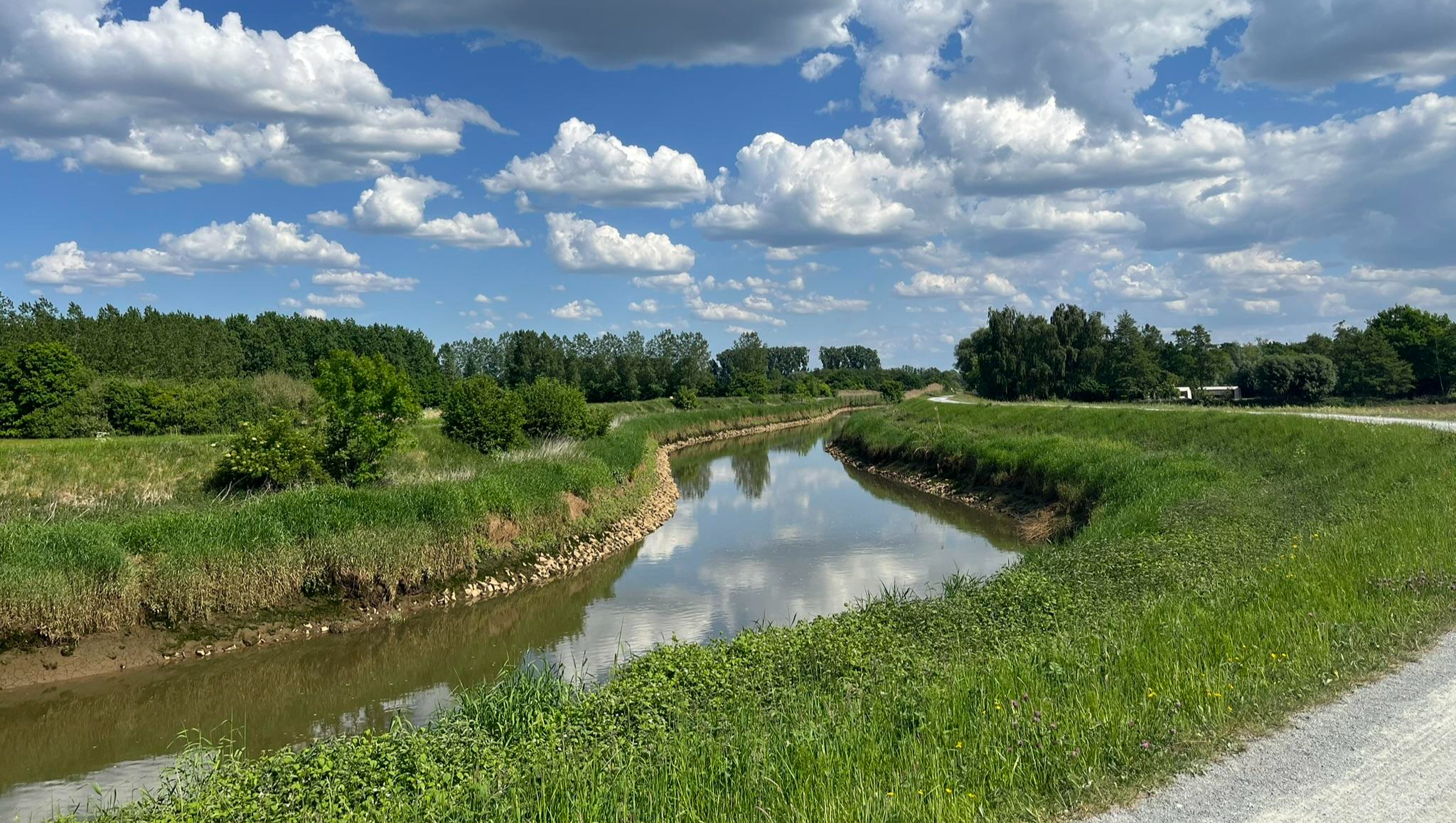
Road cycling around Herent offers a diverse landscape characterized by a network of dedicated cycle highways and mostly paved paths. The region features flat terrain along waterways like the Leuven-Dijle Canal and the Dijle River, interspersed with green spaces and nature reserves such as Wijgmaalbroek. Cyclists can also explore rolling countryside and agricultural fields, with some routes presenting gentle hills. This combination of infrastructure and varied scenery provides accessible no traffic road cycling routes for different skill levels.
Best no…
Last updated: May 19, 2026
5.0
(2)
121
riders
Easy road ride. Great for any fitness level. Mostly well-paved surfaces and easy to ride.
76
riders
120km
05:50
1,000m
1,000m
Hard road ride. Very good fitness required. Some segments of this route may be unpaved and difficult to ride.

Sign up for free
4.8
(6)
63
riders
Moderate road ride. Great for any fitness level. Some segments of this route may be unpaved and difficult to ride.
4.5
(24)
418
riders
39.1km
01:40
60m
60m
Easy road ride. Great for any fitness level. Mostly well-paved surfaces and easy to ride.
4.8
(5)
39
riders
39.4km
01:54
50m
50m
Moderate road ride. Great for any fitness level. Some segments of this route may be unpaved and difficult to ride.
Get access to more routes and recommendations from other explorers.
Sign up for free
Already have an account?
Our route recommendations are based on thousands of hikes, rides, and runs completed by other people on komoot.
Start today with a free account
Your next adventure awaits.
Login or Signup

Other adventures around Herent

Tips from the Community

The Oude Hansbrug has been a protected monument since 1988. It is a cast-iron, late 19th-century bridge over the Dijle between Keerbergen and Haacht. There has been a lot of history surrounding the Oude Hansbrug. It can already be found in the 13th century, albeit as a wooden bridge. In the 19th century, it was replaced by a cast-iron riveted bridge with a fixed section on the Keerbergen side and a drawbridge section on the Haacht side. During the First and Second World Wars, it was repeatedly destroyed and rebuilt. In 1958, a new concrete bridge was built 200 meters upstream, and the Oude Hansbrug was retired. It could no longer handle the traffic flow. Deterioration began, and it soon had to be closed, even to pedestrians and cyclists, because it was no longer safe. It simply rusted away. Together with the historical societies of Haacht and Keerbergen and both municipal administrations, a battle against time began. It soon became clear that this battle was being lost, and restoration was out of the question because there was simply nothing left to restore. Rebuilding the bridge by perfectly replicating it was the only alternative to save this now-classified monument. While pillars and bridgeheads were being restored, the Flemish Region began replicating the old bridge: a perfect copy in the same materials as the original bridge. In the night of June 14 to 15, 2005, this bridge was brought to the site in pieces by three semi-trailers, and the next day it was assembled by a large crane. On August 27, 2005, the bridge was officially reopened. The Oude Hansbrug has been a protected monument since March 16, 1998. Source: https://www.keerbergen.be/product/292/oude-hansbrug
4
0
Iron balance bridge over the Dijle, built to replace a worn-out swing bridge from 1822 (3 wooden spans on 2 stone pillars). A bridge was already located at this site in 1234 (deed drawn up by Knight Walter van Haacht). Earliest depiction of 'a' Hansbrug with toll house of the de Croy Family (figurative pre-cadastral plans by Adriaan van Montigny). Sometimes the bridge had to be replaced by a ferry or pontoon (including around 1820). The current bridge was damaged by the Belgian Army in 1914 and then repaired. Tolls were levied until after 1886. On December 23, 1890, the Municipalities of Keerbergen (Province of Antwerp) and Haacht (Province of Brabant) were granted permission to build a new bridge by the Ministry of Agriculture, Industry and Public Works, Bridges and Roads Department. After some changes to the original plans, this bridge was completed and delivered in 1893 (February 22). The total cost was 46,550 BEF paid by the Belgian State, the Province of Brabant, and the two municipalities involved. The iron parts were built by the Van Aerschot company from Herentals, also widely known as a caster of iron mill axle heads and as a constructor of riveted iron mill rods. Inventory Immovable Heritage: Hansbrug, https://id.erfgoed.net/erfgoedobjecten/200147
5
0
The 2-meter-high wooden statue of Father Damien was placed on the west side of the Damien Bridge on August 22, 2013, and was donated by Lizette Cresens from Haacht. The statue was made by an artist from Wolfsdonk. Source: https://www.tremelo.be/product/2172/15-standbeeld-damiaan-damiaanbrug The bicycle and pedestrian bridge itself was put into use in 2012 and is located near the Damien Museum in Ninde (at the end of the road). The two Dijle dikes that are connected by it are called the Pater Damiaandijk (on the Ninde side) and the Schipstrekkersdijk (the Haacht side). Near the bridge, the Grote Laak flows into the Dijle. That's a river that splits off from the Demer near Aarschot and is also known as the Laak and formerly the Meetshovense Laak.
6
0

This climb is steep and about 500 meters long. Take it slowly or you'll stall. Good warm-up.
0
0

This tunnel is better known as "The Rabbit Hole"
0
0

The Damien Bridge is a steel girder bridge for pedestrians and cyclists over the Dijle River on the border of the municipalities of Haacht and Tremelo.
6
0
Since 1988, the Old Hans Bridge has also been protected. It is a cast-iron bridge from the late 19th century that spans the Dijle River between Keerbergen and Haacht. The Old Hans Bridge has been the subject of much discussion. It dates back to the 13th century, albeit as a wooden bridge. In the 19th century, it was replaced by a riveted cast-iron bridge with a fixed section on the Keerbergen side and a retractable section on the Haacht side. During the First and Second World Wars, it was repeatedly destroyed and rebuilt. In 1958, a new concrete bridge was built 200 meters upstream, and the Old Hans Bridge was retired. It could no longer handle the flow of traffic. Deterioration began, and soon it had to be closed, including to pedestrians and cyclists, because it was no longer safe. It simply rusted away. Together with the historical societies of Haacht and Keerbergen and both municipal councils, a battle against time began. It soon became clear that this battle was being lost, and restoration was out of the question because there was simply nothing left to restore. Reconstruction by perfectly replicating the bridge was the only alternative to save this now-listed monument. While the piers and bridgeheads were being repaired, the Flemish Region began the reconstruction of the old bridge: a perfect copy using the same materials as the original. During the night of June 14-15, 2005, this bridge was delivered in sections by three semi-trailers, and the following day it was assembled by a large crane. On August 27, 2005, the bridge was officially reopened. The Oude Hansbrug has been a listed monument since March 16, 1998. Source: https://www.keerbergen.be/product/292/oude-hansbrug
6
0

ideal stop with the bike, terrace at the front and back
1
0
Frequently Asked Questions
How many no traffic road cycling routes are available around Herent?
There are over 30 dedicated no traffic road cycling routes around Herent. These routes offer a variety of experiences, with 5 easy, 18 moderate, and 7 difficult options to choose from.
What do other road cyclists think about the no traffic routes in Herent?
The no traffic road cycling routes in Herent are highly regarded by the komoot community, with an average rating of 4.5 stars. Cyclists often praise the well-maintained paths, the scenic views along waterways, and the peaceful, car-free environment.
What kind of terrain can I expect on these car-free road cycling routes?
You can expect a diverse range of mostly paved surfaces, ideal for road cycling. Many routes follow flat river and canal paths, such as the Demer Towpath or along the Leuven-Dijle Canal. The broader Flemish Brabant region also offers rolling countryside, and some routes may feature short, sharp hills, particularly towards the Hageland area east of Leuven.
Are there dedicated cycle paths or cycle highways for road cyclists in Herent?
Yes, Herent benefits from Belgium's excellent cycling infrastructure, including extensive 'cycle highways' (fietssnelwegen) that prioritize cyclists by minimizing intersections and traffic. The region also uses a 'node network' system, making it easy to navigate and customize your car-free routes by following numbered signs.
What natural features or landmarks can I see along the no traffic road cycling routes?
Many routes offer picturesque views of waterways like the Leuven-Dijle Canal and the Dijle River. You can also cycle through natural areas such as Wijgmaalbroek nature reserve. Nearby attractions include Horst Castle, the Ponds of Tervuren Park, and the Mispeldonk Nature Reserve, offering beautiful stops along your ride.
Are there any historical or cultural points of interest near these routes?
While the focus is on car-free cycling, the region offers cultural connections. You might pass by the Vineyard on the Wijngaardberg or the Chapel of Our Lady of Steenbergen. The proximity to Leuven, a city rich in history, also means you're never far from cultural exploration after your ride.
Are there any family-friendly no traffic road cycling routes in Herent?
Yes, several routes are suitable for families, particularly those that follow the flat towpaths along canals and rivers. These paths are generally well-paved and offer a safe, car-free environment for cyclists of all ages. An easy option is the View of the Leuven-Dijle Canal – Wijgmaalbroek loop from Veltem.
Can I access these no traffic road cycling routes using public transport?
Herent is well-connected by public transport, particularly trains, making it feasible to reach the starting points of many routes. Belgium's commitment to cycling infrastructure often includes good public transport links to cycle highways and popular cycling areas. For detailed public transport information, it's best to check local transport schedules.
Where can I park my car to access these car-free road cycling routes?
Many starting points for these routes, especially those near towns or popular natural areas, will have designated parking facilities. For routes like the Pater Damiaan Bridge – Kampenhout Lock loop, parking can often be found near the start in Herent or nearby villages.
Are there options for longer, more challenging no traffic road cycling routes?
Absolutely. For experienced road cyclists looking for a challenge, routes like the Hagaard Climb – Cycle Path Through the Fields loop from Veltem offer significant elevation gain and longer distances, while still utilizing mostly paved, car-free sections where possible.
What is the best time of year for no traffic road cycling in Herent?
Spring and autumn generally offer the most pleasant conditions for road cycling in Herent, with mild temperatures and beautiful scenery. Summer can also be excellent, though it can get warmer. Winter cycling is possible, but be prepared for colder temperatures and potentially wet conditions.
Are there any loop routes available for no traffic road cycling?
Yes, many of the no traffic road cycling routes around Herent are designed as loops, allowing you to start and end at the same point. Examples include the Demer Towpath – Wijgmaalbroek loop and the Cycle Highway Along Woluwelaan – View of the Leefdaal Valley loop.
Can I find places to stop for refreshments or food along these routes?
Yes, many routes pass through or near villages and towns where you can find cafes, bakeries, and restaurants. The extensive cycling network in Flanders often integrates well with local amenities, making it easy to plan refreshment stops during your ride.
Most popular attractions around Herent

Get inspired with the komoot mobile app


Explore more
Browse the best Road cycling routes in other regions.
