The best traffic-free bike rides around Lobbes
209
riders
294
rides
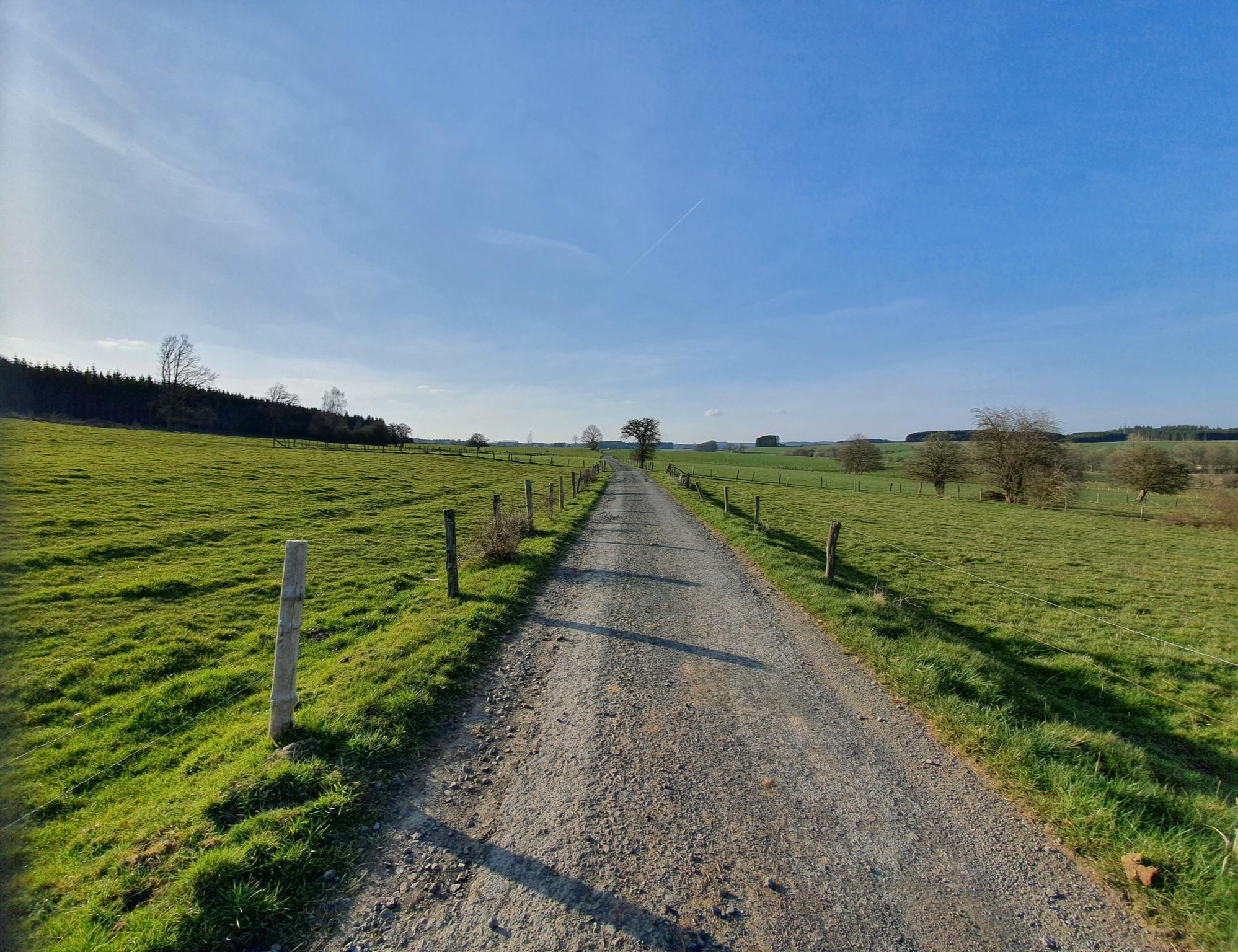
No traffic road cycling routes around Lobbes are characterized by the varied terrain of the Walloon Region in Belgium's Hainaut province. The area features rolling hills, dense forests, and scenic paths along the Sambre river. Cyclists can expect a mix of gentle gradients and more challenging ascents, with routes often utilizing greenways and disused railway lines. The landscape provides a diverse environment for road cycling, from river valleys to elevated sections offering broader views.
Best no traffic road cycling routes…
Last updated: May 3, 2026
4.3
(3)
126
riders
83.4km
04:13
850m
850m
Moderate road ride. Good fitness required. Mostly well-paved surfaces and easy to ride.
64
riders
86.3km
03:57
770m
770m
Moderate road ride. Good fitness required. Mostly well-paved surfaces and easy to ride.

Sign up for free
5.0
(1)
70
riders
94.5km
04:02
620m
620m
Moderate road ride. Good fitness required. Mostly well-paved surfaces and easy to ride.
4.0
(1)
50
riders
54.4km
02:32
460m
460m
Moderate road ride. Good fitness required. Mostly well-paved surfaces and easy to ride.
3.0
(2)
29
riders
50.9km
02:37
400m
400m
Moderate road ride. Good fitness required. Some segments of this route may be unpaved and difficult to ride.
Get access to more routes and recommendations from other explorers.
Sign up for free
Already have an account?
Our route recommendations are based on thousands of hikes, rides, and runs completed by other people on komoot.
Start today with a free account
Your next adventure awaits.
Login or Signup


Other adventures around Lobbes

Tips from the Community

The Plate-Taille Dam is located in southern Belgium in Wallonia, on the border of the provinces of Namur and Hainaut. The dam is situated near the villages of Froidchapelle and Cerfontaine and forms the central element of the Lacs de l’Eau d’Heure lake district, the largest artificial lake complex in the country. This area covers approximately 1800 hectares and consists of several interconnected lakes that together form a unique landscape of open water, wooded hills, and extensive recreational zones. Due to its location between the Ardennes and the Fagne, the area has a varied and gently rolling terrain. The origin of the dam dates back to the 1970s when Belgium faced water management problems. The Sambre River, an important waterway for industry and shipping, experienced highly fluctuating water levels. During dry periods, the water level dropped too low, which had economic consequences. To solve this problem, an ambitious project was launched, including the construction of a series of dams on the Eau d’Heure River and its tributaries. The construction of the Plate-Taille dam began around 1974 and was completed in 1981. As a result of its construction, five lakes were created: * Plate Taille (the largest and deepest) * Eau d’Heure * Falemprise * Ry Jaune * Féronval The construction brought about a major change for the region. Certain areas were submerged, and residents had to relocate. At the same time, this project laid the foundation for a new economic model based on tourism and recreation. The Plate-Taille dam is the largest dam in Belgium and an impressive example of modern hydraulic engineering. The Plate Taille lake itself has a surface area of approximately 350 hectares and is the largest and deepest lake in Belgium. The dam holds back an enormous mass of water and literally forms the heart of the entire lake district. One of the dam's main functions is energy generation through a pumped-storage power plant. * Capacity: ± 140 megawatts * Number of turbines: 4 (reversible) * Type: pumped-storage power plant System Operation The system operates on a clever principle: * During low energy demand, water is pumped to a higher reservoir. * During high energy demand, the water flows back down through turbines, generating electricity. This makes the plant particularly valuable for stabilizing the electricity grid, especially in combination with renewable energy sources such as wind and solar power. Around the dam lies a surprisingly rich nature reserve. The combination of water, forests, and open plains ensures great biodiversity. The landscape is characterized by: * Dense deciduous and coniferous forests * Open grasslands * Reed beds along the banks * Quiet bays and small islands Animals found here include: * Roe deer * Foxes * Waterfowl such as grebes and cormorants * Birds of prey The creation of the lakes has led to new ecosystems where flora and fauna have adapted to the water-rich environment. For someone who enjoys long and challenging hikes, like myself, this area is ideal, and you can easily create routes of several hours here without much crowds. 🚴♂️ Cycling and Recreation Besides hiking, the area is also popular with: * Road cyclists (hilly terrain) * Mountain bikers * Families (flat cycling paths around the lakes) There are well-maintained cycling routes that connect the entire lake district. 🚤 Water Sports and Activities The Lacs de l’Eau d’Heure are the center for water sports in Belgium. Possibilities: * Sailing * Kayaking * Windsurfing * Diving (in certain zones) * Swimming Motorized water sports are permitted to a limited extent, which contributes to a relatively calm and natural atmosphere. 🧭 Tourist Facilities The area is highly developed for visitors without losing its natural charm. Key attractions: * Skywalk Plate-Taille – a panoramic tower with views over the entire area * Natura Parc L’Eau d’Heure – adventure park with climbing routes and zipline * Marinas and beach areas * Holiday parks and campsites This makes the area suitable for both day trips and longer stays.
0
0


The thuin wall is short but steep
1
0

You are here in front of the Petit Poggio road. If you take it you can see one of the dams which regulates the water in the lakes.
1
0

Interesting and worth seeing old town of Chimay.
3
0

Thuin is a capital of inland waterways since many barge owners come from there and choose this place to stay when retirement time comes. Its belfry is a UNESCO world heritage site.
1
0
Contrary to what is written by Sylvain (https://www.komoot.com/fr-fr/highlight/2464859) and as many Dutch speakers in particular think, the "Little Poggio" and the Lakes of the Water of Hour are not located in the Ardennes. They are located in the natural region of Condroz. The Ardennes begins about ten km south of Chimay which is located in Famenne. Christian Falise
4
0

Jardinet Abbey is a Cistercian monastery founded in 1232 by Thierry II de Walcourt, inspired by a miraculous event involving a statue of the Virgin Mary. The abbey was first inhabited by nuns, then by monks, who led a reform movement in the 15th and 16th centuries. Unfortunately, the abbey was destroyed by the French Revolution in 1793, and only the entrance portal remains today. You will be able to admire the architecture of the portal, listed as heritage, and imagine the life of the monks and nuns who lived there.
2
0
Frequently Asked Questions
How many no-traffic road cycling routes are available around Lobbes?
There are 15 dedicated no-traffic road cycling routes around Lobbes, offering a variety of distances and elevations. This selection ensures you can find a ride that suits your fitness level and time availability.
What kind of terrain can I expect on these traffic-free routes near Lobbes?
The routes around Lobbes, nestled in the Walloon Region of Belgium, offer a mix of terrain. You can expect picturesque landscapes with rolling hills and varied gradients. While some routes might follow the relatively flat Sambre river valley, others will take you through more undulating areas, providing both challenging ascents and enjoyable descents typical of the Hainaut province.
Are there any easy no-traffic road cycling routes suitable for beginners or families?
Yes, there is 1 easy route available, perfect for beginners or those looking for a more relaxed ride. While the majority of routes are moderate, the region's network, including potential RAVeL routes (disused railway lines or canal towpaths), often provides flatter, car-free options ideal for families or less experienced cyclists.
What are some notable landmarks or attractions I might see along these routes?
Cycling around Lobbes offers opportunities to discover historical and natural beauty. You might pass by impressive structures like Château d'Hourpes or Monceau Castle. The region is also rich in green environments and river valleys, providing scenic viewpoints and charming small towns to explore. For more details on castles, you can check out our guide to Castles around Lobbes.
What is the best time of year to enjoy traffic-free road cycling in Lobbes?
The best time to cycle in Lobbes is generally from spring to early autumn (April to October). During these months, the weather is typically mild and pleasant, with the countryside in full bloom or displaying beautiful autumn colors. Always check the local weather forecast before heading out.
Are there any routes that offer significant elevation gain for a more challenging ride?
Absolutely. While Lobbes itself is near the Sambre river, the broader Walloon region is known for its hills. Routes like the Rue de Cousolre – Beauregard Castle loop from Lobbes feature nearly 500 meters of elevation gain over 61 km, providing a good workout. The varied terrain ensures that even traffic-free routes can offer a satisfying challenge.
Can I find circular no-traffic road cycling routes around Lobbes?
Yes, many of the routes are designed as loops, allowing you to start and finish at the same point without retracing your steps. For example, the Col de Landelies – Col de Landelies loop from Lobbes is a 62 km circular route, and the Biercée Distillery – Ham-sur-Heure Castle loop from Lobbes offers a 51 km circular experience.
What is the average distance and duration for these no-traffic road cycling routes?
The routes vary in length, with options ranging from shorter rides to longer excursions. For instance, the View of Thuin's belfry – Château d'Hourpes loop from Thuin is about 25 km, taking around 1 hour 25 minutes. Longer routes, like the The Abbey Gate – Biercée Distillery loop from Lobbes, cover around 45 km and can take over 2 hours.
Are there any specific considerations for parking when accessing these routes?
While specific parking details for each route are best checked on the individual tour pages, Lobbes and surrounding towns generally offer public parking options. Look for parking near the start points of the routes, especially in town centers or designated recreational areas, to easily access the traffic-free paths.
What do other road cyclists enjoy most about cycling in Lobbes?
While specific ratings are not available for this guide, the komoot community often praises the quiet, scenic nature of routes in the Walloon region. Cyclists appreciate the opportunity to explore charming countryside, historical sites, and green river valleys away from heavy traffic, making for a peaceful and enjoyable ride.
Are there options for refreshments or accommodation along the no-traffic routes?
Cycling through the Walloon region often means passing through charming small towns and villages. While specific amenities vary by route, you'll likely find opportunities for cafes, pubs, and even accommodation in these settlements. Planning your route with komoot allows you to identify points of interest for breaks and refreshments.
Most popular attractions around Lobbes

Get inspired with the komoot mobile app


Explore more
Browse the best Road cycling routes in other regions.
