The best hikes from bus stations around Worth Matravers
4.5
(674)
6,254
hikers
7
hikes
Bus station hiking trails around Worth Matravers offer access to the dramatic coastal scenery of the Jurassic Coast, a UNESCO World Heritage Site. The region is characterized by limestone cliffs, rolling hills, and secluded coves. Disused stone quarries and prominent headlands like St Aldhelm's Head add to the diverse landscape, providing varied terrain for exploration.
Best bus station hiking trails around Worth Matravers
- The most popular bus station hiking route is Dancing Ledge – Swanage Beach loop from Worth Matravers…
Last updated: July 15, 2026
5.0
(2)
43
hikers
26.4km
07:29
580m
570m
Hard hike. Very good fitness required. Easily-accessible paths. Suitable for all skill levels.
3.0
(1)
36
hikers
14.3km
03:51
180m
180m
Moderate hike. Good fitness required. Easily-accessible paths. Suitable for all skill levels.

Sign up for free
5.0
(1)
27
hikers
26.4km
07:27
530m
530m
Hard hike. Very good fitness required. Easily-accessible paths. Suitable for all skill levels.
5.0
(2)
11
hikers
16.0km
04:21
240m
240m
Moderate hike. Good fitness required. Easily-accessible paths. Suitable for all skill levels.
5.0
(1)
4
hikers
13.3km
03:46
290m
290m
Moderate hike. Good fitness required. Easily-accessible paths. Suitable for all skill levels.
Get access to more routes and recommendations from other explorers.
Sign up for free
Already have an account?
Our route recommendations are based on thousands of hikes, rides, and runs completed by other people on komoot.
Start today with a free account
Your next adventure awaits.
Login or Signup


Tips from the Community


The "Why" Behind the Hill Burt didn't just put it there because it looked nice. He dedicated it to his uncle and mentor, John Mowlem (another massive figure in Swanage history). But there was a practical side, too: A Landmark: It served as a waypoint for ships navigating the tricky waters around Old Harry Rocks. The View: Burt was obsessed with showing off the beauty of his hometown. By placing it on the ridge, he essentially gave people a reason to climb the hill and look down at the town he was helping to build. The Great Disappearing Act (WWII) If you look closely at the obelisk today, it looks remarkably "clean." That’s because the one you see now is a reconstruction. During World War II, the original stone obelisk was considered a "navigational hazard." The British military was worried that German pilots would use the tall, white stone pillar as a landmark to help them find their bearings for bombing raids on nearby Bournemouth or Poole. So, in 1941, they knocked it down. For decades, it lay in pieces in the grass. It wasn't until 1973 that the Encombe Estate and local residents gathered the resources to rebuild it (using a mix of the original stone and some fresh Purbeck masonry) to celebrate "Plant a Tree in '73"—though ironic, as there isn't a tree in sight on that windy ridge!
0
0
If you’ve been hiking those ridges, that lone stone pillar standing guard over Swanage has likely caught your eye. It’s officially known as the Ballard Down Obelisk (or the Burt Memorial), and the story behind it is a classic tale of Victorian pride, a bit of eccentricity, and some very literal "re-gifting." The "Stolen" Monument The obelisk wasn't originally built for the Purbeck Hills. It actually started its life in London. In the mid-1800s, it served as a monument to a man named James Thompson, standing near the entrance to the Vauxhall Bridge. However, when the bridge was being rebuilt in the late 19th century, the obelisk became an "obstruction" and was destined for the scrap heap. Enter George Burt: The Man Who Moved London Swanage looks the way it does today largely because of George Burt, a local businessman who ran a massive masonry firm in London. He had a habit of taking "architectural leftovers" from London and shipping them back to Swanage as ballast on his empty stone boats. When he saw the obelisk was going to be demolished in 1892, he stepped in. He didn't just save it; he dismantled it, shipped it down the coast, and hauled it all the way to the top of Ballard Down.
0
0
If the view from Studland Hill is a grand "reveal," the view from Rollington Hill is more of a slow, scenic immersion into the Purbeck countryside. While Studland Hill (part of the Nine Barrow Down ridge) looks at Swanage from the north/northeast, Rollington Hill sits a bit further west, closer to Corfe Castle. From here, you’re looking down the "barrel" of the valley toward the sea.
0
0

There’s nothing to not like about Swanage
0
0

Easy hike, please be careful in strong winds or take the parallel path. This is signposted and recommended if you don't want to walk too close to the sea.
0
0
There are a couple of theories behind the name "Dancing Ledge": Some say the name comes from how the waves appear to "dance" over the rock's surface at certain tide levels. Another theory suggests the ledge is the perfect size for a ballroom, though visitors attempting to walk across its uneven surface would find this an ankle-twisting endeavor.
0
0
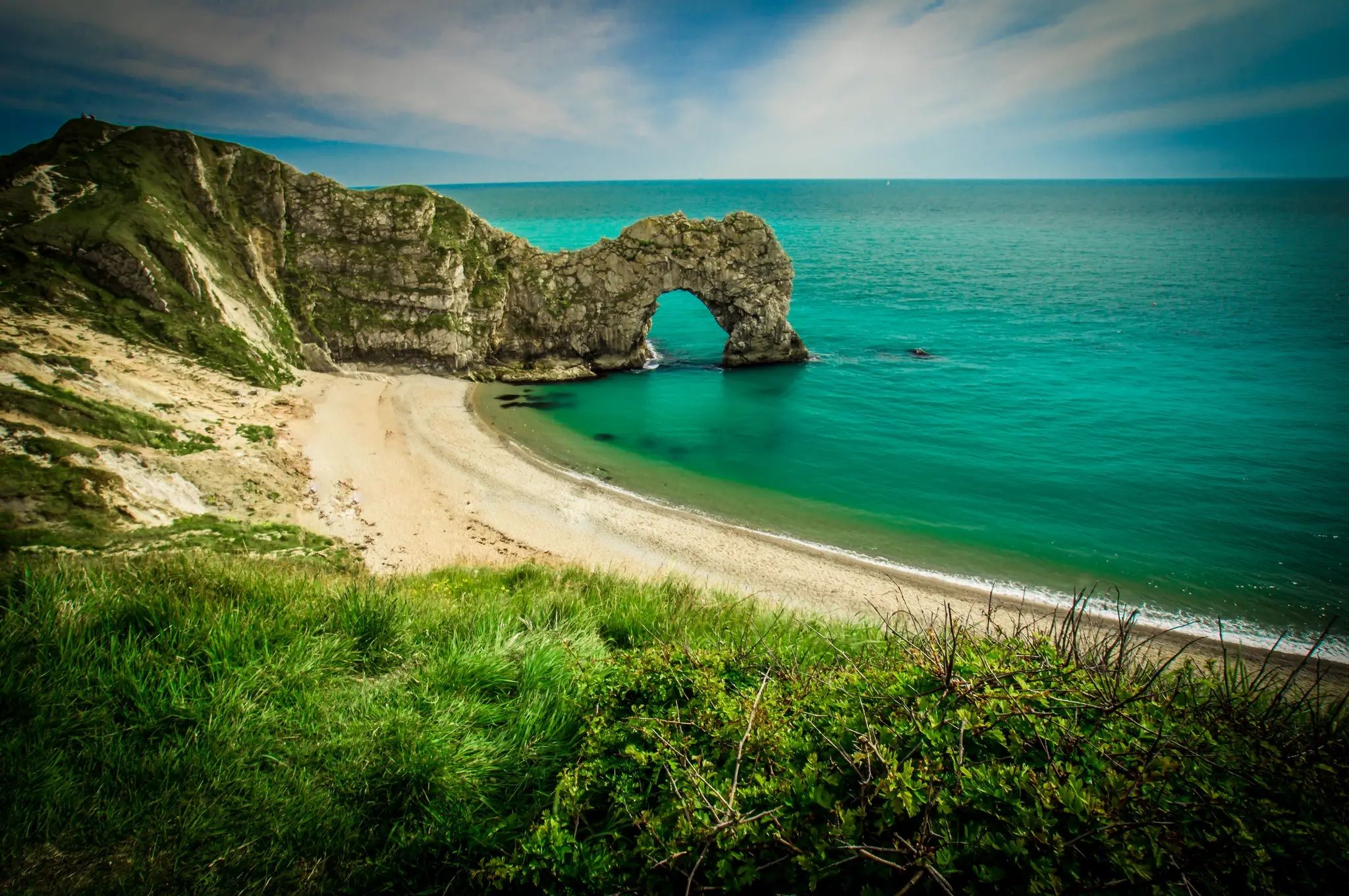
Dancing Ledge is a flat, natural rock platform on the Isle of Purbeck in Dorset, located on the Jurassic Coast near the villages of Langton Matravers and Worth Matravers. This historical quarry site is now a popular beauty spot for walkers, climbers, and swimmers. There are a couple of theories behind the name "Dancing Ledge": Some say the name comes from how the waves appear to "dance" over the rock's surface at certain tide levels. Another theory suggests the ledge is the perfect size for a ballroom, though visitors attempting to walk across its uneven surface would find this an ankle-twisting endeavor. Quarrying: During the 18th and 19th centuries, the ledge was a crucial hub for quarrying Purbeck stone, which was used in prestigious buildings, including the reconstruction of London after the Great Fire. The stone was lowered from the upper cliffs to small, flat-bottomed ships that could moor right up to the straight drop-off of the ledge. Smuggling: The busy quarrying traffic and numerous small caves also made Dancing Ledge a smuggler's haven. Contraband was often taken to nearby Spyway Farm for storage. Swimming pool: In the early 1900s, a small swimming pool was blasted out of the rock for pupils from a nearby preparatory school to learn how to swim. Author Ian Fleming, a former pupil, reportedly did not enjoy the compulsory cold dips.
0
0
Frequently Asked Questions
How many bus station hiking trails are available around Worth Matravers?
There are 8 distinct hiking trails around Worth Matravers that are accessible from bus stations. These routes offer a variety of experiences, from easy strolls to challenging coastal treks.
What kind of terrain can I expect on bus-accessible hikes in Worth Matravers?
The terrain around Worth Matravers is diverse, featuring dramatic limestone cliffs, rolling hills, and coastal paths that are part of the Jurassic Coast. You'll encounter both rugged coastal sections and more gentle inland tracks, often passing through disused stone quarries and offering breathtaking sea views.
Are there any easy bus-accessible hikes suitable for beginners or families in Worth Matravers?
Yes, there is one easy bus-accessible hike available. While many routes are moderate to difficult, you can find options that are less strenuous. For a moderate option, consider the Mill Pond – Swanage Waterfront Promenade loop from Langton Matravers, which offers a pleasant 13.9 km walk with less elevation gain.
What notable landmarks or natural features can I see on these bus station hikes?
The bus-accessible hikes in Worth Matravers offer access to several iconic landmarks. You can explore the famous chalk formations of Old Harry Rocks, the historic St Aldhelm's Chapel, and the unique Dancing Ledge. Many routes also pass through fascinating Winspit Quarry Caves, remnants of the region's stone mining history.
Are there any long-distance or challenging bus-accessible hikes for experienced hikers?
Absolutely. For experienced hikers seeking a challenge, routes like the Dancing Ledge – Swanage Beach loop from Worth Matravers or the Old Harry Rocks – Swanage Beach loop from Worth Matravers are excellent choices. Both are classified as difficult, covering over 26 km with significant elevation changes, offering extensive coastal views and a full day's adventure.
What do other hikers enjoy most about the bus-accessible trails in Worth Matravers?
The area is highly rated by the komoot community, with an average score of 4.5 stars from over 590 ratings. Reviewers often praise the dramatic coastal scenery, the historical points of interest like the quarries and chapels, and the well-maintained paths that offer stunning views across the English Channel and the Jurassic Coast.
Are there any circular routes that start and end near a bus stop in Worth Matravers?
Yes, many of the bus-accessible routes are circular, allowing you to return to your starting point without needing additional transport. For example, the Dancing Ledge – Seacombe Cliff loop from Worth Matravers is a moderate 13.2 km circular hike that explores the coastal path and offers diverse scenery.
Can I access viewpoints or scenic overlooks on these bus-accessible hikes?
Yes, the trails are rich with viewpoints. You can find panoramic vistas such as the View from the summit of Swyre Head, the View of Warbarrow Bay and Tyneham Valley from Rings Hill, and the stunning View of Chapman's Pool from Emmett's Hill, all accessible from various points along the routes.
What is the best time of year to hike the bus-accessible trails in Worth Matravers?
Worth Matravers offers great hiking opportunities year-round. Spring and autumn provide pleasant temperatures and vibrant landscapes, while summer is ideal for enjoying the coastal views. Winter hikes can be dramatic, but be prepared for potentially muddy paths and stronger winds along the exposed coastline. Always check local weather conditions before heading out.
Are there any moderate bus-accessible hikes that offer a good balance of distance and challenge?
Certainly. Several moderate routes provide a rewarding experience without being overly strenuous. The Swanage Waterfront Promenade – Swanage Beach loop from Langton Matravers is a moderate 16 km hike, offering a good distance with manageable elevation, perfect for a half-day adventure exploring the coast and town.
Most popular routes around Worth Matravers
Most popular attractions around Worth Matravers

Get inspired with the komoot mobile app


Explore more
Browse the best Hikes in other regions.
