The best traffic-free bike rides around Oliana
27
riders
7
rides
Gravel biking around Oliana offers diverse landscapes in the Segre valley, characterized by rugged terrain and river-carved gorges. The region is nestled between the Oliana and Rialb reservoirs, providing varied elevations and scenic beauty within a Pre-Pyrenean environment. This area features a mix of natural features, including mountain passes and extensive gravel roads, making it suitable for off-road cycling.
Best no traffic gravel bike trails around Oliana
- The most popular no traffic gravel bike trail is Pobla de Segur –…
Last updated: May 5, 2026
7
riders
103km
08:42
2,740m
2,740m
Hard gravel ride. Very good fitness required. Mostly paved surfaces. Suitable for all skill levels.
4
riders
27.7km
02:09
790m
790m
Hard gravel ride. Very good fitness required. Mostly paved surfaces. Suitable for all skill levels.

Sign up for free
5
riders
40.7km
03:11
1,190m
1,190m
Hard gravel ride. Very good fitness required. Mostly paved surfaces. Suitable for all skill levels.
4
riders
42.6km
03:05
1,050m
1,050m
Hard gravel ride. Very good fitness required. Mostly paved surfaces. Suitable for all skill levels.
2
riders
23.7km
02:09
740m
740m
Hard gravel ride. Very good fitness required. Mostly paved surfaces. Suitable for all skill levels.
Get access to more routes and recommendations from other explorers.
Sign up for free
Already have an account?
Our route recommendations are based on thousands of hikes, rides, and runs completed by other people on komoot.
Start today with a free account
Your next adventure awaits.
Login or Signup


Other adventures around Oliana

Tips from the Community


It is a picturesque municipality located in the Pallars Jussà region, surrounded by mountains and close to rivers such as the Noguera Pallaresa. It is an ideal destination for nature lovers and outdoor sports such as cycling. In addition, it is famous for its olive oil production and its tradition of making artisanal sausages.
0
0

Convenient mountain town with all the facilities you need during a multi-day cycling or hiking holiday: excellent campsite, a few hotels, several restaurants, a supermarket, a bakery, ...
0
0

Hortoneda, also called Hortoneda de la Conca, like the old municipality, is a town of the old term of that name, of the current Conca de Dalt, in Pallars Jussà. Together with Herba-savina, Mas de Vilanova or Vilanoveta and Pessonada formed this area of Hortoneda de la Conca. The town of Hortoneda was born near the castle of Hortoneda, of which it must have been a castle town. In the south-east of the town, a second nucleus was formed over time, born as a suburb of Hortoneda, called Segalars. It is located perched on top of a hill at almost 1,000 meters of altitude, in a preeminent place, with remarkable views over the Serra del Boumort, the Noguera Pallaresa valley and the whole of the Conca de Dalt sub-region. Of course, also on most of the municipality also called Conca de Dalt, to which it belongs. The parish church is dedicated to Santa Maria. It was a notable example of the Romanesque style for its octagonal bell tower above the nave of the church, but it was demolished towards the middle of the 20th century due to the imminent fall that its precarious state predicted. A small town throughout its history, in 1970 it had 93 inhabitants, 51 in 1981, and 32 in 2006. It has since experienced a certain recovery, and in 2007 there were already 44. Hortoneda belonged to the Romanesque church of Sant Cristòfol de Montpedrós, located about 5 kilometers to the east of the town, the old square of Llania and the scattered hamlet of Segan, at the head of the Llabro stream. Source: Wikipedia
0
0
The Coma d'Orient is a coma and a rural part of the municipality of Conca de Dalt, in lands of the old municipality of Hortoneda de la Conca, in the Pallars Jussà. It is located at the north-eastern end of the term, at the foot of the Serra de Boumort (north-west). It is a wide coma formed by the ravine of the Coma d'Orient, which later transforms into the ravine of Hell. In the center of the coma there is a grouping of bordes, some old farmhouses, known as Masos de la Coma. They belong to Hortoneda families. The most western is Borda d'Aubarell; then there was that of the Musician, missing; then came the grouping of banks in the central area of the coma, the Clot de la Ginebrosa: the Borda de Senllí, the Borda de Maladent, the Borda del Gorret and the Borda d'Isabel, the first two with a second construction that is a beating; further east is the Pletiu del Querolar, where there was the board of that name, and even further east there had been the Borda de Savoia. Like most bordes, they host a stable seasonal population, from spring to fall. (Source Wikiloc)
0
0

Located in the center of the town and under the imposing Roca de Pessonada, in the Comarca del Pallars Jussà, we find the Church of Santa Maria. As a curiosity, his Romanesque paintings are preserved, today, in the Museum of Fine Arts of Bilbao. Date of 1982
0
0
Very quiet place to rest and recover energy. We find the Mint fountain and a picnic area surrounded by nature
0
0
Frequently Asked Questions
How many no-traffic gravel bike trails are available around Oliana?
Oliana offers a selection of around 7 dedicated no-traffic gravel bike trails. These routes are designed to provide a serene cycling experience away from vehicular traffic, allowing you to fully immerse yourself in the region's natural beauty.
What kind of landscapes can I expect on Oliana's gravel bike trails?
You'll encounter a diverse range of landscapes, from rugged terrain shaped by the Segre River to the stunning views around the Oliana and Rialb reservoirs. The region's pre-Pyrenean environment means varied elevations, deep gorges, and scenic beauty, often leading to impressive mountain passes.
Are there any family-friendly no-traffic gravel routes in Oliana?
While many of the listed routes are rated as 'difficult' due to elevation and length, the area does offer options for various skill levels. For families, it's best to look for shorter, less elevated sections or explore local paths that might not be full-length tours. Always check the route details for elevation gain and distance to ensure it suits your family's capabilities.
Can I bring my dog on the gravel bike trails around Oliana?
Generally, dogs are welcome on many outdoor trails in the Oliana region, especially on gravel paths. However, it's always advisable to keep your dog on a leash, especially in areas with wildlife or near livestock. Be sure to check specific regulations for any protected areas you might enter and always carry water for your pet.
What are some scenic viewpoints or landmarks I can see along the trails?
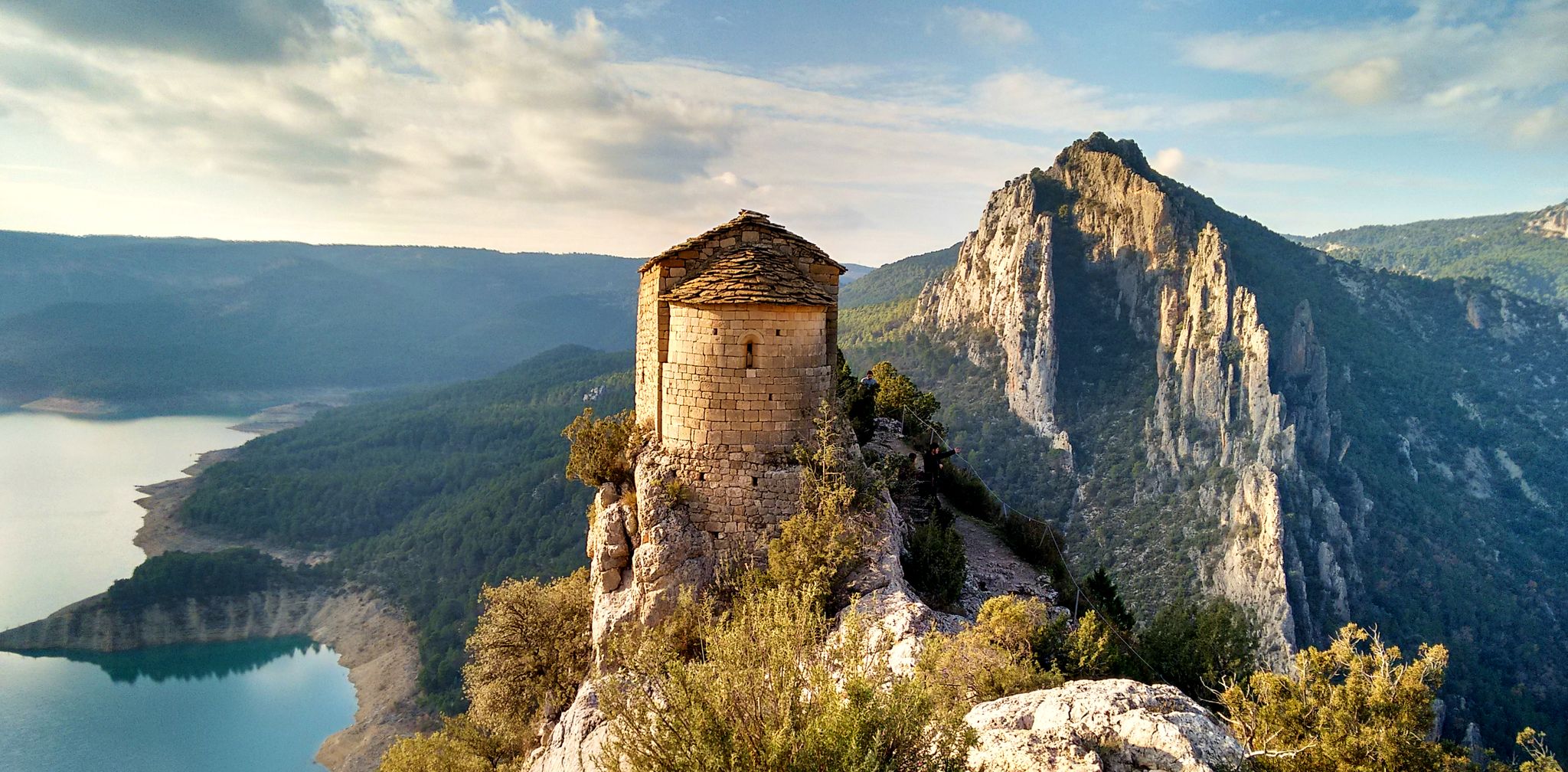
Many routes offer breathtaking views of the Segre valley and the reservoirs. You can also discover unique landmarks such as the Cyclist sculpture at Coll de Serra Seca, which provides spectacular vistas. Other notable sights include the Aguja del Corb and Ruins of Ermita de Sant Salvador, an 11th-century Romanesque hermitage.
Are there any waterfalls or swimming spots near the gravel routes?
Yes, the Waterfalls of Organyà are a natural attraction in the region, offering an idyllic spot to cool off and enjoy a pleasant swim. The Oliana and Rialb reservoirs also provide opportunities for waterside enjoyment.
What is the typical difficulty level of the no-traffic gravel routes in Oliana?
Most of the no-traffic gravel routes around Oliana are considered 'difficult' due to significant elevation gains and longer distances. For example, the Pobla de Segur – Fuente de la Menta loop from Organyà covers over 100 km with more than 2,700 meters of ascent. Routes like the Puente de las Masias – Organyà loop from Organyà are shorter but still feature over 1,000 meters of climbing.
Are there any circular gravel bike routes available?
Yes, many of the gravel bike routes in Oliana are designed as loops, allowing you to start and end at the same point. Examples include the Sant Climent de Coll de Nargó – Organyà loop from Coll de Nargó and the Gravel Road to Serra Seca loop from Oliana (residència).
What is the best time of year for gravel biking in Oliana?
The pre-Pyrenean climate means varied conditions. Spring and autumn generally offer pleasant temperatures for cycling. Summers can be hot, especially in the valley, so early morning rides are recommended. Winters can be cold, and higher passes may experience snow, so checking local weather conditions is crucial.
Are there cafes or places to refuel along the gravel routes?
While specific cafes directly on every remote gravel path might be scarce, many routes pass through or near small towns and villages like Organyà or Coll de Nargó, where you can find local establishments to refuel and rest. It's always a good idea to carry sufficient water and snacks, especially on longer routes.
Is parking available for accessing the gravel bike trails in Oliana?
Yes, parking is generally available in the towns and villages that serve as starting points for many routes, such as Oliana, Organyà, or Coll de Nargó. Look for designated parking areas within these municipalities. Always ensure you park responsibly and respect local regulations.
Can I reach the gravel biking areas using public transport?
Public transport options to reach the more remote starting points of gravel trails might be limited. Oliana itself is accessible by bus, but reaching specific trailheads often requires personal transport. It's recommended to check local bus schedules and routes if you plan to rely on public transport for access.
Most popular attractions around Oliana

Get inspired with the komoot mobile app


Explore more
Browse the best Gravel rides in other regions.
