The best traffic-free bike rides around Zuheros
5.0
(8)
1,678
riders
30
rides
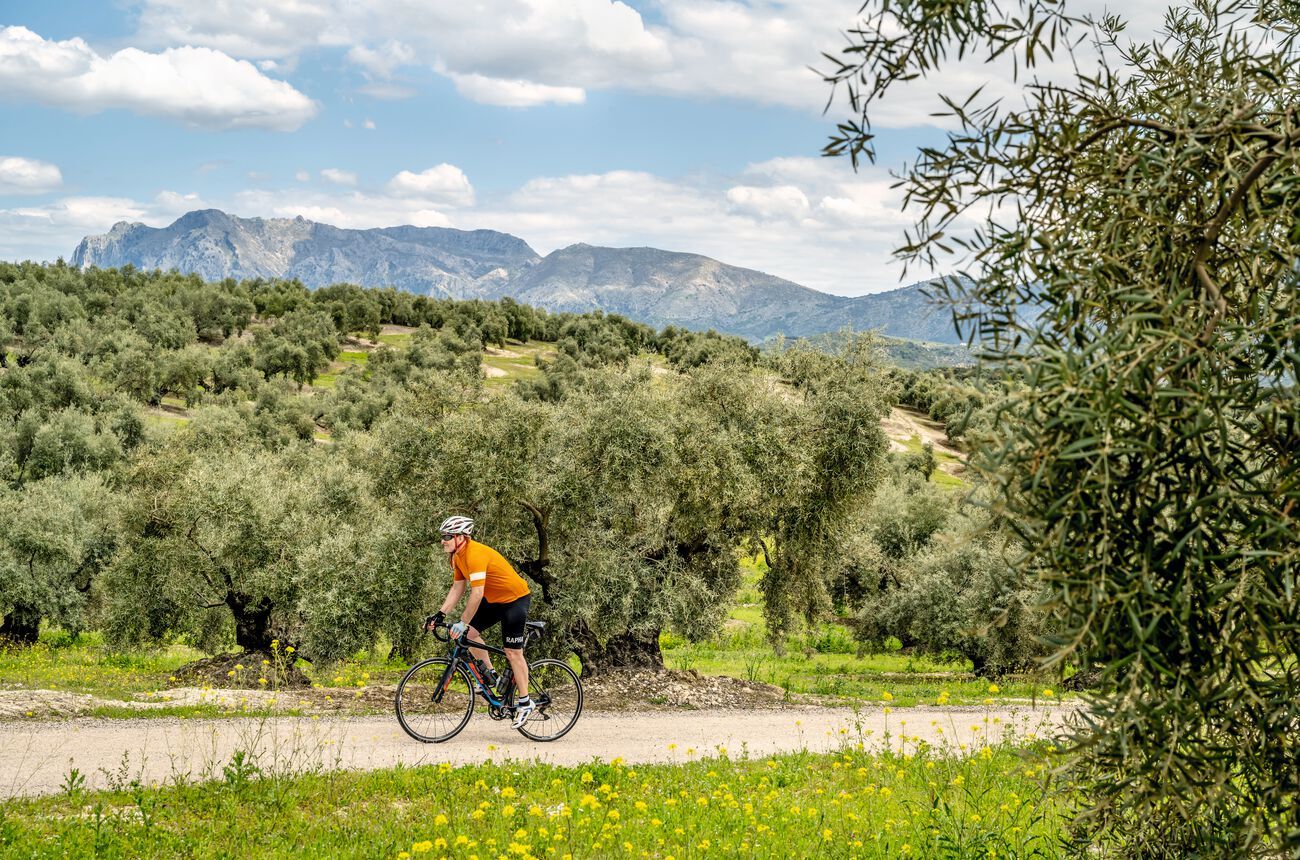
No traffic road cycling routes around Zuheros are set within the Sierras Subbéticas Natural Park and Geopark, characterized by limestone formations, extensive olive groves, and deep canyons. The region offers varied terrain for road cyclists, from the relatively flat Vía Verde del Aceite to more challenging ascents within the mountainous landscape. Cyclists can navigate routes that feature historic viaducts, former railway lines, and scenic views of the whitewashed village and its castle.
Best no traffic road cycling routes around Zuheros
- The most popular no traffic road cycling route is Cueva de los Murciélagos and Vía Verde del Aceite Loop, a 22.3 miles (35.9 km) trail that takes 2 hours 8 minutes to complete. This route combines a visit to the Cueva de los Murciélagos area with sections of the Vía Verde del Aceite, offering varied scenery through olive groves and past geological features.
- Another top favourite among local road cyclists is Baena and Porcuna Castle Loop, a difficult 57.2 miles (92.0 km) path. This route features significant elevation gain and passes through historical towns with castle views, traversing the wider agricultural landscape of the region.
- Local road cyclists also love the Vadomojón Reservoir – Zuheros loop from Doña Mencía, a 83.6 miles (134.6 km) trail leading through the countryside towards the Vadomojón Reservoir, often completed in about 7 hours 17 minutes.
- Road cycling around Zuheros is defined by the Vía Verde del Aceite, vast olive groves, and rugged limestone formations, with routes offering options for moderate to difficult ability levels.
- The routes in Zuheros are highly rated by the komoot community with an average score of 5.0 stars from over 2 reviews. More than 1600 road cyclists have used komoot to explore Zuheros's varied terrain.
Last updated: July 16, 2026
27
riders
50.1km
02:34
730m
730m
Moderate road ride. Good fitness required. Some segments of this route may be unpaved and difficult to ride.
42
riders
116km
06:32
1,220m
1,210m
Hard road ride. Very good fitness required. Mostly well-paved surfaces and easy to ride.

Sign up for free
9
riders
15.5km
01:03
490m
490m
Moderate road ride. Good fitness required. Mostly well-paved surfaces and easy to ride.
6
riders
93.0km
04:56
1,350m
1,350m
Hard road ride. Very good fitness required. Some segments of this route may be unpaved and difficult to ride.
6
riders
52.9km
02:46
890m
880m
Moderate road ride. Good fitness required. Mostly well-paved surfaces and easy to ride.
Get access to more routes and recommendations from other explorers.
Sign up for free
Already have an account?
Our route recommendations are based on thousands of hikes, rides, and runs completed by other people on komoot.
Start today with a free account
Your next adventure awaits.
Login or Signup




Tips from the Community

If you're going to copy, then copy the best!
0
0

The Zuheros Viaduct crosses the embedded bed of the Bailón River. It has a length of 104 meters resolved into two lateral sections of 31.5 meters and a central section of 41.0 meters. Its structure is metallic and is very similar to that of the Guadajoz River Viaduct. It seems that both projects were drawn up by the same engineers, Alessandri and Delaperrière.
9
0
Here you can find everything in the field of catering. Breakfast, lunch, sleep. It seems like this is the place to be in the area.
6
0

Quiet road with great views throughout, road surface in mostly good condition. Highly recommended!
0
0

The Fuente del Río in Cabra, is a picturesque natural park considered the origin of the Río Cabra. The park combines the natural beauty of a karst spring with landscaped gardens and a diverse tree landscape. It was declared a “Sitio de Interés Natural” in 1929 and today offers recreational areas and picnic areas for visitors. The spring rises at the foot of the Sierra de Cabra, an area with high rainfall and calcareous rock that leads to the formation of such karst springs. The water flows through a series of waterfalls and artificial springs and supplies the entire municipality. The Fuente del Río is part of the “Ruta del Agua” in the Subbética Cordobesa and offers a harmonious interplay of nature and human design. The park is a popular place for locals and visitors who want to enjoy the tranquility and beauty of this unique place. A visit to the Fuente del Río offers the opportunity to experience the natural beauty of the region and explore the origins of the Río Cabra.
3
0
El Castillo de Zuheros is a historic fortress in the small municipality of Zuheros. The castle sits spectacularly on a rock and has become a landmark in the region. The castle's origins date back to the Moors in the 9th century. It was strategically built on a limestone cliff to control and defend the region. Its location made it almost impregnable. The viaduct is a historic remnant of the old railway line and offers an elevated platform with unobstructed views of the surrounding landscapes. The section near Zuheros is particularly spectacular as the viaduct crosses a gorge through which the Bailón River flows. From here, Zuheros Castle rises majestically above the village, embedded in a rock. The castle seems to be one with the landscape as it is integrated directly into the limestone. The view of Zuheros Castle from the viaduct is a perfect example of the unique combination of nature and history that characterizes the Córdoba region. It is a moment that makes every bike ride along the Vía Verde unforgettable.
9
0
The Luque station, part of the original Linares-Puente Genil line, was built by the Compañía de los Ferrocarriles Andaluces and opened along with the entire line in January 1893. In 1941, with the nationalisation of the Iberian railways, the facilities passed into the hands of RENFE. The line remained in service until it was closed in October 1984, when it was dismantled and the tracks removed. After the line was closed, the old station building has been used as a restaurant since 1990. It also houses the Oil Interpretation Centre, a site dedicated to the history of olive oil and olive groves, where you can also taste oil from the region. The site is within the route formerly known as the "Vía Verde de la Subbética". In 2017, those responsible for the Greenway routes agreed to unify all sections of the old route under the same name "Vía Verde del Aceite". For many, however, it is and will remain the "Green Way". Luque station is a popular starting or intermediate point for cycling tours along the Vía Verde del Aceite, the old railway line that is now a great cycle path. The route offers a unique opportunity to experience the beauty of the Córdoba region. The current station also offers a good opportunity to take a break and enjoy food and cool drinks.
11
0
Frequently Asked Questions
How many no traffic road cycling routes are available around Zuheros?
Zuheros offers a good selection of traffic-free road cycling routes. You'll find over 30 routes, with a mix of moderate and challenging options, perfect for exploring the stunning landscapes of the Sierras Subbéticas Natural Park.
What makes Zuheros ideal for traffic-free road cycling?
Zuheros is nestled within the Sierras Subbéticas Natural Park and Geopark, offering a unique blend of rugged limestone terrain and extensive olive groves. A major highlight for traffic-free cycling is the Vía Verde del Aceite, an old railway line converted into a greenway, providing smooth, car-free paths through picturesque scenery. The village itself is a charming 'pueblo blanco' with historical appeal.
Are there easy, traffic-free road cycling routes suitable for beginners or families?
Yes, the Vía Verde del Aceite is an excellent option for easy, traffic-free cycling. This greenway, built on an old railway line, offers a relatively flat and well-maintained surface, making it suitable for a wide range of abilities, including families. You can enjoy scenic rides through olive groves and across impressive viaducts without vehicle traffic.
Can I find more challenging car-free road cycling routes near Zuheros?
Absolutely. While the Vía Verde del Aceite offers gentler sections, the surrounding Sierras Subbéticas Natural Park provides more challenging routes with significant elevation gains. For example, the Baena and Porcuna Castle Loop is a difficult route covering over 92 km with more than 1200 meters of ascent, offering a demanding, yet rewarding, car-free experience.
Are there any circular no traffic road cycling routes around Zuheros?
Yes, you can find circular routes that incorporate traffic-free sections. The Cueva de los Murciélagos and Vía Verde del Aceite Loop is a moderate 35 km circular route that allows you to experience both the greenway and other quiet roads, returning you to your starting point.
What scenic viewpoints and attractions can I see along these routes?
Many routes offer stunning views. You'll often see the dramatic Zuheros Castle perched on a rock, especially from the viaducts of the Vía Verde del Aceite. Other natural highlights include the Cueva de los Murciélagos (Bat Cave), a significant natural monument, and the picturesque Cañon del Río Bailón. The extensive olive groves themselves provide a beautiful backdrop.
Where can I park my car when starting a no traffic road cycling route in Zuheros?
Parking is generally available in and around Zuheros village. For routes utilizing the Vía Verde del Aceite, you can often find designated parking areas near the old railway stations that serve as trailheads, such as those in Zuheros or nearby Doña Mencía.
Is it possible to rent a bike in Zuheros?
While specific bike rental shops in Zuheros itself might be limited, it's advisable to check with local tourism offices or search online for rental services in nearby larger towns along the Vía Verde del Aceite. Some accommodations might also offer bike rental services.
What is the best time of year for traffic-free road cycling in Zuheros?
The best time for road cycling in Zuheros is typically during the spring (March to May) and autumn (September to November). During these seasons, the weather is milder and more pleasant, avoiding the intense heat of summer and the cooler, sometimes wetter, winter months. Spring also brings blooming wildflowers, adding to the scenic beauty.
Are there cafes or places to stop for refreshments along the no traffic routes?
Yes, especially along the Vía Verde del Aceite. Many of the old railway stations along the greenway have been converted into cafes, restaurants, or visitor centers, offering convenient spots to rest and refuel. Zuheros village also has charming cafes and restaurants where you can enjoy local cuisine.
What do other cyclists enjoy most about no traffic road cycling in Zuheros?
The komoot community highly rates the cycling experience in Zuheros, with an average score of 5.0 stars. Cyclists frequently praise the tranquility of the Vía Verde del Aceite, the stunning views of the castle and olive groves, and the opportunity to explore the unique geological features of the Sierras Subbéticas Natural Park on quiet roads.
Can I reach the starting points of these routes by public transport?
Public transport options to Zuheros can be limited. It's best to check regional bus schedules for connections to Zuheros from larger cities like Córdoba. For accessing specific points along the Vía Verde del Aceite, some towns on the greenway might have better public transport links, but bringing your own vehicle or arranging a transfer is often the most convenient option for cyclists.
Are dogs allowed on the traffic-free cycling routes?
Generally, dogs on a leash are permitted on the Vía Verde del Aceite and other public paths, but it's always recommended to check specific local regulations or signage, especially within the Natural Park areas. Ensure your dog is well-behaved and that you clean up after them.
Most popular attractions around Zuheros

Get inspired with the komoot mobile app


Explore more
Browse the best Road cycling routes in other regions.
