The best traffic-free bike rides around Murbach
4.4
(248)
7,760
riders
28
rides
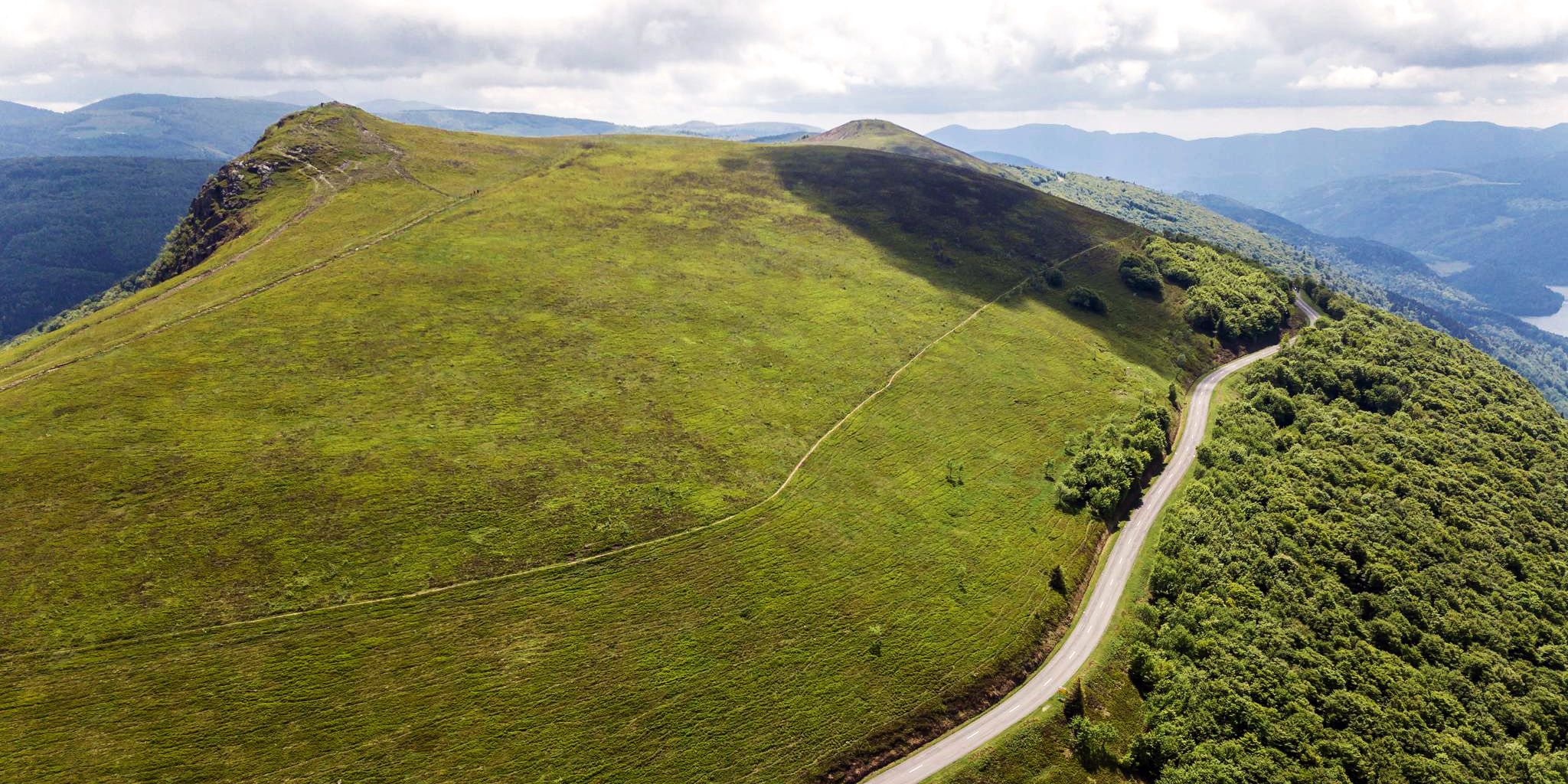
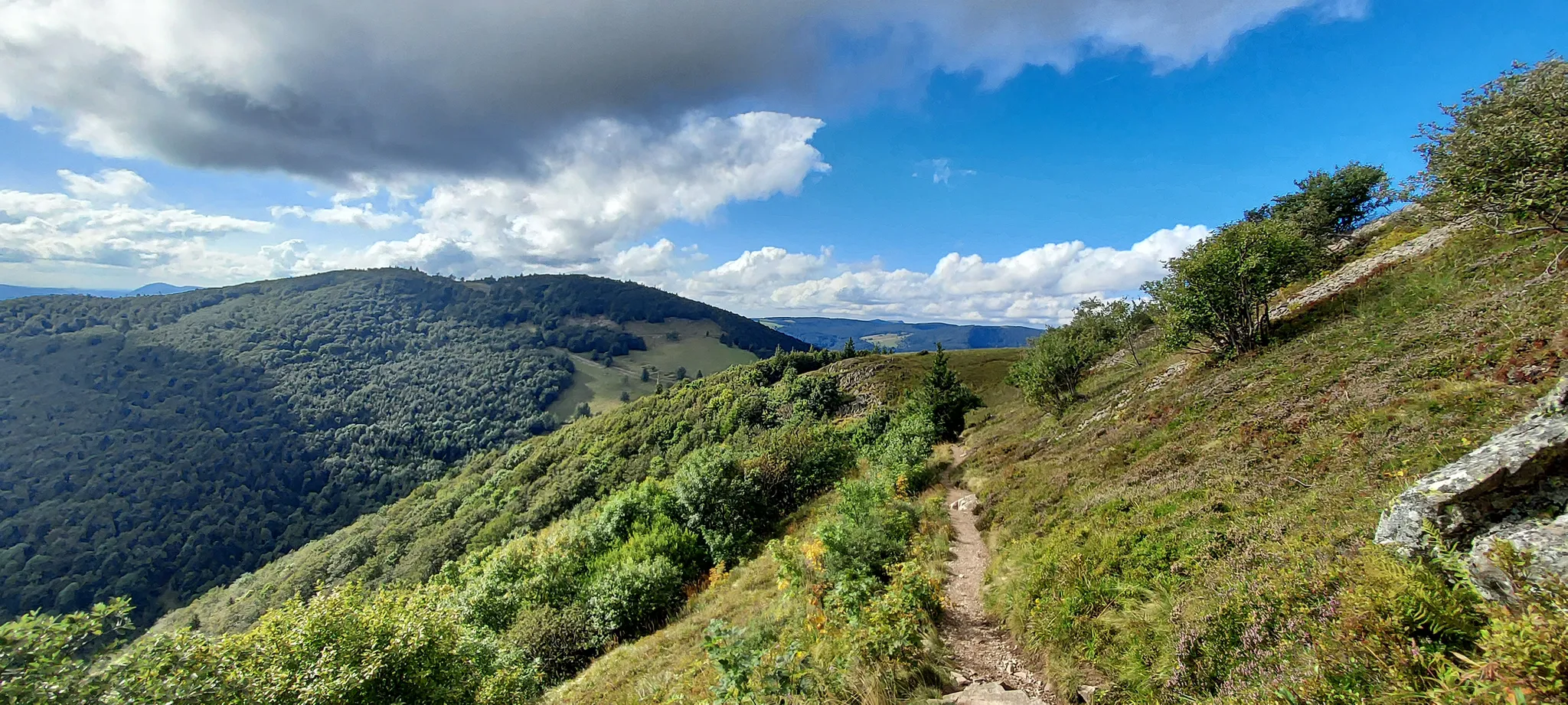
No traffic road cycling routes around Murbach are set within the Florival region of Alsace, France, at the foot of the Grand Ballon in the Vosges mountains. The terrain is characterized by verdant valleys, mountainous slopes, and mixed forests, offering diverse elevation profiles for road cyclists. This area provides a network of routes that wind through open meadows and ascend mountain passes, presenting both challenging climbs and rewarding descents.
Best no traffic road cycling routes around Murbach
- The most popular…
Last updated: May 5, 2026
4.9
(36)
659
riders
67.8km
03:57
1,690m
1,690m
Hard road ride. Very good fitness required. Mostly well-paved surfaces and easy to ride.
4.8
(4)
118
riders
33.0km
01:39
530m
530m
Moderate road ride. Good fitness required. Mostly well-paved surfaces and easy to ride.

Sign up for free
5.0
(3)
113
riders
25.8km
01:43
620m
620m
Moderate road ride. Good fitness required. Mostly well-paved surfaces and easy to ride.
4.3
(3)
52
riders
54.1km
03:25
1,430m
1,430m
Hard road ride. Very good fitness required. Some segments of this route may be unpaved and difficult to ride.
5.0
(3)
48
riders
26.5km
02:07
1,000m
1,000m
Hard road ride. Very good fitness required. Mostly well-paved surfaces and easy to ride.
Get access to more routes and recommendations from other explorers.
Sign up for free
Already have an account?
Our route recommendations are based on thousands of hikes, rides, and runs completed by other people on komoot.
Start today with a free account
Your next adventure awaits.
Login or Signup


Tips from the Community

On the route of Col Amic, above the Ferme Auberge Kohlschlag, there is a cozy wooden bench that invites you to take a break. From here, you have a view of the Ferme Auberge Kohlschlag and the mountain Le Sudelkopf. The bench was made as a project by students from the Enstib Épinal wood trade school.
0
0
The Wells of Lautenbach The monks who founded Lautenbach settled in this area because of the abundant water resources. Over the centuries, population growth led to a multitude of wells, both public and private. Many wells, like the Stockbrunnen (a type of well), played an important role in the daily life of the village. The use of solid sandstone testifies to the wealth and prosperity of the village, which had developed into a small industrial town by the end of the 19th century. The wells remained in their original state until the construction of a water supply network. --- The Wells of Lautenbach The monks who founded Lautenbach settled in this area for its water resources. Over the centuries, population growth led to a multiplication of wells, both public and private. The names of the fountains, comme le Stockbrunna, participate in the vie quotidienne of the village. The large size used is signe of the richness and the prosperity of the village qui devient, à la fin du XIXe siècle, a small industrial town. Les fontaines conservent leur état d'origine jusqu'à la creation d'un réseau d'adduction en 1896.
0
0
Das Rathaus befindet sich im ehemaligen Klostergebäude der Stiftskirche Lautenbach. Die Tür des Ostflügels trägt die Jahreszahl 1517. In diesen Gebäuden befinden sich das ehemalige Propsthaus, die Sakristei der Domherren, der Kapitelsaal und eine Gewölbegalerie. Der Nordflügel wurde erst im 19. Jahrhundert errichtet. Im Winkel zwischen den beiden Flügeln stehen noch ein Turm mit seiner Wendeltreppe. Der Gotische Kreuzgang, der durch ein Spitzbogenportal zugänglich ist, weist Rippengewölbe auf. --- The town hall is housed in the former convent building of the Collegiate Church of Lautenbach. The door of the east wing bears the date 1517. These buildings house the former provost's house, the canons' sacristy, the chapter house, and a vaulted gallery. The north wing was built only in the 19th century. In the angle between the two wings, a turret and its spiral staircase still stand. The Gothic cloister, accessible through a pointed arch doorway, features ribbed vaults. To the left, the house, arranged as a central block, was acquired by the municipality in 1978 and then demolished in 1985, making way for a more suitable urban development.
0
0

The church cannot be visited at this time as it is closed for renovations.
2
0


A pleasant section to ride, with moderate climbs and little traffic. There were a few racing cyclists on the road.
0
0

For several years now, the reintroduction of storks on the territory of the municipality of Soultz-Haut-Rhin has been a fact: the chimneys are now populated by these birds again. You can watch them for hours.
7
0

A challenge on a mountain bike without a motor. But the downhill trails are great. It's worth it 👍🏻
1
0
Frequently Asked Questions
How many no-traffic road cycling routes are available around Murbach?
There are over 25 dedicated no-traffic road cycling routes around Murbach, offering a variety of experiences for different skill levels. You'll find options ranging from moderate to difficult.
What kind of terrain can I expect on these no-traffic road cycling routes in Murbach?
The Murbach region, nestled at the foot of the Grand Ballon in the Vosges mountains, offers diverse terrain. You can expect routes winding through mixed forests and open meadows, with significant elevation changes including steep climbs and rewarding descents. The valleys and mountainous slopes provide a varied and scenic cycling experience.
Are there routes suitable for different fitness levels?
Yes, the no-traffic road cycling routes around Murbach cater to various fitness levels. You'll find 8 easy routes, 15 moderate routes, and 6 more challenging routes designed for experienced riders. For example, the Bannstein Pass – Well with drinking water loop from Guebwiller is a moderate option, while the Firstplan Pass – Firstplan Pass loop from Guebwiller offers a more difficult challenge.
What historical landmarks or viewpoints can I see along the no-traffic road cycling routes?
Murbach is rich in history and scenic beauty. You can often spot the historic Murbach Abbey, known for its Romanesque architecture, from various points. The Chapelle Notre-Dame-de-Lorette also offers beautiful views of the abbey and the surrounding valley. Additionally, you might encounter impressive castles like the Ruins of Hohrupf Castle or the Ruins of Freundstein Castle. For natural sights, look out for waterfalls such as the Siehlbaechle Waterfall or Bubalafels Waterfall.
Where can I park my car when starting a no-traffic road cycling route in Murbach?
Parking options are generally available in and around Murbach and nearby towns like Guebwiller or Issenheim, which serve as common starting points for many routes. Specific parking details can often be found on individual route descriptions on komoot or by checking local tourism information for Murbach and the Florival region.
Is Murbach accessible by public transport for cyclists?
While Murbach itself is a smaller village, the wider Florival region has some public transport connections. Cyclists looking to access routes via public transport should check regional bus services connecting to larger towns like Guebwiller, which may offer better public transport links. Always verify if bikes are permitted on board.
Are there any circular no-traffic road cycling routes in Murbach?
Yes, many of the no-traffic road cycling routes around Murbach are designed as loops, allowing you to start and finish at the same point. For instance, the Art at the tower - Kingfisher – Wagenbourg Castle loop from Issenheim is a moderate circular route. These loops are ideal for exploring the region without needing to arrange return transport.
What do other road cyclists say about the no-traffic routes in Murbach?
The no-traffic road cycling routes in Murbach are highly regarded by the komoot community, with an average rating of 4.5 out of 5 stars from over 340 reviews. Cyclists frequently praise the stunning natural beauty, the challenging climbs, and the peaceful, car-free sections that allow for an immersive experience in the Vosges landscape.
What is the best time of year to enjoy traffic-free road cycling in Murbach?
The best time for road cycling in Murbach is typically from spring to autumn (April to October). During these months, the weather is generally milder and more stable, making for pleasant riding conditions. Spring brings blooming landscapes, while autumn offers vibrant fall colors. Summer is also popular, but be prepared for potentially warmer temperatures, especially on climbs.
Are there family-friendly no-traffic road cycling options in Murbach?
While many routes in Murbach involve significant elevation, there are easier, shorter options that could be suitable for families with older children or those looking for a less strenuous ride. Look for routes categorized as 'easy' in the guide, which will have less climbing and shorter distances, allowing for a more relaxed family outing on quiet roads.
Can I find cafes or accommodation near the no-traffic road cycling routes?
Yes, Murbach and the surrounding villages in the Florival region offer various options for refreshments and accommodation. You'll find local cafes and restaurants to refuel after your ride, and guesthouses or hotels for overnight stays. It's always a good idea to check opening hours, especially in smaller villages, and book accommodation in advance during peak season.
Are there challenging no-traffic road cycling routes for experienced riders?
Absolutely. The Murbach area, being at the foot of the Grand Ballon, offers several challenging no-traffic road cycling routes with significant elevation gain. Routes like the Firstplan Pass – Firstplan Pass loop from Guebwiller or the Firstplan Pass – Pinot Bend loop from Guebwiller feature substantial climbs and descents, providing a demanding and rewarding experience for seasoned road cyclists.
Most popular attractions around Murbach

Get inspired with the komoot mobile app


Explore more
Browse the best Road cycling routes in other regions.
