The best traffic-free bike rides around Gétigné
4.5
(231)
1,886
riders
220
rides
No traffic touring cycling routes around Gétigné traverse a landscape shaped by river valleys, expansive vineyard panoramas, and tranquil wooded areas. The region is characterized by the Sèvre Nantaise and Moine rivers, with paths often following their banks and offering views of historical mills. Natural spaces like the Garenne de la Moine and Parc du Vallon contribute to a varied environment for cyclists. The terrain includes gentle gradients suitable for diverse cycling proficiencies.
Best no traffic touring cycling routes around…
Last updated: May 5, 2026
4.7
(39)
204
riders
33.1km
01:40
170m
200m
Moderate bike ride. Good fitness required. Mostly paved surfaces. Suitable for all skill levels.
4.5
(2)
22
riders
25.7km
01:50
170m
170m
Moderate bike ride. Good fitness required. Mostly paved surfaces. Suitable for all skill levels.

Sign up for free
4.4
(11)
26
riders
23.4km
01:12
140m
140m
Easy bike ride. Great for any fitness level. Mostly paved surfaces. Suitable for all skill levels.
3.0
(2)
11
riders
17.6km
01:31
130m
130m
Easy bike ride. Great for any fitness level. Mostly paved surfaces. Suitable for all skill levels.
3.5
(2)
8
riders
19.8km
01:18
120m
120m
Easy bike ride. Great for any fitness level. Mostly paved surfaces. Suitable for all skill levels.
Get access to more routes and recommendations from other explorers.
Sign up for free
Already have an account?
Our route recommendations are based on thousands of hikes, rides, and runs completed by other people on komoot.
Start today with a free account
Your next adventure awaits.
Login or Signup
Popular around Gétigné

Tips from the Community

From 1805 to 1827, the sculptor François-Frédéric Lemot (winner of the Prix de Rome in 1790) transformed a former hunting forest belonging to the lords of Clisson into an idealized landscape. Influenced by the gardens of Ermenonville and Méréville, guided by his classical education and the memory of Tivoli, Lemot freely designed his garden whenever his official duties in Paris allowed. It is now a park managed by the department, freely accessible for a relaxing break with a beautiful view of the château.
0
0

Owned by the Departmental Council, the Bois de Buis is easily accessible from the parking lot of the Moulin du Liveau site, located along the RD 113, near the Château de l'Oiselinière. This woodland was once the grounds of the Château de l'Oiselinière, which is situated on the slopes of the Sèvre River in Nantes. The site was left to nature for about fifty years, before being purchased by the Department in 2007. In 2014, the former park was restored to create structures that will allow visitors to better appreciate this natural setting, where some one hundred animal and plant species thrive. It features a scenic lookout overlooking the Sèvre River and offers panoramic views of the village of Gorges. Activities and guided tours are regularly organized for the public. This site is classified as a sensitive natural area. Surface area (in m²): 30,000 m² (3 ha) Play area: No Bowling court: No Pets allowed: Yes Bathrooms: Yes (near the Moulin du Liveau) Other: For more information, visit the Loire-Atlantique nature walks website.
0
0
The municipality installed interpretive panels in the fall of 2022. Outside the mill, furniture reminiscent of the old mill sails showcases the mill's history and mechanism, while also promoting the vineyard's tourist attractions. Inside the mill, on both floors, glazed lava orientation tables present the various sites visible from the mill while evoking the work of the vineyard throughout the four seasons. A picnic table is available on site. The site is only accessible on foot or by bicycle. Nearest parking is at the Tuileries Pond.
0
0
The last remaining witness to the region's papermaking industry, the association "Pour les arts graphiques en Vallée de Clisson" (For Graphic Arts in the Clisson Valley) has been working with local authorities since 1998 to revive the 19th-century papermaking industry at Le Liveau in Gorges. The Moulin du Liveau is a superb example of the region's Italianate architecture. With the active support of local authorities, the mill, owned by the municipality of Gorges, was restored to its original purpose as a paper mill. This magnificent site on the Sèvre Nantaise River in the Clisson Valley opened to the public in spring 2015. MORE THAN A MUSEUM, IT'S A LIVING WORKSHOP The association "Pour les arts graphiques en Vallée de Clisson" offers activities centered around the history and manufacture of paper. Children and adults alike can discover the mechanisms of the paper mill, handcraft their own sheets of paper, and learn about printing. An informative journey through history, accompanied by the ever-present pleasure of playfully recreating the gestures of the past. Inside, a hammer mill powered by a paddle wheel driven by the Sèvre River evokes the preparation of paper pulp from rags. Visitors can also practice calligraphy, participate in writing workshops, take bookbinding courses, and enjoy many other activities.
1
0
The Liveau Paper Mill in Gorges in the Clisson Valley (Loire Atlantique, 44) offers guided tours, educational outings, group visits to the paper mill, papermaking workshops, events, and exhibitions. The mill welcomes you south of Nantes and also offers a shop with a wide selection of paper, stationery, and books. The Liveau Paper Mill is located in Loire-Atlantique, in Gorges on the banks of the Sèvre Nantaise. Two flour mills, one on the right bank, the other on the left bank, made up the Liveau hydraulic site, first mentioned in 1407. Until 1561, it was owned by the lords of Clisson. • 1826, transformation of the right bank mill into a paper mill, a more prosperous activity at that time, and construction of the drying rack (drying rack), marked in its architecture by the strong Italian influence prevalent at that time in the canton of Clisson. • 1827: Papermaking begins at the mill. It produces "large gray paper" or "envelope paper" (wrapping paper) sold to the sugar refineries of Nantes. • 1850: Papermaking ends. • 1851 to 1952: Milling resumes. • 2001: The municipality of Gorges acquires the abandoned mill. • 2004: The "Pour les arts graphiques en vallée de Clisson" association wins first prize from the Fondation du Patrimoine for its project to rehabilitate and promote the Moulin du Liveau, with the support of Gorges elected officials and the Clisson Valley community of municipalities. • 2006: The Fondation du Patrimoine approves the project and brings in financial partners. • 2008-2009: Airtight and watertight construction of the buildings (mill and dryer), half of which was financed by the Total Foundation. Additional funding was provided by the Fondation du Patrimoine, the Crédit Agricole Foundation, parliamentary funds, the Pays de Loire Regional Council, the Loire-Atlantique General Council, the Clisson Valley Community of Communes, the municipality of Gorges, and various private funds. . 2014: Rehabilitation work in preparation for an artisanal papermaking activity, for cultural and tourist purposes. • April 2015: The Liveau paper mill in Gorges welcomes its first visitors.
1
0
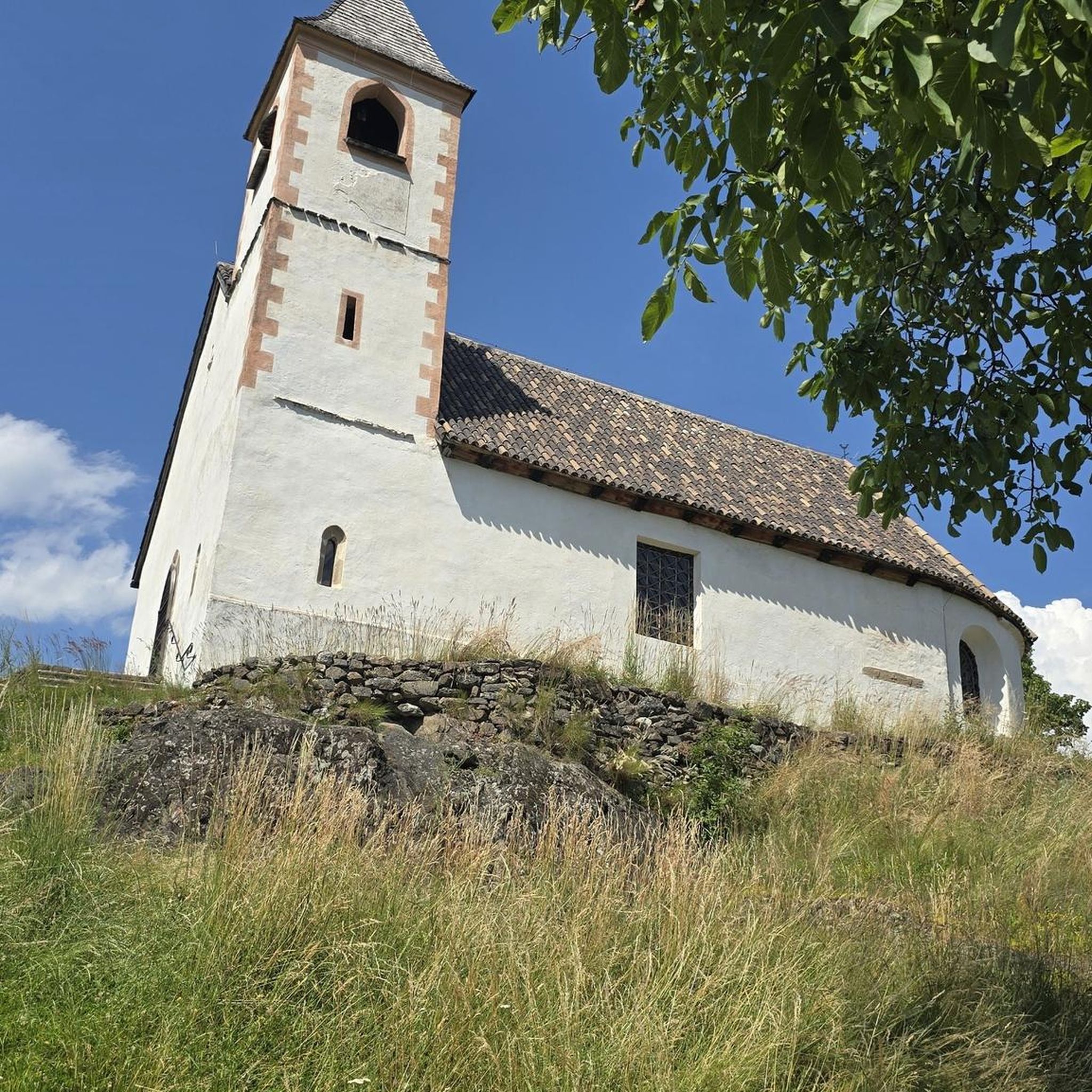
The modest Chapel of Saint Anne is the last vestige of the parish church of Saint Vincent. In the second half of the 11th century, the Chapel of Saint Anne was built. It adjoins the southern flank of a pre-existing castle chapel, probably contemporary with the keep, which dates from the late 10th or early 11th century. At an undetermined date, the two chapels were extended westward and became the chevet of the parish church of Saint Vincent. This extension was completed before 1646, the date at which a drawing by L. Doomer, preserved at the Dobrée Museum in Nantes, shows the complete building. In 1683, Archdeacon Binet described the dilapidated Church of Saint Vincent and the choir on the verge of ruin. No one dared touch it because it belonged to the lord of La Galissonnière and Le Pallet. We can therefore assume that the nave itself belongs to the parish, which is responsible for its upkeep. The choir, a former castle chapel, disappeared during the Revolution. The old church was razed in 1853, and only the Sainte-Anne chapel was spared thanks to the intervention of Prosper Mérimée. A new church was built on a new site in the village, reusing the stones from the old building. In addition to its dilapidated condition, the old church had the disadvantage of being located far from the village. The chapel was listed as a historical monument in 1941 (decree of August 9). It was restored in 1957. NOTE: THE CHURCH HAS BEEN CLOSED SINCE JULY 23, 2018, FOR INDEFINITE WORK.
1
0
The Trinity Church is getting a makeover in the heart of Clisson Off-limits since 2018, the Trinity Church in Clisson is undergoing extensive restoration work until 2027, accompanied by reinforcement and safety work. The Trinity Church in Clisson has been off-limits since 2018 due to pieces of tufa stone found on the floor of the building, raising concerns about safety issues. The restoration has been decided upon, along with reinforcement and safety work. This work is expected to continue until 2027. The construction site will soon be explained to the residents of Clisson, using signs. The artwork and furnishings have been protected and stored, tarpaulins protect the building and the workers, the vaults and framework will be restored, and the wall plasterwork will be examined and redone where necessary. The work will concern the side aisles until next summer, the nave for the following twelve months. Then it will be the turn of the choir and transepts between January 2026 and spring 2027, then the sacristy, the bell tower and the outbuildings.
2
0
The Church of the Trinity was originally a Benedictine priory, with a parish, dependent on the abbeys of Saint-Martin-de-Vertou and Saint-Jouin-de-Marnes. In the 11th century, it was occupied by the canons regular of the Order of Saint Augustine. In 1645, Fontevrist nuns from La Regrippière en Vallet settled there. The convent burned down in 1794 by the infernal columns of the Republican armies. From the 11th century onwards, the church had a choir with an apse, side chapels, and a square bell tower. In the 17th century, the Benedictine nuns replaced the Romanesque choir with an elongated one, featuring a remarkable Baroque altarpiece. They demolished the southern part of the choir to build their oratory. During the French Revolution, the church returned to the parish. Around 1867/1868, work was undertaken. The façade was redone in a neo-Romanesque style, while the neo-Gothic style was preferred for the interior of the religious monument.
1
0
Frequently Asked Questions
How many no-traffic touring cycling routes are available around Gétigné?
There are 18 dedicated no-traffic touring cycling routes around Gétigné. These routes are designed to offer peaceful rides away from vehicular traffic, allowing you to fully enjoy the scenic landscapes of the Nantes vineyard region.
Are there easy no-traffic routes suitable for beginners or families in Gétigné?
Yes, Gétigné offers a good selection of easy no-traffic routes. Out of the 18 available, 12 are classified as easy, making them perfect for beginners or families looking for a relaxed cycling experience. These routes often follow the gentle riverbanks and vineyard paths.
What kind of landscapes can I expect on these no-traffic cycling routes?
The no-traffic routes around Gétigné primarily showcase picturesque river landscapes, especially along the Sèvre Nantaise and Moine rivers. You'll also cycle through expansive vineyard panoramas and tranquil wooded areas, such as the Garenne de la Moine, offering a diverse and engaging environment.
What attractions can I see along the no-traffic touring cycling routes near Gétigné?
Many routes offer glimpses of the region's rich history and natural beauty. You can explore the medieval Château de Clisson, the picturesque The Arsenal (former mills), and the serene Valley of the Three Provinces. The Chapelle des Templiers and Moulin de Gervaud are also notable points of interest.
Are there any circular no-traffic touring routes available?
Yes, several routes are circular, allowing you to start and end at the same point. For example, the moderate "Valley Bridge – Château de Clisson loop from Gétigné" is a 28.2 km circular route, and the easy "Gaumier – Beau Soleil natural site loop from Gétigné" covers 27.7 km.
What do other touring cyclists enjoy most about cycling in Gétigné?
The komoot community highly rates the touring cycling experience in Gétigné, with an average score of 4.4 stars from 227 ratings. Reviewers often praise the quiet, traffic-free paths, the beautiful river valleys, and the charming vineyard scenery that makes for a relaxing and enjoyable ride.
Can I find routes that pass by historical sites or castles?
Absolutely. Many routes are designed to highlight the region's heritage. For instance, the "Château de Clisson – Valley Bridge loop from Clisson" offers direct access to the impressive Château de Clisson, a significant medieval landmark.
Are there any routes that follow the Sèvre Nantaise river?
Yes, the Sèvre Nantaise river is a prominent feature of the region, and many cycling paths follow its banks. These routes offer scenic views, often passing by historical mills and providing opportunities to observe local flora and fauna, including yellow and pink water lilies.
Where can I park my car when starting a no-traffic touring cycling route in Gétigné?
While specific parking locations for each route vary, Gétigné and nearby towns like Clisson offer public parking facilities. It's advisable to check the starting point of your chosen route on komoot for the most convenient parking options.
What is the best time of year to enjoy no-traffic touring cycling in Gétigné?
The spring and autumn months generally offer the most pleasant conditions for touring cycling in Gétigné, with mild temperatures and beautiful scenery. Summer can also be enjoyable, especially along the shaded river paths, but it's wise to start early to avoid the midday heat.
Are there any routes that are particularly good for spotting wildlife?
Routes that follow the Sèvre Nantaise and Moine rivers, as well as those passing through wooded areas like the Garenne de la Moine, are excellent for wildlife spotting. Keep an eye out for various bird species and aquatic life along the riverbanks.
Are there any shorter, easy routes for a quick ride?
Yes, if you're looking for a shorter, easy ride, the "Chemin du Gatz loop from Gétigné" is an excellent option. It's an easy 13.4 km circular route, perfect for a leisurely outing.
Most popular attractions around Gétigné

Get inspired with the komoot mobile app


Explore more
Browse the best Cycling routes in other regions.
