The best traffic-free bike rides around Sainte-Foy-Tarentaise
4.7
(220)
13,385
riders
47
rides
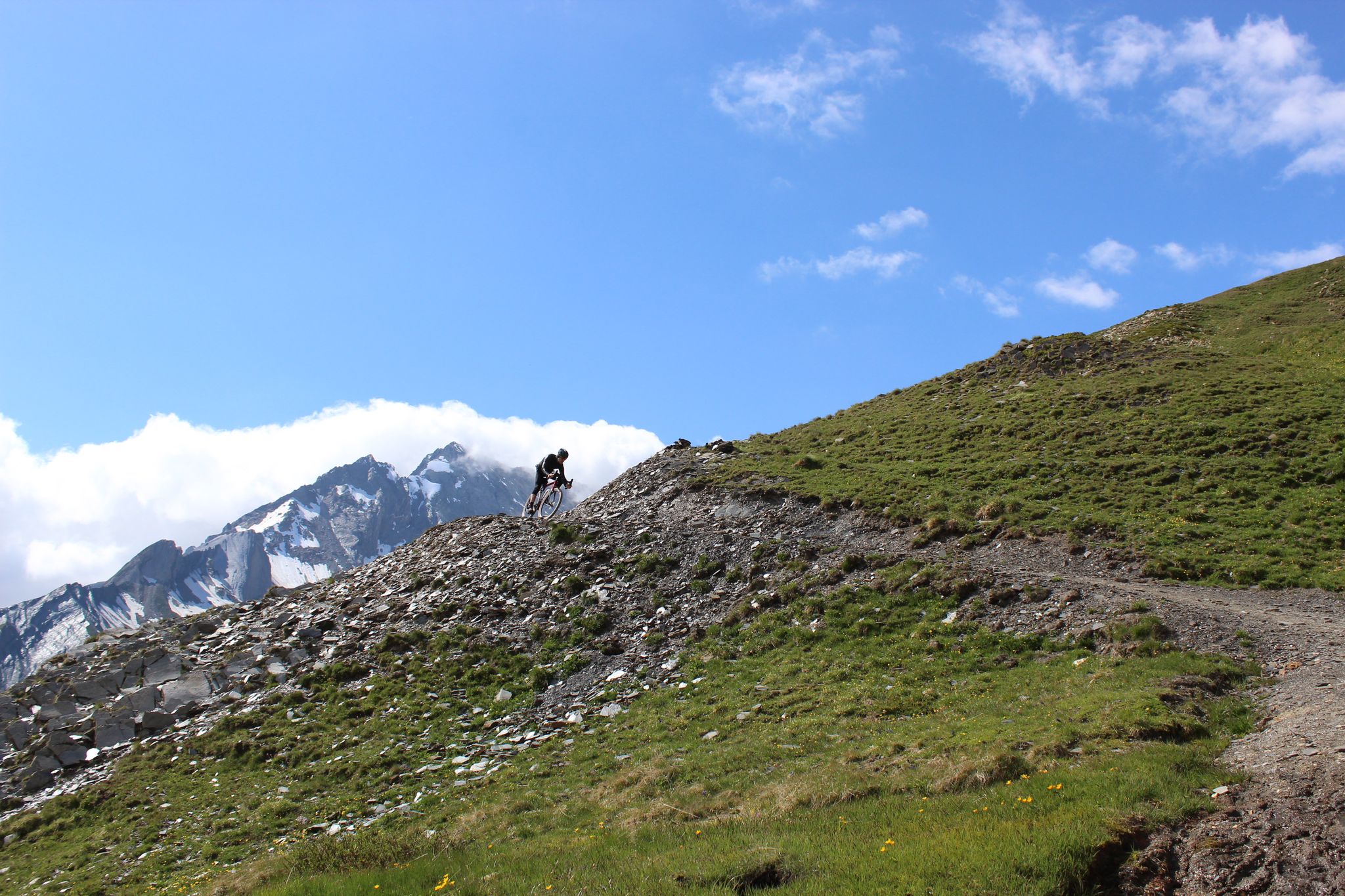
No traffic touring cycling routes around Sainte-Foy-Tarentaise traverse diverse Alpine landscapes within the Tarentaise Valley, part of the Vanoise National Park. The region features majestic peaks, including Mont Pourri, alongside larch forests and sunny mountain pastures. High-altitude trails and preserved natural environments offer varied terrain for touring cyclists. This area provides a range of routes, from challenging mountain passes to more accessible forest roads.
Best no traffic touring cycling routes around Sainte-Foy-Tarentaise
- The most popular no traffic touring cycling route…
Last updated: May 6, 2026
5.0
(2)
196
riders
36.4km
04:09
1,600m
1,600m
Hard bike ride. Very good fitness required. You may need to push your bike for some segments of this route.
5.0
(2)
118
riders
Hard bike ride. Very good fitness required. Mostly paved surfaces. Suitable for all skill levels.

Sign up for free
5.0
(1)
78
riders
18.0km
02:01
660m
660m
Hard bike ride. Very good fitness required. Mostly paved surfaces. Suitable for all skill levels.
44
riders
Hard bike ride. Very good fitness required. Mostly paved surfaces. Suitable for all skill levels.
5.0
(5)
317
riders
32.9km
02:23
750m
750m
Hard bike ride. Very good fitness required. Mostly paved surfaces. Suitable for all skill levels.
Get access to more routes and recommendations from other explorers.
Sign up for free
Already have an account?
Our route recommendations are based on thousands of hikes, rides, and runs completed by other people on komoot.
Start today with a free account
Your next adventure awaits.
Login or Signup


Other adventures around Sainte-Foy-Tarentaise

Tips from the Community

After a walk through the forest, the arrival at Arc 1600 is superb, with beautiful, open landscapes. It's up to you to choose between enjoying the resort's services or heading back up for another descent!
0
0
A beautiful thorny forest lies just above Arc 1600. By taking the Cachette or Mont-Blanc chairlifts, it is possible to cross it at full speed on a downhill mountain bike.
0
0

A great Aosta Valley classic; the climb itself isn't particularly difficult, but be careful not to underestimate the wind that often blows strongly from France, making the 12 km from La Thuile to the pass much more challenging than the steepness suggests. The landscape is beautiful and evocative: from the iconic eight hairpin bends that allow you to leave Pré-Saint-Didier behind, you enter the cool valley that leads to La Thuile. After passing the ski resort, you quickly gain altitude with long straights, then enter the forest and conclude the climb in a vast alpine meadow.
6
0

The Forte della Ridotta della Traversette is located at 2400 m in a dominant position on the French side of the Colle del Piccolo San Bernardo. A fort already existed in the seventeenth century when Savoy and Valle d'Aosta were united in the possessions of the House of Savoy. The transfer of the royal seat from Chambéry to Turin transformed what is now Haute-Savoie into a province of secondary importance and at the end of the century fortifications began to be built on the border of the territories of the Savoy, separating regions that until then had shared the same traditions, culture, religion and language. The current fort was built in 1891 on the ruins of the old fort destroyed during the French Revolution, taking advantage of its strategic position for the military surveillance of the national borders. Initially it was occupied only in the summer period and later throughout the year to train the troops in the difficult mountain conditions. In the 1930s, the fort was equipped with shooting ranges, radio equipment, and equipment for the troops and their supplies in response to the great defensive project, the Alpine Wall, desired by Mussolini. On June 10, 1940, Italy declared war on France and began a massive mobilization on the borders. On June 21, an air and ground attack kept the brave soldiers stationed at the fort, led by Lieutenant Desserteaux, busy for 4 days. The fort was occupied by Italian troops, then German ones, and liberated after fierce fighting in April 1945. Today, in ruins, it is located directly on the slopes of the Piccolo San Bernardo International ski area that connects the resorts of La Thuile in the Aosta Valley and La Rosière in Haute-Savoie.
0
0

Charming little village on the way up to Tignes or the Col de l'Iseran.
0
0

Don't hesitate to go to the Italian side: the coffee is much better.
2
0

Beautiful stature with view of the valley
0
0
Great view from the parking lot
0
0
Frequently Asked Questions
How many no-traffic touring cycling routes are available around Sainte-Foy-Tarentaise?
There are over 40 dedicated no-traffic touring cycling routes around Sainte-Foy-Tarentaise, offering a wide range of options for exploring the stunning Alpine landscapes.
What is the general difficulty level of no-traffic touring cycling routes in Sainte-Foy-Tarentaise?
While many routes in Sainte-Foy-Tarentaise are challenging, with 34 routes rated as difficult and 7 as moderate, there is also one easy route available. The region's Alpine terrain means significant elevation gains are common, but options exist for various fitness levels.
What do other touring cyclists enjoy most about cycling in Sainte-Foy-Tarentaise?
The komoot community highly rates the touring cycling experience in Sainte-Foy-Tarentaise, with an average score of 4.8 stars from 114 ratings. Cyclists frequently praise the breathtaking Alpine scenery, the quiet roads, and the diverse terrain ranging from larch forests to high-altitude passes.
Are there any family-friendly, traffic-free cycling options in Sainte-Foy-Tarentaise?
Yes, for a more relaxed experience, a relatively flat and family-friendly cycle path runs alongside the Isère river, connecting to the Plan d'eau in Aime. This offers a pleasant, traffic-free option suitable for families.
What kind of natural features can I expect to see along these quiet cycling routes?
You'll encounter diverse natural beauty, including majestic peaks like Mont Pourri, serene larch forests, sunny mountain pastures, and high-altitude lakes such as Lake Chevril. The region is also home to numerous streams and small pools, adding to its charm.
Are there any notable landmarks or attractions accessible from the no-traffic cycling routes?
Yes, the region is rich in attractions. You can explore authentic hamlets like the listed Le Monal, with its traditional stone and wood chalets. For those interested in challenging climbs, iconic mountain passes such as Col du Petit Saint Bernard and Col de l'Iseran are nearby. Additionally, you can discover stunning waterfalls like Rutor’s First Waterfall.
Can I find circular no-traffic touring cycling routes in the area?
Yes, many of the no-traffic touring cycling routes in Sainte-Foy-Tarentaise are designed as loops. For example, consider the challenging Fantastic forest road loop from Sainte-Foy-Tarentaise, which offers a great circular experience.
What is the best time of year for no-traffic touring cycling in Sainte-Foy-Tarentaise?
The best time for touring cycling in Sainte-Foy-Tarentaise is typically from late spring to early autumn (June to September). During these months, the mountain passes are generally clear of snow, and the weather is most favorable for cycling, allowing you to fully enjoy the high-altitude routes and stunning views.
Are there any specific routes that offer exceptional views of the Alpine landscape?
Many routes provide exceptional views. The Dutchies Switchbacks loop from Funiculaire 1 - Arcs 1600, for instance, offers panoramic vistas as you navigate its challenging ascents and descents through the Alpine terrain.
Are dogs allowed on the no-traffic touring cycling routes?
While the Vanoise National Park has regulations regarding dogs, specific rules for cycling routes vary. It's generally advisable to keep dogs on a leash in protected areas. For specific routes, especially those within the park boundaries, check local signage or park regulations for the most current information on dog access.
How can I access the starting points of these no-traffic cycling routes?
Many routes are accessible directly from Sainte-Foy-Tarentaise and surrounding hamlets. For routes starting further afield, such as the Fantastic forest road loop from Bourg-Saint-Maurice Railway Station, public transport options like trains to Bourg-Saint-Maurice can provide convenient access.
Are there any mountain refuges along the quiet cycling routes for longer excursions?
Yes, for those planning longer rides or multi-day tours, mountain refuges such as the Ruitor refuge and Refuge de l'Archeboc are available. These provide ideal stopping points amidst stunning scenery, though it's always recommended to check their opening times and availability in advance.
Most popular routes around Sainte-Foy-Tarentaise
Most popular attractions around Sainte-Foy-Tarentaise

Get inspired with the komoot mobile app


Explore more
Browse the best Cycling routes in other regions.
