The best traffic-free bike rides around Glaignes
3.5
(2)
20
riders
4
rides
Gravel biking around Glaignes offers a diverse landscape characterized by extensive forests and river valleys. The region, situated in the Oise department of Picardy, France, features a mix of wooded areas, undulating paths, and varied terrain. Altitudes range from 46m to 116m, providing both flatter sections and gentle ascents. This topography makes it suitable for no traffic gravel bike trails, allowing exploration of natural features like the Forêt de Compiègne and the Vallée de l'Automne.
Best no traffic gravel bike…
Last updated: May 6, 2026
3.5
(2)
10
riders
61.5km
04:58
450m
450m
Hard gravel ride. Very good fitness required. You may need to push your bike for some segments of this route.
3
riders
65.0km
05:15
630m
630m
Hard gravel ride. Very good fitness required. You may need to push your bike for some segments of this route.

Sign up for free
5
riders
44.8km
02:32
150m
150m
Moderate gravel ride. Good fitness required. Mostly paved surfaces. Suitable for all skill levels.
2
riders
32.9km
01:56
200m
200m
Moderate gravel ride. Good fitness required. Mostly paved surfaces. Suitable for all skill levels.
Our route recommendations are based on thousands of hikes, rides, and runs completed by other people on komoot.
Start today with a free account
Your next adventure awaits.
Login or Signup
Popular around Glaignes
Tips from the Community

In the heart of the Compiègne forest, the Armistice Glade marks the place where the armistice was signed on November 11, 1918, and then that of June 22, 1940. The site today includes the memorial with the “Armistice Wagon” (recreated car), the statue of Marshal Foch and the Alsace-Lorraine monument.
0
0


The square itself houses a statue of Joan of Arc, a tribute to the city's historical connection to this iconic figure. The Town Hall, with its rich history and stunning architecture, continues to captivate visitors, offering a glimpse into the past while remaining a vibrant part of Compiègne's present.
2
0
The architecture of the town hall is a true feast for the eyes. The central structure is dominated by a tall bell tower, flanked by two turrets connected by a decorative railing. This imposing façade, 47 meters high and 24 meters wide, is decorated with striking Gothic elements such as pinnacles and basket arches. The large niche now houses a high relief depicting the equestrian statue of Louis XII. It is an original creation from 1869 by the sculptor Henri-Alfred Jacquemart in the realistic style so prevalent at the time. However, contrary to the usual appearance of equestrian statues during the reign of Louis XII, Henri-Alfred Jacquemart chose not to build a horse walking "à l'amble," that is, with both straight legs raised simultaneously. On October 12, 1530, a clock was placed on the summit of the bell tower. From that time on, every quarter of an hour, she animated three wooden jaquemarts with bell hammers. The Compiègneis quickly gave them three nicknames corresponding to the enemies of the time: Langlois for the English, Flandrin for the Flemish, and Lansquenet for the Germans. Even today, they chant the life of the city by "punching the time," that is, by striking their hammer to strike the hours.
2
0

A village of character located in the heart of the forest, which offers a pleasant and exotic stopover on several tours crossing the Compiègne forest.
0
0

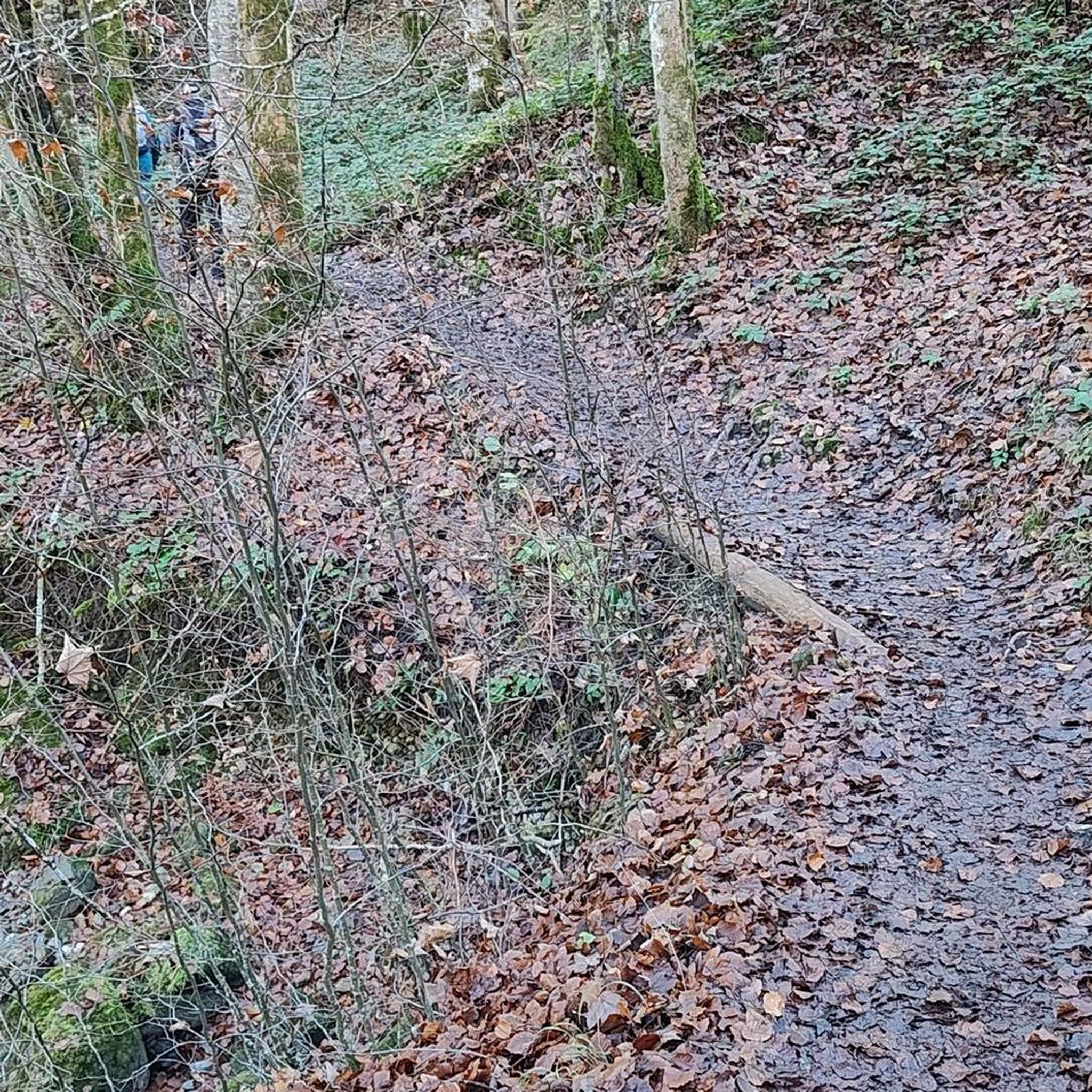
Gravel course, excellent condition required
0
0

Anecdote: A bitter historical turning point occurred in 1940, when Adolf Hitler chose the exact same spot to sign the French surrender to Nazi Germany — in the same train car. He literally reenacted the 1918 scene, but with the roles reversed. Shortly afterwards, he had the car shipped to Berlin as a trophy. The site was partly destroyed, but was redeveloped as a memorial site after the war.
6
0
Frequently Asked Questions
How many no-traffic gravel bike trails are available around Glaignes?
There are several dedicated no-traffic gravel bike trails around Glaignes, offering a variety of experiences. Our guide features 4 carefully selected routes, ranging from moderate to difficult, ensuring options for different skill levels.
What makes Glaignes a good destination for no-traffic gravel biking?
Glaignes is nestled amidst extensive forests like the Forêt de Compiègne and Forêt de Retz, and features the picturesque Vallée de l'Automne. This provides a rich network of forest roads and paths, ideal for gravel biking away from traffic. The varied topography, from plains to valleys, ensures diverse and engaging rides.
What kind of terrain can I expect on gravel bike trails near Glaignes?
You can expect a mix of terrain, from well-maintained forest roads and paths to more natural surfaces that might include heath, heather, and sand, especially in managed natural sites. The region's topography includes both flatter sections in the western plains and undulating paths within the valleys, offering a dynamic gravel biking experience.
Are there options for both beginner and experienced gravel bikers?
Yes, the routes around Glaignes cater to different experience levels. While some routes are classified as moderate, such as the Compiègne Town Hall – On the banks of the Oise loop from Saint-Sauveur, others like Crépy-en-Valois to the Ourcq Canal and the Forest of Retz are more difficult, providing longer distances and more elevation gain for seasoned riders.
Are there any historical sites or landmarks I can visit along these routes?
Absolutely! The region is rich in history. For instance, the Champlieu Roman Ruins – Douye Castle loop from Béthisy-Saint-Pierre takes you past the fascinating Gallo-Roman ruins of Champlieu, which include a temple, theater, and thermal baths. You can also discover the nearby Douye Castle and the Gallo-Roman Church of Champlieu.
Are there any routes that offer scenic viewpoints or pass through charming villages?
Many routes offer scenic beauty, particularly those traversing the Vallée de l'Automne, known for its 'green setting' and river. The region's authentic villages add to the charm, providing picturesque stops. The Retz Forest and the Automne Valley route, for example, combines extensive forest sections with the beauty of the valley.
Can I find circular gravel bike routes around Glaignes?
Yes, several routes are designed as loops, allowing you to start and end at the same point. The Compiègne Town Hall – On the banks of the Oise loop from Saint-Sauveur and the Champlieu Roman Ruins – Douye Castle loop from Béthisy-Saint-Pierre are excellent examples of circular routes that minimize logistical challenges.
What is the best time of year to go gravel biking around Glaignes?
The region is beautiful throughout the year, but spring and autumn generally offer the most pleasant conditions for gravel biking. The forests are vibrant with color, and temperatures are mild. Summer can also be great, especially for shaded forest trails, while winter rides are possible but may require more preparation for potentially colder or wetter conditions.
What do other komoot users say about gravel biking in Glaignes?
The komoot community rates the gravel biking experience around Glaignes highly, with an average score of 3.5 stars. Reviewers often praise the tranquility of the routes, the beauty of the forests, and the opportunity to explore historical sites away from busy roads.
Are there any family-friendly no-traffic gravel bike routes in the area?
While the routes in this guide are generally moderate to difficult, the extensive network of forest roads in areas like the Forêt de Compiègne or Forêt de Retz often includes flatter, less challenging sections that can be adapted for family outings. Look for shorter, less elevated loops within these forests for a more family-friendly experience.
Can I bring my dog on these gravel bike trails?
Many forest trails and paths in the region are dog-friendly, but it's always advisable to check local regulations for specific areas, especially within nature reserves or private estates. Generally, dogs are welcome on a leash, allowing you to enjoy the traffic-free routes with your canine companion.
Most popular attractions around Glaignes

Get inspired with the komoot mobile app


Explore more
Browse the best Gravel rides in other regions.
