The best traffic-free bike rides around Noyon
5.0
(1)
12
riders
2
rides
Gravel biking around Noyon offers access to varied terrain across the Oise department in northern France. The region is characterized by a mix of dense forests, such as the Forêt de Laigue and Forêt de Compiègne, alongside agricultural fields and picturesque river valleys formed by the Oise and Verse rivers. Many traffic-free gravel bike trails utilize separated bike paths, forest tracks, and canal towpaths, ensuring routes away from main roads and motor traffic. This landscape provides diverse options for cyclists…
Last updated: May 7, 2026
1
riders
67.3km
05:22
420m
430m
Hard gravel ride. Very good fitness required. You may need to push your bike for some segments of this route.
3
riders
53.0km
03:15
360m
360m
Moderate gravel ride. Good fitness required. Mostly paved surfaces. Suitable for all skill levels.

Sign up for free
4
riders
37.8km
02:26
400m
390m
Moderate gravel ride. Good fitness required. Mostly paved surfaces. Suitable for all skill levels.
Our route recommendations are based on thousands of hikes, rides, and runs completed by other people on komoot.
Start today with a free account
Your next adventure awaits.
Login or Signup
Other adventures around Noyon

Tips from the Community

In the heart of the Compiègne forest, the Armistice Glade marks the place where the armistice was signed on November 11, 1918, and then that of June 22, 1940. The site today includes the memorial with the “Armistice Wagon” (recreated car), the statue of Marshal Foch and the Alsace-Lorraine monument.
0
0
Located along the canal in Longueil-Annel, the Cité des Bateliers (Watermen's City) showcases the history of boatmen and local river life. The museum, housed in a former boatman's house and barges, showcases the daily lives of families who lived by the rhythm of navigation.
0
0


This impressive cemetery was built in 1920-1921 on a site that was heavily contested during the First World War. It contains the remains of 1,258 French soldiers, 547 of whom are buried in two ossuaries. One French soldier from the Second World War is also buried here. Adjacent is a German military cemetery with the remains of 1,095 soldiers, 388 of whom are buried in collective graves, together with four British and two French soldiers. The necropolis is located in a region where the German advance towards Paris passed through in 1914, and where fierce fighting took place in 1918 during the Battle of Matz. Today it is a serene place of remembrance and reconciliation, in the middle of a landscape that was once the scene of devastating battles.
4
0
Each cross indicates the function of the warrior.
4
0
The Lassigny military cemetery is an impressive and sober memorial site where 1,777 German soldiers from the First World War are buried. The cemetery was created in 1919 by the French military authorities, initially as a Franco-German communal cemetery. Its origins lie in a mass grave from the summer of 1918, in which 55 unknown French soldiers were buried. In 1922, the French bodies were transferred to another cemetery, after which the site was converted into a German military cemetery. The fallen came from more than 27 municipalities in the region, up to 18 km away. In 1977, the cemetery took on its current form, with metal crosses bearing the names and dates of the fallen. A monolithic memorial marks the entrance to the site.
4
0
The Église Saint-Jean-Baptiste in Plessis-de-Roye is an exceptional example of reconstruction architecture with a deeply symbolic meaning. Originally built in the first half of the 15th century, the church was almost completely destroyed during the First World War. It was rebuilt between 1930 and 1932 by the architect André Collin, who deliberately chose to leave the nave unfinished. This gave the church the character of a small cloister — a powerful symbol of loss and remembrance of the devastation of war.
4
0

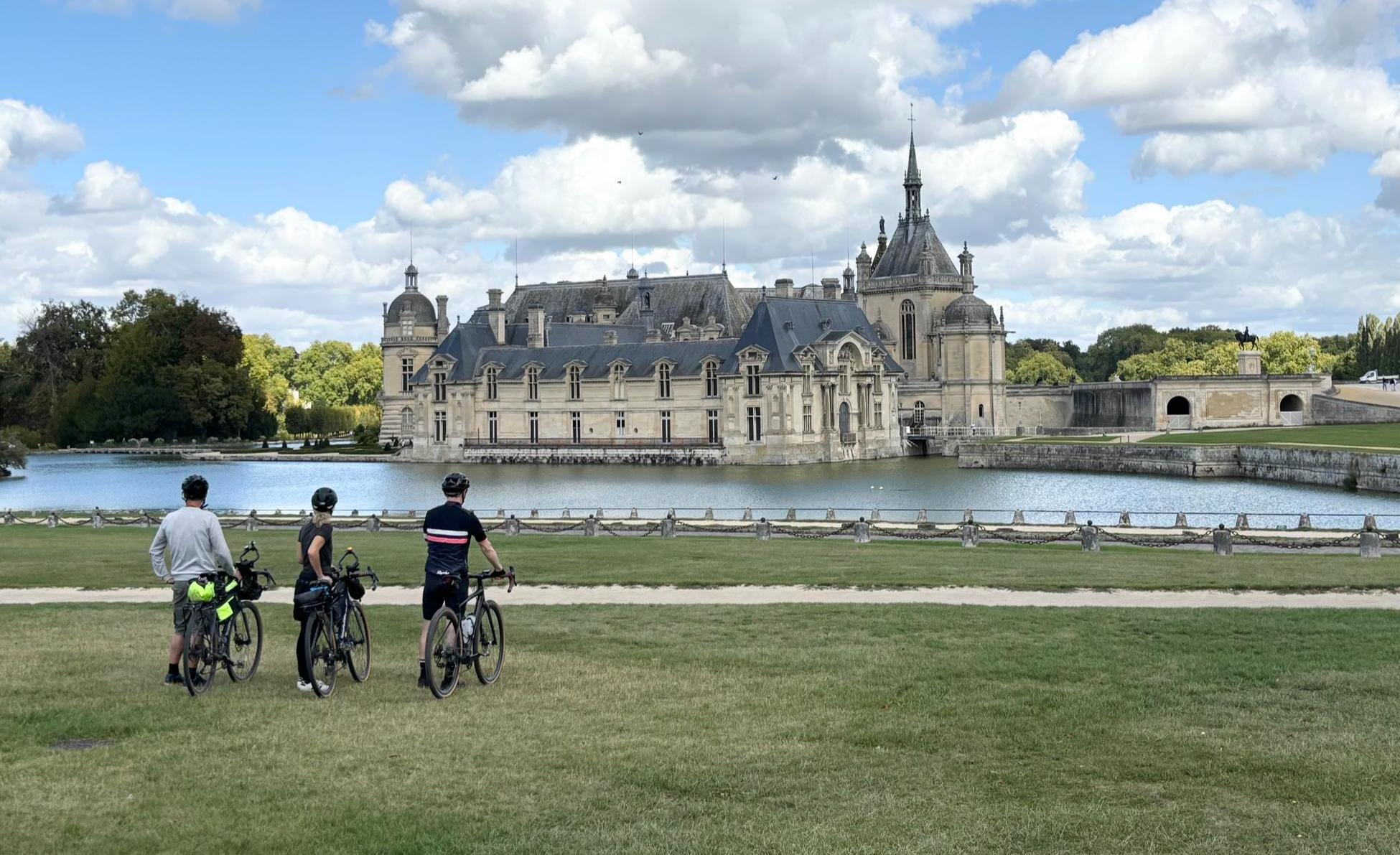
Perfect for a picnic in the castle grounds!
0
0
Frequently Asked Questions
How many traffic-free gravel bike trails are available around Noyon?
Komoot lists 3 dedicated traffic-free gravel bike trails directly around Noyon. However, the broader Oise region, including nearby forests like Compiègne and Laigue, offers an extensive network of car-free paths, forest tracks, and riverside routes suitable for gravel biking, providing many more options to explore.
What types of surfaces can I expect on traffic-free gravel bike trails near Noyon?
The traffic-free routes around Noyon feature a mix of surfaces. You'll encounter well-maintained gravel paths, forest tracks, and sometimes paved sections on dedicated bike paths or quiet country lanes. These routes are specifically chosen to avoid main roads and motor traffic, ensuring a peaceful ride through natural landscapes and agricultural fields.
Are there any family-friendly traffic-free gravel bike routes suitable for children or less confident riders?
Yes, the emphasis on traffic-free routes makes many trails around Noyon suitable for families and less confident riders. These paths often follow canal towpaths, forest tracks, or separated bike lanes, keeping you away from motor vehicles. For example, sections of the routes through the Forêt de Laigue or along the Oise River are generally flat and safe for all ages.
What historical landmarks or natural attractions can I see along these traffic-free gravel trails?
Many traffic-free routes in the Noyon area offer glimpses of historical and natural beauty. You might pass by the majestic Notre-Dame de Noyon Cathedral, or the ruins of Notre-Dame d'Ourscamp Abbey. The routes often traverse picturesque forests like the Forêt de Compiègne, offering natural beauty and fresh air. Some trails also follow the Oise and Verse rivers, providing scenic riverside views.
What is the best season for gravel biking on traffic-free trails in Noyon?
Spring and autumn are generally the best seasons for gravel biking around Noyon. The weather is typically mild, and the natural landscapes, especially the forests, are vibrant with spring blossoms or autumn colors. Summer can also be pleasant, particularly on shaded forest tracks, but remember to stay hydrated. Winter rides are possible, but some unpaved sections might be muddy or slippery.
Are there any circular traffic-free gravel bike routes around Noyon?
Yes, several routes are designed as loops to bring you back to your starting point without retracing your steps. For instance, the route "Le lavoir – The Wash House loop from Lassigny" offers a circular experience through the countryside, minimizing traffic exposure. Many forest tracks also lend themselves to creating custom circular routes.
Can I access these traffic-free gravel trails using public transport?
Yes, some routes in the Oise region are accessible from train stations, making car-free exploration easier. Noyon itself has a train station, and routes like "Noyon to Compiègne – Tour de l'Oise gravel" can be started directly from the town, allowing for public transport connections at either end. It's advisable to check train schedules and bike carriage policies beforehand.
What do other gravel bikers enjoy most about the traffic-free trails in Noyon?
The komoot community highly rates the gravel biking experience around Noyon, with an average score of 5.0 stars. Reviewers often praise the tranquility of the routes, the beautiful forested sections, and the ability to explore the region's history and nature away from busy roads. The varied terrain and picturesque river valleys are also frequently highlighted.
Are there options to connect shorter traffic-free sections into longer gravel bike routes?
Absolutely. The network of forest tracks, riverside paths, and dedicated bike lanes in the Oise region allows for combining shorter traffic-free segments into extended gravel adventures. For example, you can link sections of the Oise River path with trails through the Forêt de Compiègne or Forêt de Laigue to create a longer, immersive ride. Planning your route on komoot can help you discover these connections.
Is there parking available at the trailheads for these traffic-free gravel routes?
Parking is generally available in and around Noyon, as well as in the smaller villages and near popular forest entrances that serve as starting points for these trails. For instance, if you're starting a route like "Footbridge over the Aisne – Vieux-Moulin loop from Ribécourt", you'll typically find parking in the village of Ribécourt-Dreslincourt. Always check local signage for specific parking regulations.
Are dogs allowed on the traffic-free gravel bike trails around Noyon?
Yes, dogs are generally welcome on most public paths and forest tracks around Noyon, provided they are kept under control, preferably on a leash, especially in areas with wildlife or near agricultural land. Always ensure you clean up after your pet to maintain the natural environment for everyone.
Most popular attractions around Noyon

Get inspired with the komoot mobile app


Explore more
Browse the best Gravel rides in other regions.
