The best traffic-free bike rides around Le Boullay-Thierry
4.5
(51)
567
riders
75
rides
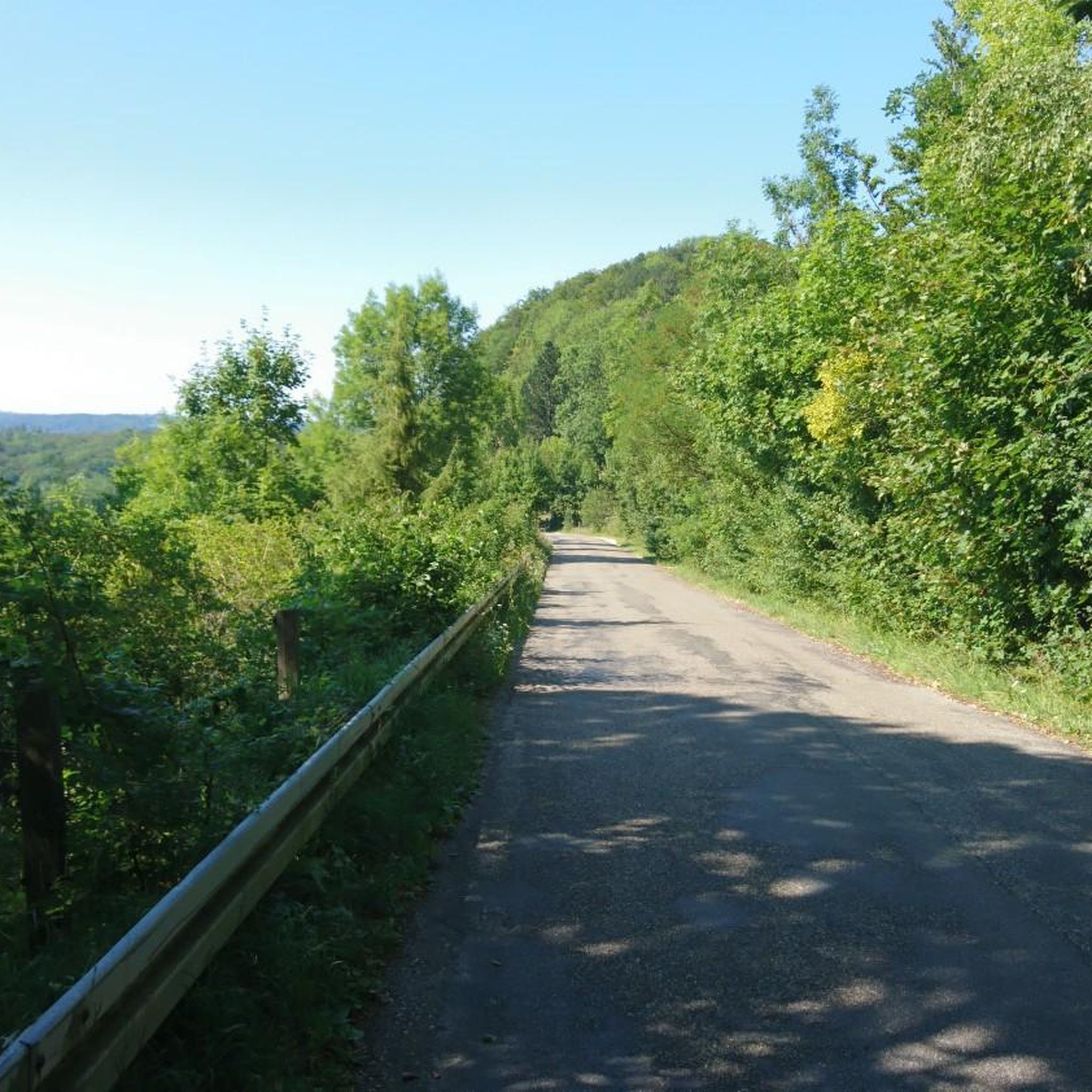
No traffic road cycling routes around Le Boullay-Thierry traverse a rural commune in the Eure-et-Loir department, characterized by tranquil landscapes and idyllic countryside. The region features well-paved surfaces suitable for road cycling, offering views of the Eure Valley and surrounding natural areas. This area is part of the Centre-Val de Loire region, known for its diverse environments including forests and valleys.
Best no traffic road cycling routes around Le Boullay-Thierry
- The most popular no traffic road cycling route is Château…
Last updated: May 7, 2026
12
riders
74.5km
02:57
320m
320m
Moderate road ride. Good fitness required. Mostly well-paved surfaces and easy to ride.
8
riders
59.1km
02:18
210m
210m
Moderate road ride. Good fitness required. Mostly well-paved surfaces and easy to ride.

Sign up for free
3.0
(3)
7
riders
49.9km
01:57
190m
190m
Easy road ride. Great for any fitness level. Mostly well-paved surfaces and easy to ride.
9
riders
38.1km
01:32
180m
180m
Easy road ride. Great for any fitness level. Mostly well-paved surfaces and easy to ride.
6
riders
41.1km
01:38
180m
180m
Easy road ride. Great for any fitness level. Mostly well-paved surfaces and easy to ride.
Get access to more routes and recommendations from other explorers.
Sign up for free
Already have an account?
Our route recommendations are based on thousands of hikes, rides, and runs completed by other people on komoot.
Start today with a free account
Your next adventure awaits.
Login or Signup
Popular around Le Boullay-Thierry
Tips from the Community


The Moulin de Mormoulins is a watermill located on the Eure River in the hamlet of Mormoulins. This mill dates back to the 18th and 19th centuries and is a listed historical monument. You can admire the old stone building, the wooden wheel, and the canal that diverts water from the river as you pass in front of the mill. The mill is surrounded by green fields and trees, creating a peaceful and relaxing atmosphere.
0
0

Very beautiful pond
0
0

Mentioned in 1159 as a possession of the chapter of Chartres, the oldest parts of the church of Saint-Léger, the nave and western façade, must date back to the 11th century. The nave, 15 m long and 7 m wide, is built from small rubble stones embedded in mortar. Only the corner quoins of the façade and the semicircular arch of the entrance door are made of dressed stone. In 1514, a larger choir (10 m X 10 m) finished by a flat wall, was added to the east. Some of its pointed arched bays have retained their beautiful tracery. The entire choir and nave are covered by a beautiful framework in the shape of an inverted hull. A significant decoration, created in the 18th century, woodwork, stalls, work bench, glory arch, lectern, and communion railing have been fortunately preserved. Traces of medieval wall paintings and a coat of arms were spotted on the walls, as well as ancient graffiti on the exterior. A 12th-century stone baptismal font and a 15th-century stone statue of Saint Léger are listed as Historic Monuments. A slate bell tower, topped with a slate spire, rises above the slightly recessed gable of the western façade. The Sauvegarde de l'Art Français (French Art Protection Agency) granted aid of 100,000 francs in 1992 and then 40,000 francs in 1993 for essential work on the framework and roof.
0
0

large bird reserve and nautical activities
0
0
Church of Saint Peter and Saint Paul The construction of the church is said to have been initiated by Don Roger, abbot of the very powerful Benedictine abbey of Coulombs from 1115 to 1174. At that time, the abbey stood near Nogent-le-Roi, a former fortified town located twelve kilometers away on the banks of the Eure. Spread over more than 80 parishes, it had a considerable influence in the region until the Revolution, whether from a religious, economic or social point of view. The Romanesque style that it had adopted since its original construction was reworked in the 16th century by the opening of tall Gothic windows around the choir. Finally, in the following century, during the Wars of Religion, the church suffered serious damage. When peace returned, the entrance porch was finally rebuilt in the elegant Renaissance style. In 1950, a fire destroyed the church and all its furniture; it was restored at the end of the 20th century.
0
0
The construction could date back to the beginning of the 12th century. The nave ends with a chancel with a four-sided apse. A bell tower outside the work is located against the west wall. A seigneurial chapel was built to the north of the chancel. The study of the framework has made it possible to determine several construction phases: 1117-1190, 1274, 1487-1520. The interior walls retain a painted historiated decoration on the back of the west portal, probably representing a dance of death, which could date back to the 1500s. The large funeral chapel built between 1577 and 1585 probably goes back to the architect Métezeau. Its decoration is representative of the end of Mannerism and the Henri IV style. The stained glass windows were restored by the master glassmaker Raphaël Lardeur and were installed in 1947. Lardeur also created the mosaic Stations of the Cross.
0
0
The whole construction is homogeneous: in Vernon limestone, it is punctuated by buttresses using blocks of sandstone and grison in the lower part. The church is largely lit by the four bays with flamboyant tracery that have been pierced to the north and south. The building is covered with a rafter frame forming entirely paneled trusses, whose stencil decoration was taken up in the 19th century by painting companies from Dreux. But it is probably the countryside of the early 16th century that attracts attention. Indeed, on the west facade has been grafted a Renaissance portal, in soft limestone, consisting of two pilasters decorated with candelabras with capitals supporting an entablature, above the arched portal, finely chiseled with a floral scroll. The whole is surmounted by a niche with a canopy framed by two fish and two balusters, and crowned by a motif similar to a dormer window. This remarkable element from the first decade of the 16th century reflects the first introductions of the Renaissance style in religious architecture. We also think of the portal of the church of Pierres sur la vallée de l'Eure. The interior of the church reflects through its furnishings the large orders made from 1759 to renew the decor of rural parish churches. We note in particular the large monumental altarpiece of the choir, but also the work bench and especially the pulpit, in wood and plaster, installed in 1759, by implanting an access staircase in the rear wall. This set of furnishings accompanies the painted decors of the 19th century, whether it be the false-appliance of the walls or the stenciled decoration of the paneled vault. The work campaign that has just ended required two functional phases: the first was devoted to sanitation work, roofing of the nave and bell tower, restoration of the sculptures (west portal), and stained glass windows; the second focused on the exterior coatings, the pillars of the bell tower belfry, lighting, cleaning of the painted vault and the conservation treatment of the furniture. This major project led by chief architect Régis Martin was supported by the Sauvegarde de l’Art français with a donation of €6,000 in 2017.
0
0
Frequently Asked Questions
How many no traffic road cycling routes are available around Le Boullay-Thierry?
There are over 70 dedicated no traffic road cycling routes around Le Boullay-Thierry. These routes offer a variety of distances and elevations, ensuring options for different fitness levels.
What do other road cyclists enjoy about the no traffic routes in Le Boullay-Thierry?
The komoot community highly rates the no traffic road cycling routes around Le Boullay-Thierry, with an average score of 4.5 out of 5 stars from 47 ratings. Cyclists often praise the tranquil landscapes, well-paved surfaces, and the opportunity to explore the peaceful countryside away from vehicle traffic.
Are there easy no traffic road cycling routes suitable for beginners or families?
Yes, there are 36 easy no traffic road cycling routes around Le Boullay-Thierry. These routes are generally flatter and shorter, making them ideal for beginners or families looking for a relaxed ride. For example, the Half-timbered house – Lavoir de Soulaires loop from Nogent-le-Roi is an easy option.
What kind of elevation can I expect on these no traffic routes?
The no traffic road cycling routes around Le Boullay-Thierry generally feature moderate elevation gains, reflecting the rolling countryside of the Eure-et-Loir department. For instance, the Château de Mormoulins – Avre Aqueduct loop from Nogent-le-Roi has an elevation gain of approximately 320 meters over its 74.5 km distance.
What scenic viewpoints or natural features can I discover on these routes?
The region offers idyllic countryside views, especially over the Eure Valley. You can also experience the diverse environments of the wider Eure-et-Loir department, which includes regional natural parks with forests and ponds. The Vallée de Vaubrun, known for its abundant butterflies and birds, provides a calm and picturesque setting.
Are there any historical or cultural attractions along the no traffic road cycling routes?
Yes, several routes pass by notable historical sites. You might encounter the impressive Château de Mormoulins or the charming Half-timbered house. The Château de Mormoulins – Half-timbered house loop from Charpont is a great route to explore these attractions.
What is the best time of year for no traffic road cycling in Le Boullay-Thierry?
Spring and autumn are generally considered the best seasons for road cycling in Le Boullay-Thierry. The weather is typically mild, and the natural landscapes are particularly beautiful, with blooming flowers in spring and vibrant foliage in autumn. The altered oceanic climate means pleasant conditions for most of the year.
Are there circular no traffic road cycling routes available?
Yes, many of the no traffic road cycling routes around Le Boullay-Thierry are circular, allowing you to start and end your ride at the same point. An example is the Cocherelle Dolmen – Avre Aqueduct loop from Villemeux-sur-Eure, which offers a varied circular experience.
Where can I find parking for these no traffic road cycling routes?
As Le Boullay-Thierry is a rural commune, parking is generally available in or near the starting points of many routes, often in village centers or designated public parking areas. It's advisable to check the specific route details on komoot for recommended parking spots near the start of your chosen tour.
Are there any routes that feature historical monuments like dolmens or aqueducts?
Yes, some routes incorporate historical elements. For instance, the Avre Aqueduct – Cocherelle Dolmen loop from Villemeux-sur-Eure allows you to cycle past both the ancient Cocherelle Dolmen and the impressive Avre Aqueduct, offering a blend of natural beauty and historical interest.
Most popular attractions around Le Boullay-Thierry

Get inspired with the komoot mobile app


Explore more
Browse the best Road cycling routes in other regions.
