The best traffic-free bike rides around Triac-Lautrait
4.6
(29)
749
riders
62
rides
No traffic road cycling routes around Triac-Lautrait traverse the Charente department in France, characterized by its rolling vineyards and the serene Charente River valley. The terrain generally features gentle elevations, making it suitable for varied cycling experiences. Routes often follow the river's course and pass through charming villages, offering a blend of natural scenery and local culture. The area is integrated into established cycling networks, providing extensive paths for exploration.
Best no traffic road cycling routes around Triac-Lautrait
- The most…
Last updated: October 21, 2026
5.0
(1)
12
riders
41.8km
01:52
300m
300m
Easy 26.0-mile road cycling loop through the Charente countryside, featuring riverside views, vineyards, and historic sites like Château de
5.0
(1)
9
riders
38.9km
01:44
300m
300m
Easy road ride. Mostly well-paved surfaces and easy to ride.

5.0
(1)
14
riders
25.9km
01:06
80m
80m
Easy road ride. Mostly well-paved surfaces and easy to ride.
5.0
(1)
10
riders
Moderate road ride. Good fitness required. Mostly well-paved surfaces and easy to ride.
3
riders
49.4km
01:59
200m
200m
Easy road ride. Mostly well-paved surfaces and easy to ride.
Get access to more routes and recommendations from other explorers.
Already have an account?
Our route recommendations are based on thousands of hikes, rides, and runs completed by other people on komoot.
Start today with a free account
Your next adventure awaits.
Popular around Triac-Lautrait

Tips from the Community


HISTORY OF THE HOUSE OF HINE In 1791, Thomas Hine (1775-1822), then aged 16, left his native land on the south coast of England to go to France… in the middle of the French Revolution. He went to Jarnac, Charente, where he was hired as a clerk in the Ranson et Delamain trading house, which produced his father’s favourite cognac. James Delamain (1738-1800), a Huguenot who had emigrated from Ireland, founded the trading house in 1763 with his father-in-law Jean-Isaac Ranson. On 3 October 1797 (13 Brumaire Year VI), Thomas Hine married Françoise Élisabeth Delamain, daughter of James Delamain and Marie Ranson. In 1817, the Ranson et Delamain house was liquidated, the heirs having been unable to agree on the succession. The eponymous son-in-law founded Thomas Hine & Co, and his cousins Paul Roullet and Henri Delamain (James' grandson) founded the Maison Roullet et Delamain seven years later, which would become Delamain et Cie. The links between the two Protestant Jarnac families remained close, and Thomas Hine's great-granddaughter, Adrienne Hine (1850-1922) married Philippe Delamain (1847-1902) - they had sons Jacques and Robert Delamain. Today, as in Thomas Hine's time, the Hine establishments line the banks of the Charente in Jarnac. The logo is inspired by Hine's speaking arms, hind meaning doe in Old English. He is lying down, his head turned backwards, symbolically looking towards England2. In 1962, Hine was granted the Royal Warrant of Her Majesty Queen Elizabeth II, and became the official supplier of cognac to the Court of England. In 1987, the company was bought by Moët Hennessy. In 2003, it became the property of the CL Financial group, which emerged from the Angostura group. The House was bought in 2013 by the Edv company. TYPOLOGY OF HINE EAUX DE VIE The House of HINE is located on the banks of the Charente, in the heart of the Cognac region. In the cellars, which ensure the protection of the precious vintages under seal, little has changed in more than 260 years. From the neighboring quays once began the journey of HINE cognacs around the world. This house is one of the oldest in Jarnac. Cognacs exclusively from the Grande and Petite Champagne vintages, a distillation with the lees, and an aging in fine grains with a light to moderate heating. Here, every manufacturing detail will be revealed to you. > To find out more: - https://hine.com/fr - Address: 16 quai Orangerie 16200 Jarnac - 05 45 35 59 59 - Visits, Tasting and Purchases possible - Opening periods: From 01/04 to 31/12 Monday, Tuesday, Wednesday, Thursday and Friday from 9 a.m. to 5:30 p.m. Excluding public holidays. Full price: from €20. Free for children under 18. (Subject to change)
0
0
1656 - Birth of the BRILLET House The Brillet House is located in Graves-Saint-Amant, in a place called Les Aireaux, in an enchanting setting, on the edge of the bucolic Charente. The story begins in 1656 with the birth of Guy Brillet, founding father of the wine estate in the very heart of the Cognac region. 1850 - Creation of the Négoce Vivien Brillet, 7th generation, inaugurates the trading house in 1850, creating a distillery and cellars. This is the beginning of the growth of the Brillet House that Raymond and his son Jean will develop at the turn of the 1920s, creating their own brand of Cognac, in Petite and Grande Champagne (the first two Cognac vintages) and Pineau des Charentes. Thus, 10 generations of the Brillet family succeed one another, passing on and passionately keeping the family heritage alive. 1985 - Creation of a Cognac and Pear liqueur Belle de Brillet It was in 1985 that Jean-Louis Brillet created Belle de Brillet, whose name pays homage to his "Belle", his wife Isabelle. Together, they worked passionately to promote Belle de Brillet, a unique liqueur combining Pear and Cognac with its distinctive pear-shaped bottle. Very quickly, it established itself as the flagship of the House. 2020 - Acquisition of Maison Brillet by the Rémy-Cointreau Group, which also cultivates 50 hectares of vines in Grande Champagne and Petite Champagne. Its Cognac comes from a single vineyard, certified HVE3, planted with the traditional Ugni Blanc grape variety. It is located in an atypical terroir of Fins Bois, on hillsides overlooking the Gironde estuary, and benefiting from the temperate influence of the Atlantic Ocean. These eaux-de-vie are the result of a double distillation without lees in a traditional Charente still, and are aged partly in new oak barrels. They have round, fruity and floral notes, ideal for a harmonious marriage with pear eaux-de-vie. > For more information: https://belledebrillet.com/ > Address: “Les Aireaux” 22 route de Graves 16120 Graves-St-Amant. > Visit, Tasting and Purchases possible: Opening Hours: Monday - Saturday: 9:30 a.m. - 6:30 p.m. Private & professional contact visit: contact@brillet.fr / +336 76 01 10 10
0
0
The Giraud d'Anqueville, lords of Bois-Charente, built the castle in the 16th century. The main building has a 16th century tower and extensions dating from the 19th century. In 1680, the castle passed through marriage to François Goulard, lord of La Faye, and it became the property of Jean Thioulet, gentleman of the king, at the beginning of the 18th century. Bois-Charente belonged in 1900, at the beginning of the 20th century, to Jean Fougerat known as Élie, a wealthy owner and benefactor for the development of the Cognac vineyard. The Charente pharmacist and winegrower Jean Fougerat (1863-1932) made a fortune by exploiting several pharmaceutical specialties, in particular the famous Rami syrup to treat the bronchi. This bachelor amassed a "considerable fortune", part of his income came from the exploitation of large vineyards that he had acquired around Graves-Saint-amant, his native land. Indeed, after the phylloxera, in 1897, he replanted 350 hectares of vines on his land acquired in the communes of Graves (logis de Bois Charente), Champmillon (domaine de la Chapelle), Saint-Preuil, in 1897 and Lignières-Sonneville between 1898 and 1901. In 1906, he harvested 22,000 hl of wine and produced 3,000 hl of brandy. He developed the logis de Bois Charente and enlarged its park. He planted more than 500 different species there. He set up a wine station where, with his colleagues, he prepared future plantations and improved the distillation processes. In the absence of immediate outlets, he distilled and aged the eau-de-vie and built numerous ageing cellars in Champmillon, Saint-Preuil and Bourg-Charente. When he died, Fougerat donated his estate and his Bois-Charente manor to the city of Angoulême, the universal legatee. She set up an "Institut de la viticulture charentaise" there (soon renamed the "Bureau interprofessionnel du cognac" and repatriated to Cognac in the 1980s). The Manor was active until the early 1980s, then between 2003 and 2016 it became an educational center for young people in judicial protection. The educational support was based on a high-end application restaurant, with the preparation of CAP and BEP certificates as a key. In his will, Jean Fougerat also had an imposing monument erected in Bois-Charente to the glory of Charente viticulture and cognac. Created by the sculptors R. Lamour de dieu and Émile Peyronnet, the work represents "six figures engaged in viticultural work, in bronze bas-relief; a distillery is engraved in marble". Jean Fougerat gave his name to a street in Angoulême and to his foundation, based in Graves-Saint-Amant. The latter supported the Institute of Viticultural Research in 1936, then currently supports the educational center with the CCAS.
0
0

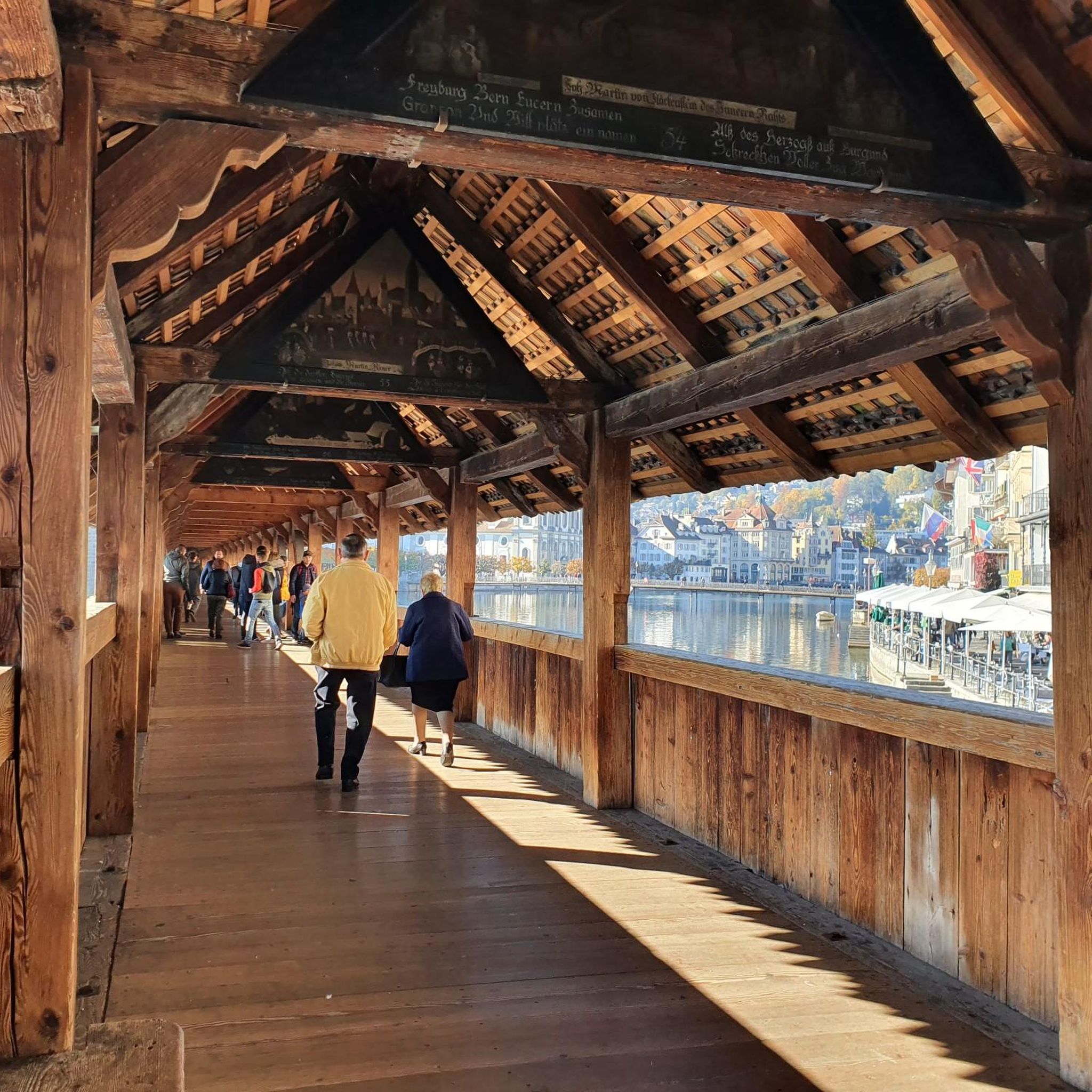
Great views in both directions from the bridge footpaths
0
0
Lovely views across Cognac of the surrounding buildings and river
0
0

The Charente in this sector is lined with many castles, the area is rich thanks to the production of Cognac and Pineau.
0
0
Frequently Asked Questions
How many no-traffic road cycling routes are available around Triac-Lautrait?
There are over 60 no-traffic road cycling routes around Triac-Lautrait, offering a wide variety of options for cyclists. These routes are designed to keep you away from busy roads, allowing for a more peaceful and enjoyable ride through the Charente landscape.
What is the best time of year for no-traffic road cycling in Triac-Lautrait?
The Charente region generally offers pleasant cycling conditions from spring through autumn. Spring brings blooming vineyards, while summer provides warm, sunny days perfect for exploring. Autumn offers beautiful foliage and cooler temperatures. Winter can be mild, but some services might be reduced.
What kind of landscapes can I expect on these no-traffic road cycling routes?
The routes around Triac-Lautrait showcase the quintessential Charente scenery. You'll cycle through rolling vineyards, along the serene Charente River, and past charming villages. The area is also close to wooded areas like the Forêt de Jarnac, offering diverse natural backdrops for your rides.
Are there any major long-distance cycling routes that pass through or near Triac-Lautrait?
Yes, Triac-Lautrait is well-connected to significant cycling networks. The renowned Flow Vélo, a national route, traverses the Charente valley nearby. Additionally, sections of the Scandibérique (EuroVélo 3) share paths with the Flow Vélo in the wider vicinity, providing extensive, well-marked options for longer rides.
What are some notable landmarks or attractions I can see along the routes?
Many routes pass through or near historical and natural points of interest. You might encounter sights like the Bourg-Charente Castle, the Château de Bouteville, or the peaceful Abbaye de Bassac. The routes also offer views of the Charente River and its picturesque banks.
Are there any easy no-traffic road cycling routes suitable for beginners or families?
Yes, there are 21 easy routes around Triac-Lautrait, many of which follow the gentle terrain of the Charente River valley or utilize greenways. These routes are ideal for beginners or families looking for a relaxed ride. An example is the "Vibrac Bridge – Château de Bouteville loop from Jarnac-Charente" which offers an easy experience.
Can I find circular no-traffic road cycling routes in the area?
Absolutely. Many of the no-traffic road cycling routes around Triac-Lautrait are designed as loops, allowing you to start and end at the same point. For instance, the "La Flow Vélo: Bouteville and Cognac Vineyards Loop" is a great example of a circular route exploring the local vineyards.
What is the general difficulty and elevation gain like on these routes?
The no-traffic road cycling routes in Triac-Lautrait are generally characterized by gentle elevations, making them enjoyable for various fitness levels. While 21 routes are easy, 41 are moderate, with some offering more significant climbs, such as the "Fontguyon Castle – Chateau des Chabannes loop from Jarnac-Charente" which has nearly 700 meters of elevation gain.
What do other cyclists say about the no-traffic road cycling experience in Triac-Lautrait?
The area is highly rated by the komoot community, with an average score of 4.6 stars. Reviewers often praise the tranquility of the routes, the beautiful vineyard and riverside scenery, and the opportunity to explore charming villages away from traffic.
Are there options for parking or public transport access near the no-traffic routes?
While specific parking details vary by route start point, many villages and towns along the Charente River, such as Jarnac and Cognac, offer public parking facilities. Public transport options to Triac-Lautrait itself might be limited, so planning your journey by car or considering local taxi services for transfers is advisable.
Are there places to stop for refreshments or accommodation along the routes?
Yes, the routes frequently pass through or near charming villages and towns like Jarnac and Cognac, where you can find cafes, restaurants, and local shops. Many establishments in the region are accustomed to cyclists and offer amenities. Accommodation options, from guesthouses to hotels, are also available in these towns.
Most popular routes around Triac-Lautrait
Most popular attractions around Triac-Lautrait

Get inspired with the komoot mobile app


Explore more
Browse the best Road cycling routes in other regions.
