The best traffic-free bike rides around Sanry-Sur-Nied
3.6
(18)
111
riders
11
rides
Gravel biking around Sanry-Sur-Nied offers diverse terrain within the Moselle department and the Lorraine Regional Natural Park. The landscape features deciduous forests, tranquil rivers, and rolling wooded hills, alongside agricultural plateaus. Many existing cycling paths, bridleways, and agricultural roads include unpaved sections suitable for gravel bikes. This region provides a mix of environments for exploration, from riverside paths to forest tracks.
Best no traffic gravel bike trails around Sanry-Sur-Nied
- The most popular no traffic gravel bike trail is La Croix…
Last updated: May 8, 2026
4.9
(16)
51
riders
Moderate gravel ride. Good fitness required. Mostly paved surfaces. Suitable for all skill levels.
5
riders
28.4km
01:35
160m
160m
Moderate gravel ride. Good fitness required. Mostly paved surfaces. Suitable for all skill levels.

Sign up for free
4
riders
30.7km
01:41
130m
130m
Easy gravel ride. Great for any fitness level. Mostly paved surfaces. Suitable for all skill levels.
4
riders
34.3km
01:58
240m
240m
Moderate gravel ride. Good fitness required. Mostly paved surfaces. Suitable for all skill levels.
2
riders
18.8km
01:14
170m
170m
Moderate gravel ride. Good fitness required. Mostly paved surfaces. Suitable for all skill levels.
Get access to more routes and recommendations from other explorers.
Sign up for free
Already have an account?
Our route recommendations are based on thousands of hikes, rides, and runs completed by other people on komoot.
Start today with a free account
Your next adventure awaits.
Login or Signup
Popular around Sanry-Sur-Nied
Tips from the Community

Two farms were located on the old path between Metz and Peltre, the Haute Bévoye and the Basse Bévoye. The Haute Bévoye, on a hill, is a fortified farm documented from the early 14th century. In 1404, it belonged to "Jehan Xaippey", i.e. Jean de Raigecourt, known as Xappel; 12 cattle and 8 horses were raised there at the time. In addition to an 18th-century dwelling and farm buildings, the layout of the medieval castle remains legible, with four rectangular wings surrounded by a moat; two wings and three towers recall the initial state. https://melodi.univ-lorraine.fr/s/projet-cite-de-metz/item/2973
1
0

The fort is still maintained as a historical memorial. The inner fortress is actually more of a small park - with playgrounds and picnic areas. The still recognizable building ruins serve as a refuge for bats. The very extensive area around it is surrounded by hiking trails, the fortress walls and, above all, the deep defensive ditch are always present.
2
0

beautiful walk starting from the Col de Lessy
1
0

Memorial to the fallen of the two world wars and the Indochina War 🕊️.
0
0
Memorial to the fallen of the two world wars 🕊️
0
0
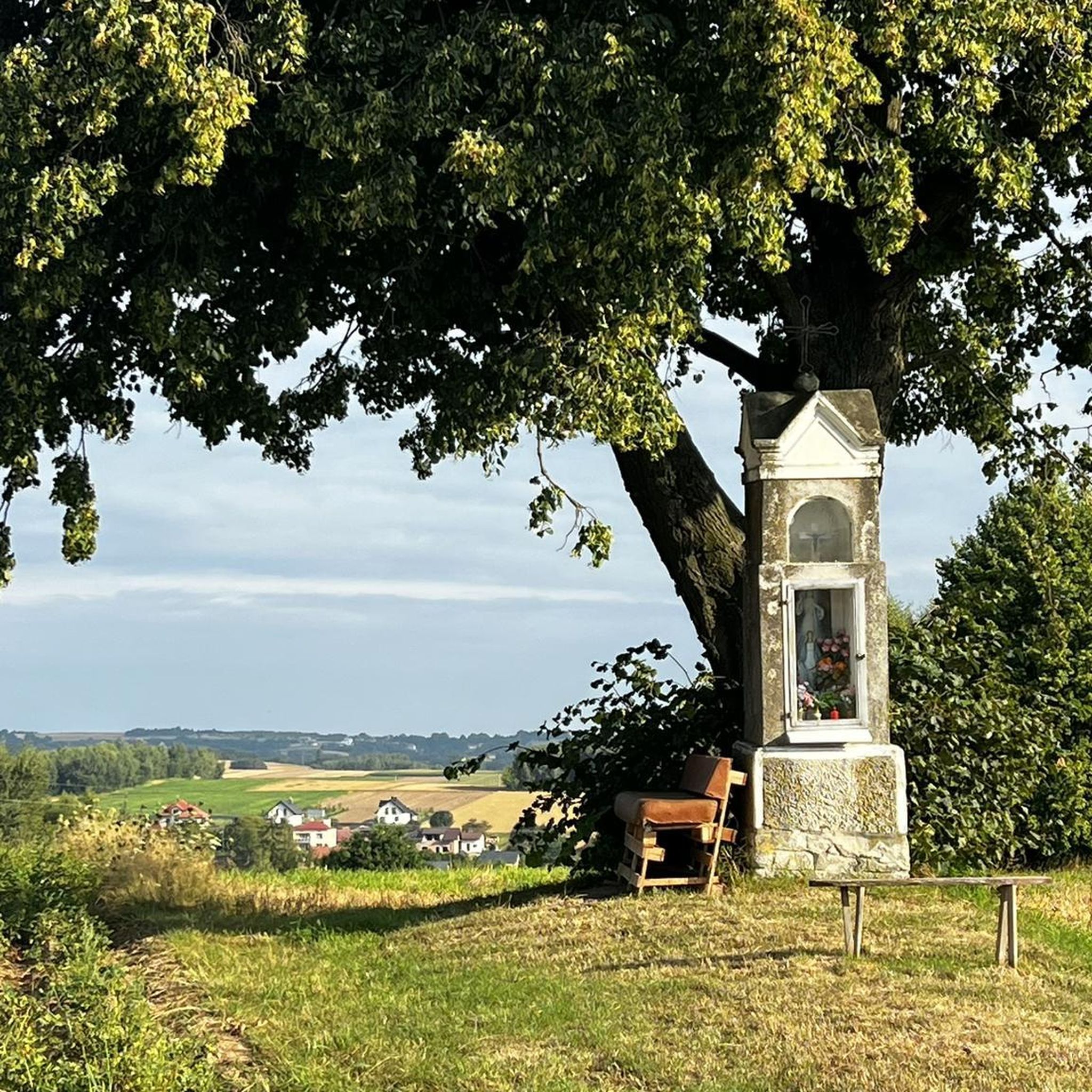
This beautiful rest area is located on the former railway line, at the old train station in Pange.
0
0

The origin of “Pont-à-Domangeville is lost in the mists of time. The Roman road from Metz to the Rhine already passed through there. Under the old regime, it was a tiny separate lordship, with a toll bridge. Usually blocked and padlocked, to cross it you had to pay a fee, depending on the livestock and products passed through. The lordship belonged in the 13th century to the Saint-Vincent de Metz abbey, then to the successive lords of Domangeville; in 1716, to the Laubrussels, then to the Leuryses, finally to the Thomas de Pange. It included, in addition to the bridge, the road - 50 toises on this side, 18 beyond - the bed of the Nied on both sides and, on the south-east bank, land with a hostelry (current Mayot farm) . In 1789, the community of Bazoncourt declared in its list of grievances “the enlightenment of the State and the kindness of the King will undoubtedly eliminate a right of final injustice perceived at Pont-à-Domangeville. However poor a plowman he may be, he pays three does and several pay without passing through.” After the revolution, the bridge had to be repaired. Paradoxically, the general council had the expenditure entered in the 1814 and 1815 rolls of the localities which had subscribed to the bridge in 1766. On this ordeal is inscribed: “This monument of our redemption was erected by the care of MM. De Pange, de Courten, Devaux and Dauphin, Commissioners responsible for the reconstruction of this bridge, in the year of our Lord 1816. During the reconstruction work and near the bridge, Joseph GRANDIDIER de Hernicourt and François ANIEL perished in the waters on July 20 from Domangeville, both attached to the service of the neighboring farm »
1
0
Frequently Asked Questions
How many no-traffic gravel bike trails are available around Sanry-sur-Nied?
There are approximately 10 dedicated no-traffic gravel bike trails listed on komoot around Sanry-sur-Nied. These routes are designed to offer a peaceful cycling experience away from vehicular traffic, often utilizing forest tracks, riverside paths, and agricultural roads within the Lorraine Regional Natural Park.
What kind of terrain can I expect on no-traffic gravel trails in this region?
The no-traffic gravel trails around Sanry-sur-Nied feature a diverse mix of terrain. You'll encounter unpaved sections, forest tracks, and paths through agricultural areas, characteristic of the Lorraine Regional Natural Park. While some segments are unpaved, they are generally suitable for gravel bikes, offering a varied and engaging ride.
Are there any easy, family-friendly no-traffic gravel routes near Sanry-sur-Nied?
Yes, there are options suitable for families looking for an easier ride. For instance, the Statue of the Mother and Child – Pange Castle loop from Les Étangs is rated as easy, covering 30.7 km with moderate elevation, making it a good choice for a relaxed outing away from traffic.
What are some notable landmarks or viewpoints I can discover along these trails?
The region offers several points of interest. You can cycle past historical sites like Pange Castle or Mercy Castle. For scenic views, consider routes that pass near Mont Saint-Pierre, offering picturesque landscapes of the Moselle department.
What is the best time of year for gravel biking in Sanry-sur-Nied?
The best time for gravel biking around Sanry-sur-Nied is typically from spring to autumn (April to October). During these months, the weather is generally mild, and the trails are less likely to be muddy or overgrown, providing optimal conditions for exploring the diverse landscapes of the Lorraine Regional Natural Park.
Are there any circular no-traffic gravel routes available?
Many of the no-traffic gravel routes around Sanry-sur-Nied are designed as circular loops, allowing you to start and end at the same point. An example is the Mountain biking in Sud Messin – Verny – Seille spillway loop from Pournoy-la-Grasse, which offers a 38.3 km ride through varied terrain.
Where can I find parking for these no-traffic gravel trails?
Parking is generally available in or near the starting points of many routes, particularly in villages like Pournoy-la-Grasse, Les Étangs, or Peltre. It's advisable to check the specific route details on komoot for recommended parking locations before you set out.
What is the difficulty level of the no-traffic gravel trails in this area?
The no-traffic gravel trails around Sanry-sur-Nied cater to various skill levels. You'll find routes rated from easy, such as the Statue of the Mother and Child – Pange Castle loop, to more difficult options like the La Croix Saint Clément – Turning Stone loop from Peltre, which features significant elevation gain over 63.5 km.
Are dogs allowed on the no-traffic gravel bike trails?
While specific regulations can vary, many natural areas and public paths in the Lorraine Regional Natural Park are dog-friendly, especially if dogs are kept on a leash. It's always best to check local signage or specific route information for any restrictions regarding pets.
Are there any cafes or amenities for cyclists near the trails?
Villages and towns located near the starting points of the trails, such as Sanry-sur-Nied itself or nearby larger towns like Metz, offer various amenities including cafes, restaurants, and accommodation. These can be good spots to refuel or rest before or after your ride.
What do other gravel bikers enjoy most about the no-traffic trails in Sanry-sur-Nied?
The area is highly rated by the komoot community, with an average score of 3.6 stars. Reviewers often praise the tranquility of the routes, the beautiful natural scenery of the Lorraine Regional Natural Park, and the opportunity to explore varied landscapes away from traffic.
Most popular routes around Sanry-Sur-Nied
Most popular attractions around Sanry-Sur-Nied

Get inspired with the komoot mobile app


Explore more
Browse the best Gravel rides in other regions.
