The best traffic-free bike rides around Cormatin
4.7
(5)
33
riders
4
rides
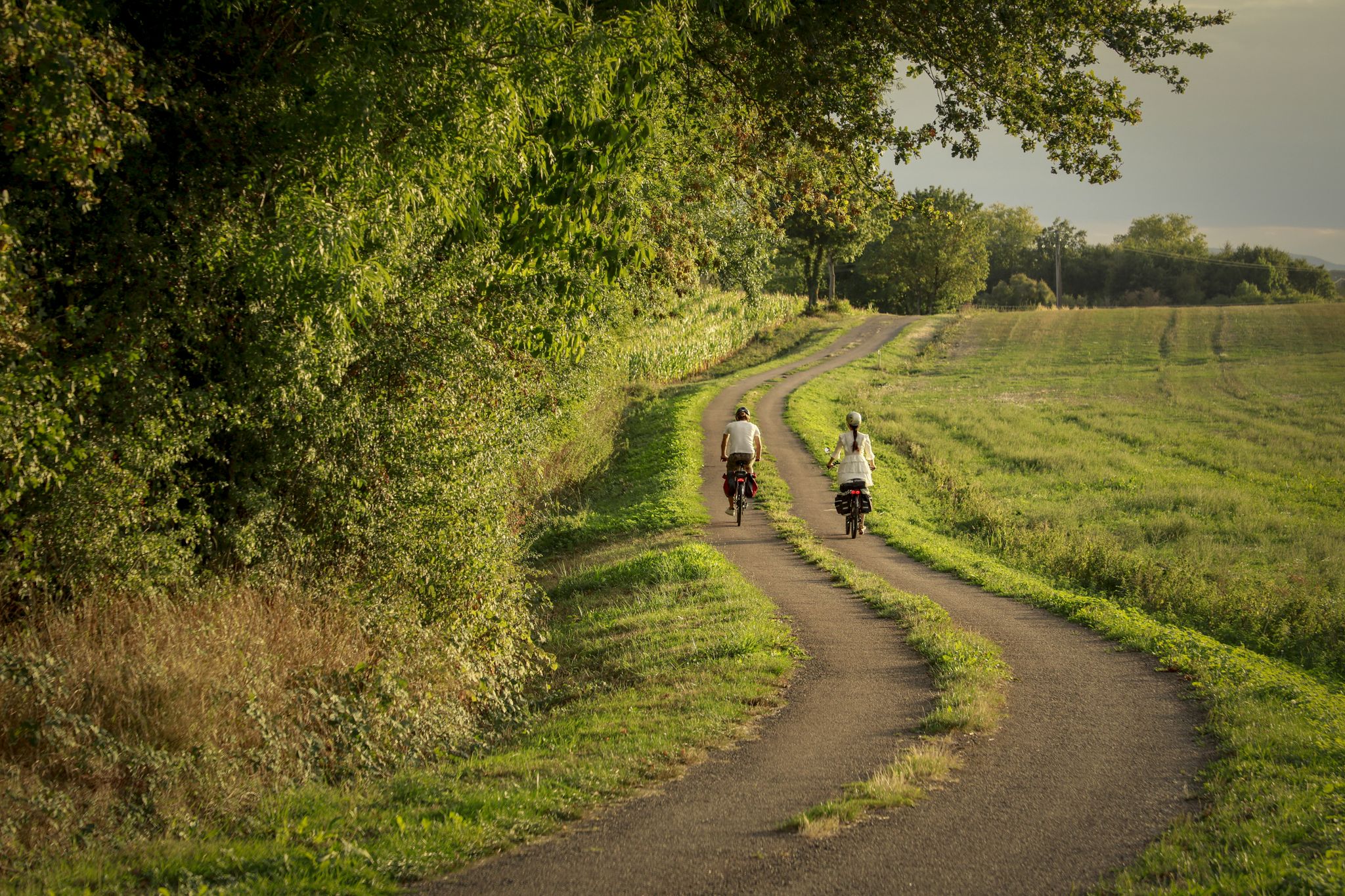
Gravel biking around Cormatin offers diverse landscapes across the picturesque Clunisois region of Burgundy, France. The area features a network of designated greenways and unpaved routes, providing varied terrain for cyclists. Routes wind through hilly countryside, forests, vineyards, and fields, with notable elevations like Mont Saint-Romain offering panoramic views. This setting provides an ideal environment for no traffic gravel bike trails.
Best no traffic gravel bike trails around Cormatin
- The most popular no traffic gravel bike trail is Mount Saint-Romain…
Last updated: May 9, 2026
5.0
(2)
28
riders
94.1km
05:28
910m
900m
Hard gravel ride. Very good fitness required. Mostly paved surfaces. Suitable for all skill levels.
2
riders
23.4km
01:57
540m
540m
Hard gravel ride. Very good fitness required. Mostly paved surfaces. Suitable for all skill levels.

Sign up for free
5.0
(2)
4
riders
31.3km
02:05
290m
290m
Moderate gravel ride. Good fitness required. Mostly paved surfaces. Suitable for all skill levels.
4.0
(1)
3
riders
31.4km
02:22
670m
660m
Hard gravel ride. Very good fitness required. Mostly paved surfaces. Suitable for all skill levels.
2
riders
13.5km
00:57
130m
130m
Easy gravel ride. Great for any fitness level. Mostly paved surfaces. Suitable for all skill levels.
Our route recommendations are based on thousands of hikes, rides, and runs completed by other people on komoot.
Start today with a free account
Your next adventure awaits.
Login or Signup
Other adventures around Cormatin

Tips from the Community

The farm offers direct sales of wine and cheese. Offerings: French cheese, regional wine, and other homemade organic products directly from the farm. The farm is idyllically located in the countryside around the well-known monastery town of Taizé. The farm shop is open every day of the week: Monday to Saturday: 10:00 – 12:30 and 14:00-19:00 Sunday: 10:00 - 12:00
0
0
The historic Romanesque parish church of the municipality of Ameugny. The first documented mention dates from the year 1050, with the Romanesque west portal visible today having been built in the 12th century. A typically Burgundian hall church with three bays and a pointed barrel vault, which appears very massive and is covered with lava stones. The tympanum above the portal shows a cross in a circle and bears the rare signature of the sculptor Seguin. The church has been a listed historic monument since October 22, 1913.
0
0

Very beautiful castle. Feel free to visit the monks' chapel of Berzé la ville, with very beautiful paintings from the abbey of Cluny
0
0
The ruins of the church of Saint-Hippolyte are located in the commune of Bonnay-Saint-Ythaire. The Romanesque church was built in the 11th century by the monks of the Abbey of Cluny. Fortification: In the 13th century (around 1214), the building was converted into a fortified church at the request of the monks to offer better protection. In the process, the church was partially transformed into a keep (Donjon). The building was severely damaged in the 15th and 16th centuries, and the nave of the church finally collapsed in the 18th century. Since 1913, the site has been a listed Monument historique.
0
0
In the Middle Ages, the abbey was one of the most influential spiritual and cultural centers in Europe. Cluny was the mother house of the Cluniac Reform and headed a federation of over 1,200 monasteries. The third abbey church (Cluny was the largest church in the Christian world until the construction of St. Peter's Basilica in Rome). Of the once-mighty complex, only parts of the southern transept remain today, as the abbey was largely used as a quarry and demolished after the French Revolution.
0
0

A site in the middle of the forests with an incomparable viewpoint
0
0

Found the garden more interesting than the interior of the castle.
0
0

The town of Cluny was based on the Benedictine monastery (Cluniac Abbey), founded in 910. The abbey was the starting point and center of the Cluniac reform at the beginning of the 10th century. Cluny reached its peak membership at the beginning of the 12th century with approximately 400 monks. The last abbey church (Cluniac 3) was the world's largest Romanesque basilica and, until the construction of today's St. Peter's Basilica in Rome, the largest church in Christendom. The church had seven towers. Although large parts of the building were destroyed, the remaining relics are absolutely remarkable and make a visit to Cluny an unforgettable experience!
1
0
Frequently Asked Questions
How many traffic-free gravel bike trails are available around Cormatin?
There are several dedicated traffic-free gravel bike trails around Cormatin, offering a variety of experiences. These routes are designed to keep you away from motorized traffic, providing a peaceful and enjoyable ride through the picturesque Burgundy countryside.
What kind of terrain can I expect on the gravel bike trails near Cormatin?
The terrain around Cormatin is quite varied, ranging from smooth sections along the 'voie verte' (greenway) to more challenging unpaved segments through hilly countryside, forests, and vineyards. You'll encounter both gentle climbs and more significant ascents, especially in the broader Clunisois region, which is known for its superb hilly landscape.
Are there any easy, beginner-friendly gravel routes without traffic?
Yes, there is at least one easy route perfect for beginners or those looking for a relaxed ride. The Cormatin Castle – La Grange Cergy Wine & Cheese loop from Cormatin is a great option, offering a relatively flat and accessible experience while still enjoying the scenic surroundings.
What are some notable landmarks or viewpoints I can discover along the gravel trails?
Many routes offer stunning views and pass by significant landmarks. For panoramic vistas, consider routes that climb Mont Saint-Romain. You can also cycle past historic sites like the magnificent Château de Cormatin with its elaborate gardens, or the beautiful Chapaize Church, one of Burgundy's finest Romanesque churches. Some trails even connect to the historic Cluny Abbey area.
Are there any circular gravel bike routes around Cormatin?
Yes, many of the gravel bike routes in the area are designed as circular loops, allowing you to start and end at the same point. Examples include the Mount Saint-Romain – Donzy loop from Saint-Gengoux-de-Scissé and the Chapaize Church – Château de Cormatin loop from Bonnay, which offer diverse scenery and attractions.
What is the best time of year to go gravel biking in Cormatin?
The spring and autumn months are generally ideal for gravel biking in Cormatin. The weather is typically mild, and the landscapes are particularly beautiful, with blooming flowers in spring and vibrant foliage in autumn. Summer can also be pleasant, but it's advisable to start earlier in the day to avoid the midday heat. Winter rides are possible, but some unpaved sections might be muddy or slippery.
Are the gravel bike trails around Cormatin suitable for families with children?
The presence of a 'voie verte' (greenway) means there are designated paths reserved for non-motorized vehicles, which are generally safe and well-suited for families. The easier routes, such as the Cormatin Castle – La Grange Cergy Wine & Cheese loop, are particularly good for family outings, offering a relaxed pace and scenic views without the worry of traffic.
Can I bring my dog on the gravel bike trails?
While specific regulations for dogs on every trail segment can vary, generally, dogs are welcome on many of the public paths and greenways in the region, provided they are kept on a leash. It's always a good idea to check local signage or specific route descriptions for any restrictions, especially when passing through private land or nature reserves.
Where can I find parking near the trailheads for gravel biking?
Cormatin and surrounding villages often have public parking available, especially near popular attractions like the Château de Cormatin or in village centers. Many of the routes are designed as loops starting from specific towns like Saint-Gengoux-de-Scissé, Bonnay, or Donzy-le-Pertuis, where you can typically find convenient parking options to begin your ride.
What do other gravel bikers enjoy most about the trails in Cormatin?
The area is highly rated by the komoot community, with an average score of 4.5 stars. Reviewers often praise the quiet, traffic-free nature of the routes, the stunning historical landmarks like the castles and Romanesque churches, and the diverse, picturesque landscapes that combine rolling hills, vineyards, and forests. The well-maintained greenways are also frequently highlighted for their accessibility and beauty.
Are there any challenging gravel bike routes for experienced riders?
Yes, for more experienced gravel bikers seeking a challenge, there are routes with significant elevation gains and more technical sections. The Mount Saint-Romain – Donzy loop from Saint-Gengoux-de-Scissé and the Cluny – Greenway of Southern Burgundy loop from Donzy-le-Pertuis are both rated as difficult, offering substantial climbs and rewarding views over the valleys of Cormatin and the broader Clunisois region.
Most popular attractions around Cormatin

Get inspired with the komoot mobile app


Explore more
Browse the best Gravel rides in other regions.
