The best traffic-free bike rides around El Aljarafe
4.5
(191)
10,784
riders
12
rides
Road cycling around El Aljarafe is characterized by its rolling hills and extensive olive groves, offering varied terrain for cyclists. The region features the Guadiamar Green Corridor, a protected landscape area providing natural routes. Situated on a platform above the Guadalquivir plains, El Aljarafe's landscape extends towards the Sierra Morena foothills, creating diverse ecosystems. This area provides well-paved surfaces suitable for no traffic road cycling routes.
Best no traffic road cycling routes around El Aljarafe
- The most popular no traffic…
Last updated: October 24, 2026
5.0
(1)
109
riders
88.2km
04:16
1,280m
1,280m
Hard road ride. Very good fitness required. Mostly well-paved surfaces and easy to ride.
77
riders
118km
05:32
1,430m
1,430m
Hard road ride. Very good fitness required. Mostly well-paved surfaces and easy to ride.

39
riders
66.3km
03:02
610m
610m
Moderate road ride. Good fitness required. Some segments of this route may be unpaved and difficult to ride.
18
riders
117km
06:06
2,000m
2,000m
Hard road ride. Very good fitness required. Mostly well-paved surfaces and easy to ride.
16
riders
Easy road ride. Mostly well-paved surfaces and easy to ride.
Get access to more routes and recommendations from other explorers.
Already have an account?
Our route recommendations are based on thousands of hikes, rides, and runs completed by other people on komoot.
Start today with a free account
Your next adventure awaits.
Popular around El Aljarafe

Traffic-free bike rides around Sanlúcar La Mayor

Traffic-free bike rides around Olivares

Traffic-free bike rides around Albaida Del Aljarafe

Traffic-free bike rides around Salteras

Traffic-free bike rides around Umbrete

Traffic-free bike rides around Bollullos De La Mitación
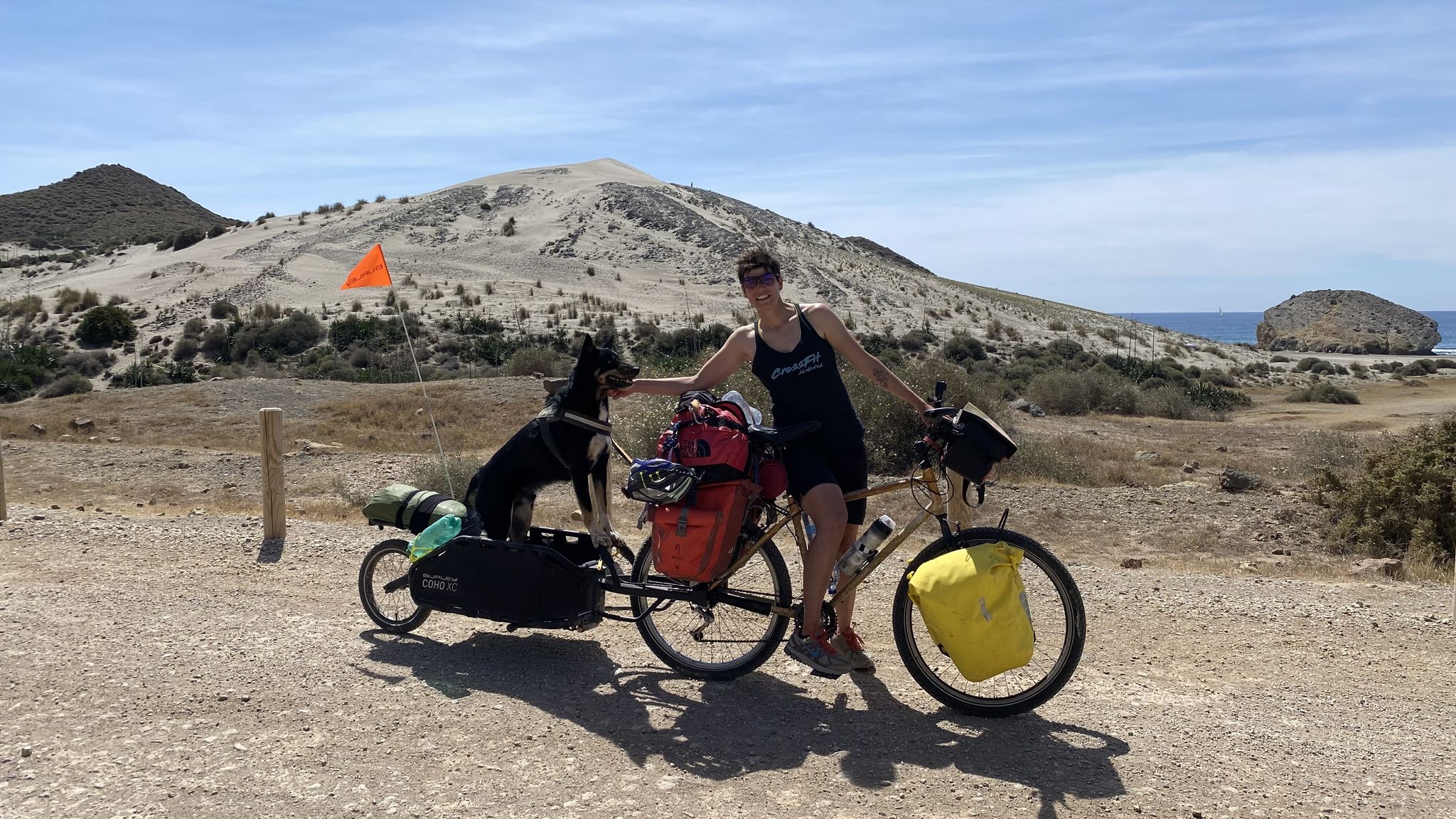
Let’s head south – cycle in Andalusia with me and my dog
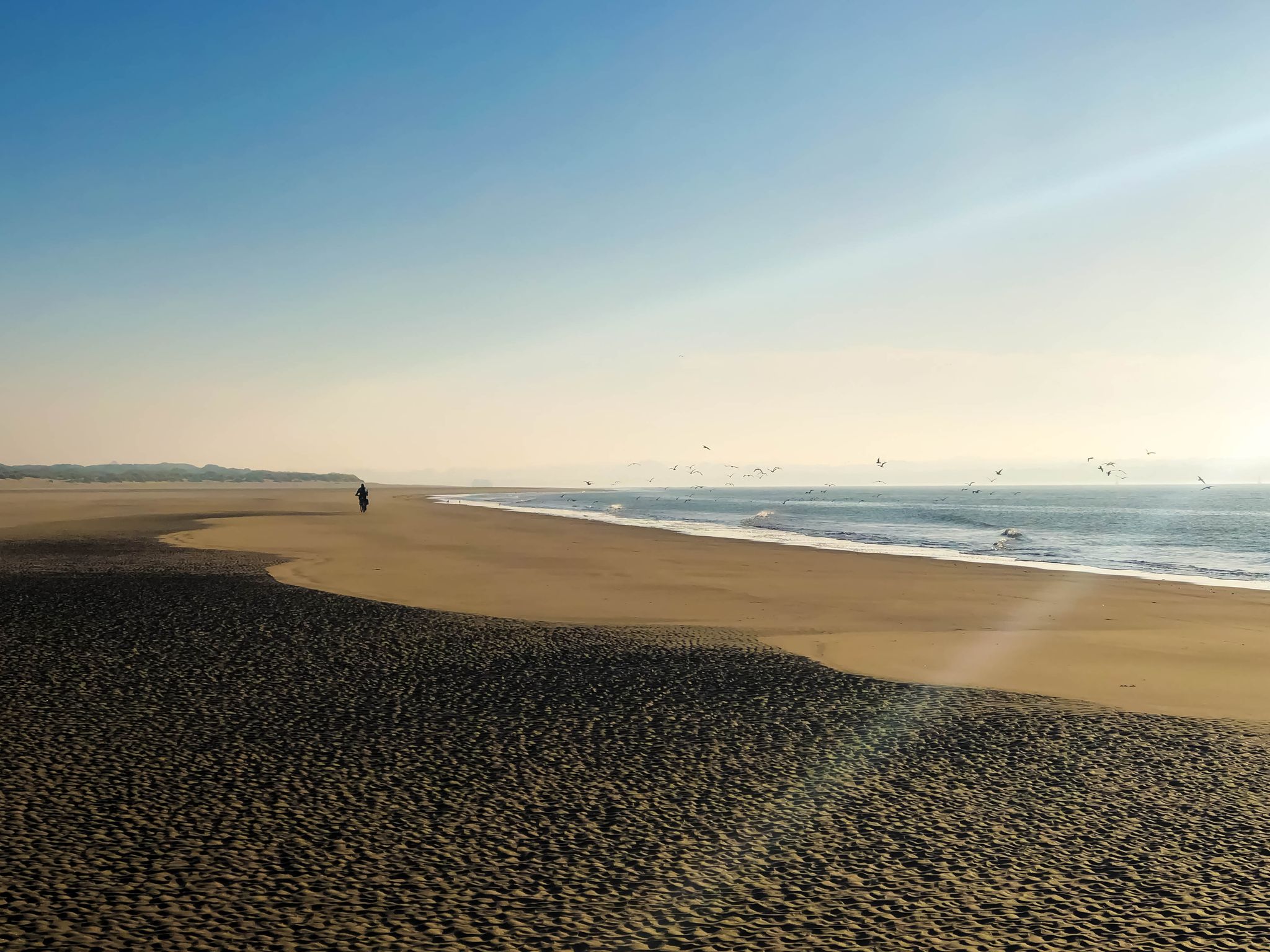
Cycle to the south – Seville to El Rocío, Doñana and Cadiz in Spain
Traffic-free bike rides around El Aljarafe

Traffic-free bike rides around El Aljarafe


Tips from the Community

The Tinto River is famous for its intense red-colored waters and extreme acidity, caused by the oxidation of iron and sulfide minerals. It is so peculiar that NASA and other space agencies study it as a terrestrial analogue of Mars, as its extreme conditions host microorganisms capable of surviving in very hostile environments. Furthermore, the area has been mined for over 5000 years by Phoenicians, Romans, and other civilizations.
0
0


The Parish Church of Santa María de la Purificación, due to its volumetric force and its location in an elevated part of the town, becomes the most representative architectural landmark. Despite being initially located away from the urban center, it is a remarkable example of a Sevillian church, in which the Mudejar and Baroque styles converge, following a very characteristic approach to 18th-century construction practice in the area. Built according to Mudejar principles in its original construction, which appears to date from the 15th century, it would later be practically rebuilt after the damage caused by the 1755 earthquake, conforming to the Baroque guidelines prevailing in the second half of the 17th century. A reconstruction in which Pedro de Silva, Antonio Matías de Figueroa, and José Álvarez participated. Among them, Antonio Matías de Figueroa stands out for the significance of his intervention in the complex. His work on the Manzanilla church can therefore be considered one of the last examples of this family's distinctive style—the so-called triumphal baroque—and one of the first signs of the change of direction demanded by the changing times, in their preference for the primacy of Rococo lines over Baroque masses. The appearance of neoclassical elements (the Gospel nave portal), derived from the presence of José Alvarez (1782–1783) as director of the works, also speaks to the formal evolution of the style toward the last quarter of the century. Finally, the tower (1760-1779) stands out, attributed to Lucas Cintora and Francisco Díaz Pinto, and one of the most beautiful examples in the province. It perfectly fits one of the two characteristic typologies of 18th-century Andalusia, originating from the Giralda in Seville. It forms part of a unique group of towers in Huelva, along with that of the Temple of San Pedro in Huelva and that of the Church of San Juan Bautista (La Palma del Condado), all of which follow a very similar model. This building represents another example of the intense religious construction activity that characterized 18th-century Huelva architecture, motivated by a fortunate combination of economic, demographic, and natural circumstances (earthquakes), and which has come to be known as its Golden Age.
0
0

The Plaza de España in La Palma del Condado is an emblematic and central place in this charming town in the province of Huelva. Surrounded by historic buildings and with a vibrant atmosphere, it is a popular meeting point for both locals and visitors. In this square, you can find the Parish Church of San Juan Bautista, one of the most representative churches of the 18th century Sevillian Baroque style. In addition, the square is close to other points of interest such as the Convent of Our Lady of Carmen and the Old Town Hall.
3
0

Obligatory stopping point if you take the road. There are incredible views even of the Rio Tinto mining railway.
0
0

Best way to do it - stop for a nice breakfast in El Castillo de las Guardas and head down this section after the breakfast.
0
0

It is my favorite place
0
0

Section of river that is crossed by the road but from where you can see the water passage before entering again towards the mountains near El Madroño.
1
0
Frequently Asked Questions
How many no-traffic road cycling routes are available in El Aljarafe?
There are 8 dedicated no-traffic road cycling routes in El Aljarafe featured in this guide. These routes offer a range of difficulties, from easy to difficult, ensuring options for various skill levels.
Are there easy, family-friendly no-traffic road cycling routes in El Aljarafe?
Yes, El Aljarafe offers several easy routes suitable for families and beginners. For instance, the Path Through the Dehesa – Aznalcázar Pine Forest Trail loop from Aznalcázar is an excellent choice, providing a gentle ride through natural landscapes. Another accessible option is the Super road for racing bikes loop from Gerena.
What is the best time of year for no-traffic road cycling in El Aljarafe?
El Aljarafe benefits from a subtropical Mediterranean climate with mild temperatures, making it comfortable for outdoor activities for much of the year. Spring and autumn are ideal, offering pleasant weather without the intense summer heat. Even in winter, temperatures are often mild, providing good cycling conditions.
Are there any long-distance no-traffic road cycling routes for experienced cyclists?
Absolutely. For experienced cyclists looking for a challenge, routes like the Aznalcóllar Mine – View of the Agrio Reservoir loop from Schott Solar CSP offer significant distance and elevation gain. Another demanding option is the El Castillo de las Guardas Loop from Aznalcóllar, which covers nearly 88 km with over 1100 meters of ascent.
What kind of scenery can I expect on these no-traffic road cycling routes?
You'll cycle through diverse and picturesque landscapes. Expect rolling hills, extensive olive groves, vineyards, and fruit trees that define the region's agricultural identity. Many routes also traverse the natural beauty of the Guadiamar Green Corridor, a protected landscape area, offering a serene natural passageway.
Are there any viewpoints or scenic stops along the routes?
Yes, the region offers several scenic spots. You might encounter views of the Agrio Reservoir, as seen on routes like the View of the Agrio Reservoir loop from Escacena. Additionally, you can visit the Guadiamar Viewpoint, offering expansive vistas of the natural corridor.
Can I find places for refreshments or cafe stops along the no-traffic routes?
While these routes focus on minimal traffic, they often pass through or near charming towns and traditional haciendas. These offer opportunities to stop for refreshments, local cuisine, or to experience the region's winemaking tradition, such as along the 'Mosto Route'.
What historical or cultural attractions can I see near the cycling routes?
El Aljarafe is rich in history. Cyclists can explore significant archaeological sites, such as the Roman ruins of Itálica in Santiponce, or discover ancient remains like dolmens. The region is also dotted with historical haciendas, many of which are vestiges of past agricultural wealth, adding to the traditional rural Andalusian scenery. You might also pass by religious buildings like the Sanctuary of Our Lady of Loreto or the Hermitage of Cuatrovitas.
What do other road cyclists think about the no-traffic routes in El Aljarafe?
The no-traffic road cycling routes in El Aljarafe are highly regarded by the komoot community, with an average rating of 4.3 stars from 29 reviews. Cyclists often praise the well-paved surfaces, the serene natural settings, and the varied terrain that caters to different fitness levels.
Are the no-traffic road cycling routes mostly circular?
Yes, many of the featured no-traffic road cycling routes in El Aljarafe are designed as circular loops. This allows for convenient starting and ending points, such as the El Castillo de las Guardas Loop from Aznalcóllar or the Path Through the Dehesa – Aznalcázar Pine Forest Trail loop from Aznalcázar.
Is parking generally available near the starting points of these quiet road cycling routes?
While specific parking information for each route varies, the routes often start from or pass through towns within El Aljarafe. These towns typically offer public parking options, making it convenient to access the quiet road cycling trails.
Most popular routes around El Aljarafe
Most popular attractions around El Aljarafe

Get inspired with the komoot mobile app


Didn’t find what you were looking for?
Check out more Road cycling routes throughout El Aljarafe below and find the perfect route in your destination.
Explore more
Browse the best Road cycling routes in other regions.
