The best road cycling routes around Moosbach
4.7
(188)
2,184
riders
24
rides
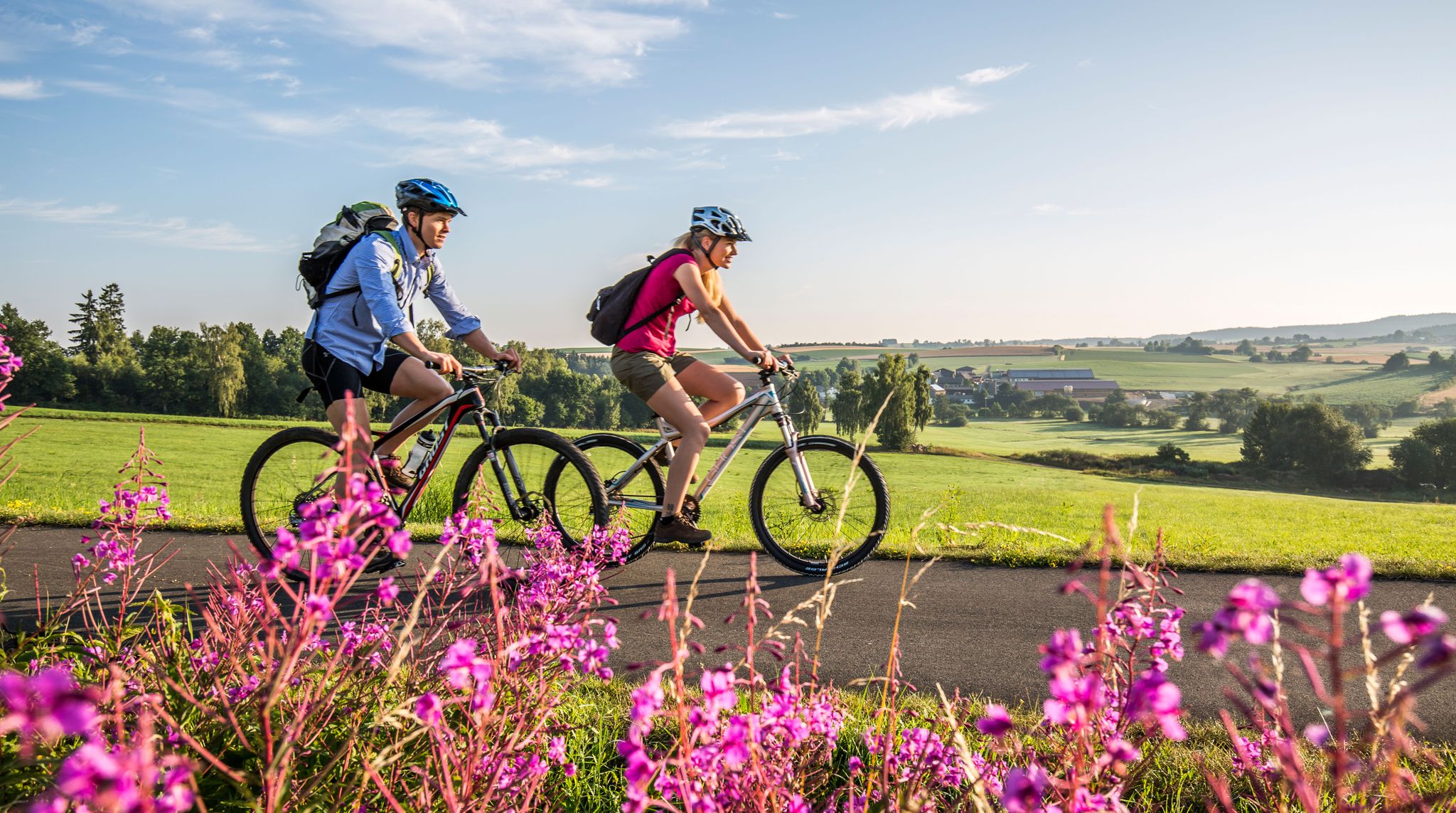
Road cycling around Moosbach, Bavaria, offers diverse terrain within the Upper Palatine Forest, characterized by rolling hills and lush green forests. The region features a mix of mostly paved surfaces suitable for road bikes, with some routes including more challenging segments and significant ascents. Cyclists can explore scenic river valleys and routes with notable elevation changes, providing options for various fitness levels. This landscape provides a varied backdrop for road cycling routes.
Best road cycling routes around Moosbach
- The most…
Last updated: November 23, 2026
5.0
(1)
21
riders
35.6km
01:47
500m
500m
Moderate road ride. Good fitness required. Some segments of this route may be unpaved and difficult to ride.
4.0
(2)
22
riders
55.0km
02:32
670m
670m
Moderate road ride. Good fitness required. Mostly well-paved surfaces and easy to ride.

5.0
(1)
11
riders
74.3km
03:33
1,010m
1,010m
Hard road ride. Very good fitness required. Mostly well-paved surfaces and easy to ride.
4.7
(7)
14
riders
42.4km
01:54
420m
420m
Moderate road ride. Good fitness required. Mostly well-paved surfaces and easy to ride.
8
riders
88.2km
04:19
1,320m
1,320m
Hard road ride. Very good fitness required. Mostly well-paved surfaces and easy to ride.
Get access to more routes and recommendations from other explorers.
Already have an account?
Our route recommendations are based on thousands of hikes, rides, and runs completed by other people on komoot.
Start today with a free account
Your next adventure awaits.

Other adventures around Moosbach

Tips from the Community

Schloß Friedrichsburg Friedrichsburg was built between 1586 and 1593. The construction was carried out by the master builder Leonhardt Greineisen from Burglengenfeld and the Weiden master mason Hanss Reicholt; after his death in 1589, the Italian master mason Hans Meria completed the work. Originally, Count Palatine Friedrich wanted to expand his residence in Weiden in a representative manner; after this failed, the decision fell on Vohenstrauß. In 1593, Count Palatine Friedrich moved with his wife Katharina-Sophia from Weiden to Vohenstrauß to reside in Friedrichsburg. After Friedrich died on December 17, 1597, the castle served as a widow's seat for the Countess Palatine until her death on May 10, 1608. The sovereign rights passed to Palatinate-Neuburg. In the following period, Friedrichsburg was used as a residence for the administrators of Floß and Vohenstrauß. The first renovation of the castle took place in the years 1659 and 1661. When it was built, Schloß Friedrichsburg was located in the south of Vohenstrauß and outside the city walls. The castle is a three-story, rectangular box-like building with a high and steep gable roof, built in the style of the German Renaissance. At the four corners, it has four round towers with pointed helmets that rise in tiers. In the middle of the north-facing main front is a fifth, also round, main entrance tower that is one story higher. On the south facade stands a sixth round tower, which was added in 1903. The east and west sides are equipped with wavy gables, and belt courses made of granite mark the individual floors. Around 1600, there was a rectangular wall with loopholes around the castle. The castle is 40.84 meters long, 18.57 meters wide, and has a net floor area of 2225 square meters. Various offices used the castle in the 19th century. For example, in 1809, the district court from Burgtreswitz was moved into the castle, and from 1842, the tax office was also housed in the castle. In 1862, the district office followed, later the surveying office, and until 1972, the castle served as the district administration office for the Vohenstrauß district. On May 24, 1989, renovation work began on the castle, and by 2001, Friedrichsburg had been completely renovated on the outside. Today, the castle serves, among other things, as a venue for exhibitions, concerts, and theater as part of the Burgfestspiele Leuchtenberg. Source: Excerpts from www.wikipedia.de
4
0

The Barbara Chapel near Trausnitz towards Hochspeicher.
0
0

Particularly charming in autumn with colorful foliage!🍂
0
0

Beautiful parking area for hikers with a playground and a fountain with drinking water
0
0
When this view suddenly appears out of the blue, you just have to take a picture. Simply picturesque.
0
0
Good opportunities for a break and a pint of beer
0
0

Very good, upscale restaurant in Tiefenbach
1
0
Frequently Asked Questions
What kind of terrain can I expect on road cycling routes around Moosbach?
The region around Moosbach, nestled within the Upper Palatine Forest, offers a diverse road cycling experience. You'll encounter a mix of rolling hills and lush green forests. While most surfaces are paved and suitable for road bikes, some routes include more challenging segments with significant ascents, catering to various fitness levels.
How many road cycling routes are available in the Moosbach area?
There are over 25 road cycling routes around Moosbach, offering a wide range of options. This includes 3 easy routes, 13 moderate routes, and 10 difficult routes, ensuring there's something for every skill level.
Are there any circular road cycling routes in Moosbach?
Yes, many of the road cycling routes around Moosbach are designed as loops, allowing you to start and end in the same location. Examples include the Vohenstrauss Town Hall – Burgtreswitz Castle loop from Moosbach and the Wernberg Town Square – View of Tännesberg loop from Moosbach.
What are some notable landmarks or natural features I might see while road cycling near Moosbach?
The routes often pass through scenic areas with interesting landmarks. You might encounter the striking rock formation known as The Devil's Churn, or the historic Kreuzberg Church in Pleystein built on a massive quartz rock. The Lerau Valley also offers natural beauty along some routes.
What is the best time of year for road cycling in Moosbach?
The spring and autumn seasons are particularly recommended for road cycling in Moosbach. During these times, the weather is pleasantly mild, and you'll generally find fewer crowds, making for a more enjoyable experience.
Are there any challenging road cycling routes with significant elevation gain?
Absolutely. For experienced cyclists seeking a challenge, routes like the Atzmannsee – Eslarn Wildlife Park loop from Moosbach feature over 1000 meters of elevation gain. Another demanding option is the View of Altglashütte – Flossenbürg Concentration Camp Memorial loop from Moosbach, which includes over 1300 meters of ascent.
What do other road cyclists think about the routes in Moosbach?
The road cycling routes in Moosbach are highly rated by the komoot community, with an average score of 4.9 stars from over 10 reviews. Cyclists often praise the varied terrain, the beautiful scenery of the Upper Palatine Forest, and the well-maintained paved surfaces.
Are there family-friendly road cycling options in Moosbach?
While many routes involve rolling hills, there are easier options suitable for families or those looking for a more relaxed ride. The region's diverse terrain includes segments along river valleys that tend to be less strenuous. Look for routes marked as 'easy' in the guide for suitable options.
Can I find parking for my car and bike near the road cycling routes in Moosbach?
Moosbach, being a municipality focused on outdoor activities, generally offers public parking options. While specific parking spots for each route aren't detailed, you can typically find parking in and around the town center or at popular starting points for trails, allowing you to access the cycling network.
Are there any historical sites accessible by road bike around Moosbach?
Yes, the region has a rich history. You can cycle to areas near historical sites such as the well-preserved Leuchtenberg Castle Ruins or the Wildstein Castle Ruins, which offer panoramic views of the Upper Palatinate Forest. The Kreuzberg Church in Pleystein is another significant historical and natural landmark.
What is the typical duration for a road cycling tour in Moosbach?
The duration of road cycling tours in Moosbach varies significantly depending on the route's length and difficulty. For example, a moderate ride like the Vohenstrauss Town Hall – Burgtreswitz Castle loop from Moosbach typically takes around 1 hour 45 minutes, while more difficult and longer routes can take over 3 hours, such as the Atzmannsee – Eslarn Wildlife Park loop from Moosbach.
Are there any natural forest baths or swimming opportunities near the cycling routes?
Yes, for a refreshing break after your ride, you can find natural forest baths in Tröbes and Etzgersrieth. The Pfreimd River also offers opportunities for water activities, which might be accessible from some cycling routes.
Most popular attractions around Moosbach

Get inspired with the komoot mobile app


Explore more
Browse the best Road cycling routes in other regions.
