The best cycling routes around Mückeln
4.5
(1331)
7,172
riders
216
rides
Touring cycling routes around Mückeln traverse the unique volcanic landscapes of the Eifel region in Germany. The area is characterized by ancient volcanic cones, maars (volcanic crater lakes), and diverse river valleys. Many routes utilize former railway lines, offering gentle gradients and paved surfaces through forests and open countryside. This terrain provides varied cycling experiences, from leisurely rides around maars to routes with more significant ascents and descents.
Best touring cycling routes around Mückeln
- The most popular touring cycling route…
Last updated: June 27, 2026
4.5
(28)
339
riders
26.5km
01:43
350m
350m
Moderate bike ride. Good fitness required. Mostly paved surfaces. Suitable for all skill levels.
4.6
(8)
18
riders
36.3km
02:33
320m
320m
Moderate bike ride. Good fitness required. Mostly paved surfaces. Suitable for all skill levels.

Sign up for free
4.6
(5)
28
riders
22.8km
01:26
240m
240m
Moderate bike ride. Good fitness required. Mostly paved surfaces. Suitable for all skill levels.
5.0
(3)
9
riders
43.3km
03:10
590m
590m
Hard bike ride. Very good fitness required. Mostly paved surfaces. Suitable for all skill levels.
4.5
(2)
8
riders
41.9km
03:32
590m
590m
Hard bike ride. Very good fitness required. You may need to push your bike for some segments of this route.
Get access to more routes and recommendations from other explorers.
Sign up for free
Already have an account?
Our route recommendations are based on thousands of hikes, rides, and runs completed by other people on komoot.
Start today with a free account
Your next adventure awaits.
Login or Signup
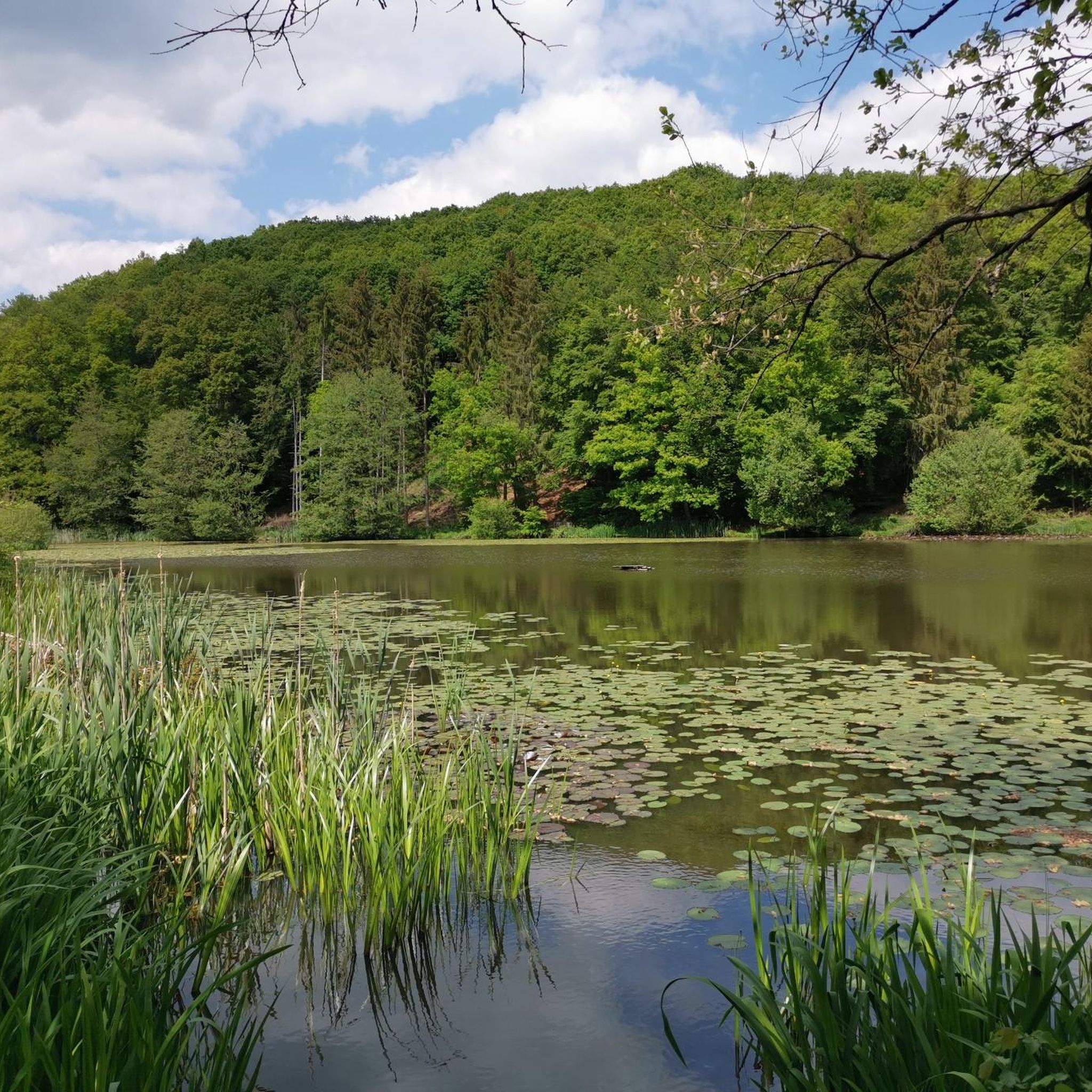
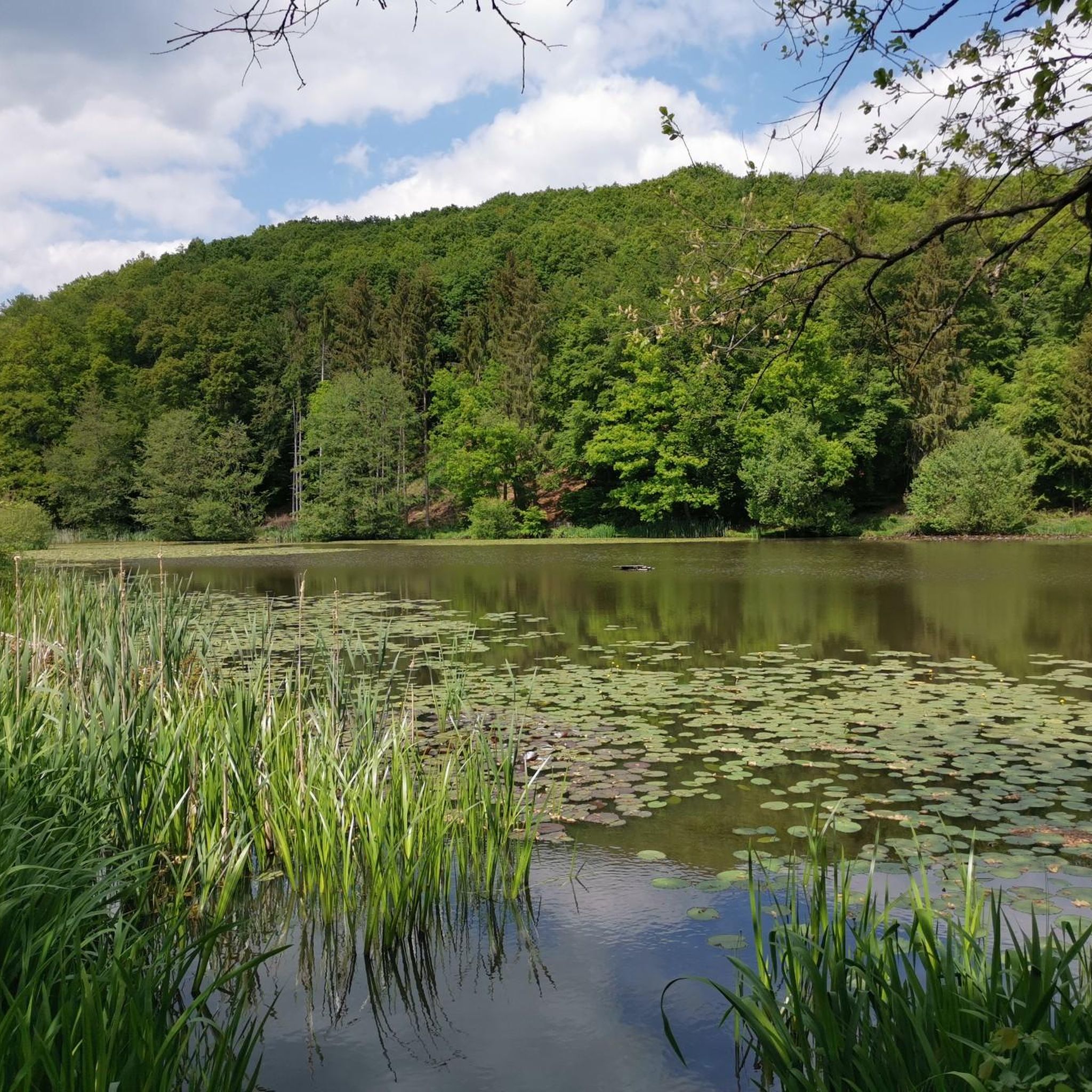
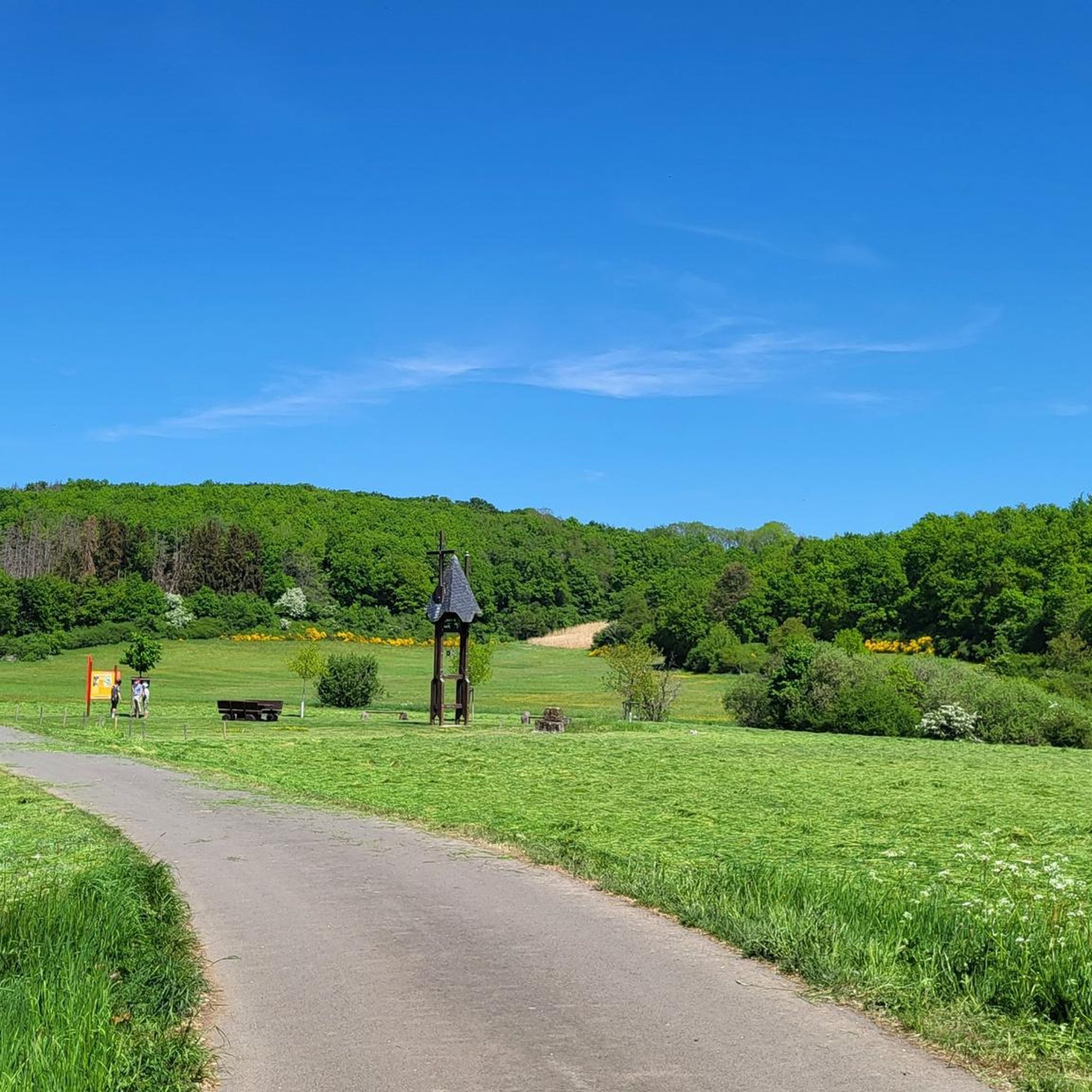
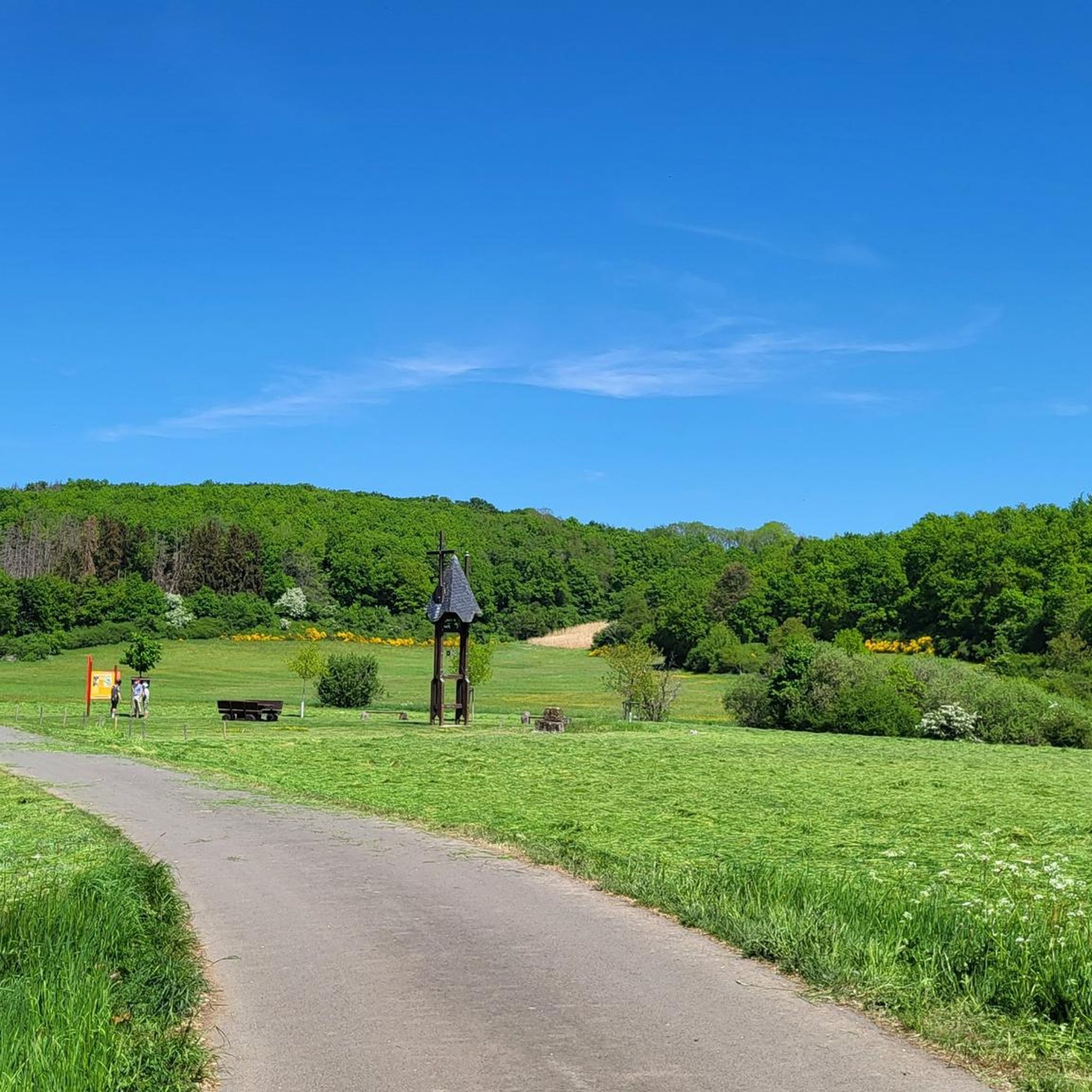

Tips from the Community

A well-maintained cycle path runs around the maar, and beautiful views are guaranteed.
0
0

Great church right in the village center
0
0

Very interesting and worth seeing place.
1
0

The fairy-tale fountain at the Alten Postplatz tells a story. Here, on this spot, it is at its most beautiful.
7
0
The Ulmen Maar lies 420 meters above sea level today, covers an area of 5.5 hectares, and is 36 meters deep. The bubbles at the maar's edge demonstrate that volcanism is still active. They bear witness to a turbulent past—but rest assured, there's no eruption in sight! A wall of various rocks and ash, up to 20 meters thick, surrounds the cone. For those interested, these testimonies to this explosive past are beautifully displayed in St. Matthias Church. This unique wall, with its different colored layers and rounded inclusions, is worth seeing for more than just geologists. The slopes of the maar basin are covered with a beautiful forest, which can be explored on a circular walk. A detour to the medieval castle ruins, from which the Crusaders once launched their campaigns, is recommended. The view from the crater rim over the maar and the Eifel beyond will take your breath away. Whether after a sweaty hike or a long drive, the blue of the Ulmer Eifel lake is all too tempting in summer. However, bathing in the maar is prohibited because it is designated as a nature and water protection area.
6
0
The lower castle has completely disappeared. You can still see the beginning of the ring that connected the lower castle and the Ulmen city wall, a two-story outer wall of the palace, as well as a cistern and some foundation walls of other buildings. The old part of Ulmen Castle was built around 1074 AD and likely rests on the remains of a Roman settlement. In the Middle Ages, Ulmen Castle was further expanded and divided into the upper castle, whose remains of the walls still exist, and the lower castle, which extended to the banks of the maar river. Two knightly families lived in the castle, which is believed to have never been attacked or destroyed until 1673 due to its size. Only the Sun King's troops succeeded. It was rebuilt, but fell again in 1689 during the War of the Succession. However, Ulmen Castle was also rebuilt this time, with only the city wall being abandoned. With the invasion of Napoleon's soldiers, Ulmen also became French and later Prussian. The empty castle, whose last descendant died in 1801, was auctioned to a merchant from Cochem, who sold it as a quarry. When a devastating fire burned Ulmen to the ground in the 19th century, the residents of Ulmen rebuilt their houses with stones from the castle. That's why you can still see a coat of arms on some of the stables today. It wasn't until the early twentieth century that Ulmen Castle was declared a listed building and became the property of the municipality of Ulmen. The castle is always freely accessible.
7
0
Wide forest paths lead from the Alfbachtal to the Notkreuz. Here, too, in the Rudebuhrwald forest, an information board informs us that during the war years of 1944-1945, the residents of Darscheid had to seek refuge in the forest to escape the constant air raids. The wooden Notkreuz, erected here, serves to remind future generations of the horrors of war and to call for peace. Wide forest paths lead from the Notkreuz, via the adjacent HeimatSpur valleys and the Höhenweg (Heimat Trail), up to the Thommener Höhe. Here, you'll be treated to breathtaking panoramas of the Volcanic Eifel.
6
0
Frequently Asked Questions
How many touring cycling routes are available around Mückeln?
There are over 200 touring cycling routes around Mückeln, offering a wide variety of options for different skill levels and preferences. The komoot community has explored more than 8,900 of these routes.
What kind of terrain can I expect on touring cycling routes in Mückeln?
The terrain around Mückeln is shaped by the unique volcanic landscapes of the Eifel region. You can expect routes that wind through ancient volcanic cones, past maars (volcanic crater lakes), and through diverse river valleys. Many paths utilize disused railway lines, providing gentle gradients and paved surfaces, while others offer more significant ascents and descents through rolling hills.
Are there routes suitable for families or beginners?
Yes, Mückeln offers several easy touring cycling routes, with over 45 options available. Many routes, like sections of the Maare-Mosel Cycle Path, follow former railway lines, ensuring gentle gradients and paved surfaces ideal for leisurely rides and families. An example is the Holzmaar – Maare-Mosel Cycle Path loop from Wallscheid, which is rated easy.
Are there more challenging routes for experienced touring cyclists?
Absolutely. For experienced touring cyclists seeking a challenge, there are over 90 difficult routes around Mückeln. These routes often feature significant elevation changes, rewarding cyclists with panoramic views. An example is the Ulmener Maar – Ulmener Maar loop from Strohn, which includes substantial climbs and descents.
What unique natural features can I see along the cycling routes?
The region's volcanic origins provide stunning natural features. You can cycle past ancient volcanic cones and maars, which are crater lakes. The Schalkenmehrener Maar is a prominent example, and routes like the Strohner Lava Bomb – Schalkenmehren Maar loop from Strohn offer views of this impressive lake. The Eifel National Park also offers designated cycle paths through protected natural areas.
Are there any historical or man-made landmarks to explore?
Yes, touring cycling routes around Mückeln often pass by interesting historical and man-made landmarks. You might encounter impressive structures like the Grünewald Viaduct or the Pleiner Tunnel, both of which are part of former railway lines now converted into cycle paths. The Strohner Lava Bomb – Großes Schlitzohr Tunnel loop from Strohn specifically features a notable tunnel.
Can I find circular touring cycling routes in Mückeln?
Yes, many touring cycling routes around Mückeln are designed as loops, allowing you to start and end at the same point. Examples include the Holzmaar – Maare-Mosel Cycle Path loop from Wallscheid and the Holzmaar – Cycle path on a railroad line loop from Strohn, offering convenient options for exploring the region.
What do other touring cyclists enjoy most about cycling in Mückeln?
The touring cycling routes in Mückeln are highly rated by the komoot community, with an average score of 4.5 stars from over 1,700 reviews. Cyclists often praise the unique volcanic landscapes, the well-maintained paths (especially those on former railway lines), and the diverse experiences ranging from serene lake views to challenging climbs.
Is it possible to combine cycling with public transport in the region?
Yes, the Volcanic Eifel region offers 'Bike & Bus' options, which allow cyclists to transport their bikes. This can be very useful for tackling challenging sections, covering longer distances, or for convenient return trips after a one-way ride on a long-distance path like the Maare-Mosel Cycle Path.
Are there places to eat or rest along the cycling routes?
Yes, the region has various options for refreshments and rest. You can find restaurants and huts along or near many routes. For instance, the Heidsmühle Hotel & Restaurant is a well-known spot, and several huts like the Balduin Hut and Ruland hut provide places to pause.
What is the best time of year for touring cycling in Mückeln?
The best time for touring cycling in Mückeln is generally from spring through autumn. During these seasons, the weather is typically mild, and the natural landscapes are at their most vibrant, offering pleasant conditions for exploring the volcanic Eifel region.
Are there any long-distance touring cycling routes that pass through or near Mückeln?
Yes, Mückeln is situated within a network of longer-distance routes. The famous Maare-Mosel Cycle Path, which connects Daun to Bernkastel-Kues, is easily accessible and offers a scenic 58.5 km ride. Other routes like the Volcanic Eifel Cycle Route and the Eifel-Ardennes Cycle Route also traverse the broader region, providing options for multi-day tours.
Most popular routes around Mückeln
Most popular attractions around Mückeln

Get inspired with the komoot mobile app


Explore more
Browse the best Cycling routes in other regions.
